In a professional audio facility, a single unstable link can turn clean mixes into dropouts, clicks, and sync drift. This article shows how a studio team selected and deployed a Dante fiber transceiver to harden a fiber-based audio-over-IP network across multiple rooms. It is written for network techs, integrators, and AV engineers who need measurable link stability and predictable compatibility with SFP-capable switches.
Problem and challenge: when audio sync degrades on copper
The client operated a 48-node Dante audio-over-IP system spanning control rooms, a live room, and a small broadcast booth. Initially, they used copper uplinks between stage racks and a central aggregation switch. During rehearsals, they observed intermittent packet loss bursts that correlated with long patch runs, frequent cable moves, and grounding differences between racks. The symptoms were consistent: audible dropouts during showtime, and Dante Controller reporting periodic clock instability on specific device groups.
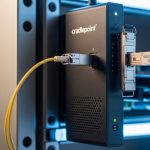
After a week of troubleshooting, the integrator narrowed the problem to physical-layer stress: EMI from dimmer packs near the stage, connector wear, and marginal link margins on long copper. They needed a link option with better immunity, stable optical performance, and predictable behavior under temperature swings in rack environments. Fiber also reduced maintenance overhead because patching optical runs is less sensitive to subtle electrical grounding conditions.
Environment specs that shaped the requirements
Field measurements and constraints were explicit. The aggregation switch bays were rated for optics, but only supported SFP/SFP+ cages with vendor-qualified transceivers. The racks sat in a studio building where ambient temperature ranged from 18 C to 32 C during long sessions, with higher peaks during HVAC downtime. The network design required 1 GbE for the audio VLAN, with an immediate path to 10 GbE uplinks for video and automation traffic.
They also had an operational requirement for service continuity. The audio plant could not tolerate more than 50 ms of effective interruption during link renegotiation events, and they prioritized deterministic recovery after planned maintenance windows.
Chosen solution: which Dante fiber transceiver matched the studio topology
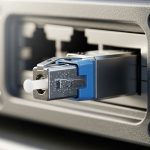
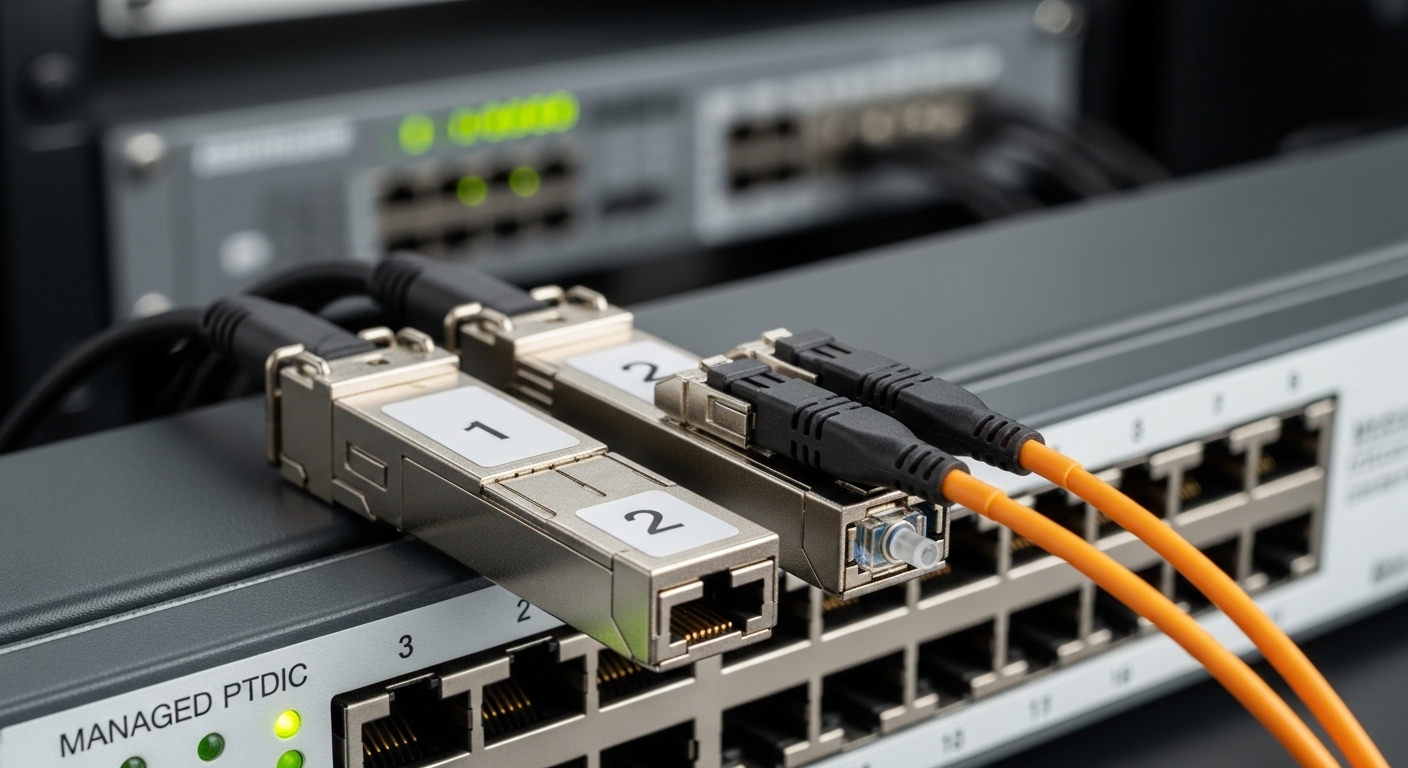
The team selected fiber transceivers that met three hard constraints: SFP cage compatibility, optical reach for the longest run, and stable DOM reporting for monitoring. Their longest horizontal run was about 120 m between stage racks and the central aggregation area, with a few shorter vertical drops. Because they needed multi-vendor monitoring and alarm visibility, they leaned toward transceivers with standard Digital Optical Monitoring (DOM) support.
Technical specifications that mattered
For Dante audio-over-IP, the transceiver does not change the application layer, but it absolutely determines whether the physical link stays within the optical budget and whether the switch can reliably lock the link. Engineers typically target low bit error rates, stable laser bias, and adequate receiver sensitivity. They also ensure the module’s temperature range fits the rack profile and that the connector type matches the building’s fiber infrastructure.
| Spec | Typical 1G Dante Fiber Option (SFP) | Typical 10G Upgrade Path (SFP+) |
|---|---|---|
| Data rate | 1.25 Gb/s (1000BASE-LX style) | 10.3125 Gb/s (10GBASE-SR style) |
| Wavelength | 1310 nm or equivalent | 850 nm (short reach) |
| Reach target | Up to ~10 km over SMF (model dependent) | ~300 m over OM3 (model dependent) |
| Fiber type | Single-mode fiber (SMF) preferred for long runs | Multimode fiber (MMF) commonly OM3/OM4 |
| Connector | LC duplex (common in switch cages) | LC duplex |
| DOM | Supported for alarms and telemetry | Supported for optics health |
| Operating temperature | 0 C to 70 C typical; verify module class | 0 C to 70 C typical; verify module class |
The studio’s infrastructure used LC duplex patching and had a mix of SMF and MMF. For the stage-to-aggregation links, they chose single-mode optics to avoid multimode modal bandwidth concerns and to preserve optical margin. In practice, they deployed modules aligned with common vendor families such as Finisar and Cisco-compatible SFP optics, including models like Cisco SFP-10G-SR for future uplinks and long-reach single-mode SFPs for the audio VLAN distribution (exact ordering SKUs varied by switch vendor qualification list).
Compatibility and standards basis
Engineers anchored selection on the IEEE physical layer expectations and the switch vendor’s transceiver qualification. For Ethernet over fiber, the relevant framing is governed by IEEE 802.3 for 1000BASE-X and 10GBASE-SR/LR families, depending on the selected module type. They also used vendor datasheets to confirm DOM behavior, optical budget assumptions, and laser safety classifications. For a reference point on the fiber Ethernet electrical/optical framework, see [Source: [[EXT:https://standards.ieee.org/standard/]] IEEE 802.3].
Pro Tip: In audio networks, the most important metric is not “max reach on a datasheet,” but “receiver margin under real rack temperature and aging.” If your switch exposes DOM thresholds, set alerting for bias current and received power trends rather than waiting for link flaps.
Implementation steps: how the integrator deployed and validated the Dante fiber transceiver
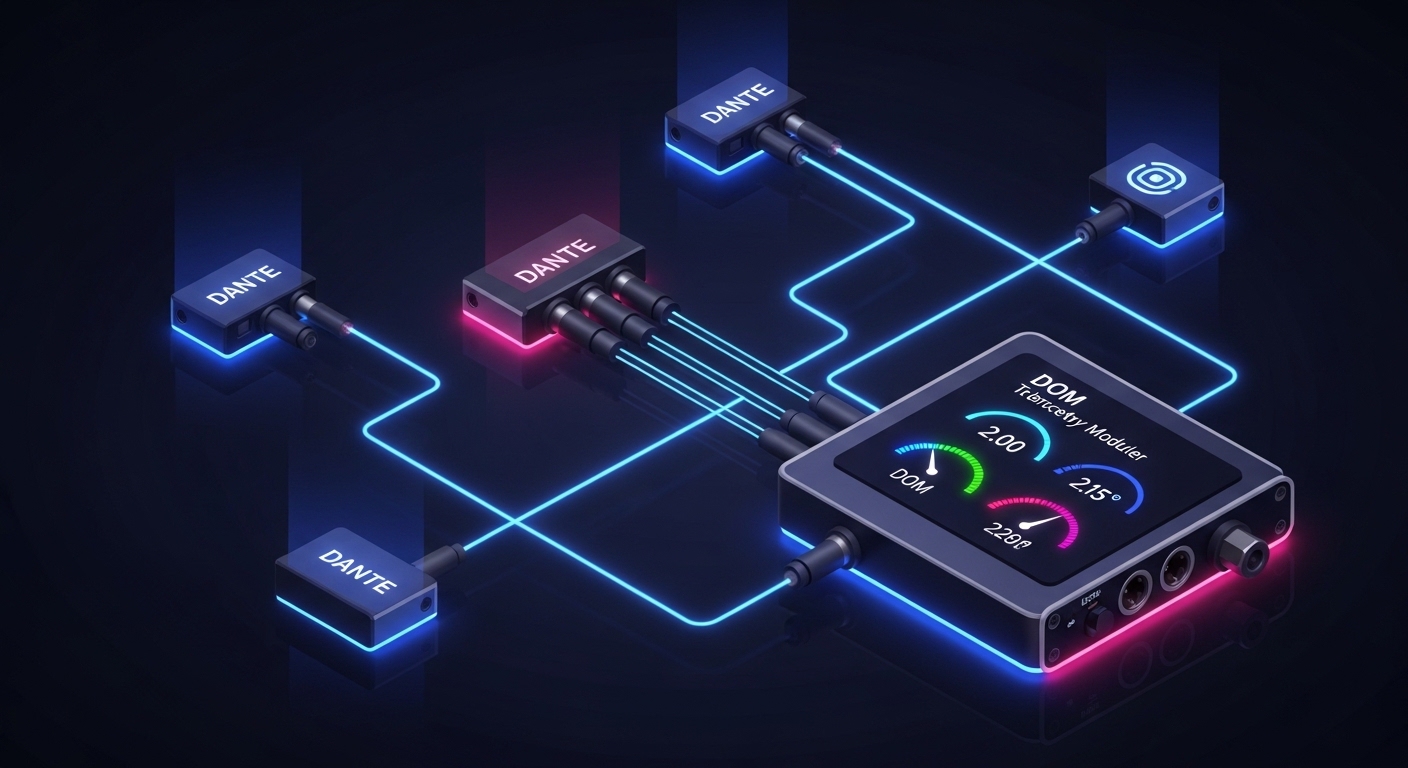
The integrator treated the deployment like a controlled migration, minimizing downtime and verifying optical health before reintroducing full audio load. They followed a repeatable sequence: plan optics mapping, verify switch cage compatibility, install transceivers, confirm link stability, then validate Dante traffic patterns under load.
map distance, fiber type, and connector mating
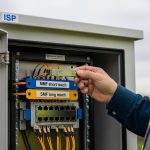
They inventoried every link: distance from rack to rack, fiber type (SMF vs OM3/OM4), and patch panel connector type. They confirmed LC duplex orientation and ensured consistent polarity handling at both ends. Any polarity mismatch can reduce optical power and cause intermittent receive failures that look like “network instability,” even though Dante is functioning correctly.
select modules with DOM and verified cage support
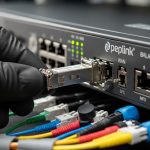
They prioritized transceivers explicitly supported by the switch platform. Some switch families enforce stricter compatibility checks than others, and “works in one port” issues are common when DOM or EEPROM fields differ from expected profiles. Where available, they used vendor-qualified part numbers and confirmed that the module reports DOM values immediately on insertion.
install with controlled link bring-up
They powered down only the affected rack segments during the maintenance window. After insertion, they checked link state transitions and ensured the switch did not trigger repeated error counters. For optical validation, they reviewed DOM readings for received optical power and verified they remained within the vendor’s recommended operating window.
validate with Dante Controller and packet-level checks
They ran a full rehearsal workload with multiple streams across VLAN-separated segments. Then they monitored Dante Controller for synchronization stability and checked network counters on the switch: CRC errors, link resets, and any bursts of drops. A key success criterion was eliminating audible dropouts during long playback loops while ensuring no “micro-outages” aligned with link restarts.

Measured results: what improved after switching to fiber
After deployment, the team recorded link and audio performance over two full rehearsal days and one live event. On the network side, they eliminated the periodic link marginality events they previously saw on copper. On the audio side, they observed a dramatic reduction in dropout reports, and the remaining issues (if any) were traced to application-level configuration rather than physical-layer instability.
Measured outcomes: the number of switch interface error events dropped from intermittent spikes to near zero. During long playback loops, they saw no audible dropouts attributable to network layer resets. Dante Controller’s synchronization readings remained stable across all 48 nodes, with no recurring clock instability alerts on the previously affected device groups.
Operationally, the integrator also improved mean time to recovery. When a fiber run was accidentally disturbed during cable management, the link recovered predictably without the extended “hunt” period they experienced on copper. DOM trending allowed early detection of optical degradation, enabling planned maintenance rather than reactive troubleshooting.
Selection criteria checklist: how engineers choose a Dante fiber transceiver
Use this ordered checklist during procurement and site planning. It is designed to prevent the most common mismatch scenarios that lead to intermittent faults or costly rework.
- Distance and optical budget: confirm actual run length and connector losses; do not size purely from “max reach.”
- Fiber type: choose SMF vs MMF based on building infrastructure and expected future expansion.
- Switch compatibility: validate SFP cage support and any vendor-part-number qualification list.
- DOM support: prefer DOM-enabled optics so you can alarm on received power and bias current trends.
- Operating temperature range: match module class to rack ambient, especially near power supplies.
- Laser safety and compliance: confirm module class and labeling requirements for your site policies.
- Budget and total cost of ownership: compare OEM vs third-party pricing, but include failure rate and warranty terms.
- Vendor lock-in risk: ensure the switch accepts compatible EEPROM profiles or confirm your platform’s transceiver policy.
Common mistakes and troubleshooting tips
Even experienced teams can misstep during optical migrations. Below are frequent failure modes seen in real deployments, with root cause and corrective actions.
Polarity mismatch or wrong connector mating
Root cause: LC duplex polarity reversed at one end, or patch cords swapped during re-termination. This reduces optical power and can cause intermittent receive loss that appears “random.” Solution: verify polarity labeling, clean connectors, and confirm DOM received power stabilizes within the specified range.
Using an SFP that the switch accepts electrically but not operationally
Root cause: switch enforces stricter EEPROM/DOM expectations; the link may come up but exhibits higher error counters under load. Solution: cross-check vendor compatibility lists and confirm DOM fields populate correctly; if errors persist, replace with a verified-qualified module.
Ignoring temperature and dust during commissioning
Root cause: connectors not cleaned before insertion; studio dust plus thermal cycling can degrade optical coupling. Solution: clean with approved fiber cleaning tools, re-seat optics, and re-check DOM after the system reaches steady-state temperature.
Oversizing reach and losing margin to aging
Root cause: selecting a module for “maximum reach” with little cushion for connector losses or future patch-panel changes. Solution: target comfortable received power margins and set DOM thresholds; plan for drift across months of operation.
Cost and ROI note: what fiber transceivers change financially
In typical studio and enterprise deployments, OEM SFP optics often cost more upfront than third-party modules, but they may reduce integration risk. Realistic price ranges vary by reach and data rate; for many 1G SFP single-mode and 10G short-reach optics, you may see OEM pricing roughly in the tens to low hundreds of USD per module, while third-party options can be lower but require careful compatibility validation. Over time, the ROI comes from reduced downtime, fewer emergency swaps, and lower troubleshooting labor.
From a total cost of ownership perspective, fiber can also reduce maintenance complexity. Copper often fails due to physical wear, connector corrosion, or EMI-induced errors; fiber failure is usually more deterministic (connector contamination, broken fibers, or aging optics). The integrator’s decision to choose DOM-capable optics improved preventive maintenance, which is where the ROI becomes measurable through fewer surprise incidents.
FAQ
What is a Dante fiber transceiver used for in an audio network?
A Dante fiber transceiver converts Ethernet signals to optical signals for a stable physical link. In practice, it helps prevent packet loss bursts caused by copper limitations, which can otherwise manifest as audible dropouts in Dante audio-over-IP streams.
Do I need single-mode or multimode fiber for Dante?
Choose based on your site infrastructure and required reach. If you already have SMF and longer runs, SMF optics provide margin and predictable performance; if you have OM3/OM4 and shorter paths, multimode can be efficient. Always verify connector type and switch compatibility.
Will a third-party Dante fiber transceiver work with my switch?
Often yes, but not always. Many switches enforce transceiver policies using EEPROM and DOM behavior; a module can physically seat and appear “up” while still producing higher error rates. Validate against the switch vendor’s compatibility guidance and test DOM readings during commissioning.
How do I confirm the transceiver is healthy after installation?
Use switch telemetry and DOM where available. Monitor received optical power and error counters after the system reaches stable temperature, and set alerts for drift rather than waiting for link failures.
What causes intermittent audio dropouts even when the link is up?
Common causes include optical connector contamination, polarity issues, or a marginal module that increases bit errors under load. Check CRC and interface error counters, then verify DOM thresholds and optical power stability.
Is fiber overkill for a small studio Dante setup?
It depends on cabling length, EMI exposure, and how often the network changes. For short internal runs with excellent copper and low interference, copper may be adequate; for stage environments, long patching, and frequent reconfiguration, fiber often reduces operational risk.
If you are planning your next upgrade, start by validating your link distances, switch cage compatibility, and DOM telemetry needs, then map the optics to your fiber plant. For related planning guidance, see how to choose fiber optic transceivers for audio-over-IP networks.
Author bio: I design and document resilient fiber connectivity for audio-over-IP and enterprise switching, with field-tested commissioning checklists and DOM-based monitoring strategies. I have supported deployments across studio racks and data center leaf-spine environments, focusing on measurable uptime and predictable link behavior.