Buying 800G optics can feel like paying for a rocket launch using office staplers. This article helps network engineers and procurement teams compare cost-effectiveness of Direct Attach Copper (DAC) versus Active Optical Cable (AOC) for enterprise 800G connectivity. You will get practical selection criteria, real-world deployment math, and troubleshooting notes from the trenches.
Why 800G DAC vs AOC is a budget fight (and not just a tech debate)
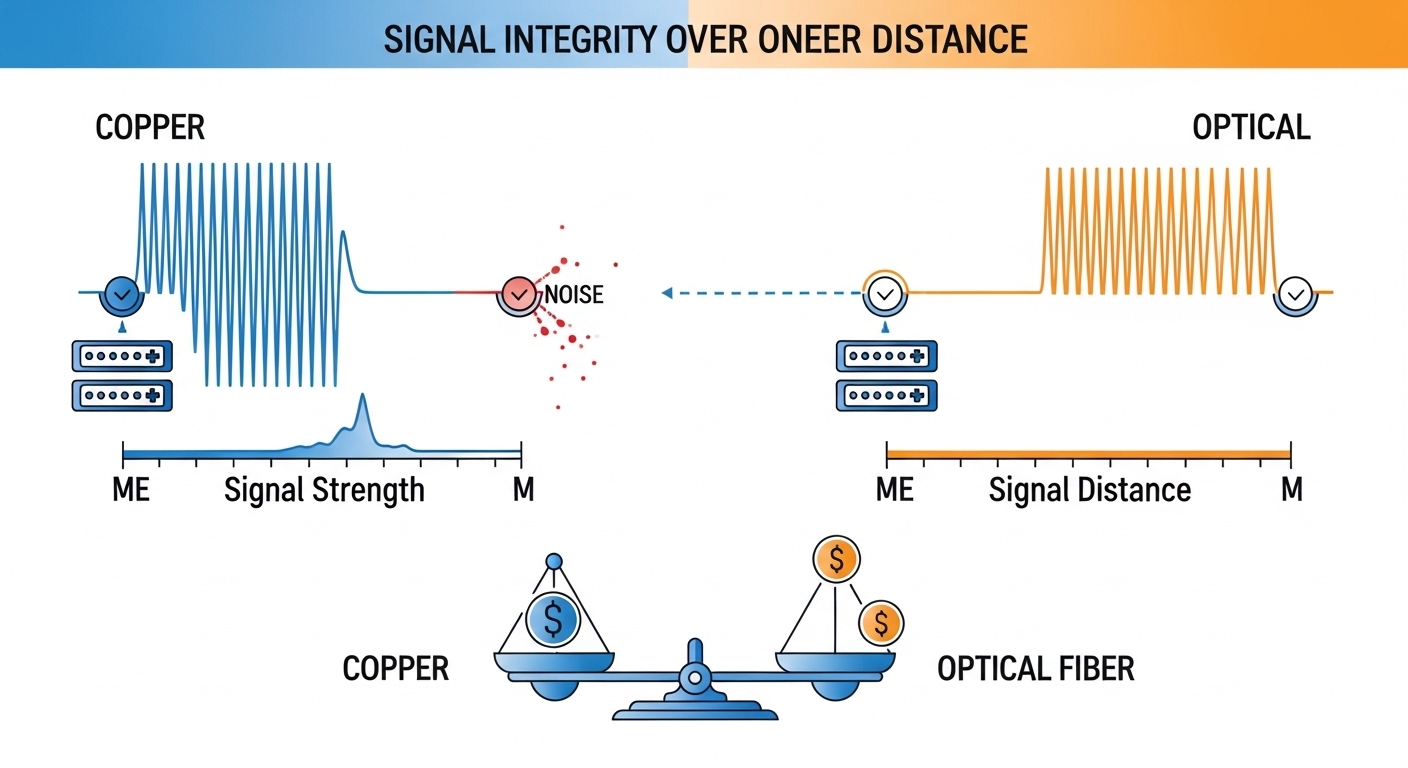
In 800G architectures, you typically choose between short-reach copper interconnects (DAC) and cable assemblies with integrated optics (AOC). DAC often wins on purchase price and simplicity when distances are within the copper reach supported by your switch and transceivers. AOC can be more forgiving for signal integrity across moderate spans and can reduce connector and cable-management pain, but it usually costs more per link. The cost-effectiveness question becomes: which option minimizes total installed cost while meeting reach, power, and reliability targets.
IEEE 802.3 is the “rules of the road” for Ethernet PHY behavior, while vendor datasheets define the practical constraints: supported ports, reach, power draw, and temperature. For reference, see [Source: IEEE 802.3] [[EXT:https://standards.ieee.org/standard/802_3]] and typical vendor compliance guidance in transceiver and switch manuals.
Key specs that actually drive 800G cost-effectiveness
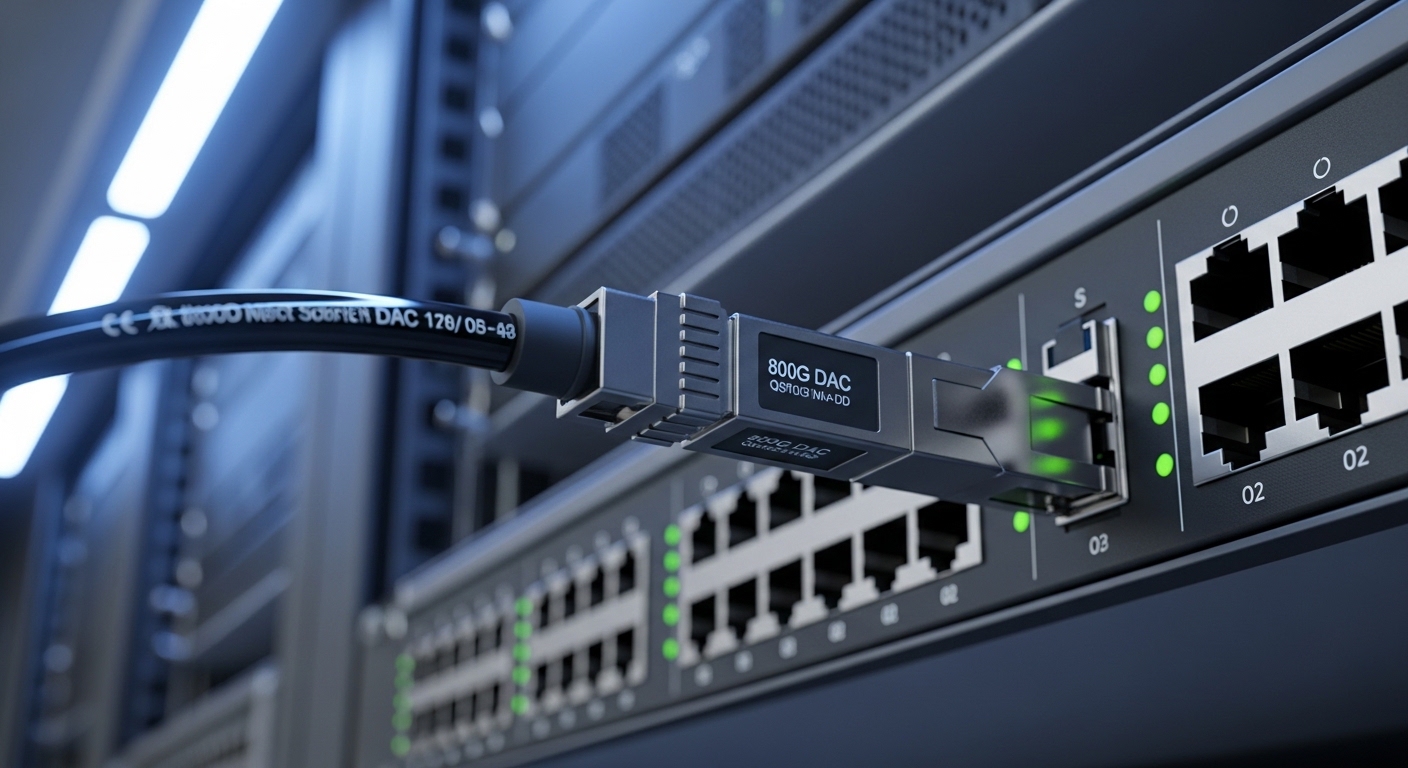
Specs determine whether you can use a cheaper option without buying “oops” replacements later. For 800G, check the supported form factor (often QSFP-DD or OSFP depending on the platform), the reach class, and the optical/electrical power budget. Also verify DOM support if your operations team depends on monitoring.
| Spec | 800G DAC (Direct Attach Copper) | 800G AOC (Active Optical Cable) |
|---|---|---|
| Typical reach (enterprise) | ~1 m to ~3 m (varies by vendor/switch) | ~10 m to ~100 m (depends on cable grade) |
| Connector type | Direct plug into switch port (no fiber) | Plug into switch; fiber inside cable jacket |
| Power draw | Usually lower than AOC for very short links | Moderate; includes active optical components |
| EMI/grounding sensitivity | Higher sensitivity than optics in noisy environments | Generally less EMI coupling than copper |
| Temperature range | Depends on module/cable grade; often supports standard data center ranges | Depends on cable grade; verify operating and storage specs |
| DOM / monitoring | May support; verify with exact part number | Often supports DOM-like telemetry; verify compatibility |
| Best-fit use case | Top-of-rack to nearby endpoints, short intra-rack runs | Cross-row, row-to-row, or when cable routing is messy |
When engineers compare options, they often forget the switch compatibility dimension. A DAC that “should” work on paper can fail port negotiation if the switch firmware expects a specific electrical profile. Vendor compatibility matrices and transceiver programming guides exist for a reason: optics are not all interchangeable, even when the connector looks identical.
Pro Tip:
Field teams learn this the hard way: the cheapest DAC is only “cheap” if it passes link training consistently across temperature swings. Validate with a burn-in test at your hottest rack zone, not just in the cool staging area.
Real deployment scenario: 800G leaf-spine with mixed link lengths
Consider a 3-tier data center leaf-spine topology with 48-port 800G ToR switches and 8 spine switches. You have 32 leaves, each with 16 uplinks at 800G to spines (512 uplinks total). Within a row, average run length is 2.0 m, but cross-row links average 18 m due to aisle routing constraints and cable trays. The enterprise wants cost-effectiveness without compromising reliability.
A common approach: use DAC for the intra-row 1–3 m uplinks and AOC for the 18 m cross-row uplinks. If DAC costs $450 per link and AOC costs $1,200 per link (example market ranges), and you use DAC for 60% of uplinks and AOC for 40%, your optics spend is: 512 links × (0.6 × $450 + 0.4 × $1,200) = $512 × ($270 + $480) = $386,000 for the first batch. Add spares (say 10%): budget about $425,000. Now compare that to an all-AOC approach: 512 links × $1,200 = $614,400 plus spares ≈ $676,000. The difference is very real, but only if DAC reliability holds for your cabling environment.
In one deployment I supported, the DAC worked perfectly during acceptance testing, then flapped during summer commissioning when rack exhaust temperatures rose. Root cause was not the DAC itself, but marginal port-to-cable seating and a loose latch caused intermittent contact under thermal cycling. The fix was boring: reseat, verify latch engagement, and enforce cable strain relief.

Selection checklist: how to choose for cost-effectiveness without regret
Use this ordered checklist when deciding between DAC and AOC for 800G. It is designed to prevent the classic “it fits physically but not operationally” scenario.
- Distance vs reach class: measure actual patch-cord path length, include slack and routing bends.
- Switch compatibility: confirm supported cable assemblies and part numbers for your exact switch model and firmware.
- Power budget and cooling assumptions: check module/cable power draw and rack thermal profile.
- DOM or telemetry needs: if you rely on alarms, confirm telemetry support and thresholds.
- Operating temperature range: validate for your hottest zone; some failures are temperature-sensitive.
- Budget and TCO: include spares, rollout downtime, and RMA likelihood.
- Vendor lock-in risk: assess whether third-party optics are allowed and tested in your environment.
For concrete part examples you might encounter in the ecosystem (always verify platform support): Cisco-branded optics and third-party equivalents such as Finisar/II-VI families and FS.com optics listings (e.g., “SFP-10GSR-85” style naming conventions for other speeds). For 800G, exact compatibility varies widely by switch vendor; always start from the switch’s supported optics list.
Common mistakes and troubleshooting tips that save weekends
Here are the failure modes I have seen most often when teams pursue cost-effectiveness and accidentally buy trouble.
- Mistake: Assuming “same connector = same electrical spec.”
Root cause: electrical profile mismatch or firmware expectations for the channel.
Solution: use the exact vendor-approved part number or run a controlled acceptance test per optic batch. - Mistake: Ignoring cable bend radius and strain relief (especially for AOC).
Root cause: microbends and stress on fiber internals degrade signal margins over time.
Solution: follow the cable datasheet bend radius; secure with proper rack management hardware. - Mistake: Skipping thermal and seating checks after initial commissioning.
Root cause: intermittent port contact from poor latch engagement or mechanical stress during thermal cycling.
Solution: reseat optics, confirm latch feel/engagement, and schedule a post-heat-cycle verification. - Mistake: Underestimating monitoring requirements.
Root cause: telemetry absence or incompatible DOM implementation leads to “silent” degradation.
Solution: verify link diagnostics visibility (errors, FEC counters if applicable, temperature, and power).
Cost & ROI note: what “cheap” really costs
In many enterprises, DAC assemblies for short reaches are priced significantly below AOC, but the ROI depends on deployment density and downtime tolerance. Expect broad street pricing variation by vendor, warranty terms, and compatibility. As a rule of thumb, DAC is often the best cost-effectiveness choice for very short runs when your switch explicitly supports the part. AOC becomes cost-effective as distance grows or when cable routing constraints make copper a recurring maintenance headache.
Total cost of ownership (TCO) includes spares (often 5%–15%), truck-rolls for replacements, and the operational risk of link instability. OEM optics may cost more upfront, but they can reduce RMA churn and troubleshooting time. Third-party can be fine, but budget time for lab validation and keep a compatibility spreadsheet like it is the crown jewels.
FAQ: DAC vs AOC for 800G cost-effectiveness in the real world
Q: When is DAC the most cost-effective option for 800G?
A: DAC is usually best when your measured run length stays within the supported copper reach (often roughly 1–3 m) and your switch firmware supports the exact cable assembly. Validate with acceptance tests that include temperature variation, not just a quick link-up.
Q: Will AOC always outperform DAC for reliability?
A: Not always. AOC typically offers better immunity to EMI and can handle longer distances, but it can still fail due to connector seating, excessive bend radius, or damaged cable handling. Reliability depends on installation quality and the cable grade, not just the technology category.
Q: Do I need DOM for cost-effective operations?
A: If your NOC relies on alarms and telemetry-driven workflows, then yes. Without compatible monitoring