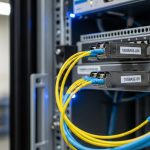
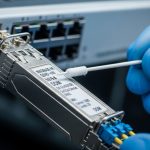
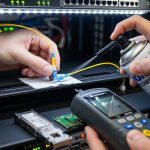
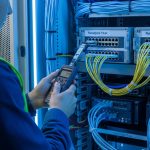
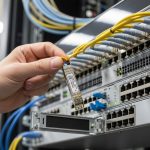
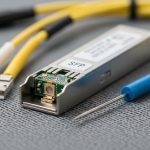
In dense server rooms and retrofit trenches, I often see link failures that trace back to cable handling, not optics. This article helps network engineers and field technicians predict bend insensitive fiber performance impact on SFP link loss, especially when installers must route around tight radii or through crowded trays. You will get a practical comparison against standard fiber, plus a decision checklist you can apply during acceptance testing and ongoing maintenance.
Bend radius reality: why SFP link loss spikes under stress
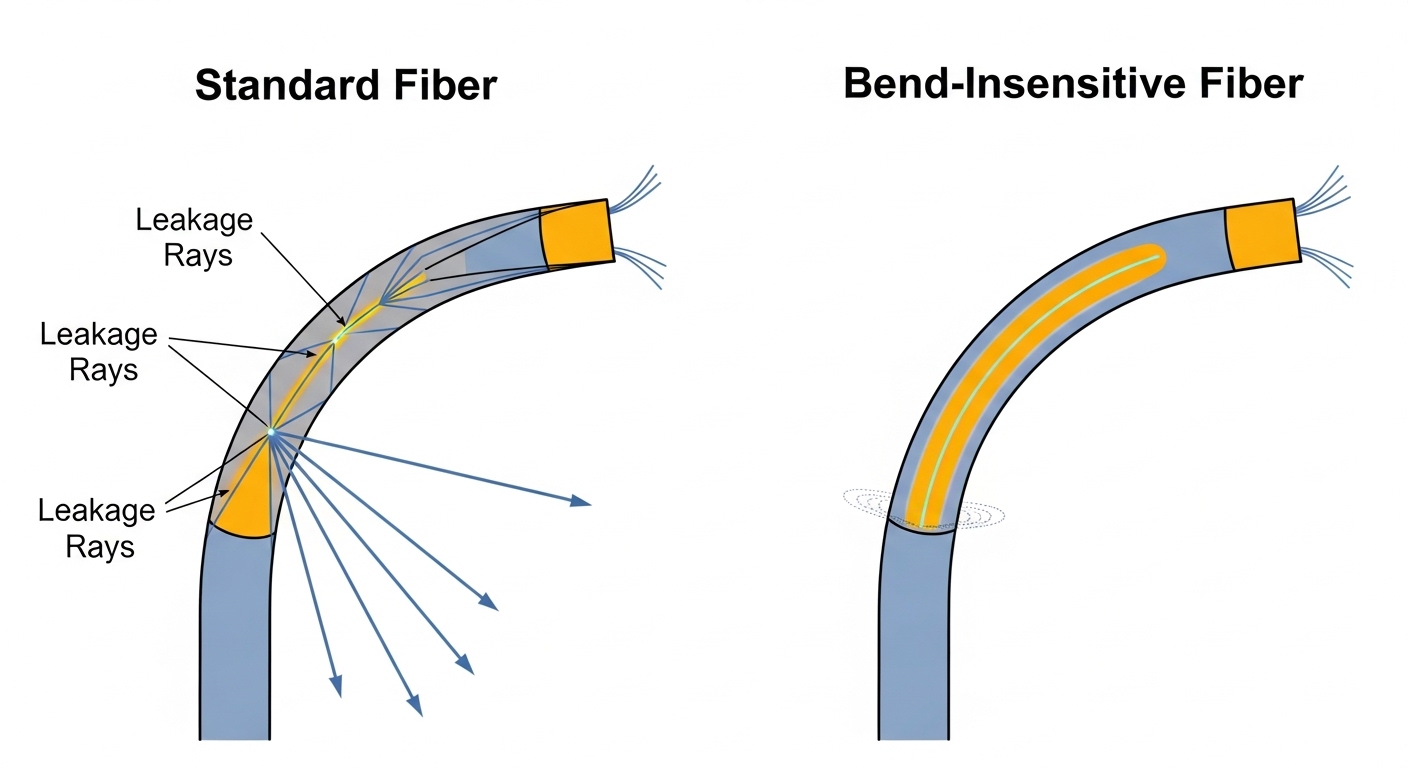
Optical fiber loss is not only about intrinsic attenuation; it also includes microbending loss created when the fiber is forced into a radius smaller than the design limits. With SFP transceivers, that added loss reduces the optical budget margin for the entire link, which can show up as higher receiver power penalties, intermittent errors, or complete loss of signal. On IEEE 802.3 links, the symptom is often a rising BER that eventually triggers link flaps or CRC errors. In field measurements, I treat bend-induced loss like a link budget variable that must be controlled during installation and verified with OTDR or an optical power meter.
What “bend insensitive” changes in the physics
Bend insensitive fiber typically uses a modified refractive index profile that makes the guided mode less sensitive to curvature-induced leakage. In practice, that means the effective loss increase under bending is reduced, so installers can route cables with smaller radii than standard single-mode fiber while keeping the link within spec. The manufacturer still defines a minimum bend radius and a dynamic bend limit; you should treat those as hard constraints. If you ignore them anyway, even bend insensitive fiber can exceed the receiver sensitivity budget of the specific SFP.
How SFP link loss interacts with receiver sensitivity
An SFP’s receiver sensitivity is a function of wavelength and modulation format, and it is validated with a link budget that assumes specified fiber attenuation plus connector and splice losses. When bend loss increases, the received optical power drops, and the SFP’s limiting amplifier has less headroom. For 1G/10G SFPs, I have repeatedly seen failures when the bend radius was violated near patch panel exits, where the cable transitions from horizontal trays to vertical management rails. If you are using modern optics that support digital diagnostics (DOM), you can often observe the optical power trend before the link fully fails.
Head-to-head: bend insensitive fiber vs standard for SFP links
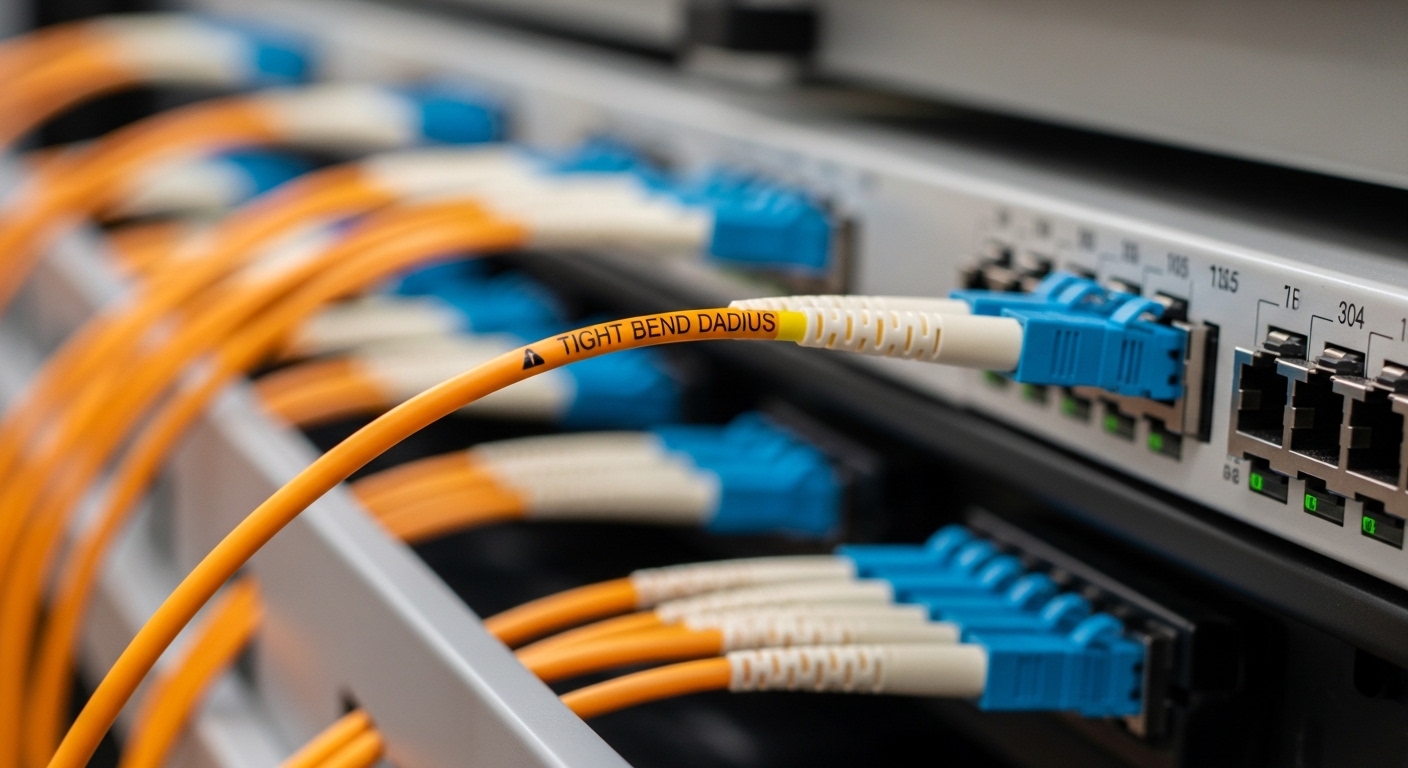
Below is the comparison I use when planning a deployment where installers cannot guarantee generous bend radii. The key is that “bend insensitive” does not eliminate bend loss; it reduces sensitivity so you retain margin. Your real deciding factors are the minimum static/dynamic bend radius from the fiber datasheet, the SFP wavelength (850 nm vs 1310/1550 nm), and the end-to-end link budget including connectors. For engineers, the most actionable metric is whether the bend-induced loss still keeps received power above the SFP sensitivity at temperature extremes.
| Spec category | Bend insensitive fiber (typical) | Standard single-mode fiber (typical) |
|---|---|---|
| Minimum static bend radius | Often tighter (commonly ~7.5 mm to 10 mm, varies by vendor) | Typically larger (often ~30 mm for standard guidance) |
| Minimum dynamic bend radius | Defined by manufacturer; often smaller than standard | More restrictive during handling and movement |
| Added loss under curvature | Lower microbending penalty when routed correctly | Higher curvature/leakage sensitivity |
| Wavelength compatibility | Usually optimized for common telecom bands; must match SFP wavelength | Broad compatibility for standard telecom wavelengths |
| Connector/splice impact | Still dominated by connectors and splices if poorly terminated | Same—termination quality remains critical |
| Operational temperature range | Depends on cable construction; often includes -10 C to +60 C for indoor | Depends on cable construction; similar ranges possible |
| Best fit | Retrofits, high-density trays, tight patch panel transitions | New builds with controlled bend radii and spacious routing |
Sources to anchor expectations: link loss budgets and receiver sensitivity concepts align with IEEE physical-layer requirements described in [Source: IEEE 802.3]. Fiber bend loss behavior and OTDR interpretation are also discussed in vendor and test-industry guidance such as [Source: OFS Technical Notes] and [Source: Fluke Networks Fiber Testing Guides]. Always use the specific fiber datasheet for the actual minimum bend radius and test conditions.
What I see in the field: a 10G retrofit where bend margin matters
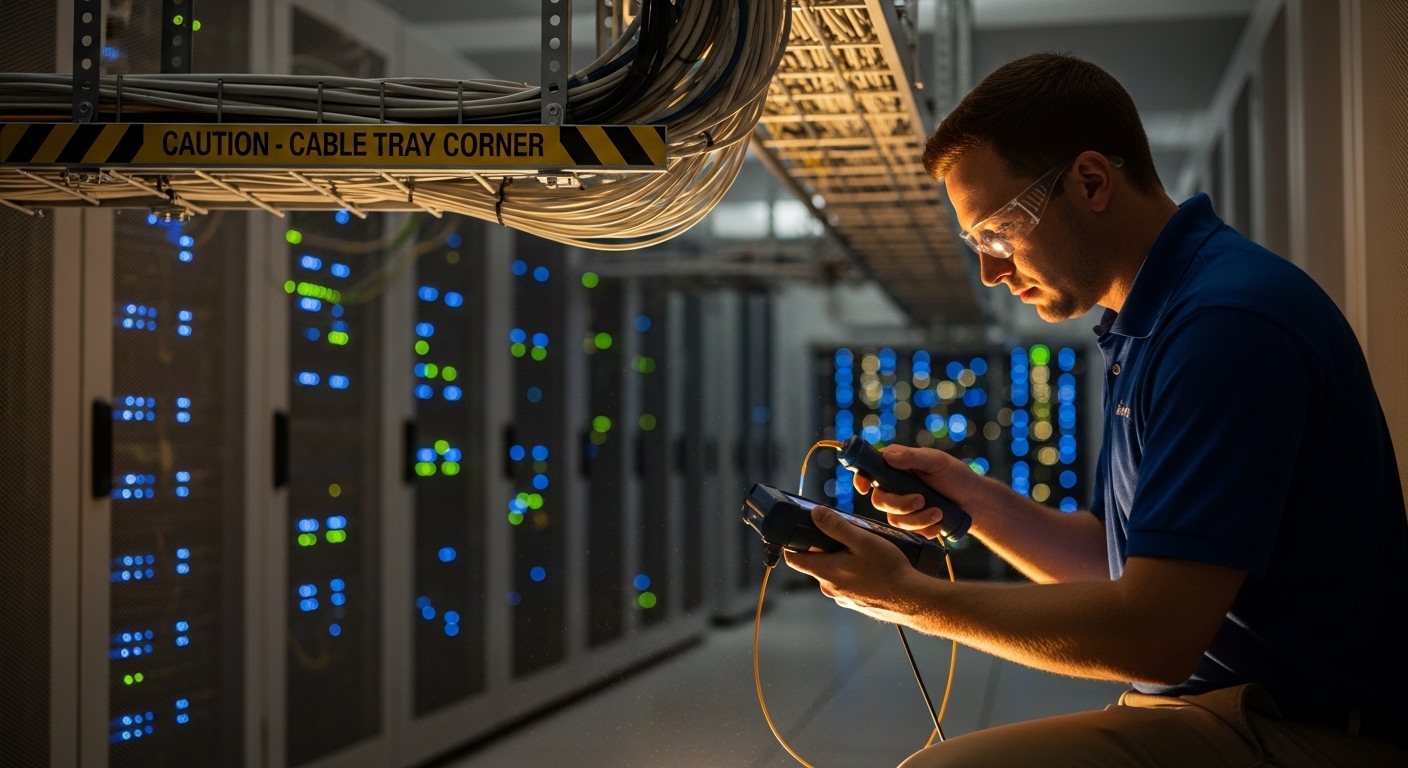
In a 3-tier data center leaf-spine topology with 48-port 10G ToR switches, we retrofitted 64 server racks using 10G SFP+ transceivers and pre-terminated patch cords. The constraint was a narrow overhead tray where cable management rails forced installers to route around corners with tight radii during phased moves. Each rack used roughly 20 m of backbone fiber plus patch jumpers, with an estimated budget of 3.0 dB for connectors/splices and ~0.35 dB per 10 km for attenuation at 1310/1550 nm classes. After initial activation, DOM showed receiver optical power dropping by about 1.2 dB on the most problematic runs, and those links correlated with the same patch panel exit points.
We resolved it by replacing only the affected patch cords and sections with bend insensitive fiber assemblies rated for the tray’s minimum bend radius, then re-testing with an optical power meter at the transceiver wavelength. The remaining links met error-free thresholds without further changes. The takeaway for engineers is that bend-induced loss is often localized, so targeted remediation can be cheaper than full cable replacement—provided you can map faults to physical routing and validate with measurements.
Acceptance test approach that actually catches bend loss
Before cutover, I recommend two checks: (1) continuity and polarity verification, then (2) end-to-end optical power measurement at the intended wavelength using the SFP’s operating band. If you use OTDR, look for localized attenuation bumps near transitions rather than averaging across the full run. For 10G SFP+ over 10 km class links, a small bend margin loss can be the difference between stable and intermittent performance. If DOM is available, log Rx power and temperature during a controlled traffic soak to detect early degradation.
Selection checklist: choosing bend insensitive fiber for SFP compatibility
Engineers should treat this as a link-budget and installation-risk decision, not a brand preference. The ordered list below reflects what I weigh during design reviews and field sign-off.
- Distance and attenuation class: Confirm fiber attenuation at the SFP wavelength (for example, 1310 nm vs 1550 nm) and ensure the base budget is comfortably inside margin.
- End-to-end connector and splice losses: Count connectors, include typical insertion loss, and verify termination quality; bend loss cannot compensate for bad polishing.
- Minimum static and dynamic bend radius: Use the vendor’s explicit numbers and match them to your tray corner geometry and expected handling conditions.
- SFP wavelength and reach class: Ensure the fiber build is compatible with the transceiver’s intended band and reach (850 nm multimode vs 1310/1550 nm single-mode).
- Switch and transceiver compatibility: Validate the optics with the specific switch model and transceiver vendor; some platforms enforce strict DOM thresholds.
- DOM support and monitoring strategy: Prefer optics that expose Rx power via digital diagnostics so you can catch marginal links early.
- Operating temperature range: Confirm cable construction and fiber coating performance across the site’s extremes; temperature can affect both attenuation and connector behavior.
- Vendor lock-in risk: Third-party optics and assemblies can work, but you should test on your exact platform to avoid surprises during spares replacement.
Pro Tip: In many outages I have investigated, the “bend problem” is actually a bend plus connector transition issue. The tightest radius often occurs right at the patch panel exit, but the dominant loss jump shows up where the cable jacket stops and the bare fiber transitions into the connector ferrule. Mapping DOM Rx power against physical routing points is faster than trying to average across the whole link.
Cost and ROI: when bend insensitive fiber is worth the spend
Pricing varies by region and cable construction, but in typical enterprise procurement I have seen bend insensitive fiber assemblies cost roughly 10% to 35% more than standard assemblies for comparable lengths and termination styles. The ROI comes from reducing truck rolls and avoiding disruptive rework: a single failed cutover can cost more than the fiber premium when you include labor, downtime, and spare optics replacement. Total cost of ownership (TCO) also includes failure rates tied to installation stress; while bend insensitive fiber does not remove all risk, it lowers the probability of marginal links that degrade under repeated service moves.
For spares strategy, consider stocking bend insensitive patch cords for high-risk zones (rack exits, corner transitions, and under-floor conduits). OEM optics can be more expensive than third-party modules, but bending risk is orthogonal: a lower-cost standard fiber patch cord can still fail even with a premium SFP if the bend radius is violated. In other words, optimize the weakest link budget element first: termination quality and physical routing control.
Common mistakes and troubleshooting tips
Below are the failure modes I see most often when engineers attempt to stabilize SFP links after installation, especially in retrofits.
Mistake: assuming bend radius is only a “long-run” issue
Root cause: Microbending loss is localized near sharp transitions, so averaging loss across the link hides the problem. Installers may route the majority of the cable within spec but violate radius only at the tray corner or patch panel exit.
Solution: Re-measure Rx power per run and correlate it with physical route geometry. Use OTDR or localized power checks at patch points to isolate the section, then replace only the problematic patch cords with bend insensitive assemblies rated for the site’s bend radius.
Mistake: mixing fiber types without updating the link budget
Root cause: Bend insensitive fiber may have different attenuation characteristics or coating behavior than the standard fiber you replaced. If you assume identical loss per km and connector performance, you can under-budget margin and end up with intermittent BER.
Solution: Recalculate the link budget using the exact fiber datasheet values and the actual number of connectors/splices. Validate with optical power meter readings at the SFP wavelength and temperature range.
Mistake: skipping connector inspection after routing changes
Root cause: Re-routing a cable often stresses connector interfaces, causing dust ingress, micro-scratches, or imperfect seating. This can dominate loss more than bend sensitivity.
Solution: Inspect and clean all connector endfaces using appropriate cleaning tools, then re-test. For persistent issues, verify ferrule condition and confirm that connectors are fully seated and within mating tolerances.
Mistake: trusting link-up without monitoring DOM telemetry
Root cause: Some SFPs will link up even when Rx power margin is low, then later flap under traffic or temperature changes. Without Rx power telemetry, you miss early warning signs.
Solution: Enable DOM logging where available and track Rx power, Tx power, and temperature during a traffic soak. If Rx power approaches the SFP’s specified threshold, treat it as a design or installation violation, not a “normal variance.”
Decision matrix: which option fits your constraints
Use this matrix to choose between bend insensitive fiber and standard fiber based on installation risk and operational requirements.
| Scenario | Recommended fiber type | Why |
|---|---|---|
| Tight tray corners, retrofit with limited routing space | Bend insensitive fiber | Higher tolerance to curvature reduces microbending penalty and preserves SFP margin |
| New build with controlled bend radii and clean cable management | Standard single-mode fiber | Meets loss budget when installation controls are enforced |
| High churn environment with frequent moves and patching | Bend insensitive fiber (targeted) | Reduces risk of degradation from repeated handling in known stress zones |
| Strict cost minimization with strong process control | Standard fiber | Lower material cost; stability depends on rigorous installation QA |
| Uncertain installer compliance during phased deployments | Bend insensitive fiber | Builds slack against real-world mistakes; still verify with measurements |
Which option should you choose?
If your routing forces cable transitions around tight corners, or you cannot guarantee installers will maintain the minimum bend radius, choose bend insensitive fiber for the high-risk segments (tray corners, rack exits, and patch panel transitions). If you have a greenfield build with enforced cable management standards and documented QA, standard fiber can be the economical choice without sacrificing performance. In both cases, validate with end-to-end optical power measurements and, when possible, DOM telemetry to confirm you still meet the SFP receiver sensitivity budget as conditions change.
FAQ
What minimum bend radius should I use for bend insensitive fiber?
Use the bend radius values in the exact fiber or cable assembly datasheet, including separate limits for static and dynamic bending. Typical ranges are tighter than standard fiber, but the only safe numbers are the vendor’s tested specifications under defined conditions. [Source: OFS Technical Notes]
How does bend loss show up on an SFP link?
It usually reduces received optical power, which you can see in DOM Rx power readings on compatible SFPs. Operationally, you may observe CRC errors, rising BER, or link flaps under temperature or traffic changes. The link may still come up initially if margin is barely sufficient.
Can I mix bend insensitive and standard fiber in the same link?
Yes, but you must update the link budget using the actual attenuation and any vendor-specific guidance. Also ensure connector and splice quality is consistent across segments, because poor terminations can dominate loss regardless of bend sensitivity.
Do I need OTDR if I have DOM telemetry?
DOM telemetry is excellent for detecting marginal links, but OTDR helps localize the physical section causing extra loss. In troubleshooting, I use DOM to triage which runs to inspect, then OTDR or targeted power checks to pinpoint the stressed region near transitions.
Are third-party bend insensitive fibers or optics risky?
Third-party optics and third-party fiber assemblies can be reliable, but compatibility depends on your switch platform, DOM thresholds, and tested insertion loss. The safest approach is to validate in a representative lab or pilot rack before scaling, especially for strict platforms that enforce optical power limits.
What is the most cost-effective way to fix a bend-related SFP problem?
Replace only the segments in the physical routing zones that correlate with low Rx power, typically patch cords or short jumpers near tray corners and patch panels. Then re-test end-to-end with the same SFPs and verify DOM telemetry during a traffic soak to confirm stability.
Updated on 2026-05-01. As a field-focused photographer and network documentation writer, I prioritize what I can measure: bend radius constraints, receiver power margins, and connector hygiene. My goal is to help you prevent SFP link loss by aligning fiber handling realities with the optical budgets validated under IEEE 802.3 expectations. optical link budget and troubleshooting
Author bio: I have deployed and documented fiber runs in dense data centers, using optical power meters, DOM telemetry, and OTDR traces to isolate loss sources. I also write installation checklists that translate vendor specs into repeatable field procedures for faster acceptance and fewer truck rolls.