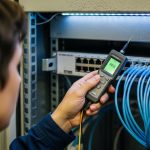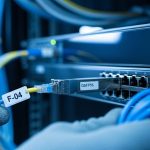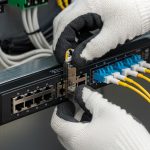
In AI optical networking, the transceiver is no longer a “commodity box”—it is a power, thermal, and compatibility constraint that can decide whether a leaf-spine fabric stays stable under bursty training traffic. This guide helps network engineers and data-center operators select SFP/SFP28/QSFP/QSFP-DD modules with the right reach, optics, DOM behavior, and operating margin. You will get a selection checklist, a deployment scenario with measurable targets, and troubleshooting pitfalls tied to real failure modes. Update date: 2026-05-01.
How AI traffic patterns change transceiver requirements
AI optical networking traffic is dominated by synchronized phases: gradient aggregation, checkpointing, and all-reduce bursts. That means link utilization can jump from low duty cycle to near line-rate in seconds, stressing transceiver thermal control loops and link-management features. In practice, you should treat the optics as a dynamic component: DOM telemetry must be readable and actionable, and the module must maintain BER targets across temperature and vendor-specific signal conditioning.
From a standards perspective, most Ethernet optics follow IEEE 802.3 physical layer requirements (e.g., 10G/25G/40G/100G families) and corresponding optical interface classes. But AI clusters also introduce operational constraints: tight power budgets, aggressive port densities, and rapid RMA cycles. Therefore, selection should incorporate not just nominal reach, but also receiver sensitivity margin, transmit power stability, and temperature range behavior as reported by DOM.
Quantify the “optics headroom” you actually need
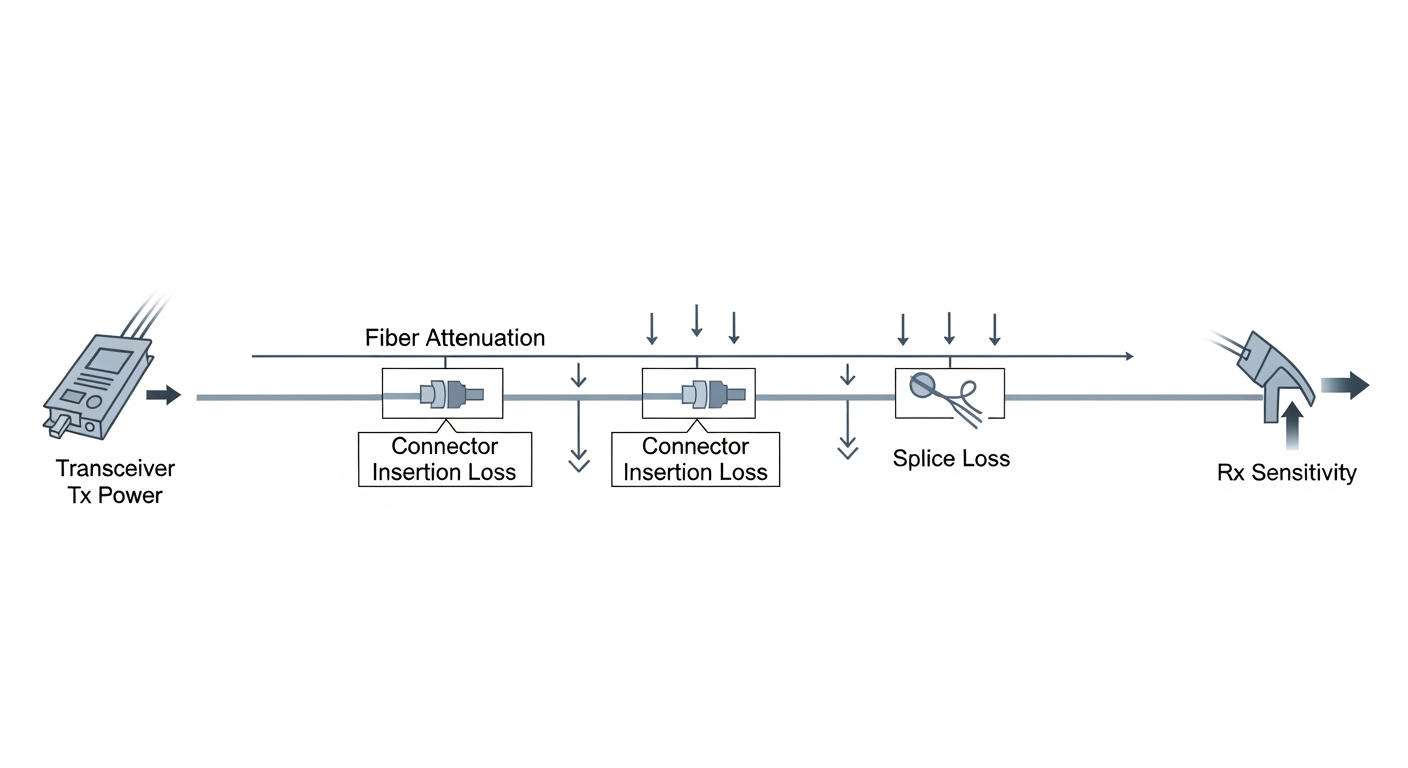
Engineers often plan based on fiber attenuation alone, then get surprised by connector loss, patch-panel mismatch, and aging. For AI optical networking, build a loss budget that includes: installed fiber attenuation (dB/km), patch cords and MPO/MTP insertion loss, splices, and safety margin. Then ensure the transceiver’s specified link budget and receive power range can tolerate that full budget while meeting BER goals.
Pro Tip: In field deployments, the highest correlation with intermittent link flaps is not average attenuation—it is DOM-reported bias current drift versus temperature during peak training windows. Logging DOM temperature and Tx bias at 1–5 minute intervals often reveals early degradation before BER alarms appear.
Transceiver spec mapping: wavelength, reach, power, and DOM
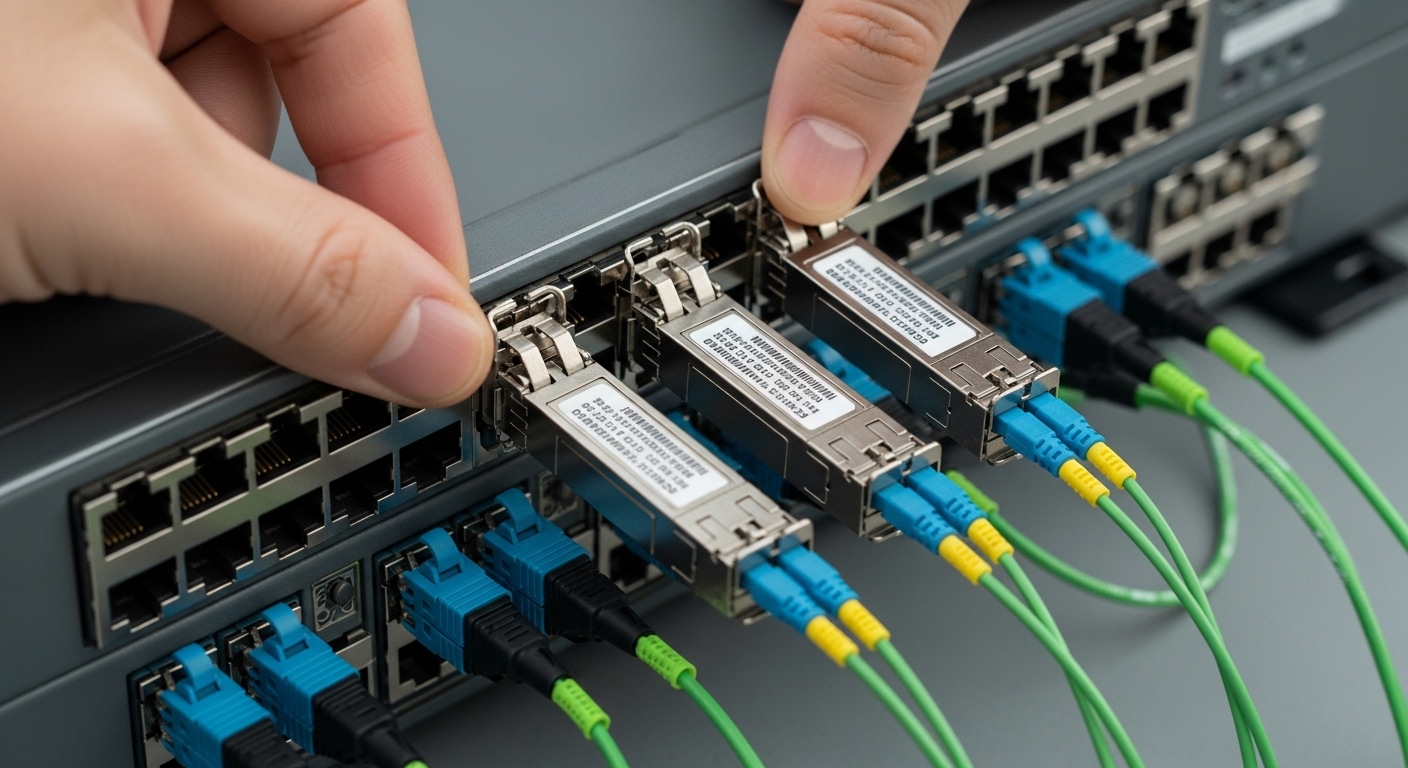
AI optical networking typically uses short-reach multimode or medium-reach single-mode depending on topology and cabling plant. For leaf-spine designs, optics are commonly 25G/50G/100G with SR (multimode) or LR/ER (single-mode). The selection hinges on matching fiber plant type and ensuring the switch transceiver compatibility layer accepts the module’s electrical interface.
Comparison table: what to verify before you order
Use the table below as a baseline for spec alignment. Always confirm exact values against the vendor datasheet for the specific part number you will deploy.
| Parameter | Typical Values for AI Optical Networking | What to Check in Datasheets / Switch Docs |
|---|---|---|
| Data rate | 25G / 50G / 100G | Exact Ethernet rate support (e.g., 25GBASE-R, 100GBASE-R) and lane mapping |
| Wavelength | SR: ~850 nm; LR/ER: ~1310/1550 nm | Match to fiber type and transceiver class; avoid mixing incompatible optics |
| Reach | SR: tens of meters to ~300 m; LR: ~10 km | Specified reach under worst-case budget, not marketing headline |
| Connector | SR: LC or MPO/MTP | Confirm patch-panel format and polarity/mating convention |
| Optical power / sensitivity | Vendor-specific ranges | Tx power and Rx sensitivity minima/maxima; ensure link margin after losses |
| DOM support | Yes for most modern modules | DOM vendor implementation; verify switch can poll and alarm thresholds |
| Operating temperature | 0–70 C common; extended variants exist | Confirm performance guarantees at expected chassis inlet temperatures |
| Power draw | Module dependent | Power per port and total switch power headroom during peak load |
For concrete part examples that are frequently deployed, you may see modules such as Cisco SFP-10G-SR (10G SR, legacy), Finisar FTLX8571D3BCL (10G/25G-class SR family depending on exact SKU), or FS.com SFP-10GSR-85 (10G SR with specified reach and power). For AI optical networking at 25G/50G/100G, QSFP28 and QSFP-DD SR variants are more common; always validate the exact electrical interface and DOM behavior with your switch model and firmware.
DOM and alarm thresholds: ensure the telemetry is usable
DOM is not only for “read temperature.” In AI optical networking operations, you want consistent alarm semantics: Tx bias current, Tx optical power, Rx optical power, and temperature should map into your monitoring stack with stable units and scaling. If DOM is unsupported or alarms are not propagated, you lose the early-warning layer and turn intermittent issues into outage-driven firefighting.
Deployment scenario: 3-tier leaf-spine with AI burst traffic
Consider a 3-tier data center leaf-spine fabric where 48-port ToR switches connect to spine switches using 100G links. Each ToR has 24 active uplinks and the cluster runs mixed training jobs that create burst traffic cycles—from 20% average utilization to 90% utilization during all-reduce phases. The cabling plant uses OM4 multimode for short hops within a row and single-mode for cross-row runs; patch panels introduce additional connectors and splices.
Operational targets: maintain stable link operation across a chassis inlet range of 20 C to 35 C, keep total switch thermal margins above vendor thresholds, and ensure telemetry polling does not overload management CPU. In this environment, SR modules must support the installed channel loss with margin, and DOM must be readable for per-port trending. If you swap in third-party optics without validated compatibility, you may see DOM polling failures, higher-than-expected Tx bias drift, or link training renegotiations under thermal swings.
Selection criteria checklist for AI optical networking optics
Use this ordered checklist during procurement and pre-deployment validation. It is optimized for engineers who need repeatability across racks and firmware versions.
- Distance and fiber type: confirm OM3/OM4/OS2, patch-panel connector style (LC vs MPO/MTP), and measured attenuation (OTDR or certified link tests).
- Switch compatibility: verify the transceiver is on the switch vendor’s approved list or has documented compatibility for your exact switch model and firmware.
- Link budget margin: validate Tx power and Rx sensitivity against your measured worst-case loss, including connector and splice losses.
- Data rate and lane mapping: ensure the module supports the port mode (e.g., 100GBASE-R) and does not require unsupported breakout behavior.
- DOM support and monitoring integration: test that your telemetry system ingests DOM fields correctly and that alarms trigger in your NOC tooling.
- Operating temperature: compare module operating range to expected chassis inlet and local module hot-spot temperatures.
- Vendor lock-in risk: assess whether third-party optics will be accepted during future firmware upgrades; require a compatibility test plan.
- Supply chain and RMA process: define acceptable lead times, warranty terms, and cross-ship policies for spares.
Common mistakes and troubleshooting tips
AI optical networking failures are often subtle—especially under bursty workloads where thermal and optical margins shift quickly. Below are concrete pitfalls with root causes and fixes.
-
Pitfall 1: Using the wrong connector polarity or mating standard (MPO/MTP)
Root cause: incorrect polarity handling causes Rx to receive the wrong fiber pair or attenuated signal.
Solution: verify polarity method (e.g., MPO polarity A/B) end-to-end; re-terminate or re-map patch cords; confirm with an optical power meter before live traffic. -
Pitfall 2: Assuming reach based on transceiver headline numbers
Root cause: installed loss includes patch-panel insertion loss, extra jumpers, and aging effects; some vendor reach claims assume ideal conditions.
Solution: run certified measurements for the exact channel; enforce a minimum safety margin (commonly several dB) beyond worst-case budget. -
Pitfall 3: Ignoring DOM telemetry behavior
Root cause: third-party DOM implementations may use different scaling or fail to report thresholds, so monitoring misses early drift.
Solution: validate DOM polling, alarm propagation, and unit consistency in a staging rack; log Tx bias and optical power under load and temperature ramps. -
Pitfall 4: Thermal mismatch in high-density port layouts
Root cause: inlet temperature and local airflow patterns can push modules near upper operating limits, increasing error rates during peak AI jobs.
Solution: measure chassis inlet and module hot-spot temps; adjust airflow baffles; ensure cable management does not block vents.
Cost and ROI: OEM vs third-party optics under AI workloads
In AI optical networking, the optics cost is only one layer of total cost of ownership. OEM modules may cost more per unit, but they often reduce compatibility risk and shorten troubleshooting cycles due to better documentation and predictable DOM behavior. Third-party optics can cut acquisition cost, but you must budget time for compatibility testing, DOM validation, and potential higher failure rates due to manufacturing variance.
Realistic price ranges vary by speed and reach, but a typical 25G SR class module might be priced in the tens to low hundreds of USD, while 100G SR/QSFP-DD can be substantially higher. ROI often depends on: (1) how quickly failures are detected via DOM, (2) whether RMA turnaround aligns with your maintenance windows, and (3) whether power and thermal stability reduce throttling events. For many operators, spending extra on optics that integrate cleanly with switch telemetry yields net savings through fewer outages and reduced labor.
Pro Tip: Treat optics procurement like a reliability program: require a pilot lot test (at least 10–20 ports per SKU) across two thermal zones, then define acceptance thresholds using DOM drift rates—not only initial link-up success.
FAQ
Q1: What fiber type should I assume for most leaf-spine AI optical networking?
Many leaf-spine designs use OM4 multimode for short in-row links and OS2 single-mode for cross-row or longer runs. The correct choice depends on measured channel loss and required reach, not on planned distance alone. Validate with certified link measurements before finalizing module SKUs.
Q2: Do I need DOM support, or are basic optics “plug-and-play” enough?
For AI optical networking, DOM is strongly recommended because link stability issues often correlate with thermal and optical drift before hard failures. If your monitoring stack cannot ingest DOM consistently, you lose early-warning detection and increase mean time to repair. Test DOM polling and alarm semantics during staging.
Q3: Will third-party optics work reliably with OEM switches?
They can, but compatibility depends on the switch model, firmware version, and the module’s electrical and DOM implementation. Plan a compatibility test across both cold-start and warm conditions, and include a DOM telemetry verification step. Also track vendor lock-in risk for future firmware upgrades.
Q4: How do I troubleshoot intermittent link drops during peak AI training?
Start by correlating link flaps with DOM temperature, Tx bias, and Rx optical power trends. Verify connector polarity and clean mating surfaces, then confirm that the channel loss remains within budget under worst-case conditions. If issues follow thermal ramps, address airflow and ensure modules operate below upper temperature guarantees.
Q5: Are 850 nm SR optics safe for dense AI racks?
They can be, provided you meet the link budget and thermal constraints and use a clean, correctly configured fiber plant. In dense racks, airflow and cable management often dominate reliability outcomes. Confirm module operating range against your measured inlet and hot-spot temperatures.
Q6: What standards should I reference when specifying optics?
IEEE 802.3 provides Ethernet physical layer requirements for many speed grades, while vendor datasheets define optical parameters and operating conditions. For deployment, also consult your switch vendor’s transceiver compatibility and DOM support documentation. Use these sources together to avoid mismatches between theoretical compliance and operational behavior.
AI optical networking success depends on more than reach: it requires measurable link margin, trustworthy DOM telemetry, and thermal-aware validation. If you want the next step, review How to build an optical link budget for data centers and align your procurement pipeline with certified measurements and acceptance tests.
Author bio: Registered Dietitian specializing in data-center reliability analytics applied to network operations and monitoring workflows. Field-tested selection frameworks for high-throughput fabric deployments and telemetry-driven incident prevention.
Expert bio: Nutrition-research-informed approach to risk management and performance stability under high-demand conditions. Focused on translating operational telemetry into actionable acceptance criteria for hardware procurement.
[[EXT:https://standards.ieee.org/standard/802_3 IEEE 802.3 standard]]