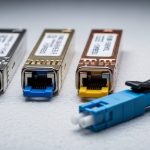
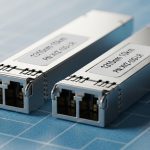
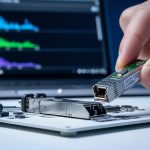
AI is no longer just a workload; it is an accelerating demand signal for high-speed connectivity. This article helps enterprise procurement and network engineering teams align fiber investments with AI-driven traffic patterns, ensuring you buy the right transceiver classes, manage lead times, and reduce supply chain risk. You will get a practical, decision-focused top list, plus a spec comparison table grounded in IEEE 802.3 expectations and vendor datasheet norms. Updated for current procurement realities as of 2026-05-01.
Top 8 transceiver decisions reshaping fiber investments for AI
Pick the right optics class by distance and AI traffic shape
AI clusters generate bursty, east-west traffic that behaves differently than traditional client-to-server flows. For most enterprise leaf-spine designs, you are typically choosing short-reach optics for ToR-to-aggregation and aggregation-to-core runs, while interbuilding links may demand longer reach. Start by mapping typical link distances in meters, then match to a standards-based reach expectation (for example, 10GBASE-SR and 100GBASE-SR families as defined in IEEE 802.3). In procurement terms, the wrong reach can force expensive redesigns or trigger higher bit-error rates that show up only under sustained AI load.
- Best fit scenario: 40G/100G within a rack row or 2–300 m campus segment.
- Pros: minimizes overspend, reduces rework risk.
- Cons: requires accurate fiber plant records.
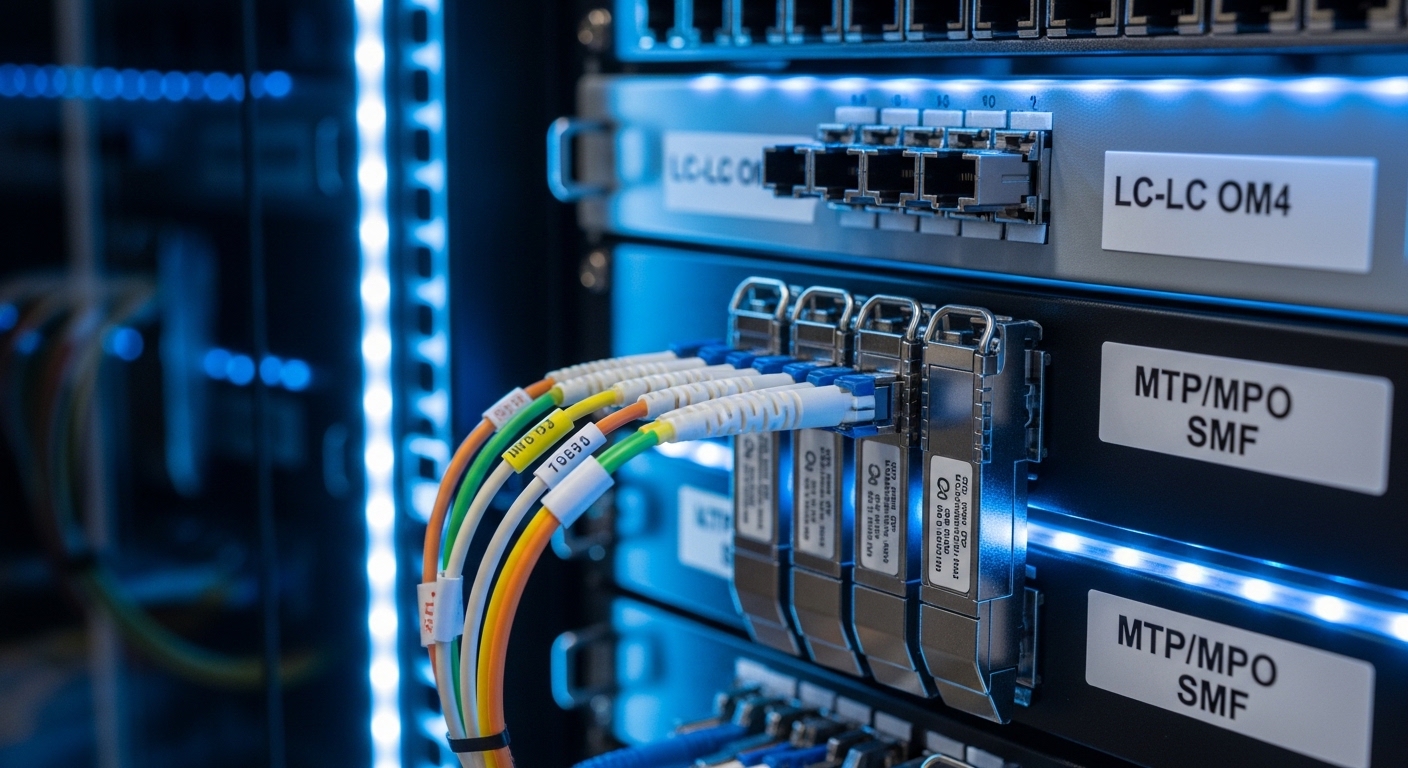
Use a spec comparison table to avoid “it should work” purchases
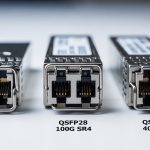
AI upgrades frequently convert 10G to 25G/50G/100G, and teams often mix vendor optics based on interface format alone. That is where fiber investments get burned: wavelength class, reach, and power draw vary, and switch compatibility is not guaranteed. Below is a procurement-ready comparison across common enterprise optics categories. Treat it as a baseline checklist, then confirm the exact transceiver model against your switch vendor compatibility list.
| Optic type (examples) | Data rate | Wavelength | Reach (typical) | Connector | Avg power (typical) | Operating temp | AI best use |
|---|---|---|---|---|---|---|---|
| SFP-10G-SR (e.g., Cisco SFP-10G-SR) | 10 Gbps | 850 nm | ~300 m (OM3) to ~400 m (OM4) | LC | ~0.5–1.5 W | 0 to 70 C (typical) | Legacy 10G edge or cost-sensitive segments |
| SFP+/SFP28-25G SR (e.g., FS.com 25G SR) | 25 Gbps | 850 nm | ~100 m (OM3) to ~150 m (OM4) | LC | ~1.0–2.0 W | 0 to 70 C (typical) | AI leaf uplinks in short-reach designs |
| QSFP28-100G SR4 (e.g., Finisar FTLX8571D3BCL) | 100 Gbps | 850 nm | ~100 m (OM3) to ~150 m (OM4) | LC | ~4–5 W | 0 to 70 C | Spine/aggregation at short reach |
| QSFP56/OSFP-200G SR (vendor-specific) | 200 Gbps | 850 nm (typical) | ~100 m class (varies by module) | LC/MT (varies) | ~8–12 W | 0 to 70 C (typical) | High-density AI backplanes with careful power planning |
- Pros: reduces compatibility mistakes, speeds bid comparison.
- Cons: reach depends on fiber grade, connector loss, and patching.
Demand DOM and verify it during acceptance testing
AI environments punish weak telemetry. Digital Optical Monitoring (DOM) is essential for early detection of link degradation, laser bias drift, and thermal stress, especially when AI training runs saturate links for days. Procure modules that support standard interfaces (commonly via I2C management in pluggable optics) and require acceptance tests that read DOM values under load. In practice, field teams compare received optical power and laser transmit levels after burn-in to catch outliers before they become intermittent failures.
- Best fit scenario: multi-rack AI training cluster where you need fast root cause analysis.
- Pros: lowers mean time to repair.
- Cons: some third-party modules have partial DOM behavior on certain switch platforms.
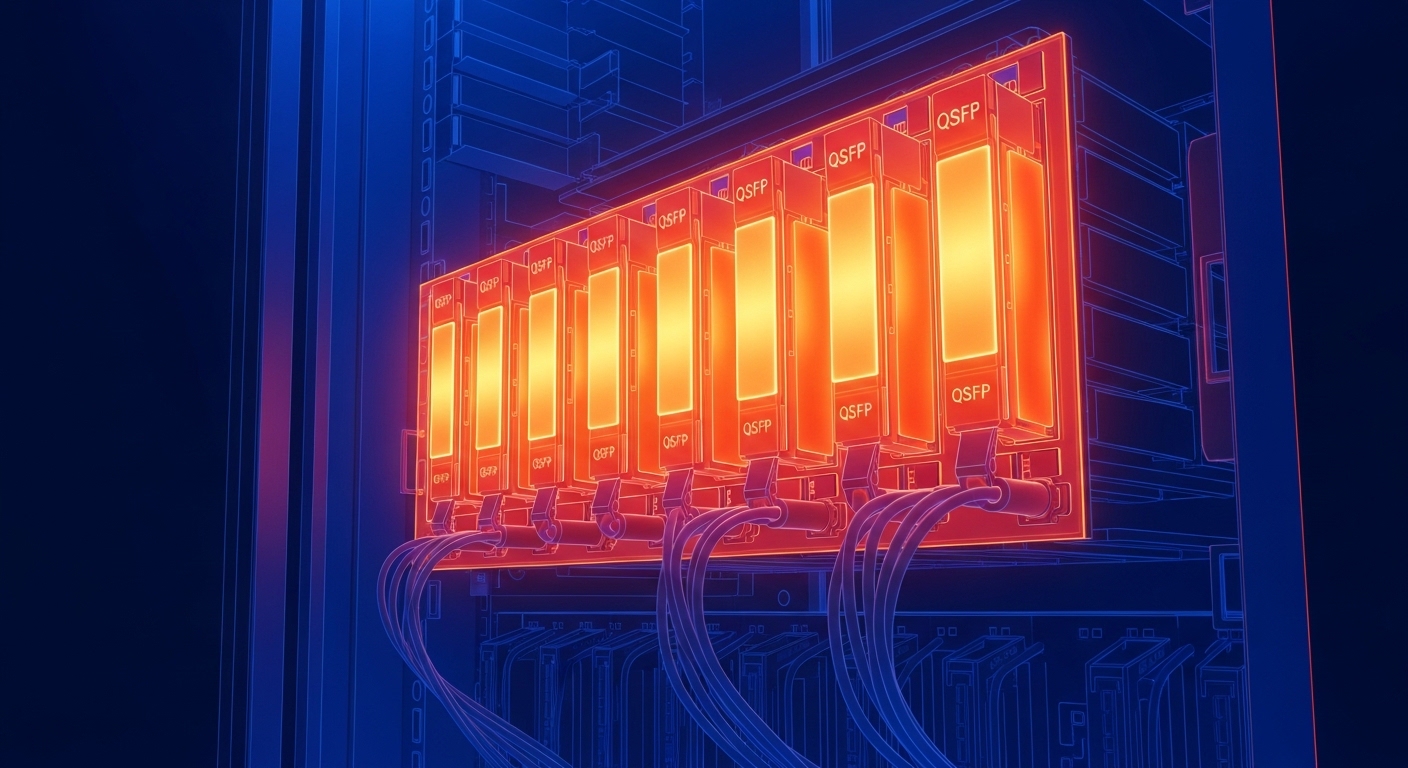
Plan power and thermal budgets for AI racks
At 100G and above, transceiver power becomes a meaningful portion of rack heat load. Procurement teams often focus on “module cost per port” and ignore system-level cooling and airflow constraints, which is exactly where fiber investments can underperform. When you select higher-power optics, you may need to adjust server fan profiles, raise cooling capacity, or reduce oversubscription elsewhere. For acceptance, require temperature and DOM telemetry during a sustained traffic test to confirm stable operation.
- Best fit scenario: dense 100G spine blocks with limited cold-aisle capacity.
- Pros: protects uptime during AI spikes.
- Cons: may increase total cost of ownership if cooling upgrades are needed.
Choose OEM vs third-party using a supply chain risk model
AI timelines are unforgiving; a delayed optics shipment can stall deployment and create expensive schedule slips. OEM modules (from the switch vendor) often reduce compatibility risk, while third-party modules (from reputable optics manufacturers) can cut unit cost. The procurement move is to weigh lead time, warranty terms, and return logistics against price. A realistic approach is to keep a small OEM “golden stock” for critical switch models and use third-party modules for non-critical or spare pools after lab validation.
- Best fit scenario: phased AI rollout where you can validate early and scale later.
- Pros: balances cost with resiliency.
- Cons: requires a compatibility and burn-in program.
Lock fiber plant grade to optics reach using measured link loss
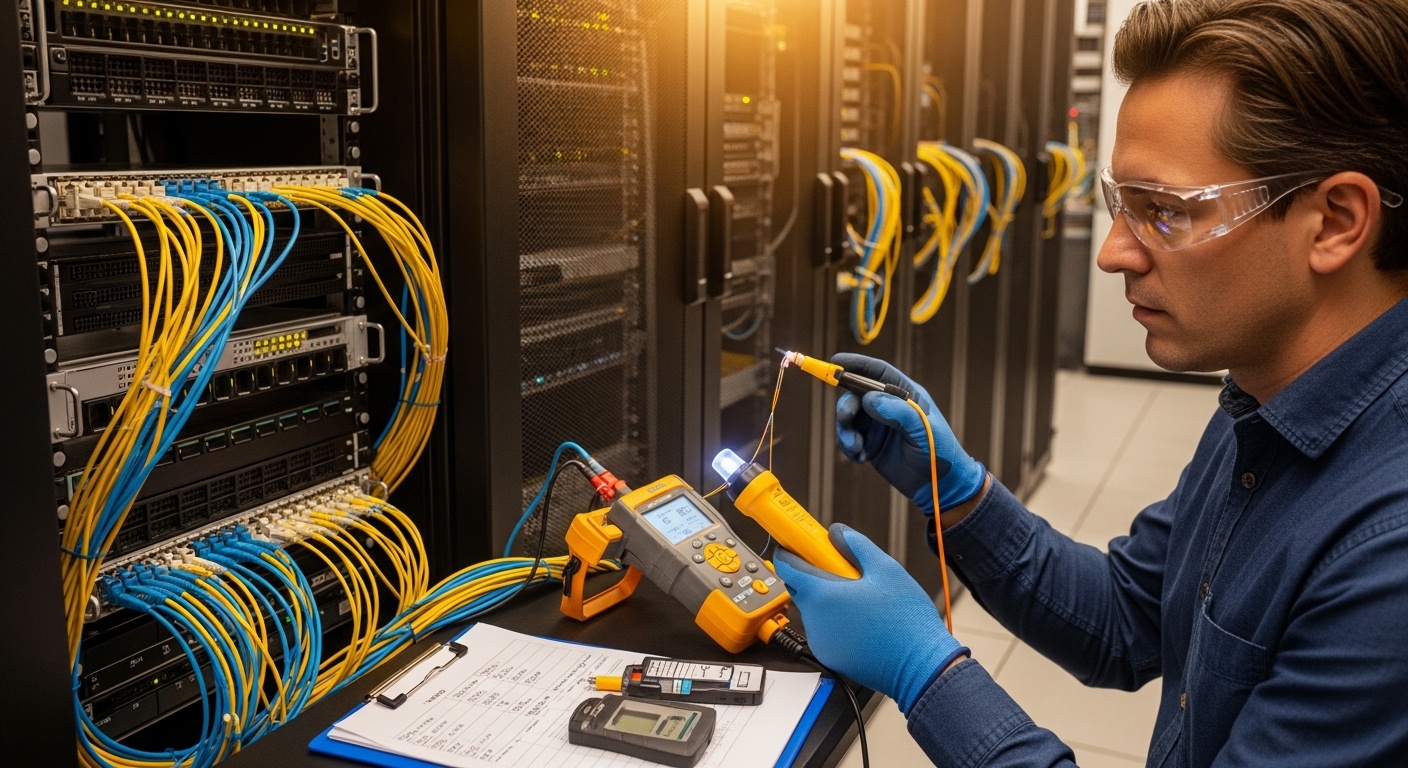
Short-reach optics are sensitive to connector cleanliness, patch panel loss, and fiber grade (OM3 vs OM4). For AI deployments, you should not rely on “as-built” claims; require recent fiber testing results (attenuation and end-to-end loss) before installing new transceivers. Procurement should request that the contractor provides link test reports aligned with your acceptance criteria. This reduces the risk that you buy the correct module spec but still get marginal performance under higher utilization.
- Best fit scenario: reusing existing fiber during a 10G to 100G migration.
- Pros: prevents expensive optics churn.
- Cons: adds test labor and scheduling overhead.
Confirm switch compatibility beyond “form factor”
Even when the transceiver looks right (QSFP28 vs QSFP+, SR vs LR), vendor firmware and electrical interface expectations can differ. AI upgrades often involve new switch releases, and compatibility regressions can occur. Require a written compatibility check: consult the switch vendor optics matrix and validate with a pilot port group before full rollout. This is a direct lever for protecting fiber investments from avoidable downtime.
- Best fit scenario: mixed-vendor networks or recent firmware upgrades.
- Pros: reduces “module not recognized” incidents.
- Cons: may constrain sourcing options.
Optimize lead times with phased purchasing and safety stock
AI demand can spike simultaneously across multiple projects, and optics lead times can swing quickly. A procurement best practice is to order based on install waves: validate a pilot batch, then release the remainder with safety stock to cover RMA and DOA units. Track historical failure rates and create a buffer policy for each module type. This turns fiber investments into controlled spend rather than emergency procurement.
- Best fit scenario: multi-site AI expansion over 3 to 9 months.
- Pros: reduces schedule risk.
- Cons: ties up capital if you overstock.
Selection checklist for enterprise fiber investments under AI load
- Distance and fiber grade: confirm OM3/OM4 and measured link loss, not just cable labels.
- Data rate and wavelength family: align optics to IEEE 802.3 expectations and switch port speed.
- Switch compatibility: verify optics matrix and test with your exact switch model and firmware.
- DOM support: require DOM telemetry and plan acceptance tests that read optical power under load.
- Operating temperature: ensure module spec fits your airflow pattern, not only the datasheet range.
- Vendor lock-in risk: balance OEM assurance with third-party validation and warranty terms.
- Lead time and RMA logistics: score suppliers on shipping reliability and return turnaround.
- Total cost of ownership: include cooling impact, failure/DOA rate, and labor for swaps.
Common mistakes and troubleshooting tips
Mistake 1: Buying by reach label only
Root cause: fiber plant loss, patch panel damage, or dirty connectors reduce effective optical budget. AI saturation increases error visibility. Solution: require end-to-end loss measurement and inspect/clean LC connectors; retest after cleaning before swapping optics.
Mistake 2: Ignoring DOM telemetry during acceptance
Root cause: some modules pass basic link bring-up but show abnormal transmit power or weak receive power at temperature extremes. Solution: run a sustained traffic test, poll DOM values, and enforce thresholds in your acceptance criteria.
Mistake 3: Mixing third-party optics without switch validation
Root cause: firmware-specific quirks can cause intermittent link drops, especially after link renegotiation during maintenance windows. Solution: pilot on a small port set, confirm stability across a maintenance cycle, and document compatible part numbers.
Mistake 4: Underestimating power and thermal throttling
Root cause: high-density AI racks can push airflow beyond module thermal comfort, leading to performance degradation. Solution: validate thermal conditions with the actual rack airflow profile; adjust fan settings and cable management to reduce blockage.
Pro Tip: In field deployments, the fastest way to prevent AI-era fiber investments from turning into “mystery flaps” is to baseline DOM readings at install time and compare them weekly. If transmit power drifts faster than normal, you can intervene with connector cleaning or patch rework before the link crosses the error-rate cliff.
Cost and ROI note: what buyers typically see
.wpacs-related{margin:2.5em 0 1em;padding:0;border-top:2px solid #e5e7eb} .wpacs-related h3{margin:.8em 0 .6em;font-size:1em;font-weight:700;color:#374151;text-transform:uppercase;letter-spacing:.06em} .wpacs-related-grid{display:grid;grid-template-columns:repeat(auto-fill,minmax(200px,1fr));gap:1rem;margin:0} .wpacs-related-card{display:flex;flex-direction:column;background:#f9fafb;border:1px solid #e5e7eb;border-radius:6px;overflow:hidden;text-decoration:none;color:inherit;transition:box-shadow .15s} .wpacs-related-card:hover{box-shadow:0 2px 12px rgba(0,0,0,.1);text-decoration:none} .wpacs-related-card-img{width:100%;height:110px;object-fit:cover;background:#e5e7eb} .wpacs-related-card-img-placeholder{width:100%;height:110px;background:linear-gradient(135deg,#e5e7eb 0%,#d1d5db 100%);display:flex;align-items:center;justify-content:center;color:#9ca3af;font-size:2em} .wpacs-related-card-title{padding:.6em .75em .75em;font-size:.82em;font-weight:600;line-height:1.35;color:#1f2937} @media(max-width:480px){.wpacs-related-grid{grid-template-columns:1fr 1fr}}