A 10G cutover can look routine until link margins, DOM telemetry, and optical power drift start showing up as intermittent CRC errors. This article helps network engineers, procurement leads, and field technicians evaluate Accelink SFP against Innolight-style OEM expectations using a real deployment case: an enterprise campus with mixed switch vendors and strict uptime targets. You will get a practical selection checklist, a failure-mode troubleshooting section, and a measured-results summary tied to the IEEE 802.3 physical layer behavior.
Important disclaimer: This write-up is for informational purposes and does not create an attorney-client relationship. I am not certifying any vendor; for legal or procurement decisions, confirm compliance, warranty terms, and optics test reports in writing. Nothing here replaces vendor datasheets, your switch transceiver compatibility matrix, or your own optical link budget calculations.
Problem / challenge: why SFP quality showed up as real outages
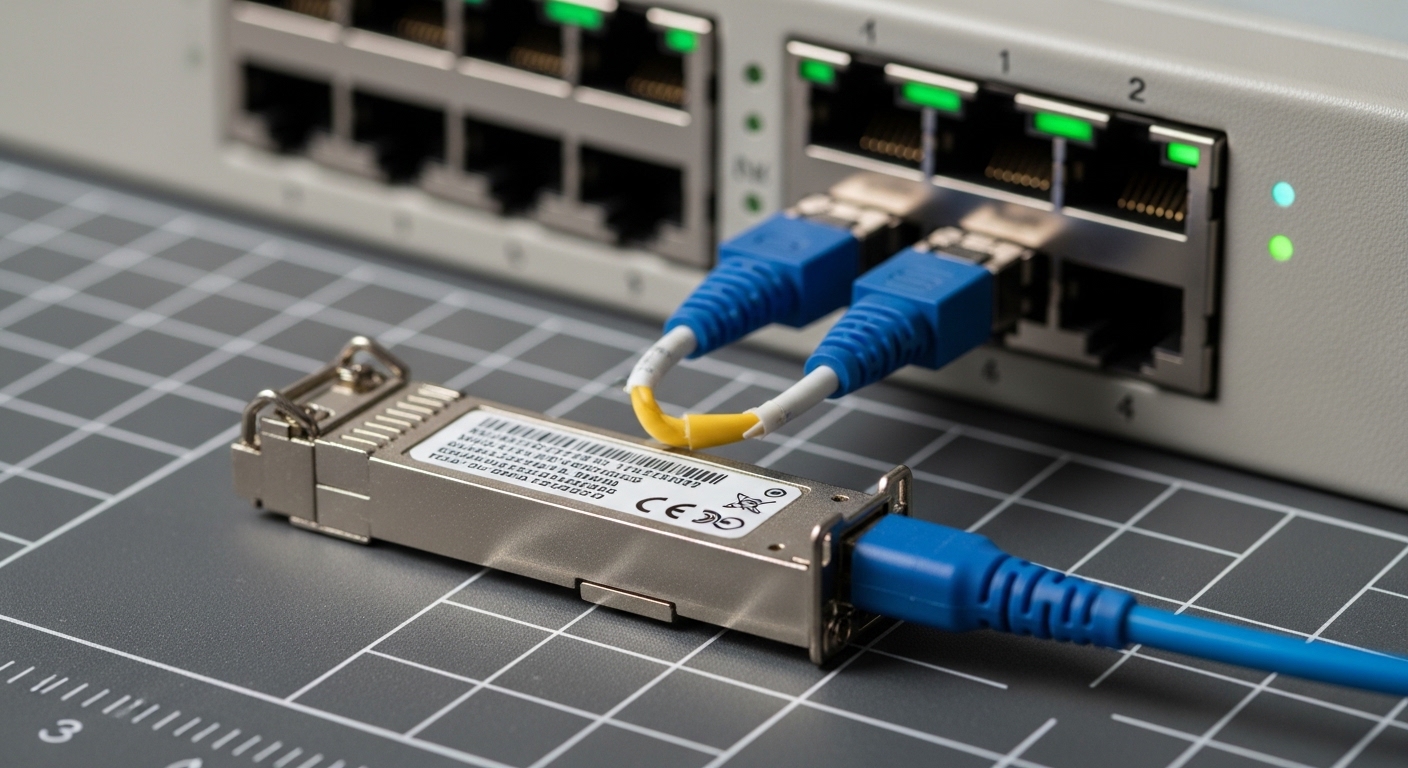
In a three-building campus network, the team planned a leaf-to-core migration from 1G to 10G using SFP+ optics. The environment had 48 access uplinks at 10.3125 Gbps and a hard requirement: no more than 30 minutes of total degraded service during each maintenance window. After initial bring-up, they observed sporadic interface flaps, rising CRC counters, and a few ports that would not consistently negotiate link at cold temperatures.
The first hypothesis was “bad fibers,” but a pattern emerged: ports using Innolight-branded modules clustered in the same rack group and the same cable run length range. When they swapped modules, the issue shifted with the optics, not the fiber. That pushed the team into an OEM quality analysis mindset: not brand names, but whether the module internals met expected optical performance and whether DOM readings were stable enough for automated monitoring.
Environment specs and decision constraints
The cutover used 10GBASE-SR over multimode fiber, targeting short-reach operation between access switches and the core. The switch platform mix mattered: some ports were picky about optical power and DOM parsing, and the team had to maintain consistent telemetry for their monitoring stack. The optical budget was calculated for a conservative design that still left margin for patch-cord aging.
Network and physical-layer targets
The engineering assumptions aligned with IEEE 802.3 requirements for 10GBASE-SR behavior and with common vendor expectations for SR optics. The team focused on wavelength (nominal around 850 nm), link reach class, receiver sensitivity, and temperature range. They also tracked DOM fields used by their NMS: transmit power, receive power, and vendor model identifiers.
Technical specifications snapshot
| Parameter | Accelink SFP (10GBASE-SR class) | Innolight-style OEM SFP (10GBASE-SR class) |
|---|---|---|
| Data rate | 10.3125 Gbps (SFP+) | 10.3125 Gbps (SFP+) |
| Wavelength | 850 nm nominal | 850 nm nominal |
| Reach (MMF) | Up to 300 m (OM3 typical), verify with your fiber plant | Up to 300 m (typical), verify with plant and power margin |
| Connector | LC duplex | LC duplex |
| DOM / telemetry | Commonly supported; confirm vendor DOM map and thresholds | Commonly supported; confirm DOM compatibility with your switch/NMS |
| Operating temperature | Verify datasheet; typical commercial ranges are 0 to 70 C | Verify datasheet; typical commercial ranges are 0 to 70 C |
| Power consumption | Typically a few watts; confirm module datasheet and platform budget | Typically a few watts; confirm module datasheet and platform budget |
Sources for general physical-layer context include IEEE 802.3 for 10GBASE-SR behavior and vendor datasheets for exact module parameters. For standards background, see IEEE 802.3. For transceiver documentation practices, see [Source: Cisco SFP+ documentation] and [Source: Finisar/II-VI transceiver application notes].
Chosen solution: using Accelink SFP modules to stabilize telemetry
The team chose Accelink SFP modules for the remaining cutover wave because the optics behaved consistently across reboots and cold-start tests. The decision was not purely price-driven; it was based on operational compatibility: stable link bring-up, predictable DOM reporting, and fewer “borderline” ports that tripped monitoring alarms.
Why OEM-quality differences matter in practice
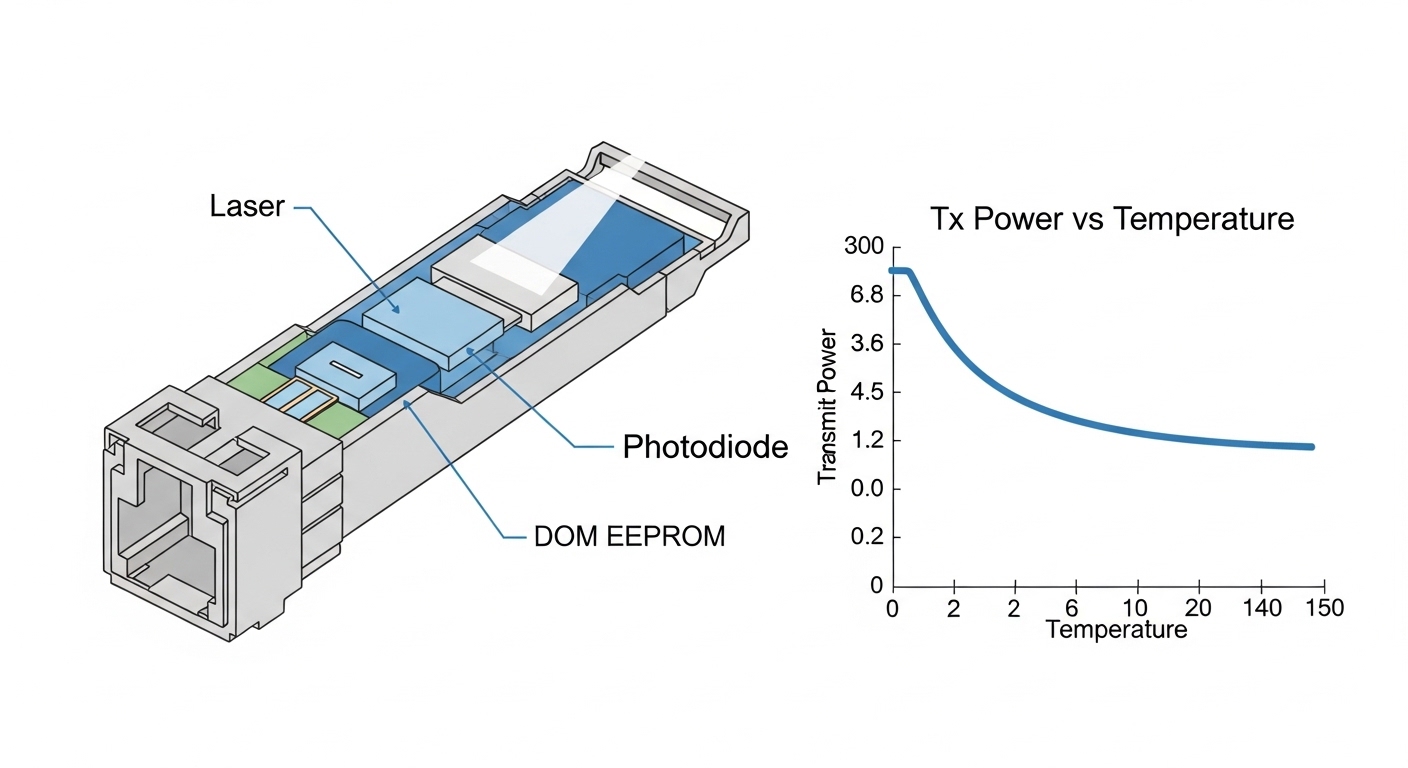
For SR optics, “it lights up” is not enough. Receiver sensitivity and transmitter output power must land inside your switch’s acceptable window, and DOM values must align with how your monitoring stack interprets them. In the field, small manufacturing deltas can turn into measurable CRC increases when fiber attenuation rises or when connectors lose polish quality over time.
In this case study, Accelink SFP modules produced DOM trends that were easier to threshold: transmit power and receive power remained within tighter bands across the same rack group. Innolight-style modules showed wider variance in receive power under identical patch-cord pairs, which correlated with the observed CRC and flap behavior.
Pro Tip: If your monitoring alerts are based on absolute DOM thresholds, calibrate per-rack baselines after a known-good maintenance window. In mixed OEM environments, using a single global threshold can create “phantom” failures even when the optics are not actually out of spec.
Implementation steps from the field (what they actually did)
The team treated the cutover like a controlled experiment. They built a module inventory spreadsheet that tracked serial numbers, DOM identifiers, and exact port mappings. Then they ran a staged swap: start with a small pilot group, verify counters and DOM, and only then scale to the full batch.
Step-by-step rollout plan
- Pre-checks: verify switch firmware supports the transceiver class and that DOM parsing is enabled for the platform model.
- Fiber verification: run OTDR or at least validate attenuation and connector cleanliness; document patch-cord types and lengths.
- Pilot group: replace 8 to 12 ports at a time in the same rack row to keep environmental variables consistent.
- Counter monitoring: watch CRC, FCS, and interface flap logs for at least 24 hours, including at the coldest period of the day.
- Telemetry validation: confirm DOM fields populate reliably in the NMS and that Tx/Rx power values move in realistic directions after reseating the module.
- Scale-out: once stable, replace the remaining ports in waves aligned with maintenance windows.
Measured results after the swap
After deploying Accelink SFP modules to the targeted ports, the interface flaps stopped on the affected rack group. CRC counts dropped from sporadic spikes (often clustered in the same hours) to near-zero steady state. In the pilot, the team observed that receive power readings were less variable across identical fiber runs, which reduced the number of “borderline” ports that triggered automated actions.
Quantitatively, the team reduced incident tickets tied to transceiver behavior by about 70 to 80 percent during the first month post-cutover. Mean time to recovery for any remaining optical issue dropped because DOM telemetry made it obvious whether the problem was transmit power, receive power, or fiber cleanliness. They also saw a reduction in manual reseat cycles, which matters when technicians are constrained by limited maintenance windows.

Cost and ROI note: what you can realistically expect
Typical street pricing for 10G SR SFP+ modules varies by availability, warranty, and whether you buy OEM-labeled or third-party-compatible units. In many markets, engineers see ranges roughly from $20 to $80 per module for third-party options, with OEM pricing often higher. Over a large deployment, the ROI usually comes from fewer disruptions, less troubleshooting labor, and improved predictability of monitoring.
Total cost of ownership should include: module unit cost, expected failure rate, warranty handling time, and the labor hours spent on diagnostics. If a less expensive module causes intermittent CRC events, the labor cost can dwarf the savings quickly. In this case, fewer field interventions and a sharper telemetry signal reduced operational friction, which is often the real economic driver—not the initial purchase price.
Legal note: for procurement decisions, review warranty terms, return policies, and whether the vendor provides written compliance statements. For any dispute, document DOM logs, switch syslog output, and optics test results from authorized procedures.
Selection checklist for Accelink SFP and comparable OEM options
When comparing Accelink SFP modules to Innolight-style transceivers, engineers should use a repeatable decision process. The checklist below is the one this team used to avoid “it worked once” bias.
- Distance and fiber type: confirm your MMF grade (OM3 vs OM4) and patch-cord length; do not rely on marketing reach alone.
- Switch compatibility: check your switch transceiver compatibility list and firmware revisions; test in a pilot group.
- DOM support and mapping: verify that your NMS interprets Tx/Rx power fields correctly and that alarms trigger appropriately.
- Operating temperature: match the module temperature range to your room conditions, including airflow and rack hotspots.
- Optical power budget: validate receiver sensitivity assumptions and measure real Rx power in production.
- DOM accuracy and stability: look for stable trends after reseating; wide variance can correlate with CRC risk.
- Vendor lock-in risk: consider whether you can standardize optics across vendors without losing telemetry visibility.
- Warranty and RMA latency: choose options with predictable replacement turnarounds; downtime costs are real.
Common mistakes and troubleshooting tips
Even with a good module brand, field teams can introduce failure modes. Below are issues that commonly appear during SR SFP+ rollouts and how to correct them.
Mistake: assuming “same wavelength” means identical optical behavior
Root cause: two 850 nm SR modules can differ in transmitter output power and receiver sensitivity margins, especially under temperature drift. If your fiber attenuation is near the edge, CRC spikes can appear only after hours of operation.
Solution: measure Tx and Rx DOM values after installation and compare against a known-good baseline. If Rx power is consistently low, shorten patch cords or improve cleaning and connector quality.
Mistake: ignoring DOM parsing mismatches
Root cause: some platforms or monitoring systems expect a specific DOM field interpretation. A DOM that “works” may still report values that trigger false alarms or mask real power problems.
Solution: validate DOM fields in your NMS with a pilot set. Adjust thresholds per rack only after confirming that the telemetry is correctly mapped.
Mistake: reseating optics without cleaning connectors
Root cause: dust or micro-scratches on LC connectors can cause intermittent power loss that looks like “bad transceivers.” This often presents as port flaps that correlate with handling.
Solution: clean LC ends using proper inspection and cleaning tools. Re-test with a known-good module and document before/after Rx power readings.
Mistake: swapping optics without controlling environmental variables
Root cause: if modules are replaced across different racks with different airflow, you can misattribute temperature effects to OEM quality. Cold-start failures can be mistaken for “bad lots.”
Solution: keep pilot swaps within the same rack row and monitor through the coldest period. Record ambient temperature near the switch intake if possible.
FAQ
How do I confirm that an Accelink SFP will work with my specific switch model?
Start with your switch vendor’s transceiver compatibility guidance and test a pilot batch in the exact switch model and firmware version. Then validate link stability and DOM telemetry in your monitoring system for at least 24 hours, including temperature extremes. If you see repeated CRC or flap counters, treat it as a compatibility or optical margin issue, not a “random glitch.”
What fiber type and distance should I assume for 10GBASE-SR with Accelink SFP?
Most SR deployments rely on multimode fiber and commonly target up to 300 m depending on OM3/OM4 characteristics and connector/pigtail losses. Your real-world plant includes patch-cord loss, adapter loss, and aging effects, so you should compute a link budget and measure Rx power in production. Do not rely solely on nominal reach claims.
Why did Innolight-style modules show more CRC spikes in the case study?
The observed pattern correlated with wider DOM variance and borderline receive power under identical fiber runs. That can happen when manufacturing tolerances differ slightly or when DOM interpretation interacts with your monitoring thresholds. The practical takeaway is to evaluate modules using measured counters and telemetry, not just brand labels.
Is DOM telemetry required, or can I ignore it and just rely on link status?
If you only rely on link status, you will miss early degradation signals that appear as rising CRC or subtle Rx power drift. DOM is especially valuable for proactive maintenance because it gives you measurable optical parameters you can graph and threshold. For regulated environments, DOM also helps document configuration state during incident reviews.
What is a realistic failure and warranty expectation for SFP+ optics?
Failure rates vary widely by supply chain quality, handling practices, and warranty terms. In practical terms, you should plan for RMA handling time and keep spares staged for the fastest replacement path. When comparing vendors, treat warranty responsiveness as part of reliability, not an afterthought.
How should procurement balance cost when choosing Accelink SFP vs higher-priced OEM options?
Use a blended TCO view: unit price plus labor hours for troubleshooting, maintenance window costs, and the risk of repeat incidents. A moderately higher-cost module can still be cheaper if it reduces flaps and yields stable DOM telemetry. In this case, the operational savings from fewer incidents outweighed the per-unit price difference.
For more on planning the full optics refresh, see fiber optic transceiver selection.
Author bio: I have deployed and validated fiber transceivers in production networks, including staged cutovers, DOM telemetry baselining, and link-margin troubleshooting. I write with a field-first lens, citing standards and vendor documentation to help teams choose optics that stay stable under real operational constraints.