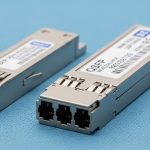
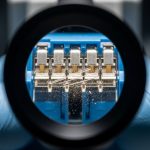
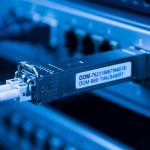
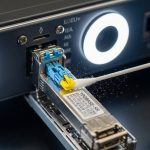
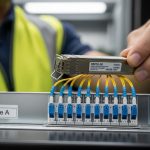
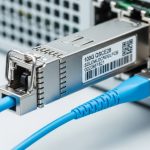
Field teams keep getting surprised by “mystery link flaps,” rising BER, and switch-side diagnostics that blame the wrong thing. This article helps network engineers and procurement leads choose and validate a telecom transceiver upgrade for SFP-based optics, with practical compatibility checks, optics tradeoffs, and troubleshooting patterns from real deployments. You will also get an engineer-style decision checklist and a ranked summary table to accelerate selection.
10G SFP+ SR optics: the rack-friendly workhorse
When you need reliable 10G over multimode fiber in data centers, SR optics are the classic “it just works” choice—until budget, temperature, or switch compatibility quietly disagree. Most 10G SFP+ SR modules use 850 nm VCSEL over OM3/OM4 fiber, typically supporting 300 m on OM3 and 400 m on OM4 (exact limits depend on module class and link margin). For a telecom transceiver upgrade, SR is often the fastest path because it avoids wavelength planning and usually matches the existing fiber plant.
Key specs to verify
- Data rate: 10.3125 Gbps (10G Ethernet)
- Wavelength: 850 nm
- Typical reach: 300 m (OM3), 400 m (OM4)
- Connector: LC duplex
- DOM: varies by vendor; check digital optical monitoring support
- Temperature range: often commercial (0 to 70 C) or industrial (-40 to 85 C)
Best-fit scenario: a leaf-spine topology where ToR switches have short intra-rack and end-of-row links, and your fiber is already OM3. For example, in a 3-tier data center, you may run 48-port 10G ToR switches with 10G SR to server access and 10G SR between adjacent aggregation rows, keeping patch panel distances under 120 m.
Pros: simple wavelength, mature ecosystem, predictable installation. Cons: limited reach vs long-haul optics, and multimode link margin can be tight if fiber is aged or poorly terminated.
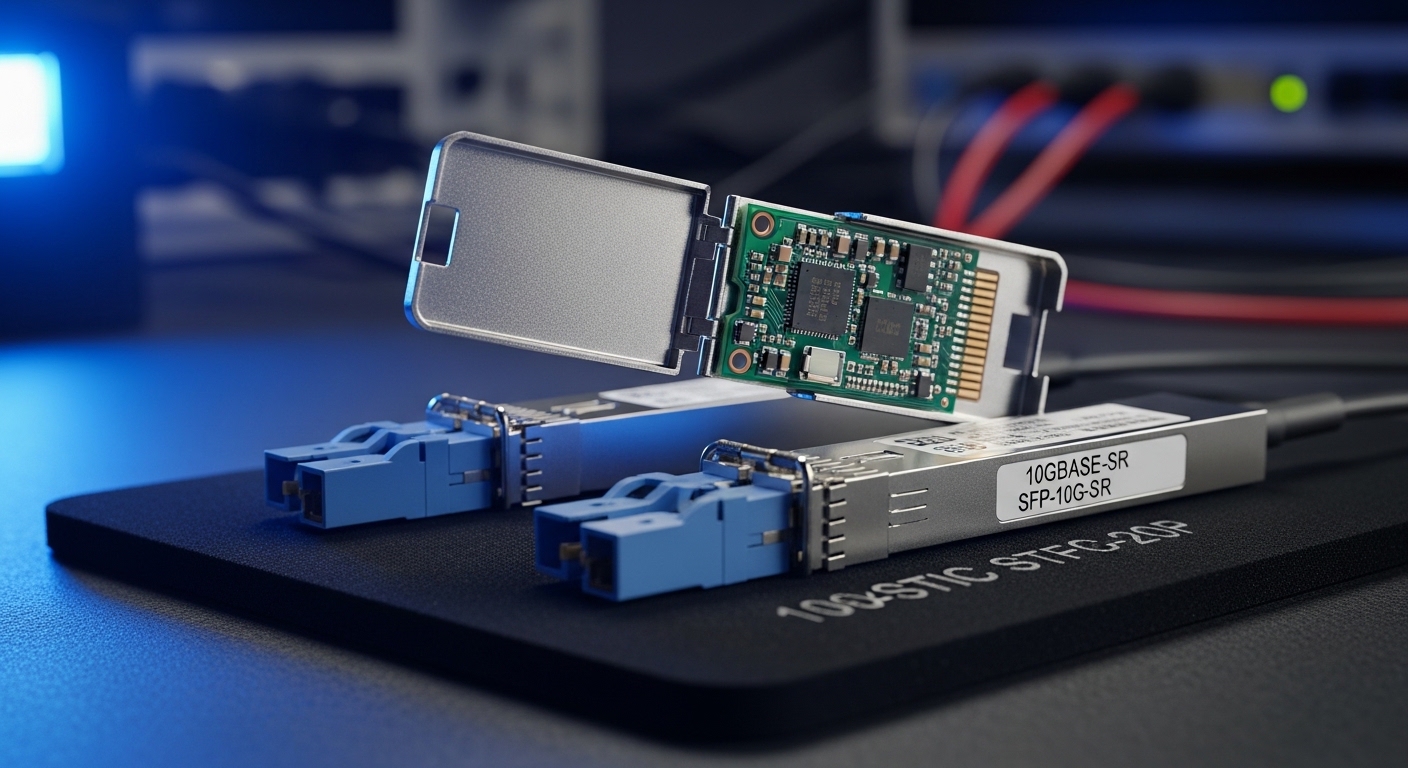
25G SFP28 SR: doubling density without changing your fiber story
Upgrading from 10G to 25G often feels like a forklift upgrade—except many networks can modernize with 25G SFP28 SR on the same 850 nm multimode approach. This is a telecom transceiver innovation sweet spot because it increases throughput while staying in the “short-reach optics” category. Most 25G SR optics target 850 nm and require OM4 (or better) for best-case reach, though vendor specs vary by fiber type and link budget.
What to check before you buy
- Compatibility: confirm switch supports SFP28 and the required optical class
- Fiber type: OM4 recommended; OM3 may work for shorter distances
- DOM: ensure switch reads temperature/bias/power correctly
- Power and thermal: watch for high-density airflow constraints
Best-fit scenario: a server refresh where you move from 10G NICs to 25G NICs, and your patch distances are typically 30 to 80 m on OM4 in a high-density row. A common field pattern is replacing SFP+ SR with SFP28 SR in-place while leaving the fiber plant and patching structure untouched.
Pros: higher capacity at short range, common LC form factor. Cons: OM3 might not meet reach, and marginal links show up as higher error rates under load.
40G/100G QSFP-style optics: when you must move big, fast
Sometimes the bottleneck is not the server access but the aggregation uplink. Telecom transceiver selection for 40G (QSFP+ / QSFP) or 100G (QSFP28 / CFP2-class) must account for optics type (SR, LR, ER, etc.), lane mapping, and switch port behavior. Even when the link works at day one, lane skew, polarity settings, and transceiver diagnostics can turn into a recurring operational tax.
Practical guidance
- Wavelength: SR usually 850 nm; LR/ER typically 1310/1550 nm
- Connector: LC for many SR/LR modules; MPO for high-speed SR options
- Lane count: confirm MPO polarity and breakout expectations
- DOM and alarms: verify the switch interprets thresholds correctly
Best-fit scenario: upgrading spine uplinks in a leaf-spine fabric where each leaf has 8 x 100G uplinks and the site uses a structured fiber backbone with MPO trunks. Here, the telecom transceiver “innovation” is often better diagnostics and consistent thermal behavior, not just raw reach.
Pros: big bandwidth per port, fewer oversubscription headaches. Cons: polarity and MPO handling errors cause silent headaches; optics can be more expensive.
Wavelength shift optics: LR/ER for fiber plants that grew up
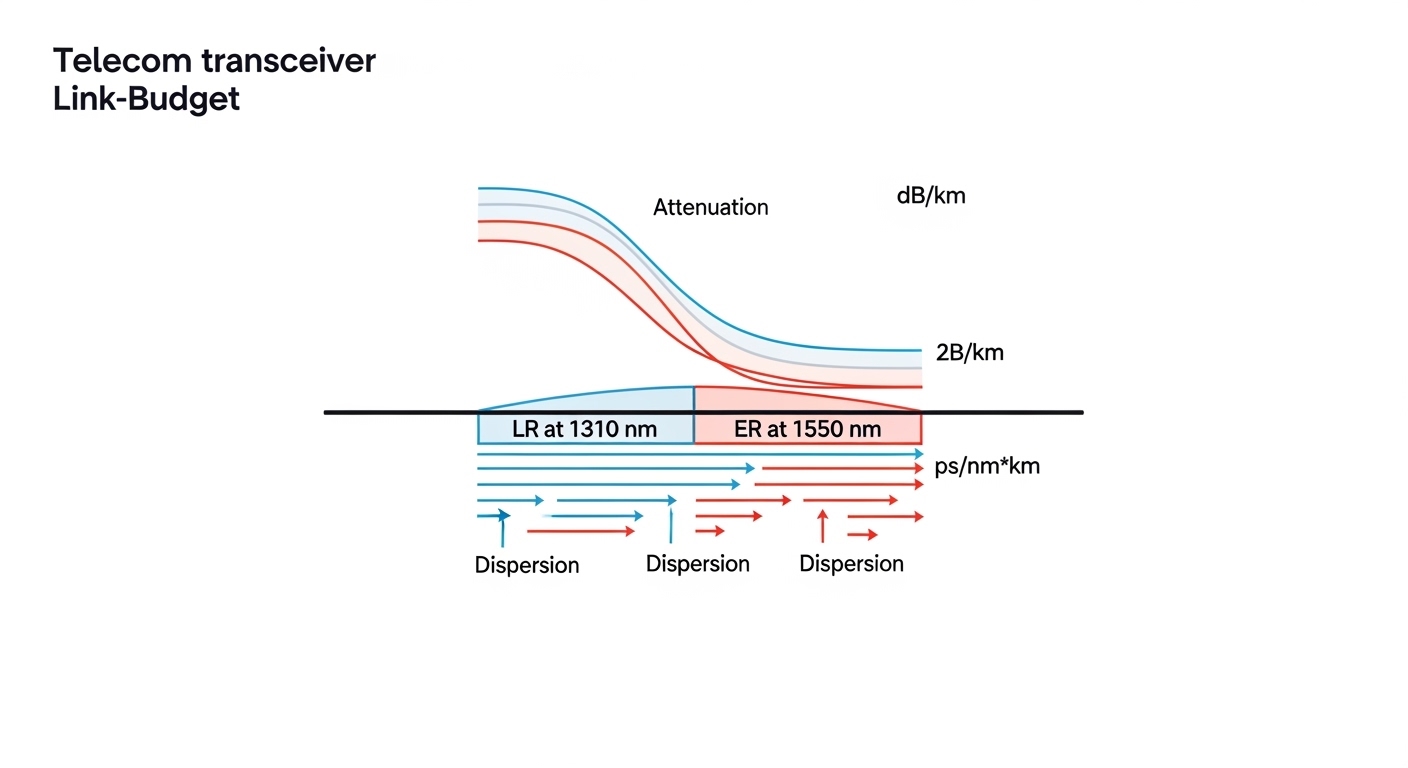
Longer reach optics are where telecom transceiver upgrades stop being “swap and smile” and become a link-budget exercise. LR and ER optics typically use singlemode fiber with wavelengths like 1310 nm (LR) or 1550 nm (ER), relying on coherent engineering of dispersion and attenuation margins. If your network expanded over time, you may discover that your “short” links aren’t short anymore.
Engineering checks
- Fiber type: singlemode with correct core/cladding specs
- Attenuation: measure end-to-end loss and connector/splice contribution
- Dispersion and OSNR: especially for higher data rates
- Power class: ensure receiver sensitivity meets your margin
Best-fit scenario: a campus network interconnecting buildings with 2 to 10 km runs where singlemode fiber is present but older optics were never updated. In practice, field teams often pair LR optics with measured OTDR results and adjust patching to hit a conservative margin target.
Pros: stretches reach without changing fiber type. Cons: higher cost and more sensitivity to fiber quality and cleaning discipline.
DOM and diagnostics: the innovation that prevents midnight paging
DOM support (Digital Optical Monitoring) is a telecom transceiver feature that often gets treated as optional—until you need forensic evidence. DOM provides real-time readings such as transmit power, receive power, and module temperature through standardized interfaces. When your switch supports DOM alarms, you can detect aging optics, dirty connectors, or thermal throttling before the link fails catastrophically.
What to validate on the bench
- DOM readout: confirm the switch displays RX power and temperature
- Threshold behavior: verify which alarms trigger port err-disable
- Timing: ensure DOM updates don’t lag behind fast transients
- Firmware assumptions: some platforms expect specific diagnostic formats
Best-fit scenario: an industrial facility where optics sit near HVAC vents and dust load is non-trivial. Teams often implement a monthly DOM trend review and correlate RX power drops with cleaning schedules and connector maintenance logs.
Pro Tip: If DOM shows RX power slowly drifting downward but the link stays up, treat it like a “dirty connector tax” rather than a random hardware fault. Clean the LC/MPO interface first and re-measure; many “failing” telecom transceivers are actually victims of contamination and marginal cleaning intervals.
Pros: proactive maintenance, better root-cause analysis. Cons: not all third-party modules expose the same DOM behavior, and some switch models have quirks in alarm interpretation.
Temperature-grade optics: avoiding thermal drift in high-density racks
High-density deployments can turn the transceiver cage into a small convection oven. Telecom transceiver temperature range matters because optical output power and receiver sensitivity shift with temperature, and some modules are only guaranteed for commercial ranges. If you run industrial environments, outdoor cabinets, or simply pack switches tightly with constrained airflow, you want industrial-grade optics validated for -40 to 85 C when appropriate.
Selection notes
- Guaranteed range: commercial vs industrial grade
- Airflow: confirm front-to-back or side-to-side cooling path
- Thermal cycling: repeated warm/cold cycles can stress optical components
- Power budgets: check switch port power and module thermal design
Best-fit scenario: a warehouse automation network with 50 to 70 C ambient swings near conveyor control cabinets, using short-reach optics in harsh enclosures. Engineers often upgrade to industrial-grade telecom transceivers and standardize on a cleaning and inspection cadence to stabilize link performance.
Pros: more predictable behavior under heat stress. Cons: industrial modules can cost more; verify your switch supports the module class.
Vendor compatibility and standards: SFP is not always plug-and-play
Most engineers assume SFP form factor equals universal compatibility. Reality is more nuanced: the electrical interface, memory map, and diagnostics behavior must align with the host switch. Telecom transceiver compatibility is governed by standards like IEEE 802.3 for Ethernet optical interfaces and by the host vendor’s implementation choices. When you mix vendors, you may need to adjust polarity, confirm lane mapping, or accept that some DOM fields will read differently.
Standards and references to keep handy
- IEEE 802.3 Ethernet physical layer specifications for 10G/25G/40G/100G optical links: IEEE 802.3
- Vendor datasheets for module electrical/optical characteristics and DOM support: Cisco support and datasheets
- Switch SFP/QSFP compatibility matrices (usually on vendor support portals)
Best-fit scenario: a multi-vendor network where you standardize on one optics family for SR and one for LR, but still buy from two suppliers to avoid supply-chain surprises. Teams often pre-validate modules in a staging chassis and record DOM and alarm behavior before rolling out.
Pros: less downtime, easier troubleshooting across vendors. Cons: compatibility matrices can be tedious and must be revisited after firmware updates.

Third-party vs OEM optics: cost control without gambling the uptime
Budget pressure is real, and telecom transceiver pricing swings widely across OEM and third-party suppliers. Third-party optics can be cost-effective, but the operational risk depends on quality control, DOM behavior, and whether the host switch enforces strict compatibility checks. A practical approach is to compute TCO using failure rates, cleaning intervals, and downtime cost—not just the purchase price.
Typical price and TCO lens
- 10G SFP+ SR: often mid-range pricing; OEM usually higher
- 25G SFP28 SR: modest premium vs 10G, with more variability for third-party
- 40G/100G optics: can dominate optics spend; higher cost for LR/ER variants
- Downtime cost: include labor hours for swap, verification, and incident escalation
Best-fit scenario: a mid-size ISP or enterprise with hundreds of active ports where optics failures are rare but not zero. Teams often buy OEM for critical paths and third-party for non-critical redundancy, then gradually expand third-party usage after staging validation.
Pros: lower acquisition cost, supply-chain flexibility. Cons: occasional compatibility quirks; must validate per switch model and firmware.
Telecom transceiver spec comparison: SR vs LR vs ER in one glance
Below is a practical comparison table for common telecom transceiver choices you will see in modern SFP/SFP28 and QSFP-class deployments. Always cross-check the vendor datasheet for exact reach and power class.
| Module type | Typical wavelength | Fiber type | Typical reach | Connector | Data rate | Temperature range | DOM |
|---|---|---|---|---|---|---|---|
| 10G SFP+ SR | 850 nm | OM3/OM4 multimode | 300 m (OM3) / 400 m (OM4) | LC duplex | 10.3125 Gbps | 0 to 70 C or -40 to 85 C (variant) | Often supported |
| 25G SFP28 SR | 850 nm | OM4 multimode (often required) | ~70 m to ~100 m class (varies by vendor) | LC duplex | 25.78125 Gbps | Commercial or industrial (variant) | Often supported |
| 40G QSFP+ LR | 1310 nm | singlemode | ~10 km (class varies) | LC duplex | 40 Gbps | Commercial or industrial (variant) | Often supported |
| 100G QSFP28 LR/ER | 1310/1550 nm | singlemode | ~10 km to ~40 km (class varies) | LC or MPO (depends) | 100 Gbps | Commercial or industrial (variant) | Often supported |
Selection criteria checklist for a telecom transceiver purchase
Engineers typically win these projects by being boring in the right ways. Use this ordered list to reduce surprises during installation and burn-in.
- Distance and fiber type: confirm multimode OM3/OM4 vs singlemode, then validate reach with conservative margin.
- Switch compatibility: verify the exact host model and firmware; confirm SFP vs SFP28 support and port speed behavior.
- DOM support and alarm behavior: ensure the switch reads RX/TX power and temperature and does not err-disable.
- Operating temperature grade: match ambient and enclosure airflow; choose industrial grade when thermal swings are real.
- Connector and polarity handling: LC vs MPO and required polarity conventions for high-speed optics.
- Vendor lock-in risk: decide OEM-only for critical links or validate third-party with staging tests.
- Optical cleanliness process: plan cleaning tools (lint-free wipes, alcohol, inspection microscope) as part of the rollout.
- Warranty and RMA workflow: confirm turnaround time and whether swaps are supported without prolonged downtime.
Common mistakes and troubleshooting tips (the stuff that causes outages)
Here are failure modes you can actually recognize in the field, with root causes and fixes. Think of this as the “save you from the third reboot” section.
Link flaps after insertion: dirty connectors or polarity mismatch
Root cause: for LC duplex, contamination increases attenuation; for MPO/MTP, polarity can invert lanes and prevent proper optical reception. Solution: clean both ends, inspect under magnification, re-seat firmly, and verify polarity labeling before replacing the module.
Works at low load, fails under traffic: marginal link budget
Root cause: fiber attenuation or poor splices reduce receiver margin; higher utilization increases error sensitivity. Solution: measure RX power and compare to vendor sensitivity thresholds; use OTDR/OLTS results to identify high-loss segments and improve patching.
Switch shows “unsupported transceiver” or DOM alarms: compatibility or DOM format mismatch
Root cause: the host platform expects a specific diagnostic behavior; some third-party modules report fields differently. Solution: validate with the same switch model and firmware in staging; if needed, switch to the vendor-approved optic list or update switch firmware.
Gradual degradation over weeks: thermal drift and aging optics
Root cause: high ambient temperature leads to output power reduction and receiver sensitivity changes; some modules run hotter than expected in constrained airflow. Solution: check module temperature via DOM, improve airflow, and consider industrial-grade optics for hot racks.
Summary ranking table: which telecom transceiver upgrade to prioritize
This ranking assumes you want a pragmatic upgrade path that minimizes risk while improving performance. Your exact order may vary with distance, fiber type, and switch platform.
| Rank | Upgrade choice | Best for | Main risk | Field confidence |
|---|---|---|---|---|
| 1 | 10G SFP+ SR | Short multimode links, fast replacement | Connector cleanliness and OM3/OM4 margin | High |
| 2 | 25G SFP28 SR | 25G server and ToR upgrades | OM4 requirement and reach miscalculation | High |
| 3 | DOM-enabled modules | Operational visibility and proactive maintenance | DOM format quirks across vendors | Medium-High |
| 4 | Temperature-grade optics | Hot racks and industrial enclosures | Cost premium and variant availability | Medium |
| 5 | LR/ER optics | Campus and longer singlemode links | Link budget errors and fiber quality surprises | Medium |
| 6 | 40G/100G QSFP-style optics | Uplink and backbone bandwidth growth | MPO polarity and lane mapping complexity | Medium |
| 7 | Third-party vs OEM strategy | Cost control with validation | Compatibility and RMA friction | Context-dependent |
FAQ
What is a telecom transceiver, and why does my switch care?
A telecom transceiver is the optical/electrical module that converts signals between the host interface and fiber. Your switch cares because it expects specific electrical signaling, optical parameters, and sometimes DOM diagnostic behavior. If any of those don’t match the platform expectations, you can see “unsupported” or unstable links.
How do I choose between SR and LR for a telecom transceiver upgrade?
Choose SR (850 nm) for short multimode links where you already have OM3/OM4 fiber and patch distances are modest. Choose LR/ER (singlemode) when you need kilometers of reach or when your fiber plant is already singlemode. Always validate with measured loss and conservative margin, not just the marketing reach.
Will third-party telecom transceivers work in an OEM switch?
Often yes, but you must validate with your exact switch model and firmware. The biggest practical issues are DOM