
Election systems need high uptime, predictable link behavior, and traceable hardware choices. This article helps IT and field engineers select a voting network transceiver for fiber runs in electoral commission and election operations networks. You will get practical selection criteria, a troubleshooting checklist, and an engineer-style comparison table grounded in IEEE Ethernet optics behavior and vendor datasheets. Update date: 2026-04-30.
Top 7 voting network transceiver decisions that prevent election downtime
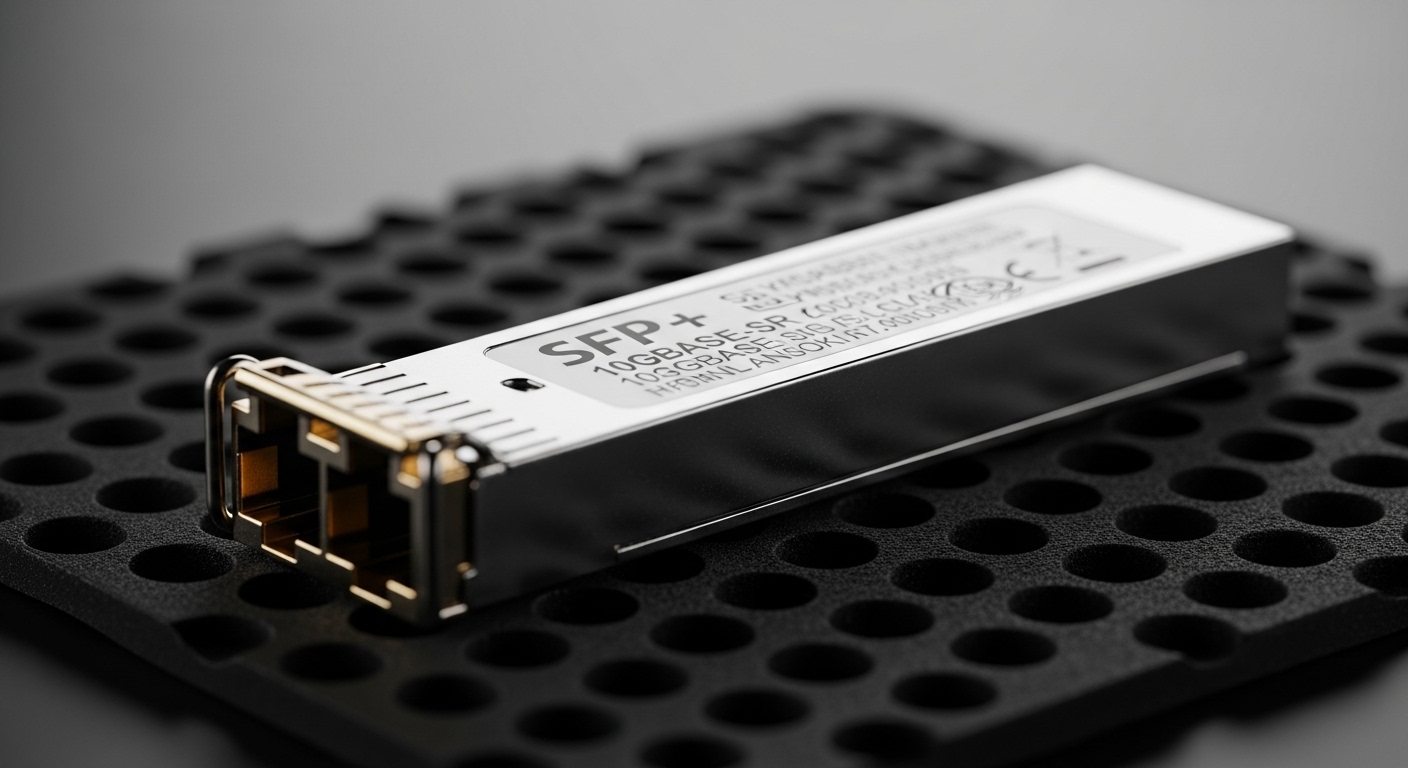
In voting and electoral operations environments, “it links” is not enough; you also need stable optics, deterministic diagnostics, and safe thermal margins. Below are the seven decisions that most often determine whether a fiber deployment stays reliable through peak operational windows. I include concrete specs, compatibility traps, and field-tested verification steps you can run during acceptance testing.
Pick the right Ethernet data rate and interface standard first
The most common failure mode in election networks is choosing optics that technically “work” at the wrong Ethernet speed or with mismatched port modes. Most voting network designs use 1G/10G Ethernet over fiber, aligned with switch uplink capabilities. Confirm the switch port is IEEE 802.3-compliant and supports the target speed (for example, 10GBASE-SR on SFP+ or 10GBASE-LR on SFP+ depending on distance). Then match the transceiver form factor: SFP, SFP+, QSFP+, or QSFP28.
Fast field check
Before installing in a cabinet, read the switch port capabilities and optics expectations. On Cisco IOS-XE and NX-OS, verify the interface shows the intended speed and that auto-negotiation behavior matches the transceiver type (10G fiber links typically do not negotiate the same way as copper). For acceptance, capture the link up time and optical diagnostics once the transceiver initializes.
Best-fit scenario: A regional election operations center with 10G leaf/spine aggregation where ToR-to-aggregation uplinks are 10GBASE-SR using multimode fiber, short spares stored as SFP+ modules.
- Pros: Avoids speed mismatch surprises; simplifies spare inventory.
- Cons: Requires careful mapping to switch port type and optics cage.
Match wavelength and fiber type to your actual plant (MMF vs SMF)
Voting network transceivers must match the fiber plant. Multimode (MMF) typically uses 850 nm (SR variants), while single-mode (SMF) uses 1310 nm or 1550 nm (LR/ER variants). If the wrong wavelength hits the wrong fiber type, you may see high errors, marginal signal levels, or intermittent link flaps during temperature changes. Use as-built drawings and, if needed, verify with an OTDR or at least fiber certification records.
| Transceiver type | Wavelength | Typical fiber | Target reach | Connector | Power class (typ.) | Operating temperature |
|---|---|---|---|---|---|---|
| 10GBASE-SR SFP+ | 850 nm | OM3/OM4 MMF | Up to 300 m (OM3) or 400 m (OM4) | LC | Low power (vendor-specific) | 0 to 70 C or -40 to 85 C |
| 10GBASE-LR SFP+ | 1310 nm | SMF | Up to 10 km | LC | Low power (vendor-specific) | 0 to 70 C or -40 to 85 C |
| 25GBASE-SR SFP28 | 850 nm | MMF | Up to 100 m (OM4, typical) | LC | Low power (vendor-specific) | 0 to 70 C |
| 10GBASE-ER SFP+ | 1550 nm | SMF | Up to 40 km | LC | Higher budget (vendor-specific) | -40 to 85 C (common) |
Best-fit scenario: A county election office with 500 m runs between a staging room and a secure comms rack where OM4 is available, favoring 850 nm SR optics with margin. If only SMF exists, switch to 1310 nm LR and avoid wasting budget on an incompatible SR module.
- Pros: Prevents link instability from fiber mismatch; preserves optical power margin.
- Cons: Requires accurate fiber type identification and patching discipline.
Use optical budget and connector loss margins, not just “rated reach”
Vendor reach claims assume ideal conditions. Election-grade deployments need extra margin for aging, dirty connectors, patch panel variability, and temperature drift. For SR, MMF bandwidth and modal effects matter; for LR/ER, SMF attenuation and splice/connector losses dominate. Build a link budget using fiber attenuation (dB/km), measured patch cord and splice losses (dB per event), and connector loss (often 0.2 to 0.5 dB per mated pair, but must be verified). Then ensure the transceiver’s supported power budget exceeds your computed loss with a safety factor.
What engineers actually calculate
- Fiber loss: attenuation coefficient times route length.
- Splice/connector losses: count events and use measured or conservative values.
- Margin: reserve headroom for cleaning cycles and operational dust.
Best-fit scenario: A regional tabulation facility with 2 km SMF between buildings, multiple patch panels, and known connector wear. You select a 10GBASE-LR SFP+ with a documented power budget that comfortably covers splices plus a margin, rather than relying on the “10 km” headline.
- Pros: Fewer intermittent errors; better long-term stability.
- Cons: Needs documentation and realistic loss assumptions.
Demand real diagnostics: DOM support and alarm thresholds
During election operations, you need fast detection of degrading links before failures. Digital Optical Monitoring (DOM) provides per-module telemetry such as received optical power and transmitter bias/current, typically accessible via switch CLI or SNMP. Confirm DOM support in both the transceiver and the host switch. Use the vendor’s DOM specification and confirm the switch actually reads the fields and raises alarms (for example, low RX power or high TX bias). This is especially important in voting network transceiver deployments where remote sites may not have immediate on-site expertise.
Pro Tip: In the field, “link up” can stay stable while DOM shows a slow RX power decline. Set thresholds in monitoring (or at least alert on low-RX) weeks before an election event, because connector contamination and fiber micro-bends often reveal themselves through telemetry long before BER or CRC counters spike. [Source: vendor DOM documentation; [Source: IEEE 802.3]]
Best-fit scenario: A multi-site electoral commission network where you monitor 40+ remote racks from a central NOC. DOM alerts help you schedule cleaning and replacement during low-traffic periods.
- Pros: Earlier warning; faster MTTR.
- Cons: Requires monitoring integration and staff process.
Choose temperature grade and mechanical fit for the installation environment
Election environments can include equipment rooms without tight HVAC control, temporary deployment sites, or outdoor-ish distribution cabinets. Select transceivers with appropriate operating temperature range and ensure the host switch supports the module type. Many optics are available in standard 0 to 70 C and extended -40 to 85 C grades; the latter reduces risk when cabinets run warm. Also verify connector type and cleanliness requirements: LC is common, but ensure dust caps are used during maintenance.
Best-fit scenario: A secure comms rack in a regional office where ambient can reach 40 to 50 C during operational days. You use extended temperature transceivers and confirm the switch airflow path is unobstructed.
- Pros: Lower thermal-induced drift and fewer surprise failures.
- Cons: Extended-grade modules may cost more.
Manage compatibility and vendor lock-in with disciplined part selection
Not every third-party optic behaves identically with every switch. Some platforms enforce optic vendor whitelists, and some have stricter requirements for DOM format, EEPROM layout, or supported compliance codes. In safety-critical operational networks, treat compatibility as a formal acceptance criterion. If you must use third-party optics, validate on the exact switch model, firmware version, and port type in a staging environment, and keep at least one OEM spare per critical site if policy allows. Document the approved transceiver part numbers.
Concrete examples to anchor sourcing
Common real-world optics include Cisco SFP-10G-SR and Finisar/FS-style SR modules such as FTLX8571D3BCL (vendor varies by channel and documentation), plus third-party equivalents like FS.com SFP-10GSR-85 (verify DOM and temperature grade in the datasheet before deployment). Always match the form factor (SFP+ vs SFP28) and the wavelength/fiber type.
Best-fit scenario: A commission network with strict change control where you pre-qualify two approved suppliers for each transceiver type, then freeze the bill of materials before election season.
- Pros: Reduced procurement risk; controlled compatibility.
- Cons: Requires qualification testing and change-management work.
Plan spares, verification tests, and maintenance actions like a reliability program
For voting network transceiver deployments, reliability is a process, not a purchase. Standardize your acceptance testing: verify link stability for a defined period (for example, 30 to 60 minutes), check DOM values against baseline, and run basic interface counters checks (CRC, errors, discards). For MMF SR links, confirm patch cord quality and connector cleanliness. For SMF LR/ER links, inspect splices and ensure proper cable management so micro-bends do not occur during routine maintenance. Keep spares matched by part number and temperature grade, and store them with dust caps and proper packaging.
Best-fit scenario: A network with 3-tier architecture where you keep at least one spare transceiver per critical uplink pair. During a controlled maintenance window, you swap a module only after verifying DOM baselines and optical power levels.
- Pros: Lower outage probability; faster recovery.
- Cons: Requires procedure discipline and documentation.
Common mistakes and troubleshooting tips for voting network transceivers
Even experienced teams run into predictable optics problems. Below are concrete failure modes with root causes and practical fixes.
-
Mistake: Installing an 850 nm SR transceiver into an SMF patch or vice versa.
Root cause: Fiber plant mismatch; the receiver sees insufficient signal or none.
Fix: Verify fiber type at the patch panel; label and trace each run; use correct SR vs LR part numbers. -
Mistake: Ignoring optical budget and relying on “max reach” marketing numbers.
Root cause: Too many patch panel events or dirty connectors push RX power below sensitivity.
Fix: Build a link budget from attenuation plus counted losses; clean connectors; re-measure or inspect splices. -
Mistake: Accepting third-party optics without DOM telemetry validation.
Root cause: DOM fields may not map cleanly to the switch’s monitoring expectations, or alarms are not triggered.
Fix: Validate DOM visibility and alarm behavior on the exact switch model and firmware; confirm RX power and thresholds. -
Mistake: Swapping modules without checking connector cleanliness.
Root cause: Dust or micro-scratches increase insertion loss and cause intermittent BER/CRC errors.
Fix: Clean LC connectors with approved wipes and inspect with a scope; replace damaged patch cords. -
Mistake: Overheating modules due to blocked airflow in cabinets.
Root cause: Thermal stress shifts bias current and reduces optical output stability.
Fix: Confirm airflow direction, remove obstructions, verify cabinet ambient, and use the correct temperature grade.
Authority references: IEEE Ethernet physical layer behavior is defined in IEEE 802.3; DOM and transceiver behaviors are documented by vendors and implemented through switch optics management. [Source: IEEE 802.3; Source: vendor transceiver datasheets]
Cost and ROI note for election-season transceiver planning
Budgeting for a voting network transceiver program is about total cost of ownership, not only unit price. In typical enterprise channels, 10GBASE-SR SFP+ modules often fall in the low tens of USD per unit for third-party and higher for OEM; extended-grade and higher-speed modules cost more. The ROI comes from avoided downtime, reduced truck rolls, and faster troubleshooting using DOM. In many deployments, the cost of one avoided outage during operational windows outweighs the price difference between OEM and qualified third-party optics.
Practical guidance: Keep spares on the same approved BOM list, and include replacement labor and cleaning supplies in TCO. If your organization can integrate DOM into monitoring, the operational savings can be significant because you detect degradation earlier rather than after errors appear.
Summary ranking table: best choice by deployment constraint
| Constraint | Top choice | Why it ranks high | Trade-off |
|---|---|---|---|
| Short reach in MMF | 10GBASE-SR SFP+ (850 nm, OM4) | Lower cost, common LC ecosystem, fast installs | Sensitive to MMF quality and patch cord losses |
| Medium reach over SMF | 10GBASE-LR SFP+ (1310 nm) | Strong reach margin and stable SMF behavior | SMF and splicing costs may be higher |
| Remote sites with limited staff | DOM-capable, alarm-integrated optics | Enables early detection and proactive maintenance | Requires monitoring setup and process |
| Hot cabinets or uncertain HVAC | Extended temperature grade (-40 to 85 C) | Reduced thermal drift risk | Higher per-unit cost |
| Strict compatibility policy | OEM or pre-qualified third-party with same switch model | Lower risk of unsupported DOM/EEPROM behavior | Qualification effort and BOM freeze |
FAQ
What is a voting network transceiver, and why does election use change the selection?
A voting network transceiver is an optical module that converts Ethernet signals to fiber for reliable link transport. Election use adds stricter reliability needs: you must minimize intermittent faults, enable diagnostics, and plan spares and maintenance during constrained operational windows.
