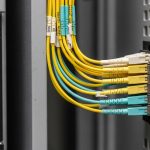
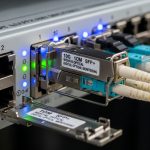
I have installed in-building fiber runs where the vertical riser fiber trunk looked fine on paper, yet the SFP links would randomly flap during commissioning. This guide helps network and cabling engineers choose the right SFP optics and fiber type for vertical and horizontal distribution in offices, schools, and mixed-use buildings. You will get a fast selection checklist, real deployment numbers, and troubleshooting patterns I have seen in the field.
Why vertical riser fiber behaves differently than horizontal runs
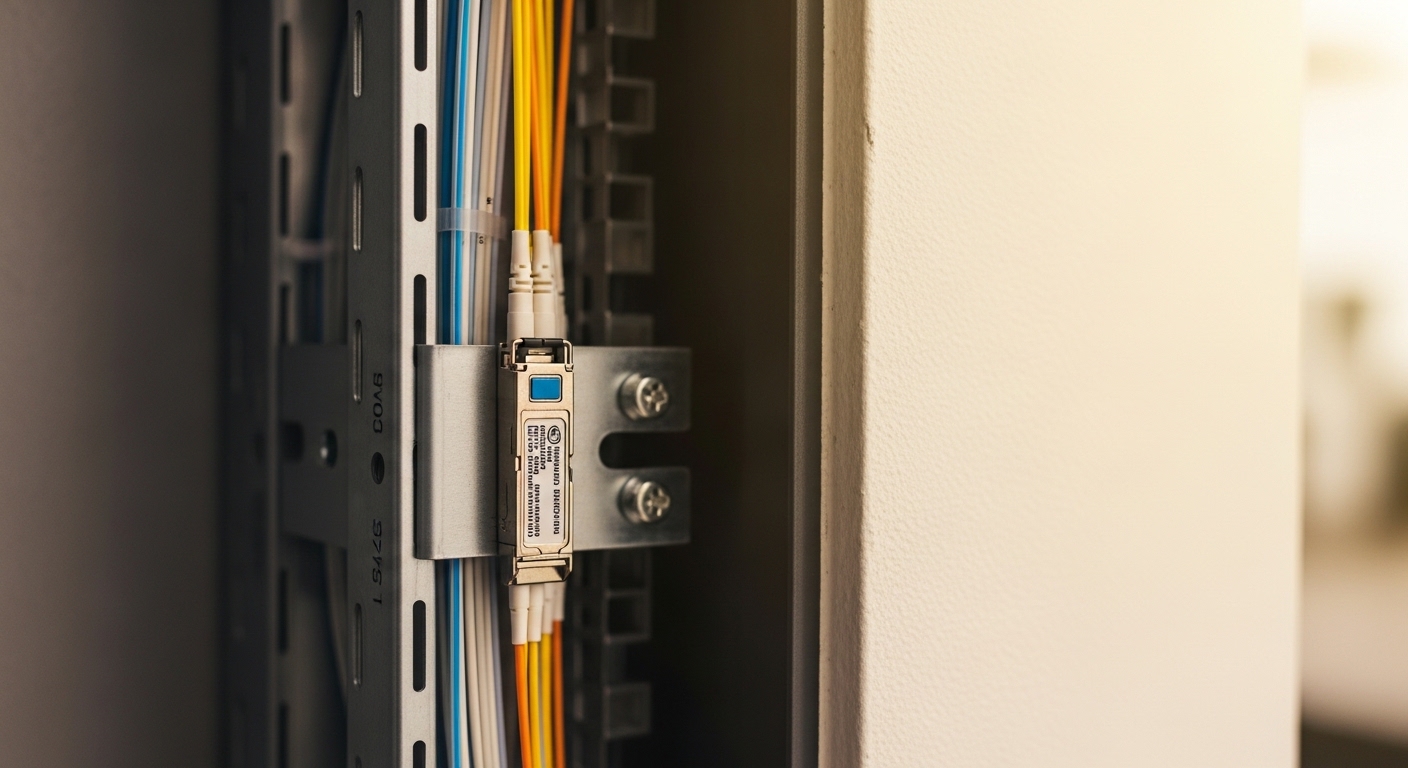
Horizontal links are usually short, thermally stable, and routed in predictable pathways. Vertical riser fiber adds variables: longer continuous spans, more handling points, higher chances of microbends during installation, and temperature swings near stairwells or mechanical shafts. In practice, those factors show up as higher bit error rates (BER) and sensitivity to connector cleanliness.
On the optics side, most SFPs rely on IEEE-compliant electrical interfaces (commonly aligned with SFP MSA) and fiber channel behavior as defined by IEEE 802.3 for Ethernet line rates. For example, 10GBASE-SR/SW optics are typically validated for multimode reach using OM3 or OM4, while 10GBASE-LR/LW uses single-mode wavelengths for longer distance.
Field reality check: the riser path is the channel
During one retrofit in a 10-story building, we measured end-to-end insertion loss and observed that the riser had more connectors and tighter bends than the horizontal tray sections. The SFPs were rated for the nominal distance, but the installed link margin was thin after adding patch cords, splice loss, and two connector remakes. That is why “rated reach” is not enough; you need installed link power budget and cleanliness control.
Pro Tip: In riser-heavy builds, the limiting factor is often not raw fiber attenuation; it is the combination of connector contamination plus microbends that degrade modal distribution in multimode. Before swapping optics, clean both ends, re-seat connectors, and re-run OTDR or at least an insertion-loss check to confirm the channel is stable.

Optics choices: SFP types that actually fit vertical riser fiber
Most in-building designs use 10G or 1G Ethernet for access switching, then aggregate upward. The SFP selection hinges on whether you are using multimode (MMF) or single-mode (SMF), and which transceiver family matches your switch and DOM expectations.
Common, field-proven examples include Cisco SFP-10G-SR for multimode short reach, and Finisar/FS-branded 10G SR optics such as Finisar FTLX8571D3BCL or FS.com SFP-10GSR-85 for OM4/OM3 deployments. For longer vertical spans or future-proofing, single-mode options like 10GBASE-LR use different optics wavelengths and require SMF.
Quick comparison table (match wavelength, reach, and fiber)
| Use case | Typical Ethernet | Fiber type | Optical wavelength | Connector | Target reach (typical) | DOM | Operating temperature |
|---|---|---|---|---|---|---|---|
| Intra-floor / short patching | 10GBASE-SR | OM3/OM4 multimode | ~850 nm | LC | Up to ~300 m on OM3, ~400 m on OM4 (depends on model) | Usually supported on modern SFP+ | Commonly 0 to 70 C (check datasheet) |
| Long vertical runs / future expansion | 10GBASE-LR | OS2 single-mode | ~1310 nm | LC | Up to ~10 km (model- and budget-dependent) | Usually supported | Commonly 0 to 70 C (check datasheet) |
| 1G access (if you must) | 1000BASE-SX | OM3/OM4 multimode | ~850 nm | LC | Typically hundreds of meters on MMF | Varies by vendor | Check spec |
For standards and baseline behavior, use IEEE 802.3 for Ethernet PHY expectations and vendor datasheets for exact reach, receiver sensitivity, and DOM behavior. References: [[EXT:https://standards.ieee.org/standard/802_3 IEEE 802.3]] and specific transceiver datasheets from the OEM or the optics vendor you plan to deploy. For SFP mechanics and electrical interface expectations, consult the SFP MSA documentation via vendor references.
Deployment scenario: 48-port ToR switches with riser trunks
In one 3-tier data center leaf-spine topology inside an office campus, we used 48-port 10G ToR switches per floor. Each ToR uplinked to an aggregation switch using SFP+ modules, while access ports connected to horizontal cabling drops. The vertical riser fiber consisted of a backbone trunk with multiple splice points, routed through a mechanical shaft, then fanned out to patch panels per floor.
Quantitatively, the vertical segment averaged 620 m from aggregation patch panel to the top-floor ToR, with an additional 8 to 12 m patch cord length per endpoint. We selected single-mode 10GBASE-LR optics for the riser to protect link margin, and we used multimode 10GBASE-SR only for short, controlled horizontal segments where OM4 was installed and connector handling was tightly supervised. The commissioning checklist included cleaning verification, insertion loss measurement, and DOM readout confirmation on each SFP before final patching.
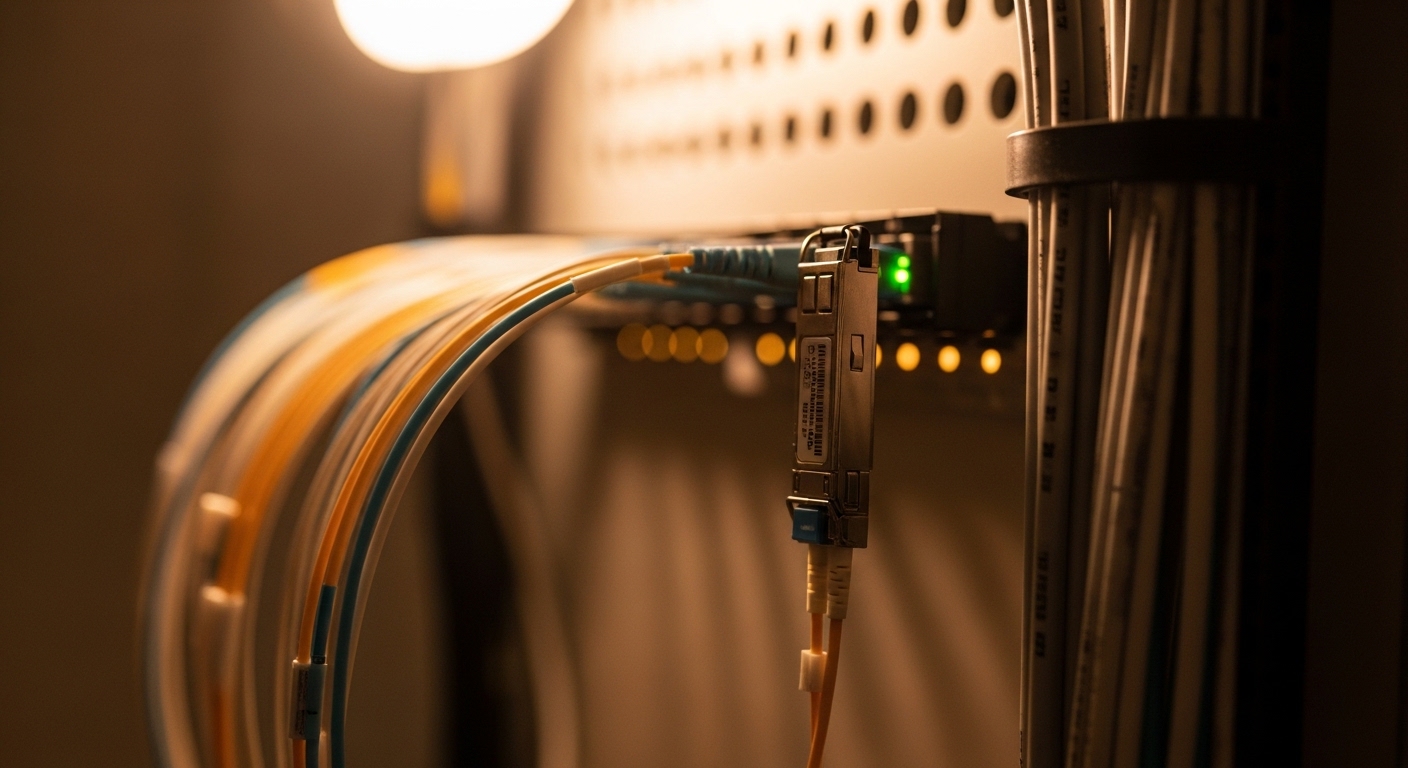
Decision checklist for vertical riser fiber and SFP compatibility
- Distance and installed loss: compute end-to-end loss including splices, connectors, patch cords, and expected aging. Use OTDR or certified bidirectional test results.
- Fiber plant type: confirm OM3/OM4 or OS2, and verify core/cladding specs and bend tolerance records if available.
- Transceiver wavelength and reach: pick 850 nm for MMF short reach or 1310 nm for SMF long reach; verify the exact model’s reach and power budget.
- Switch compatibility and optics policy: some switches enforce vendor-specific qualification. Validate with your exact switch model and SFP form factor (SFP vs SFP+).
- DOM behavior: confirm whether your switch reads DOM fields and whether thresholds are enforced. If you use third-party optics, ensure DOM support matches your platform expectations.
- Operating temperature: risers can see higher ambient near shafts. Check the SFP temperature range and the transceiver’s derating guidance in the datasheet.
- Vendor lock-in risk: OEM optics may be costly; third-party can be economical but requires validation for DOM, optics diagnostics, and long-term stability.
How to avoid “rated reach” traps
When you budget for the riser, include patch panel adapters, remates, and any temporary jumpers used during construction. If you plan to add future floors or reroute patching, treat the margin as a living number, not a one-time pass/fail.
Common mistakes and troubleshooting patterns
Below are failure modes I have seen repeatedly when vertical riser fiber and SFP optics are mismatched or handled loosely.
Link up/down flapping after commissioning
Root cause: connector contamination or microbends introduced during tray routing; multimode is especially sensitive to modal distribution changes. Solution: clean with the correct method, re-seat LC connectors, and re-test with a certified light source and power meter; if available, run OTDR to locate splice or connector loss hotspots.
“Works on one direction, fails on the other” symptoms
Root cause: polarity reversal at patch panels (TX/RX swapped) or inconsistent MPO/LC labeling during vertical-to-horizontal transitions. Solution: verify polarity end-to-end, correct patch cord orientation, and standardize labeling by direction and floor.
Receiver power too low warnings even though attenuation seems acceptable
Root cause: using an optics model with a tighter sensitivity requirement than your budget; also possible: older splice loss higher than expected or unaccounted patch cord losses. Solution: confirm the exact SFP part number’s receiver sensitivity in the datasheet, then adjust the link budget or swap to a more tolerant optics option (for example, different reach grade or SMF where appropriate).
Over-temperature events near shafts
Root cause: riser ambient exceeds the SFP’s rated operating range, especially in poorly ventilated mechanical rooms. Solution: measure ambient temperature during peak conditions, improve airflow, and select optics with verified temperature ratings; also check if the switch chassis itself is within spec.
Cost and ROI: what to budget for vertical riser fiber projects
In commercial builds, optics cost is only part of total cost. Typical street pricing varies by region, but OEM 10G SFP+ modules can land in a higher range than third-party optics, and third-party modules require up-front validation. For TCO, include cleaning supplies, certification testing, spare optics inventory, and the labor cost of rework if the wrong transceiver family is deployed.
Practically, the ROI comes from reducing outage risk and avoiding truck rolls. If you spend more on single-mode for the riser, you may save money later by keeping link options open as you expand floors or upgrade access speeds. Conversely, if your building plan is stable and distances are short, multimode can be economical—provided you control connector handling and test results tightly.
Pro Tip: Keep a small “known good” set of SFPs and a cleaning kit staged at the patch panel level. During riser commissioning, swapping optics is fast, but verifying cleanliness and link budget first prevents you from chasing the wrong component.
FAQ: vertical riser fiber with SFP modules
What fiber type is best for vertical riser fiber, multimode or single-mode?
It depends on distance, installed loss, and your upgrade timeline. For long vertical spans or limited margin, single-mode OS2 with 10GBASE-LR optics is often safer. For shorter, well-controlled riser segments with OM4 and strict handling, multimode 10GBASE-SR can work well.
Can I use the same SFP module for vertical and horizontal distribution?
Sometimes yes, but it is not always wise. If your horizontal runs are short and your riser runs are long, using different optics families (SR for short MMF, LR for long SMF) can preserve margin and reduce failures.
How do I verify SFP compatibility with my switch?
Check the switch model’s optics compatibility guidance and confirm DOM support behavior. In the field, I validate by inserting the exact SFP part number into the target switch and checking link status plus DOM readouts before final cabling closeout.
Will third-party SFPs work in a vertical riser fiber network?
Often they do, but you must test. The main risks are DOM field mismatches, threshold alarms, or vendor-specific qualification policies. Plan a pilot with representative ports and monitor for stability over a few days.
What testing should I run before declaring the riser complete?
At minimum, run bidirectional certification for the structured cabling channel and confirm insertion loss and polarity. For optics readiness, inspect connectors, clean both ends, and verify link power/receive levels per the transceiver datasheet.
What is the most common reason vertical links fail after they first come up?
Contamination and connector rework. Riser work often involves repeated access to patch panels, and a single dirty LC face can cause intermittent errors even if the attenuation looks fine.
If you are planning a mixed vertical and horizontal build, start by matching your installed link budget to the correct SFP optics family, then enforce connector cleanliness and certification discipline. Next, review fiber optics troubleshooting.
Author bio: I travel between network labs and active sites, documenting how optics, cabling, and commissioning practices affect real throughput. I specialize in hands-on verification for Ethernet transceivers and fiber plants under field constraints.