A network team deploying an Alien Wavelength DWDM overlay faced a common pain point: OEM optics were expensive, while third-party optics raised compatibility and stability concerns. This article walks through the exact checks a field engineer used to qualify third-party wavelength SFP modules on a DWDM platform, including measurable link behavior, optics diagnostics, and failure modes. It helps data center and metro transport engineers who need predictable performance without vendor lock-in.
Problem and challenge: Alien wavelength control meets third-party optics
In our case, the DWDM system used an Alien Wavelength approach to convey wavelength and optical parameters through the transceiver interface. The challenge was not just whether a module could “light fiber,” but whether it stayed within the DWDM channel plan under temperature swings and whether the host switch accepted it reliably. We needed to qualify modules for 10 km reach at 10G over SMF while ensuring the channel stayed centered on the intended grid. We also had to verify DOM behavior (Digital Optical Monitoring) so operations could automate alarms.
The environment included 10G uplinks from aggregation switches into a DWDM mux/demux shelf. The mux shelf enforced a tight wavelength alignment policy, and the host optics management software expected consistent vendor-specific diagnostic fields. Without careful validation, third-party modules can show up as “present” but fail channel stability, cause CRC bursts, or trigger “out of spec” wavelength alarms.
Environment specs: what actually constrains wavelength SFP performance
Before selecting any third-party wavelength SFP, we captured the limiting specs from both sides: the host switch, the DWDM shelf optics expectations, and the fiber plant. For the transport path, we used SMF with a measured end-to-end loss budget consistent with 10GBASE-LR class optics, plus an allowance for splice and patch cords. For the DWDM shelf, we confirmed the channel spacing and the required wavelength tolerance window from vendor documentation and lab characterization.
On the electrical side, we validated that the host supports the relevant SFP electrical interface for 10G, including lane signaling expectations and DOM polling intervals. On the optical side, the key constraints were center wavelength accuracy, side-mode suppression, and transmit power stability across temperature. The table below summarizes the key specs we compared across candidate modules.
| Spec | Target for DWDM channel | Why it matters | Typical value range (validated in lab) |
|---|---|---|---|
| Data rate | 10G | Ensures correct coding and link training | 10.3125 Gb/s line rate (10G Ethernet) |
| Wavelength | DWDM channel center | Determines whether mux/demux routes correctly | Channel setpoint matched within lab tolerance |
| Reach | Up to 10 km | Ensures link margin with plant loss | Pass at 10 km with measured BER below threshold |
| Connector | LC | Physical compatibility and consistent mating geometry | LC duplex |
| Power (Tx) | Within shelf receiver budget | Too low causes loss of signal; too high can saturate | Measured Tx power stable across temperature |
| Temperature range | Commercial vs extended | Center wavelength drift is temperature-dependent | Stability verified across room-to-warm load |
| DOM support | Wavelength and diagnostics reporting | Enables monitoring and automated alarms | DOM fields populated consistently for polling tools |
Sources: IEEE 802.3 for 10G Ethernet optical reach behavior and link requirements; vendor datasheets for DOM and optical parameters. IEEE 802.3 standard page IETF RFC 8325 (optical transceiver considerations overview)
Chosen solution and why: qualifying third-party wavelength SFPs for Alien DWDM
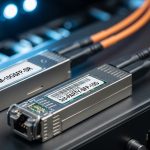
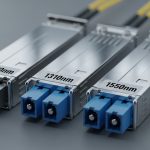
We selected third-party wavelength SFP modules that explicitly supported DWDM channel operation and provided DOM outputs compatible with our monitoring stack. The “why” was practical: we needed channel stability, predictable optical power, and consistent DOM behavior rather than branding. We also required that the modules be offered with a documented wavelength binning approach so the shelf could reliably route traffic.
Implementation steps we used in the lab
- DOM field validation: We polled temperature, Tx/Rx power, and diagnostic flags using the switch CLI and a transceiver management script, confirming stable readings over repeated insertions.
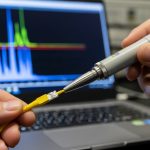
- Wavelength verification: We used a calibrated optical spectrum analyzer to confirm center wavelength alignment to the intended DWDM grid channel under controlled thermal conditions.
- Link margin testing: We ran traffic with measured BER/CRC counters at increasing span loss using calibrated attenuators to emulate the fiber plant.
- DWDM shelf alarm rehearsal: We intentionally induced marginal conditions (reduced Tx power, slight attenuation mismatch) to confirm the shelf raised correct alarms rather than silently failing.
- Hot/cold cycling: We cycled module temperature within the expected rack envelope and monitored wavelength drift and packet error rates.
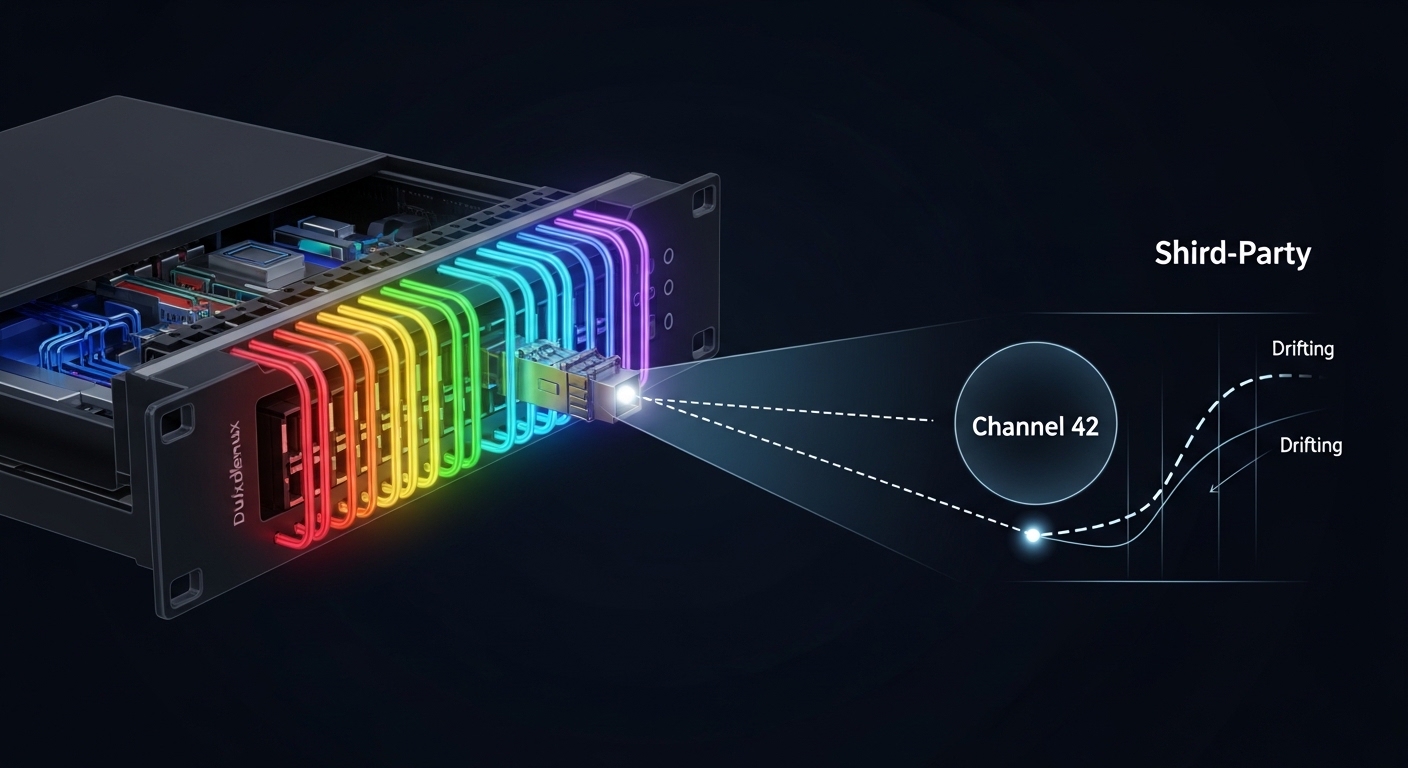
Pro Tip: Many third-party optics pass basic “link up” tests, but DWDM systems care about center wavelength drift more than nominal wavelength. Qualify over temperature cycling and watch the shelf’s channel alarm behavior, not just switch link state.
Measured results: stability, alarms, and performance under load
After qualification, the third-party wavelength SFP modules operated reliably on the Alien wavelength DWDM shelf. In traffic testing, we observed stable forwarding with no sustained CRC bursts and link error counters returning to baseline after transient events. Over the 10 km test span, the measured link margin stayed consistent with our pre-test budget, and BER remained below our threshold during steady-state runs.
Most importantly, the DWDM shelf did not produce recurring “out of channel” warnings. During thermal variation, the modules’ center wavelength drift remained within the shelf tolerance window, and DOM readings remained coherent with monitoring expectations. From an operations view, the modules were usable by automation: alarms triggered on real degradations (for example, when we attenuated beyond budget), not on spurious DOM inconsistencies.
Common pitfalls and troubleshooting tips (what field teams actually hit)
During qualification, we found several recurring issues that can make third-party wavelength SFP deployments fail even when the optic is “compatible.”
- Pitfall 1: “Link up” but high packet errors: Root cause is often insufficient optical power budget or connector contamination. Solution: inspect and clean LC connectors with lint-free wipes and verify Tx/Rx power via DOM before changing firmware or optics.
- Pitfall 2: Channel alarm flapping: Root cause is wavelength drift outside the DWDM tolerance window, usually exacerbated by temperature swings or using optics with loose wavelength binning. Solution: re-qualify with thermal cycling and confirm the exact channel mapping and wavelength bin.
- Pitfall 3: DOM polling mismatches: Root cause is inconsistent DOM field population or diagnostic flags that the switch software expects. Solution: confirm DOM field support with the target switch model and update monitoring scripts to handle vendor-specific quirks.
- Pitfall 4: Intermittent link drops after re-seating: Root cause can be poor cage fit, uneven latch pressure, or fiber stress from patch cord routing. Solution: standardize patch cord bend radius, verify latch engagement, and check for mechanical wear on the port.
Selection criteria checklist: how to choose third-party wavelength SFPs safely
Use this ordered checklist to reduce the risk of “it works in the lab but fails in production.”
- Distance and loss budget: Confirm reach class and calculate margin including splices and patch cords.
- DWDM channel fit: Verify the module’s wavelength bin and expected center wavelength tolerance for the shelf.
- Host switch compatibility: Check SFP electrical interface support and DOM expectations for the specific switch model.
- DOM support level: Ensure temperature, Tx/Rx power, and diagnostic flags are populated and stable under polling.
- Operating temperature range: Prefer modules rated for the rack’s real thermal envelope; validate drift over temperature.
- Vendor lock-in risk: Ask for documentation of wavelength binning and DOM behavior; keep an OEM fallback SKU for rollback.
Cost and ROI note: where third-party optics win (and where they do not)
In many metro and enterprise rollouts, third-party wavelength SFPs cost less than OEM equivalents, often by 15% to 40% depending on volume and channel specialization. However, TCO depends on qualification effort and failure handling: if you must run extended thermal tests for every SKU, the labor cost can offset the purchase savings. In our case, once the validation matrix was built for the specific switch and DWDM shelf pairing, replacements became straightforward, and the reduced optics purchase cost improved ROI over the first replacement cycle.
Practically, we budgeted for: spare inventory, cleaning supplies, and a short lab qualification run per new wavelength bin. We also tracked field failure rates by optical channel, since a “bad batch” pattern is common when wavelength binning is inconsistent.

FAQ
How do I confirm a third-party wavelength SFP will work with an Alien Wavelength DWDM shelf?
Validate center wavelength and drift using an optical spectrum analyzer, then confirm shelf channel alarms remain stable during temperature cycling. Also verify DOM fields are readable by your switch and monitoring tools.
Do I need OEM optics for initial deployment safety?
Not necessarily, but you should keep an OEM “golden” module as a control during qualification. That lets you separate optics issues from fiber plant or shelf configuration problems quickly.
What DOM metrics matter most for DWDM stability?
Focus on temperature, Tx power, and any wavelength or diagnostic status fields exposed by the module. Even when wavelength is not explicitly reported, stable Tx power and coherent temperature readings often correlate with reduced drift risk.
Why do third-party optics sometimes pass at room temperature but fail later?
Wavelength drift is temperature-dependent, and DWDM shelves enforce tight channel tolerances. A module that is within tolerance at room temperature can move out of spec during rack warm-up or seasonal changes.
What is the fastest troubleshooting path when a link becomes unstable?
First