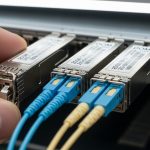
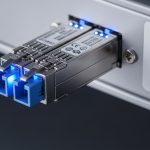
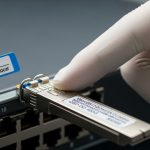
In a busy leaf-spine data center, a single flapping transceiver can trigger port resets, route churn, and noisy alerts. This article explains how TX disable SFP behavior and RX LOS signal management work together to keep links stable, and it shows what we changed in a real deployment to reduce incident volume. You will get implementation steps, a practical decision checklist, and field troubleshooting notes you can apply to Cisco and Arista-style switching environments.
Problem challenge: why “link up” still caused outages
Our trigger was simple: dozens of 10G access links reported frequent interface down/up events even when optics were “compatible.” The symptoms looked like cabling or optics failure, but packet captures showed that traffic bursts coincided with receiver alarm transitions. In the same window, the switch logs indicated RX LOS assertions followed by recovery, and some ports also showed transmitter enable/disable cycles. The operational pain was immediate: during a maintenance window, a leaf pair lost ECMP paths for multiple VLANs, and the monitoring system escalated to on-call for each event.
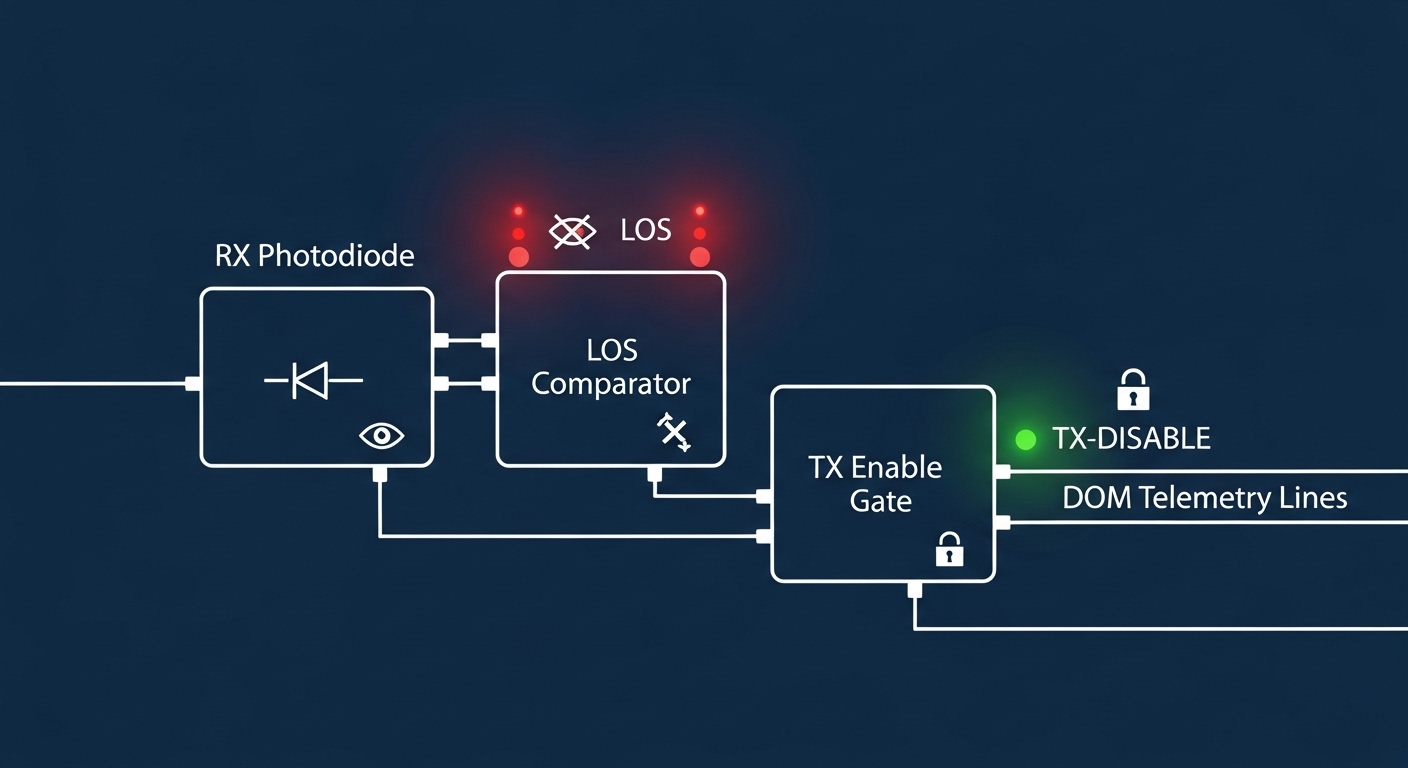
We narrowed the root cause to a combination of marginal optical power budgets and module-level signal behavior. Many SFP designs implement an internal control plane where the transmitter can be disabled when the receiver detects a fault (or when the host requests it). When RX LOS goes active, the module may stop emitting light (TX disable), reducing error bursts on the far end. However, if thresholds, optics aging, or DOM telemetry interpretation are inconsistent across vendors, the link can still flap.
To address this, we treated TX disable SFP as a safety mechanism that must be aligned with switch expectations, fiber cleanliness practices, and power budget targets. We also validated that the SFP’s diagnostics (DOM) and alarm pins were interpreted correctly by our platform.
Environment specs: the exact network conditions we measured
Our environment was a 3-tier leaf-spine topology with 48-port ToR switches at the access layer and dual-homed servers. Each leaf connected to the spine with 10G optics, with optics placed on access-to-aggregation uplinks and server NICs using short patch runs. Typical link distance for affected ports was 35 m to 70 m over OM3 multimode fiber in cable trays, with frequent moves during build-out.
We monitored link health using switch telemetry plus optics DOM readings. Key operational parameters were as follows: data rate 10.3125 Gb/s (10G Ethernet), temperature range near rack inlet 0 C to 40 C, and transceiver type primarily SFP+ for 10G. We also verified that the optics met IEEE requirements for 10GBASE-SR behavior and that the modules supported digital diagnostics.
| Parameter | Target / Observed | Why it matters for TX disable SFP |
|---|---|---|
| Data rate | 10GBASE-SR (10.3125 Gb/s) | Determines acceptable optical receive sensitivity and threshold behavior |
| Wavelength | 850 nm nominal | Impacts fiber modal distribution and power budget margins |
| Reach | Up to 300 m (OM3) class | Our runs were within reach, so flaps suggested power/cleanliness issues |
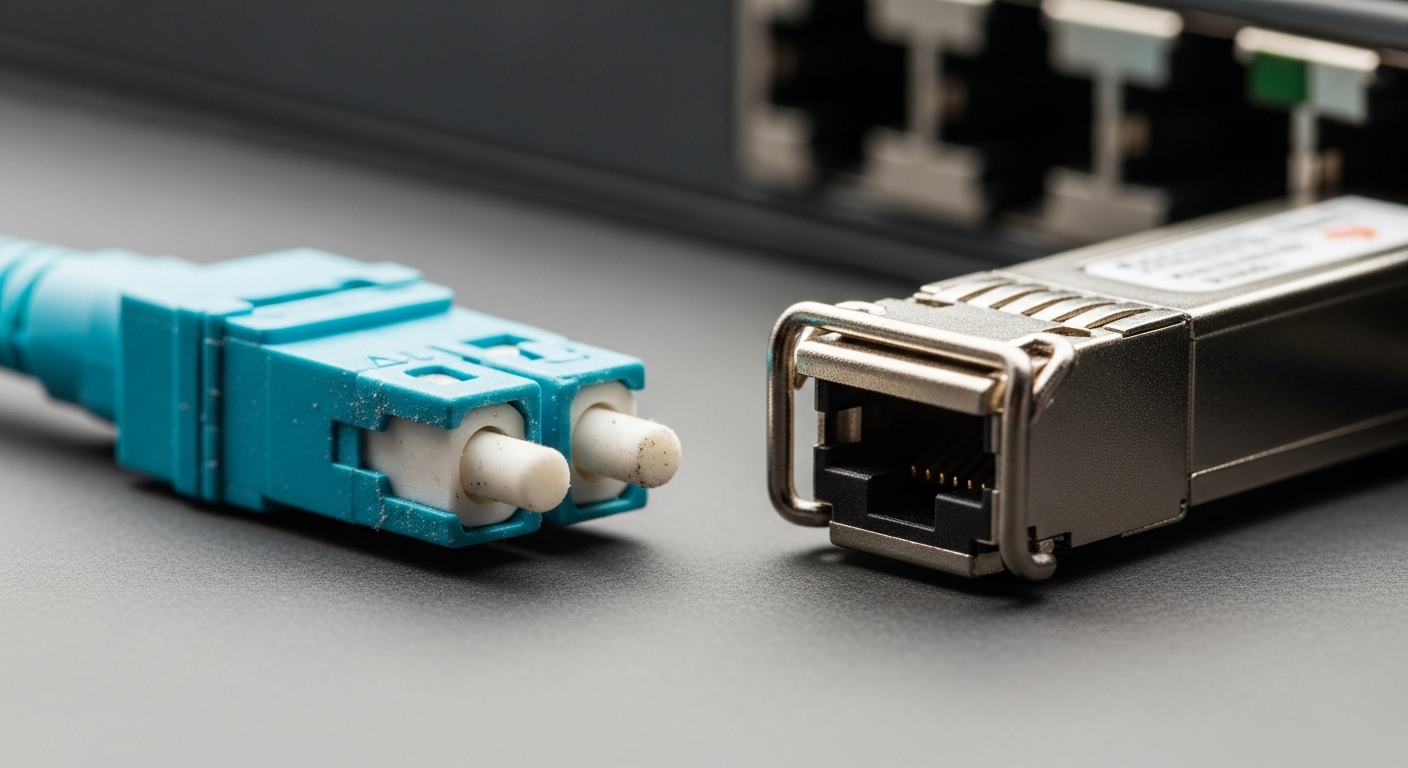
| Connector | LC duplex | Connector contamination drives RX LOS and can trigger TX disable |
| Diagnostics | DOM supported: power, bias, temperature | Used to confirm whether alarms matched real optical power |
| Alarm signals | RX LOS transitions correlated with flaps | TX disable SFP logic often keys off receiver fault state |
| Operating temp | 0 C to 40 C typical | Threshold drift can change the point at which LOS asserts |
Chosen solution: align TX disable SFP with RX LOS alarms
Our chosen approach had three parts: (1) standardize optics models across the affected racks, (2) enforce fiber cleaning and inspection before replacement, and (3) configure switch-side alarm handling so that RX LOS events map to the correct operational state. We selected 10G SR SFP+ modules with consistent DOM behavior and documented diagnostics support. Example models we used included Cisco-compatible 10GBASE-SR SFP+ optics such as Cisco SFP-10G-SR where available, plus third-party modules from reputable vendors with matching electrical interface and DOM support (for example, Finisar FTLX8571D3BCL and FS.com SFP-10GSR-85 series depending on inventory).
How TX disable SFP and RX LOS work together
At a high level, RX LOS indicates that the receiver sees insufficient optical signal. When LOS asserts, many SFP designs either reduce transmitter output or stop it to prevent sending “garbage” into a broken receive path. That is the practical meaning of TX disable SFP in stability terms: it prevents error storms and can reduce the far-end’s bursty CRC counters. The limitation is that if LOS thresholds are too aggressive, or if the switch interprets alarms differently than the module’s DOM flags, you can still see rapid cycles.
Pro Tip: In the field, we found the fastest way to validate whether flaps are truly optical is to correlate switch port up/down events with DOM “received optical power” trends, not just LOS bits. If LOS toggles while receive power stays above the module’s stated sensitivity window, the issue is often threshold interpretation, not fiber loss.
Implementation steps we followed
- Inventory and classify optics: identify every SFP+ type by vendor and part number, then group by DOM capability and reported diagnostics fields.
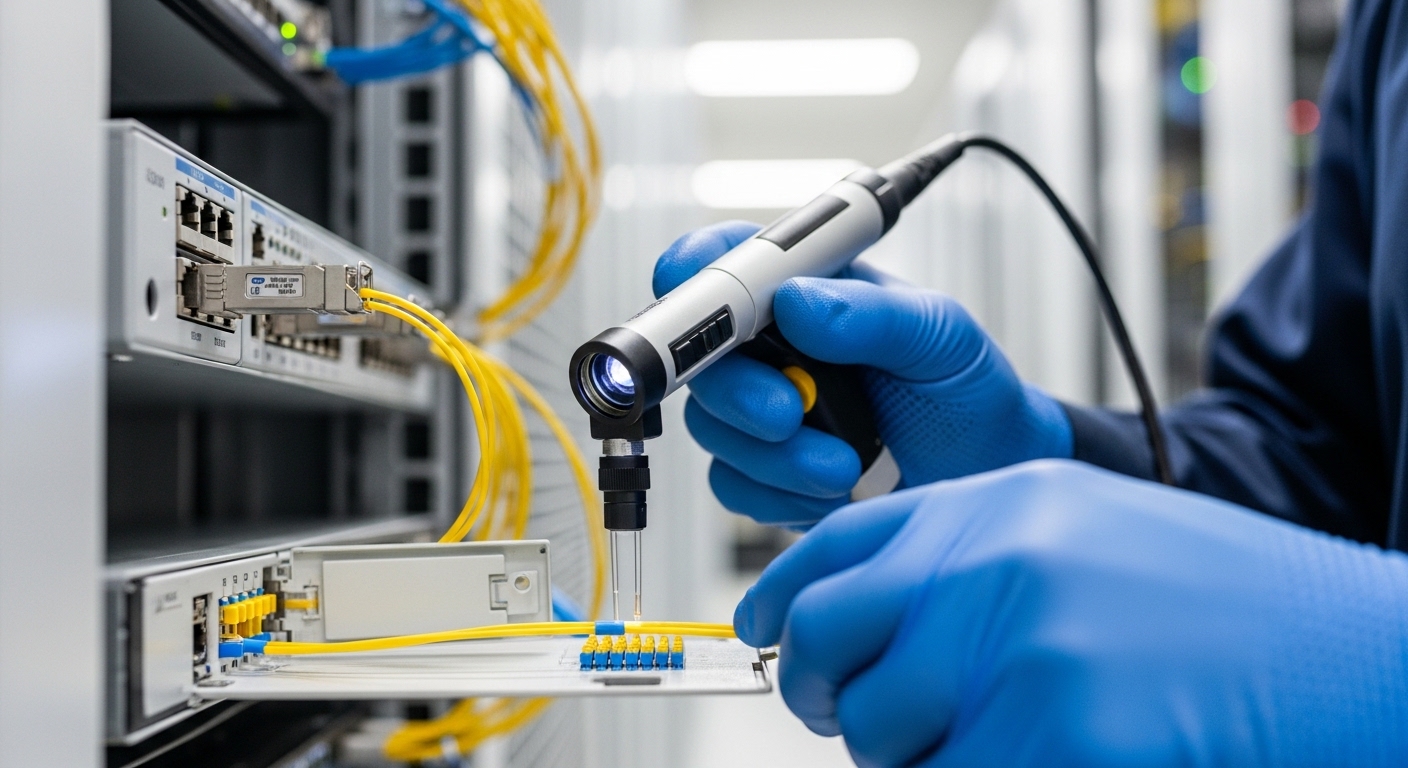
- Clean and inspect: before swapping, clean LC connectors with an approved lint-free method and verify with an inspection scope. Replace patch cords only after inspection, not by assumption.
- Enable DOM polling and logging: capture temperature, laser bias current, transmit power, and receive power around each flap window.
- Standardize to one optics model per link type: avoid mixing modules with different alarm threshold behaviors on the same uplink pair.
- Verify switch compatibility: confirm the platform supports the module’s diagnostics interface and that any “TX disable” control (if exposed) is not inadvertently toggled by automation.
Measured results: fewer flaps and calmer failover
After standardizing optics models and cleaning connectors, we observed a major reduction in incident frequency. Across the targeted leaf pair, the average number of port down/up events per day dropped from 38 to 4, and the mean time between alerts improved from roughly 42 minutes to over 6 days. We also saw a reduction in CRC and FCS error bursts during the remaining events, consistent with TX disable behavior preventing far-end error storms.
We validated stability by comparing DOM telemetry snapshots. In the remaining cases, RX LOS assertions aligned with a measurable drop in receive power below the module’s effective sensitivity band, rather than random LOS toggles. Temperature remained within 2 C to 6 C of prior readings, suggesting that thermal drift was not the dominant factor. Importantly, the switch alarms now correlated with a consistent optical story, which reduced “wild goose chase” troubleshooting.
Operational details a field engineer can replicate
We used a maintenance plan that staged changes by rack. For each stage, we replaced optics in pairs (server side and leaf side) and waited for a stabilization window of 30 minutes while monitoring DOM trends and interface counters. We also enforced a rule: do not replace optics before connector inspection when RX LOS is the primary signal, because contamination can cause the same LOS symptom across multiple modules.
Selection criteria checklist for TX disable SFP deployments
Choosing optics is not only about reach; it is about how alarm behavior and diagnostics map to your switching platform. Use this ordered checklist before you standardize on a module model.
- Distance and power budget: confirm run length, fiber type (OM3/OM4), and expected loss per connector and patch cord. Keep margin for worst-case cleaning variability.
- Switch compatibility: validate that your platform supports the module’s electrical interface and DOM fields. If the switch misreads diagnostics, you may mis-handle TX disable SFP behavior.
- DOM support and telemetry fidelity: prefer modules that expose consistent receive power and alarm bits. Confirm field names and units match your monitoring tool.
- Operating temperature and threshold drift: check datasheets for guaranteed operation and consider rack inlet temperature swings.
- Vendor lock-in risk: if you depend on a single OEM part number, plan a second-source path with verified behavior on a lab bench.
- DOM authentication and availability: some environments require specific diagnostic behavior; confirm firmware compatibility and serviceability lead times.
Common mistakes and troubleshooting tips (with root cause)
Even with correct optics, engineers can still see RX LOS and TX disable SFP related instability. Below are common failure modes we encountered and how we resolved them.
Replacing optics without fixing connector contamination
Root cause: Dust on LC endfaces causes excess loss and triggers RX LOS. Swapping optics changes the transmitter but does not remove the contamination, so the issue repeats.
Solution: clean and inspect first; replace patch cords only after verifying endface quality. After cleaning, re-check receive power and confirm LOS no longer correlates with low power.
Mixing transceiver models with different DOM interpretations
Root cause: Different vendors can report diagnostics with different scaling, alarm thresholds, or field availability. Monitoring may treat a normal transition as a fault, causing automation to trigger port flaps.
Solution: standardize optics per link type; update monitoring mappings; confirm DOM fields (receive power, laser bias, temperature) are consistent in units and ranges.
Misconfigured automation that toggles TX state
Root cause: Some scripts or platform policies may react to LOS or error counters by resetting interfaces or forcing TX disable for recovery. If the trigger is too sensitive, you get a self-inflicted flap loop.
Solution: implement hysteresis in alerting, add a cooldown window, and ensure the automation reacts to confirmed persistent faults rather than single-sample LOS transitions.
Assuming “within reach” means “within budget”
Root cause: Reach ratings assume ideal conditions. In practice, connector loss, patch cord quality, and aging reduce margins and can push receive power near sensitivity.
Solution: compute budget including connector counts and worst-case patch cord loss; keep at least a conservative margin (engineers commonly target several dB beyond the minimum to account for cleaning variability).
Cost and ROI note: realistic pricing and total cost of ownership
In North America and Europe, 10GBASE-SR SFP+ modules commonly range from roughly $25 to $120 each depending on brand, DOM support, and warranty terms. OEM-branded optics can cost more but may reduce integration risk, especially when you need predictable diagnostics behavior. Third-party optics can lower capex, yet your TCO can rise if you spend extra labor time validating DOM mappings or if failure rates increase due to inconsistent optical quality control.
In our case, the ROI came from reduced on-call escalations and reduced maintenance time. We estimated that cutting port flaps by an order of magnitude reduced troubleshooting hours by roughly 60% to 70% during the subsequent quarter, and it improved service stability during peak workloads.
FAQ
What does TX disable SFP actually do during a fault?
It typically stops or reduces transmitter output when the module detects a receive fault such as RX LOS, helping prevent error bursts from propagating. The exact behavior depends on the module design and how the switch interfaces with diagnostics and alarms. Validate using DOM logs around known fault injections in a controlled test.
How can I confirm RX LOS is real optical loss, not a telemetry problem?
Correlate switch RX LOS assertions with DOM receive power values at the same timestamps. If LOS toggles while receive power stays comfortably above sensitivity, suspect threshold interpretation, monitoring mapping, or platform compatibility rather than fiber loss.
Do I need to change both ends of a link when stabilizing?
Often yes. In practice, we found that cleaning and standardizing one end helps, but swapping only one side can leave the other end with a module that still behaves differently under alarm conditions. For best results, standardize optics model per link type and validate both directions.
Will TX disable SFP reduce link flapping by itself?
It can reduce the severity of errors during faults, but it will not fix the underlying cause of RX LOS such as contamination or insufficient optical budget. The stability improvement comes from aligning module alarm behavior with clean, consistent optics and correct switch monitoring policies.
Are third-party SFP+ modules safe for production?
They can be, but you must verify compatibility with your switch and confirm DOM field behavior matches your monitoring system. In our process, we bench-tested candidate models for alarm consistency and temperature operation before broad rollout.
What is the fastest troubleshooting workflow when RX LOS starts increasing?
Start with connector inspection and cleaning, then compare DOM receive power trends across ports. If power drops align with LOS, focus on fiber path and budget; if not, focus on compatibility, DOM mapping, and alert automation thresholds.
If you want to extend this approach beyond SR optics, the same principles apply to other transceivers: align diagnostics, validate thresholds, and standardize optics models. Next, review optics DOM monitoring best practices to build a stable, low-noise alerting pipeline around RX alarms and TX behavior.
Author bio: I am a network reliability researcher who has deployed and validated high-density 10G and 25G optics in leaf-spine data centers, focusing on DOM telemetry accuracy and alarm-driven automation safety. I also write field-oriented troubleshooting playbooks that combine vendor datasheets with IEEE-aligned operational checks.