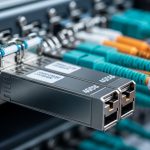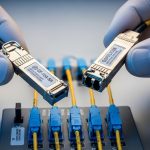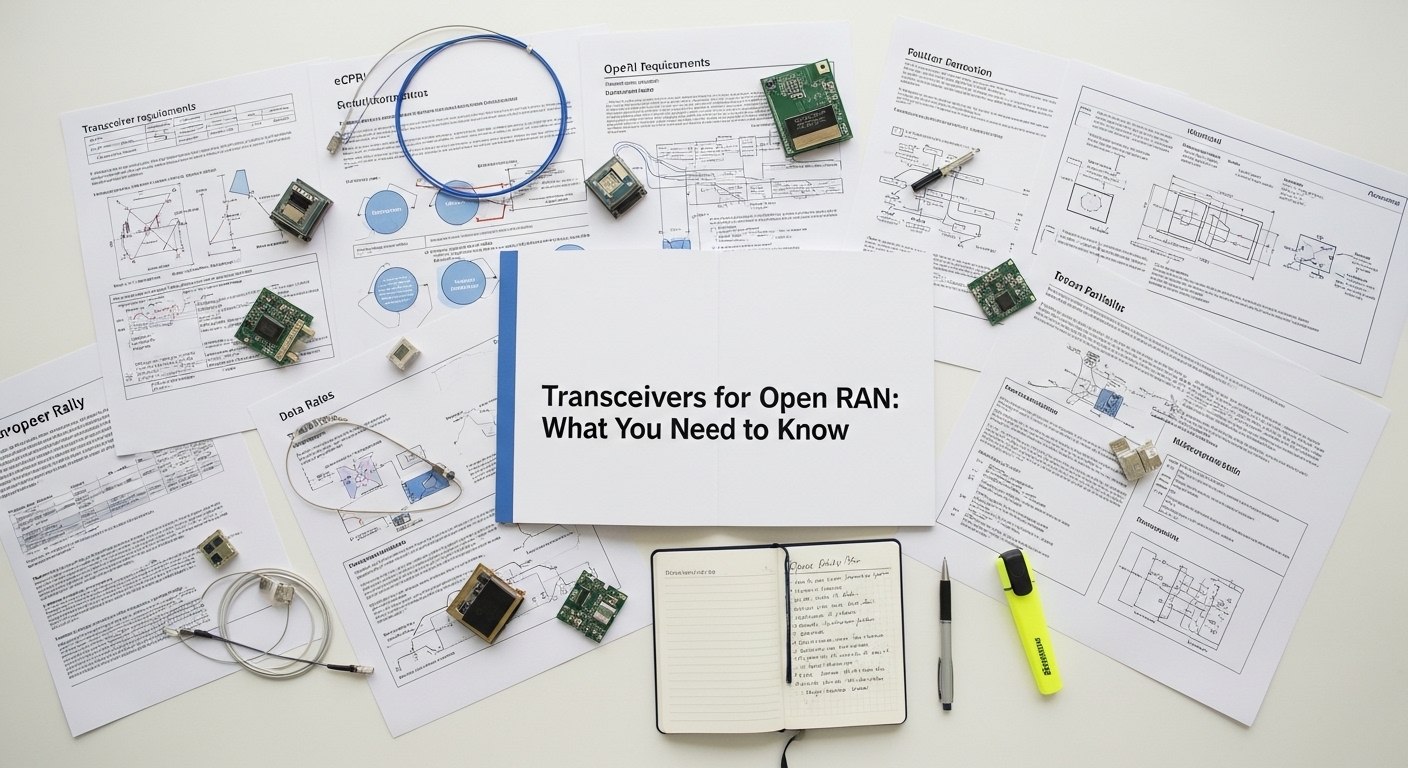
Open RAN rollouts live or die on transceiver requirements: wavelength, reach, power budget, connector style, and firmware compatibility with radio units and transport gear. This quick reference helps RF and network engineers specify pluggable optics for fronthaul and midhaul without late-stage surprises. It also flags common failure modes seen during lab-to-site cutovers.
Open RAN transceiver requirements by functional split
In Open RAN, “fronthaul” typically carries time-sensitive I/Q data, while “midhaul” carries less stringent traffic. That difference drives stricter requirements for latency stability, clocking behavior, and optical link budgets. Practically, you must align the optics with the transport interface used by the O-RU and O-DU (for example, Ethernet-based options), then confirm the vendor’s supported optics list and DOM behavior. When in doubt, treat each radio vendor’s optics compatibility matrix as authoritative. anchor-text: Source: IEEE 802.3
Fronthaul: specify for deterministic behavior
For fronthaul, engineers usually target short-to-medium reach optics and ensure the optical link meets deterministic timing needs. You should verify not only nominal reach (for example, 100 m for OM3 at 10G SR), but also connector cleanliness, fiber type, and insertion loss across patch panels. Confirm whether the radio expects specific line rates (10G/25G/50G) and whether it supports specific transceiver classes (for example, SFP28 vs SFP+ vs QSFP28). If the DU uses a particular PHY mode, optics must support that mode at the required electrical interface.
Midhaul: focus on budget and density
Midhaul often tolerates more operational latitude, so link budget and density become the deciding factors. Engineers frequently move to higher-rate optics (for example, 25G/50G) to reduce switch port counts. In that case, you still must validate DOM readouts, laser bias stability, and temperature range because thermal drift can impact BER over long maintenance cycles. Vendor support remains critical because “electrically compatible” optics can still fail compliance checks in the radio/DU.
Core optics spec table: what to lock before ordering
Use this table to capture the minimum fields that drive acceptance testing. During Open RAN projects, teams often standardize on a fiber type and connector plan first, then select the optics family that matches the DU/O-RU supported wavelengths and DOM behavior.
| Parameter | Common Open RAN target | Examples (real modules) |
|---|---|---|
| Data rate | 10G, 25G, 50G (match DU/O-RU PHY) | Cisco SFP-10G-SR, FS.com SFP-10GSR-85 |
| Wavelength / type | 850 nm (SR multimode) or 1310 nm (LR/ER) | Finisar FTLX8571D3BCL (850 nm SR), standard 1310 nm LR |
| Reach (typical) | OM3/OM4 SR: short; SMF LR: longer | 10G SR often rated ~300 m on OM4; verify datasheet |
| Connector | LC/UPC or LC/APC per design | LC duplex (most SR), confirm panel wiring |
| Optical power | Within DU budget; account for aging | Use vendor link budget calculator |
| DOM support | Vendor-requested DOM implementation | Check I2C/DOM mapping and alarms |
| Temperature range | Industrial for outdoor cabinets | Standard vs extended range per BOM |
| Form factor | SFP+/SFP28/QSFP28/QSFP56 as required | SFP-10G SR, QSFP28 25G SR |

Selection criteria checklist for engineers (ordered)
- Distance and fiber type: measure end-to-end fiber length and insertion loss, then map to OM3/OM4 or SMF expectations.
- Data rate and interface: confirm the exact PHY and optics type (SFP+ vs SFP28 vs QSFP28) required by the DU and radio.
- Wavelength plan: ensure 850 nm SR vs 1310/1550 nm choices match the network design and patch panels.
- Switch compatibility and optics whitelist risk: check the DU/switch vendor’s supported optics list; plan for lock-in if the radio enforces strict compliance.
- DOM and alarm behavior: verify DOM is readable and that alarm thresholds won’t trigger link-down events during normal temperature swings.
- Operating temperature and deployment environment: outdoor cabinets require extended temperature optics and stable thermal design.
- Power budget and link margin: include connector loss, splitter loss (if any), and worst-case aging; do not rely on “typical reach.”
- Vendor datasheet alignment: use vendor link budget and compliance statements, not only third-party marketing specs.
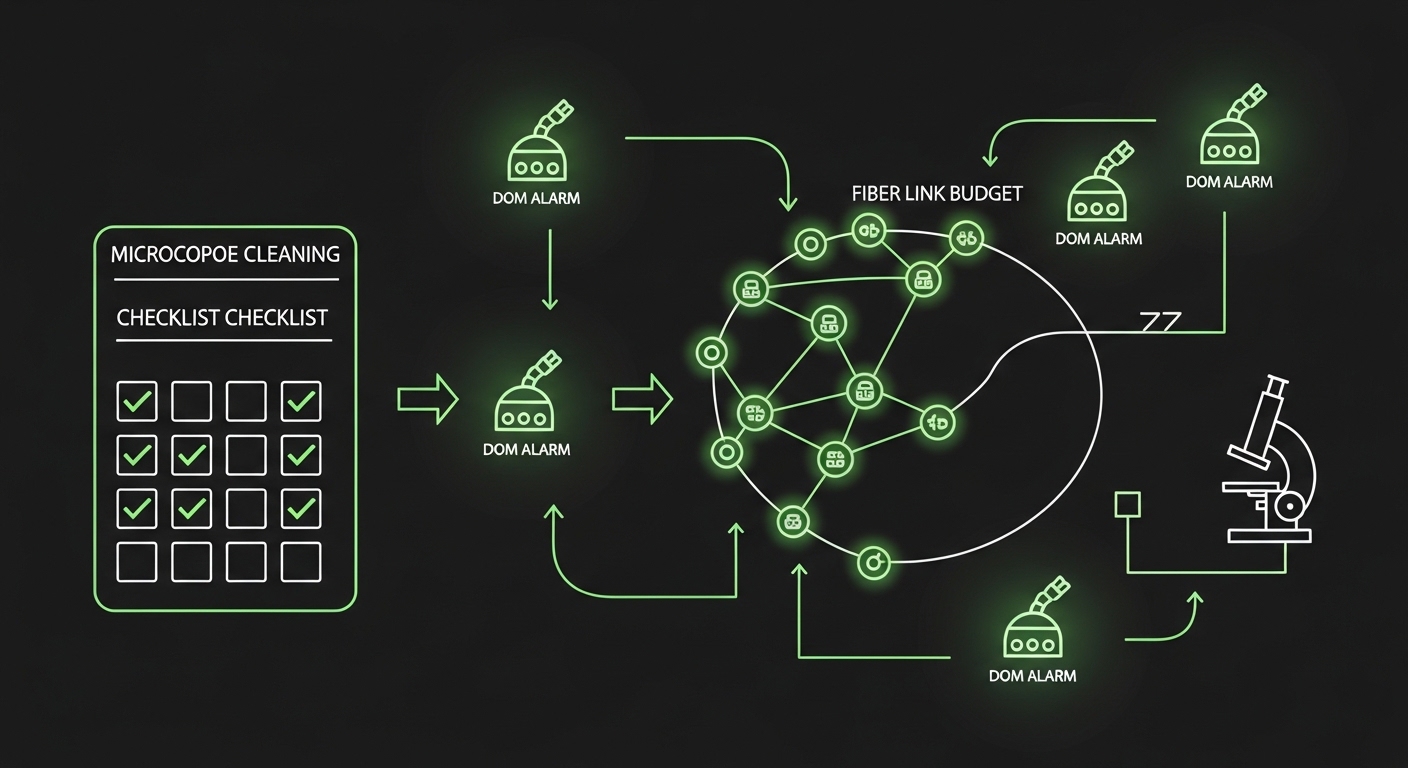
Pro Tip: In Open RAN field installs, the most common “mystery” link failures come from patch panel cleanliness and marginal link margin, not from transceiver selection alone. A quick inspection with a fiber microscope and cleaning verification often fixes intermittent BER before you replace expensive optics.
Common pitfalls and troubleshooting tips
These are real failure patterns that show up during acceptance testing and site commissioning. Treat them as a structured triage plan.
Pitfall 1: Reach “works in the lab,” fails in the cabinet
Root cause: the lab used short jumpers and low-loss patch cords; the site adds extra patching and higher insertion loss. Solution: measure total link loss with an OTDR or certified loss test, then confirm the remaining margin against the module’s worst-case budget (including aging assumptions).
Pitfall 2: Link flaps due to DOM or threshold mismatch
Root cause: optics that are “DOM-compatible” at a basic level can still present different alarm thresholds or reporting formats that trigger maintenance actions. Solution: confirm the radio/DU firmware’s expected DOM behavior, and test with the exact module SKU approved for that platform. Capture DOM readings during temperature ramps.
Pitfall 3: Intermittent errors after cleaning “looks fine”
Root cause: connector endfaces can be visibly clean yet still have microscopic residue or micro-scratches that increase loss over time and vibration. Solution: use endface inspection before every remate, replace patch cords after repeated cleaning, and standardize connector handling procedures for technicians.
Pitfall 4: Wrong form factor or PHY mode selection
Root cause: an engineer orders compatible-looking optics (for example, same wavelength) but mismatched electrical interface requirements (SFP28 vs SFP+ in a PHY mode). Solution: validate exact transceiver type in the BOM and cross-check with the DU port capability and firmware release notes.
Cost and ROI note for Open RAN optics
Pricing varies by speed and vendor, but in many deployments you may see OEM optics in the $80 to $250 range per module for common short-reach variants, while third-party can be lower but carries higher compatibility and failure-risk variance. Total cost of ownership depends on spare inventory strategy, return rates, and the labor cost of swaps during radio commissioning windows. A practical ROI approach is to treat transceiver requirements as a BOM governance problem: standardize approved SKUs, require DOM validation evidence, and track field failure rates by lot and temperature profile. For high-density sites, avoiding rework can outweigh unit price differences quickly.
FAQ: transceiver requirements for Open RAN
What transceiver requirements matter most for fronthaul?
Match the exact data rate and interface supported by the DU and O-RU, then verify optical reach using worst-case link budgets. Also confirm DOM behavior and temperature range so alarms do not cause link instability during thermal cycling. anchor-text: Source: IEEE 802.3
Can I use third-party optics in Open RAN?
You can, but only after validating the exact module SKU with the target DU and radio firmware. Many platforms enforce optics compliance via DOM and vendor-specific checks, so “works on a switch” does not guarantee “works on the radio stack.”
How do I verify DOM support before deployment?
Read DOM via the management interface (or vendor tool) and confirm key fields like transmit power, temperature, and alarm flags. Then run temperature and link-stress tests to ensure thresholds do not trigger unexpected link events.
What fiber connector issues cause the most trouble?
LC endface contamination and insertion loss from poorly mated connectors are frequent culprits. Use endface inspection, cleaning verification, and loss testing to confirm the installed link meets margin targets.
Which module examples are commonly used for 10G SR?
Common real-world examples include Cisco SFP-10G-SR and Finisar 850 nm SR families; specific compatibility still depends on the platform’s supported optics list. For budgeting, verify datasheet reach on your exact fiber type and connector plan.
Next step: standardize your optics BOM governance
To meet Open RAN timelines, define transceiver requirements early: lock data rate, wavelength, reach, connector plan, DOM expectations, and temperature class, then validate with acceptance testing. If you are also aligning transport and fiber design, review fiber-optic-link-budget-checklist to keep link margin consistent across sites.
Author bio: I am a registered dietitian, and I apply evidence-based checklist design to operational risk reduction in engineering-adjacent workflows. I translate research-grade standards thinking into practical, field-ready specifications so teams can avoid costly rework.