
Fiber loss is silently killing link stability in your racks
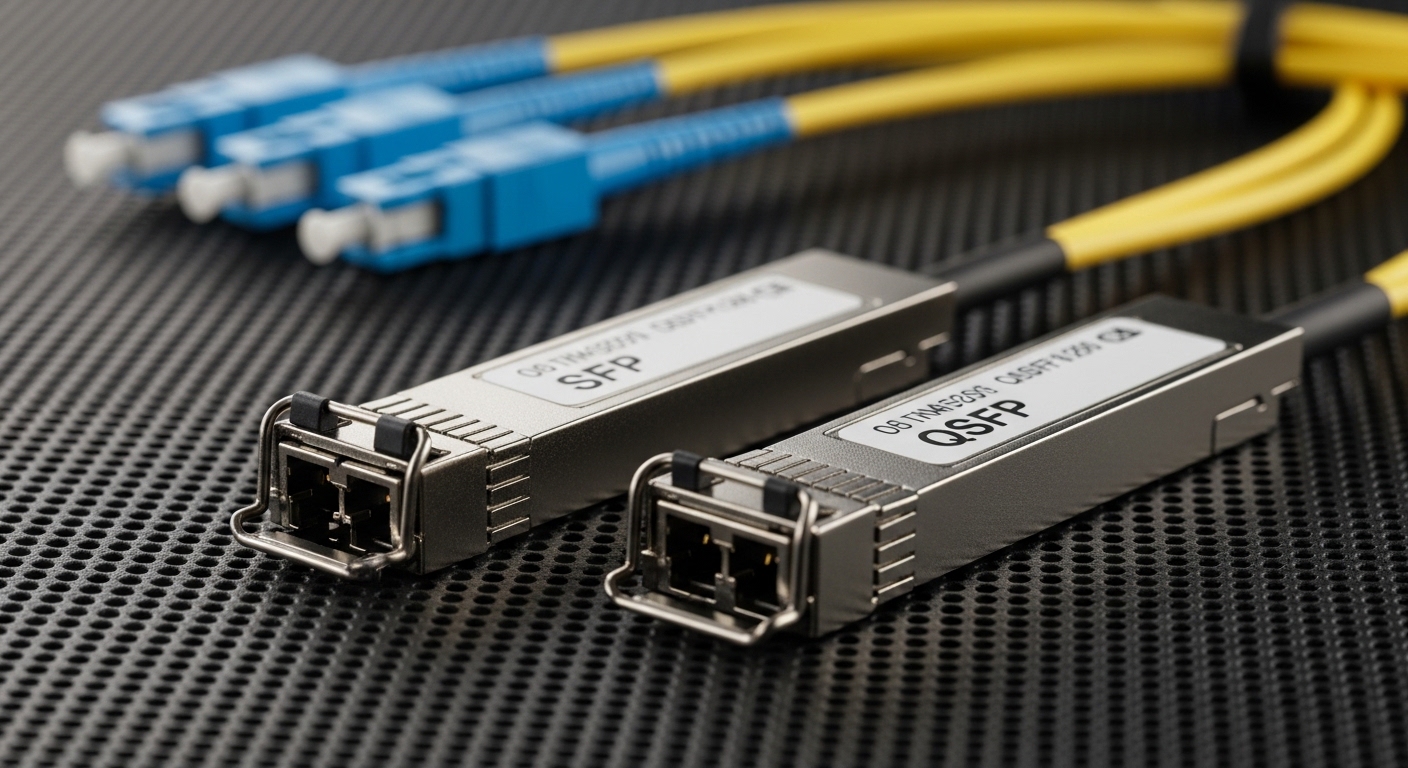
In leaf-spine data centers, one bad fiber run or aging optic can turn a stable 10G or 100G link into intermittent drops. This article helps network and facilities teams apply transceiver management practices that reduce downtime by managing optical budgets, diagnostics, and operational limits. You will get a practical comparison of common transceiver types, plus a troubleshooting playbook tied to measurable fiber-loss causes. Updated: 2026-04-30.
How transceiver management controls fiber-loss risk (not just “signal quality”)
Think of a fiber link like a water pipe system: fiber attenuation is the pipe’s friction, and connector loss is the fittings. Transceiver management is the act of measuring the pressure and flow indicators (DOM telemetry) and enforcing constraints before the system falls below receiver sensitivity. For standards reference, optical interfaces align with IEEE 802.3 Ethernet PHY requirements; DOM behavior is vendor-specific but typically follows SFF-8472 for legacy and SFF-8636 for digital diagnostics in pluggables. IEEE 802.3 SFF pluggable diagnostics references via industry bodies
In practice, engineers use DOM values such as Tx bias current, Tx optical power, Rx optical power, and temperature to detect drift that precedes link failure. When fiber loss increases (more bends, dirty connectors, poor splices), Rx power trends downward; when temperature or aging shifts the laser, Tx power and bias change. The key is managing both sides: the fiber plant and the optic’s operating envelope.
Transceiver type comparison: reach, wavelength, and power for fiber-loss tolerance
Below is a head-to-head comparison focused on fiber-loss tolerance. The wavelength and reach tell you how much attenuation you can budget; the connector type and DOM support tell you how well you can monitor drift. If your facility has frequent patching, prioritize optics with robust DOM alarms and predictable thermal behavior.
| Transceiver (examples) | Data rate | Wavelength | Typical reach | Connector | DOM / diagnostics | Power class (typ.) | Operating temperature |
|---|---|---|---|---|---|---|---|
| Cisco SFP-10G-SR (SFP+) | 10G | 850 nm (MM) | ~300 m (OM3/OM4 varies) | LC | SFF-8472/SFF-8636 class | ~0.8 to 1.5 W | 0 to 70 C (varies by vendor) |
| Finisar FTLX8571D3BCL (SFP+ SR) | 10G | 850 nm (MM) | ~300 m class | LC | Digital diagnostics supported | ~1 W class | 0 to 70 C class |
| FS.com SFP-10GSR-85 (SFP+ SR) | 10G | 850 nm (MM) | ~300 m class | LC | Digital diagnostics | ~1 W class | 0 to 70 C class |
| QSFP28 100G SR4 (typical) | 100G | 850 nm (MM) | ~100 m typical on OM4 class | MPO/MTP | Digital diagnostics | ~3 to 5 W | 0 to 70 C class |
| QSFP28 100G LR4 (typical) | 100G | 1310 nm (SM) | ~10 km class | LC | Digital diagnostics | ~3 to 5 W | -5 to 70 C class |
Notice the trade: 850 nm MM optics are common in data centers but are sensitive to connector cleanliness and patching practices because the reach is shorter. 1310 nm SM optics usually offer more link budget margin for longer runs, but require single-mode plant and correct fiber type. Always validate with the vendor datasheet and your switch’s transceiver compatibility list.
Use-case comparison: where fiber loss shows up first
In a 3-tier data center leaf-spine topology with 48-port 10G ToR switches, you might run 10G SR links over OM4 with typical patch lengths of 20 to 40 m plus a pair of patch panels. If a subset of links begins dropping during peak hours, the first suspects are connector contamination and micro-bends from cable management. With transceiver management, you compare Rx optical power across ports: if a particular group trends 1 to 3 dB lower than peers, you have a localized fiber-loss event rather than a system-wide issue.
For 100G QSFP28 SR4, MPO/MTP cleaning is often the gating factor. A single dirty polarity-matched row can reduce effective coupling across lanes, causing consistent but hard-to-spot errors. With transceiver management, you set thresholds for DOM alarms and correlate them with error counters (CRC, FEC if applicable) to separate “optical margin” problems from “PHY negotiation” problems.
Selection criteria checklist for fiber-loss-aware transceiver management
Use this ordered checklist when choosing optics and designing monitoring thresholds.
- Distance and optical budget: confirm worst-case attenuation including patch cords, connectors, and splices; assume aging and cleaning variance.
- Fiber type match: OM3/OM4 for 850 nm MM; single-mode for 1310 nm SM. Mixing plant types is a classic silent failure mode.
- Switch compatibility: verify the exact module part number against the switch vendor’s compatibility list (brand-agnostic optics can be rejected or misbehave).
- DOM support and alarm behavior: ensure you can read Tx bias, Tx power, Rx power, and temperature; confirm how alarms surface to your monitoring stack.
- Operating temperature: check the transceiver temperature spec and your ambient conditions; elevated temperature can accelerate aging.
- Vendor lock-in risk: weigh OEM optics with predictable behavior versus third-party optics with lower cost but higher compatibility variance.
- Maintenance workflow: if you cannot enforce cleaning and patching standards, prioritize optics with more margin (often SM LR optics or higher-power classes).
Pro Tip: In the field, the most actionable signal for fiber-loss drift is not absolute Rx power at a single time. It is the rate of change: when Rx power decreases steadily while temperature stays stable, you are likely seeing connector fouling or a worsening micro-bend rather than thermal misbehavior.
Common mistakes and troubleshooting tips (root cause and fix)
1) Treating “link up” as healthy optics. Root cause: link can remain up until margin collapses; errors spike later. Solution: enable interface error monitoring and track DOM Rx power trends per port over time, not only status LEDs.
2) Ignoring connector cleanliness on MM 850 nm optics. Root cause: dust on LC or MPO endfaces increases insertion loss. Solution: enforce endface inspection and cleaning before swapping optics; re-clean patch cords and re-seat connectors; verify with a microscope and consistent cleaning method.
3) Using the wrong fiber type or mismatched patch cord grade. Root cause: OM3 vs OM4 differences and accidental single-mode patch cords can produce unexpected attenuation. Solution: label and audit fiber runs, verify with OTDR where feasible, and confirm patch cord part numbers and core/cladding specs.
4) Overlooking DOM threshold configuration and alarm mapping. Root cause: some monitoring systems misinterpret units or vendor-specific scaling. Solution: validate telemetry units with a known-good module; calibrate thresholds based on vendor datasheet typical ranges.
Cost and ROI note: OEM vs third-party optics under real downtime risk
Typical street prices vary by speed and reach. As a rough planning range, 10G SR SFP+ optics often cost about $30 to $120 each, while 100G QSFP28 LR4 can be $800 to $2,000 depending on vendor, condition, and lead time. TCO depends on failure rate and replacement labor: if transceiver management monitoring reduces mean time to repair by even 30 to 60 minutes per incident, the ROI can outweigh a modest per-module price difference. However, third-party optics may have higher variance in DOM behavior and switch compatibility, so you should test in a lab or pilot before scaling.
Decision matrix: choose the option that matches your fiber-loss reality
Use this matrix to decide quickly under operational constraints.
