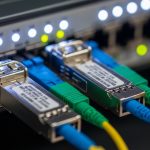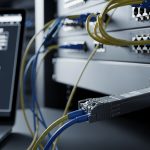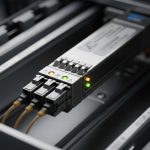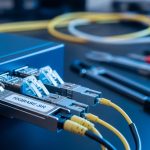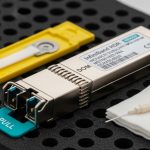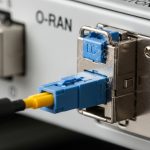
When AI training jobs begin to sprint, the network becomes the hidden metronome. This article maps transceiver innovations to real, engineer-facing choices: reach, lane rate, power, thermal limits, and optics compatibility. It is for network architects, data center engineers, and field teams who must keep links stable while upgrading from conventional 10G and 25G fabrics to AI-era 100G and beyond.
Why AI workloads stress transceivers more than classic traffic
Traditional east-west traffic often tolerates a little extra latency and occasional retraining churn. AI traffic is different: it is bursty, synchronized, and sensitive to microbursts that saturate queues and expose marginal optics. Modern transceiver innovations therefore focus on tighter electrical equalization, better optical budgets, and more reliable diagnostics (DOM) so operations teams can detect drift before it becomes downtime. IEEE 802.3 defines key physical-layer behaviors for Ethernet links, but vendor-specific implementation details decide whether your lab test becomes your production story. anchor-text:IEEE 802.3 standards
In practice, the stress shows up in three places: optical power margin, receiver sensitivity vs. temperature, and host-side signal integrity. Field engineers see it when new racks are powered up at scale: ambient temperature rises, airflow patterns change, and transceiver thermal behavior shifts. The transceiver’s ability to report accurate diagnostics (DOM) is what turns that shift from a mystery into a measured variable.
Core specs that decide link success: wavelength, reach, power, and optics
AI clusters commonly use short-reach optics for ToR and spine links, then extend reach for aggregation and campus. You will usually choose between SR (multi-mode), LR/ER (single-mode variants), and newer high-density form factors. The key is to match your fiber type, distance, and lane rate while staying inside the switch vendor’s electrical interface expectations.
| Transceiver type (examples) | Data rate | Wavelength | Typical reach | Connector | DOM/diagnostics | Operating temp (typ.) |
|---|---|---|---|---|---|---|
| Cisco SFP-10G-SR (legacy SR) | 10G | 850 nm | Up to ~300 m (MM, depends on fiber) | LC | Supported in most SFP+ SR modules | 0 to 70 C (varies) |
| Cisco/compatible QSFP28 100G-SR4 | 100G (4 lanes) | ~850 nm | Up to ~100 m (MM) | LC | Digital diagnostics (per MSA) | 0 to 70 C (varies) |
| Finisar FTLX8571D3BCL (example 25G/50G-class optics) | 25G | ~850 nm | Short reach on MM | LC | DOM over I2C | Commercial/industrial variants exist |
| FS.com SFP-10GSR-85 (example third-party SR) | 10G | 850 nm | Up to ~300 m (MM) | LC | DOM supported | 0 to 70 C (varies by SKU) |
| QSFP28 100G-LR4 (SM, example) | 100G (4 lanes) | ~1310 nm | Up to ~10 km (SM) | LC | DOM supported | -5 to 70 C (varies) |
These numbers are simplified; always verify against the vendor datasheet for your exact part number and host compliance. For transceiver innovations, the practical takeaway is that reach ratings assume a specific link power budget and fiber model. If your cabling uses older MM runs or exceeds the specified OM class, your “100 m” may become “60 m” under real attenuation and patch panel losses.
Deployment scenario: leaf-spine AI fabric where optics drift becomes outages
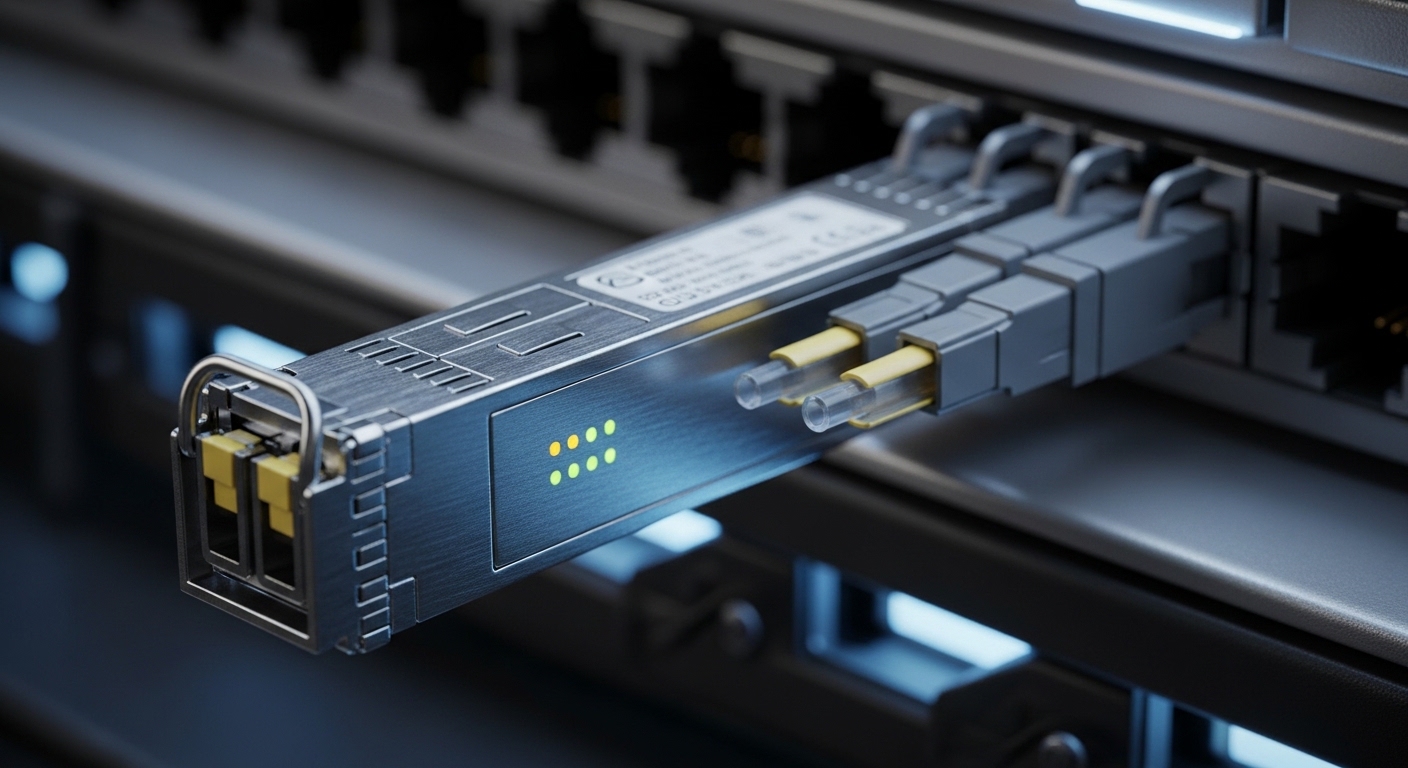
Consider a 3-tier data center leaf-spine topology with 48-port 10G ToR switches upgraded to 25G and 100G uplinks for GPU clusters. Each leaf has 8 uplinks to a spine using QSFP28 100G-SR4 over multi-mode fiber, with patch panels and frequent moves during commissioning. In week three, field teams notice intermittent link flaps at peak training hours. Diagnostics show DOM temperature swings and RX power trending down by about 1.5 dB over several days, correlating with a failing fan tray that changed airflow across the top-of-rack.
The “innovation” in this moment was not only the module; it was the operational feedback loop made possible by DOM and link error counters. Engineers scheduled a controlled airflow correction and swapped only the affected lanes, rather than performing blind replacements across the whole aisle. This reduced downtime and avoided unnecessary spend on modules that were still within their optical budget.
Selection criteria checklist: how engineers choose transceiver innovations that survive production
When procurement and engineering disagree, the checklist below prevents the argument from becoming a fire. Use it in order, and document the outcome so future audits remain calm.
- Distance and fiber type: measure end-to-end loss on MM or SM, not just the label on the cable.
- Switch compatibility: confirm the switch vendor’s supported optics list for your exact model and software version.
- Data rate and lane mapping: verify SR4 vs LR4 lane counts and whether the host expects FEC on specific speeds.
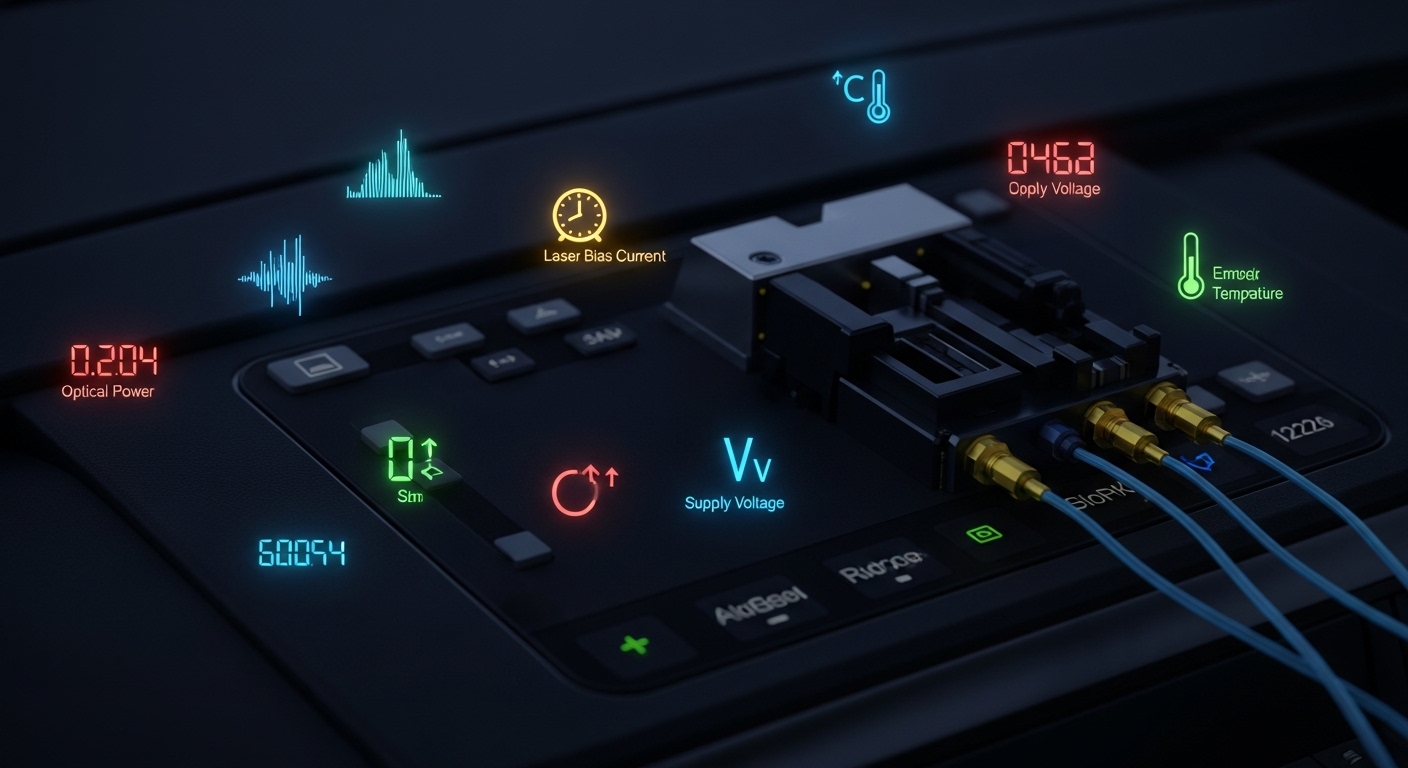
- DOM support and accuracy: ensure diagnostics are available and interpreted by your network OS and monitoring stack.
- Operating temperature and airflow: check the module’s spec and your real rack thermal profile at peak load.
- Connector cleanliness and insertion depth: LC endfaces must be inspected and cleaned with proper wipes and inspection tools.
- Vendor lock-in risk: evaluate OEM vs third-party for availability, but run a compatibility test in staging.
- Failure pattern and warranty terms: choose modules with clear RMA paths and serviceable lead times.
Pro Tip: In many AI clusters, the limiting factor is not the nominal reach spec; it is the combination of patch panel density, connector contamination, and thermal cycling that subtly reduces RX margin over time. If your monitoring alerts on DOM RX power trends early, you can replace a few modules during a maintenance window instead of firefighting during the next training run.
Common pitfalls and troubleshooting: where transceiver innovations still fail
Even with modern transceiver innovations, failures cluster around a few repeat offenders. Below are concrete failure modes seen in the field, with root causes and fixes.
-
Pitfall: Link up/down flaps after a patch move
Root cause: Dirty LC connectors or damage to fiber endfaces creating intermittent reflections.
Solution: Inspect with a microscope-style fiber scope, clean with lint-free procedures, and verify insertion seating; then re-run link tests while watching DOM RX power and error counters. -
Pitfall: Works in staging, degrades in production heat
Root cause: Thermal mismatch and airflow obstruction leading to higher module temperature and reduced receiver sensitivity margin.
Solution: Measure rack inlet/outlet temps at peak load, confirm module temperature readings, and correct airflow before swapping optics wholesale. -
Pitfall: Third-party optics show “no DOM” or are rejected
Root cause: Host firmware compatibility gaps or MSA interpretation differences that affect identification and diagnostics.
Solution: Validate in a controlled staging lab with the same switch model and software, and keep an approved third-party list with evidence. -
Pitfall: Marginal BER despite “green” link LEDs
Root cause: Overstressed link budget, often from older MM OM3/OM4 runs exceeding attenuation assumptions or exceeding patch loss.
Solution: Re-measure fiber loss, check for bad jumpers, and compare measured RX power to the module’s threshold guidance in the datasheet.
Cost and ROI note: where savings hide, and where they do not
Pricing varies by speed and reach. As a rough planning range, OEM 100G-SR4 modules often cost several hundred US dollars each, while reputable third-party options may be meaningfully lower but demand compatibility validation. TCO is not only purchase price: include downtime risk, labor hours for replacements, and the cost of failed training runs when optics degrade mid-job.
A conservative ROI approach is to run a small pilot—say 10 to 20 modules across representative ports and racks—monitor DOM trends for 4 to 6 weeks, and then scale. If the third-party modules show higher temperature or faster RX power drift, the “savings” evaporate in maintenance effort.
FAQ: transceiver innovations in AI networks
Q: Are transceiver innovations mainly about higher speeds?
A: Speed matters, but the more durable gains come from improved equalization, tighter optical budgets, and better diagnostics. For AI clusters, the operational visibility from DOM often determines uptime more than the headline reach number.
Q: Should we standardize on QSFP28 or mix form factors?
A: Standardize where possible to reduce testing and troubleshooting variance. Mixing form factors can be acceptable during phased upgrades, but only if your switch supports both reliably and your monitoring can interpret each module type.
Q: How do we verify compatibility without buying everything?
A: Use a staging lab that mirrors your switch model and firmware, then validate with a representative fiber plant (including patch panels). Track link error counters and DOM RX power under realistic thermal conditions.
Q: What is the most common cause of optical link issues in data centers?
A: Connector cleanliness and patch panel losses are frequent culprits, especially after moves. Even a high-quality transceiver can fail a link when reflections and attenuation push the receiver past its margin.
Q: Do third-party transceivers create security or compliance concerns?
A: Security concerns are usually about supply chain and validation rather than “hacking” optics. Still, keep provenance documentation, confirm DOM behavior, and ensure your procurement process meets your organization’s risk requirements.
Q: Where should we start our next upgrade?
A: Start with the highest fan-out uplinks where link instability is most expensive. Then standardize monitoring on DOM telemetry and error counters so transceiver innovations translate into measurable reliability.
Transceiver innovations are best understood as a system: optics, fiber plant, switch firmware, and the thermal realities of your racks. If you want the next step, review your current optical budget and monitoring coverage, then map changes to a phased upgrade plan using [[LINK:optical budget and DOM