Open RAN deployments live and die by tight timing, predictable power, and reliable optics. If you are planning fronthaul or midhaul across distributed units, you need a practical telecom selection approach for SFP/SFP28/QSFP and coherent pluggables. This article helps network and data center engineers pick the right optical transceiver families using real-world constraints like DOM behavior, temperature limits, and link budgets.
Top 7 telecom selection choices for Open RAN optical transceivers
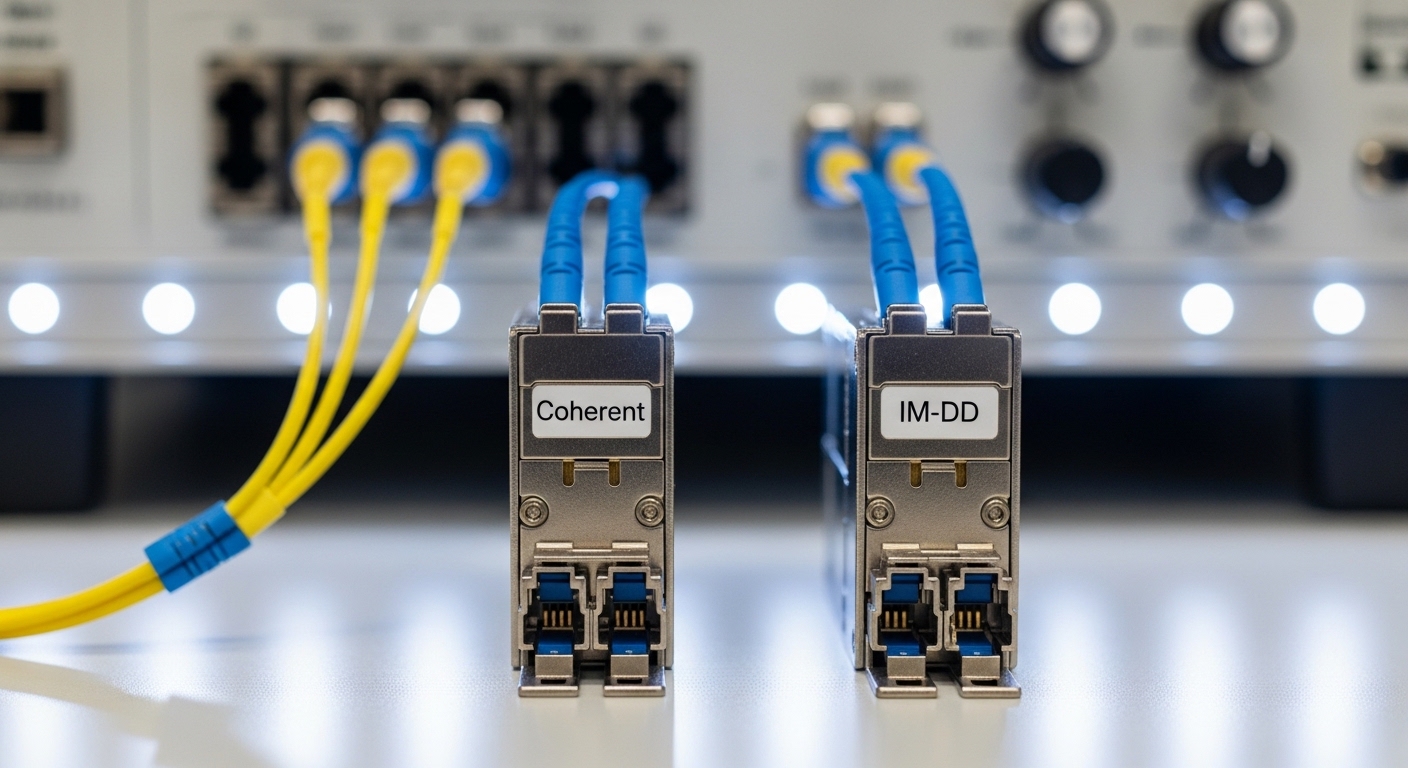
Open RAN commonly mixes high-density ToR switching, aggregation, and strict fiber plant rules in cabinets and remote radio sites. Engineers typically standardize on a few module families to reduce spares and troubleshooting time. Below are seven picks, each mapped to a common distance and data-rate pattern.
10G SFP+ SR (850 nm) for short fronthaul in controlled racks
Key specs to look for: 10G, 850 nm, typical reach 300 m OM3 / 400 m OM4, LC duplex, and an operating range that matches your site HVAC profile. In my deployments, this shows up between a baseband unit and an edge switch when you can keep patch cords short and use OM4 in the cable tray.
Best-fit scenario: A leaf-spine edge with a row of Open RAN DU aggregation switches where the maximum fiber run is under 200 m, and you are using OM4 rated patching. The transceiver cost is usually low enough to populate every port without spiking capex.
- Pros: Mature ecosystem, low cost, easy compatibility with many switches
- Cons: Limited reach vs 1310 nm options; sensitive to dirty fibers
Image: .
25G SFP28 SR (850 nm) for denser midhaul economics
Key specs: 25G, 850 nm, reach typically 70 m on OM3 / 100 m on OM4 (exact values depend on vendor and fiber launch conditions), LC duplex. In practice, 25G SR becomes the “sweet spot” when you need more throughput but cannot justify 100G coherent.
Best-fit scenario: A midhaul aggregation tier where you run 25G to ToR for traffic grooming and keep distances under 100 m with OM4. I have seen this reduce oversubscription pain while keeping optics power manageable.
- Pros: Higher per-port capacity than 10G, widely supported
- Cons: More expensive than 10G SR; reach constraints require better fiber hygiene
40G QSFP+ SR4 (850 nm) when you need 4-lane balance
Key specs: 40G aggregated over four lanes, 850 nm, typically 100 m OM3 / 150 m OM4, QSFP+ form factor, MPO-12 connector (often with breakout/cabling rules). SR4 is common when you are migrating from 10G and want to avoid full 100G design changes.
Best-fit scenario: Cabinet-to-cabinet fan-in where you can standardize MPO patching and maintain consistent polarity. This is especially helpful in Open RAN where multiple DUs converge on a smaller number of aggregation points.
- Pros: Efficient for 40G plans; good fit for MPO-based structured cabling
- Cons: Polarity management is critical; cleaning demands are higher with MPO interfaces
25G/50G SFP28/ QSFP28 LR (1310 nm) for longer midhaul segments
Key specs: 1310 nm wavelength, LC duplex, reach often 10 km (25G) depending on module class, and a well-defined optical power budget. LR modules are useful when fiber runs exceed SR limits but you still want direct attach economics.
Best-fit scenario: Midhaul between sites where you can’t always guarantee OM4 patch cord lengths. In field work, LR tends to be the “telecom selection” compromise when trenching is done once and you want predictable margins.
- Pros: Longer reach, better for distributed sites
- Cons: Higher cost than SR; requires careful budgeting for end-to-end loss
100G QSFP28 SR4 (850 nm) for high-density aggregation over structured OM4
Key specs: 100G over four lanes, 850 nm, typically 100 m OM4 class, QSFP28, MPO-12. For Open RAN aggregation, 100G SR4 can consolidate uplinks when the fiber plant is designed for parallel optics.
Best-fit scenario: A central rack row where multiple 10G/25G streams are groomed into 100G uplinks, and the data hall uses OM4 with engineered insertion loss. I have seen this reduce switch port count and simplify routing.
- Pros: Port density boost; strong fit for MPO structured cabling
- Cons: Demands disciplined cleaning; polarity and breakout correctness are mandatory
Image: .
100G QSFP28 LR4 (1310 nm) for 10 km+ midhaul without coherent complexity
Key specs: LR4 uses wavelength division across four lanes, 1310 nm band, LC duplex or MPO depending on design, and reach commonly 10 km class. For Open RAN midhaul, LR4 offers longer reach while avoiding coherent DSP power and cost.
Best-fit scenario: Inter-building links where you can design for predictable loss but still want straightforward optics and simpler troubleshooting than coherent.
- Pros: Longer reach than SR; manageable operational complexity
- Cons: Compatibility varies by switch vendor; DOM behavior must match platform expectations
400G QSFP-DD/OSFP coherent-lite options for future-proofing aggregation
Key specs: 400G class optics vary widely; some use coherent architectures, others use high-speed direct-detect depending on vendor. In Open RAN planning, 400G becomes relevant when you expect traffic growth and want to keep cabling and switch footprint stable.
Best-fit scenario: A high-capacity aggregation tier where power and cooling budgets can handle higher per-module consumption, and you have a fiber plant with documented OSNR or attenuation margins.
- Pros: Capacity scale; reduced number of uplinks
- Cons: Higher cost; compatibility and optics qualification become stricter
Specifications comparison engineers use during telecom selection
Use this table as a quick sanity check before you validate with your switch vendor compatibility matrix and your SFP/QSFP DOM requirements. Standards references include IEEE 802.3 for Ethernet PHY behavior and ANSI/TIA guidance for cabling practices. For optical and safety constraints, confirm datasheets from module vendors and your platform OEM.
| Module type | Data rate / lanes | Wavelength | Typical reach class | Connector | Operating temperature | Common DOM |
|---|---|---|---|---|---|---|
| 10G SFP+ SR | 10G / 1 lane | 850 nm | ~300 m OM3 / ~400 m OM4 | LC duplex | 0 to 70 C (confirm) | I2C + diagnostics |
| 25G SFP28 SR | 25G / 1 lane | 850 nm | ~70 m OM3 / ~100 m OM4 | LC duplex | -5 to 70 C (confirm) | I2C + diagnostics |
| 40G QSFP+ SR4 | 40G / 4 lanes | 850 nm | ~100 m OM3 / ~150 m OM4 | MPO-12 | 0 to 70 C (confirm) | I2C + diagnostics |
| 25G QSFP28 LR | 25G / 1 lane | 1310 nm | ~10 km class | LC duplex | -5 to 70 C (confirm) | I2C + diagnostics |
| 100G QSFP28 SR4 | 100G / 4 lanes | 850 nm | ~100 m OM4 class | MPO-12 | 0 to 70 C (confirm) | I2C + diagnostics |
| 100G QSFP28 LR4 | 100G / 4 lanes | 1310 nm | ~10 km class | LC duplex (typical) | 0 to 70 C (confirm) | I2C + diagnostics |
Note: Reach depends on fiber type, link loss budget, launch conditions, and patch cord quality; always validate with your fiber OTDR results and the module vendor’s optical budget.
Pro Tip:
Pro Tip: In Open RAN cabinets, the most common “telecom selection” failure is not wavelength mismatch, it is DOM and PHY qualification. Even when the module is electrically compatible, a switch may apply stricter receiver settings or require specific DOM reporting fields; always test one spare module in your exact switch and firmware version before ordering pallets.
Selection criteria checklist for telecom selection in Open RAN
- Distance and fiber type: Map each link to OM3/OM4/OS2 and confirm insertion loss, patch cord count, and connector loss.
- Switch compatibility: Validate module form factor (SFP+, SFP28