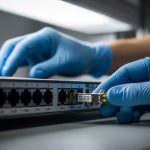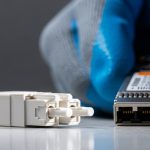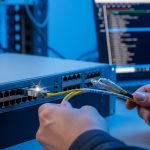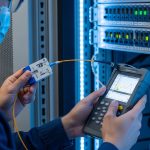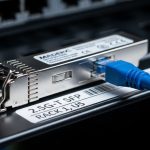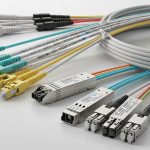
When traffic forecasts shift, telecom teams often discover too late that optics, fiber plant, and switch compatibility were not planned for telecom scalability. This article helps network engineers and early-stage operators validate upgrade paths quickly, then execute safely with vendor-compatible transceivers and measurable fiber readiness. You will get field-level selection criteria, a spec comparison table, and troubleshooting patterns from real deployments where downtime is expensive.
Why fiber upgrades break under load growth
In many access and metro networks, capacity growth arrives in bursts: a new enterprise buildout, a wholesale IP migration, or sudden mobile backhaul demand. Even if the switch chassis has free ports, optics and fiber reach can block scaling. Under IEEE 802.3 line-rate rules, link training and autonegotiation behave differently across vendors, and marginal optical budgets show up as CRC errors, link flaps, or intermittent BER spikes.
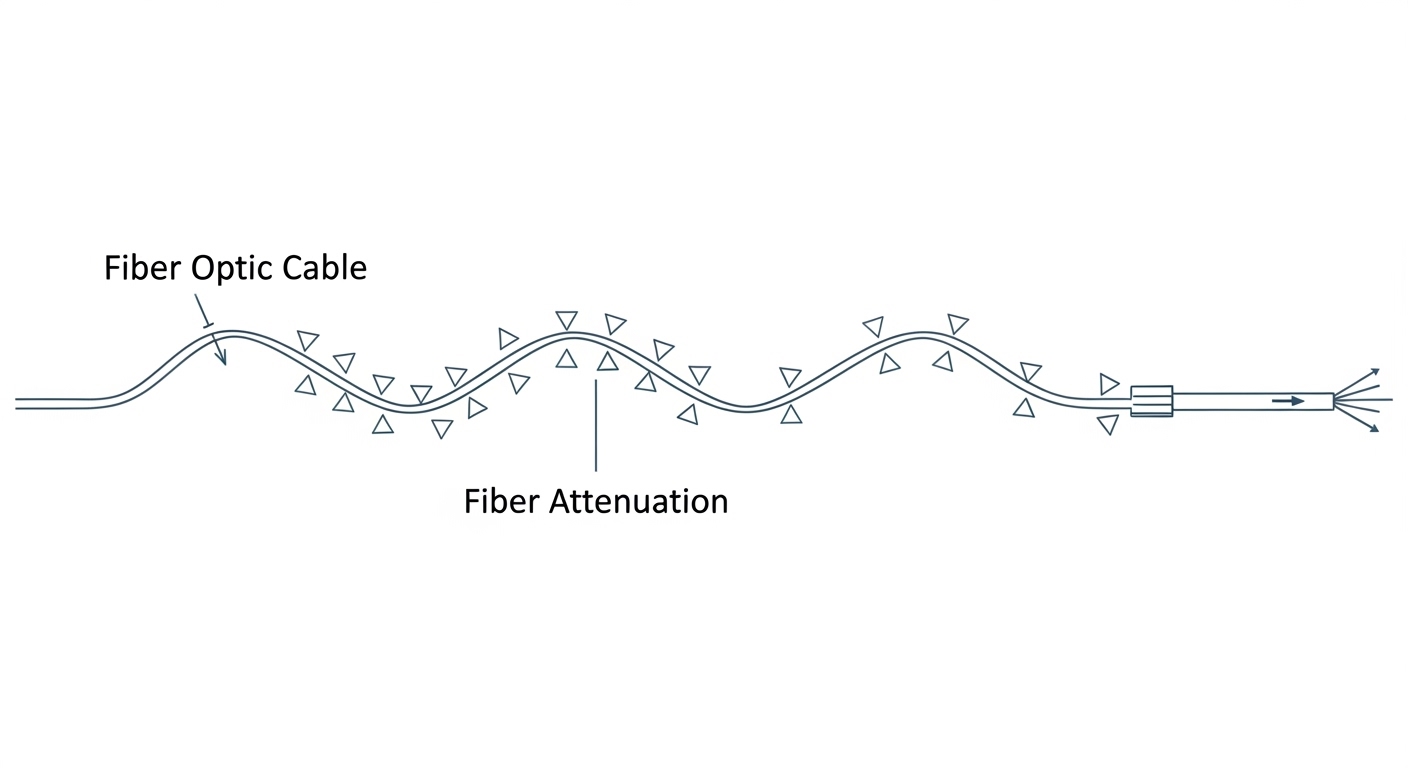
Fiber plant readiness matters as much as port availability. A common failure mode is selecting transceivers that meet nominal reach on paper but ignore insertion loss, connector loss, and aging splice performance. For multi-year upgrades, you also need operational headroom: plan for connector cleaning, re-termination, and patch panel loss rather than assuming the current plant will stay within margin.
For standards grounding, start with IEEE 802.3 for Ethernet PHY behavior and vendor datasheets for optics electrical/optical budgets. For background on fiber types and loss assumptions, reference [Source: IEEE 802.3]. For practical transceiver behavior and DOM monitoring, use vendor product documentation and compliance notes, such as [Source: Cisco Transceiver Data Sheets] and [Source: Finisar/II-VI Technical Notes].
Spec-driven upgrade planning: optics and fiber budgets
Before you touch the network, model the optical budget and verify the physical plant. Engineers typically estimate link loss using measured fiber attenuation plus patch/connector/splice losses, then compare to the transceiver’s receive sensitivity and transmitter power. If you do not have OTDR traces yet, do a fast audit: inspect patch cords, confirm fiber type (OM3, OM4, OS2), and measure end-to-end loss at the wavelength you will use.
Core comparison: common 10G multimode and single-mode options
The table below shows typical starting points you can use for planning. Actual values vary by vendor and exact part number, so treat this as a planning baseline and validate against datasheets before purchase.
| Transceiver (example part) | Interface | Wavelength | Reach (typ.) | Connector | DOM | Operating temp | Notes |
|---|---|---|---|---|---|---|---|
| Cisco SFP-10G-SR | 10GBASE-SR | 850 nm | ~300 m (OM3) | LC/UPC | Often supported | Typical commercial/industrial bands | Multimode; sensitive to patch loss |
| Finisar FTLX8571D3BCL | 10GBASE-SR | 850 nm | ~300 m (OM3) | LC | Commonly available | Vendor-specific | Third-party option; validate compatibility |
| FS.com SFP-10GSR-85 | 10GBASE-SR | 850 nm | ~300 m (OM3) | LC | Varies by SKU | Vendor-specific | Budget-friendly; confirm DOM profile |
| Finisar FTLX1471D3BCL (example) | 10GBASE-LR | 1310 nm | ~10 km (OS2) | LC | Often supported | Vendor-specific | Single-mode; different budget assumptions |
Model the upgrade path around distance and headroom
For telecom scalability, the right move is often to standardize on optics families that match both your current fiber and your planned expansion. If you expect future reach to extend beyond your current patch panel limits, consider single-mode (OS2) early rather than repeatedly re-terminating multimode links. On the budget side, leave margin for connector wear and cleaning cycles, especially in field cabinets where dust contamination is common.
Pro Tip: In many real rollouts, the biggest source of link instability is not the fiber attenuation itself, but patch cord and connector contamination that changes after repeated maintenance. Use a microscope to inspect LC/UPC faces before blaming the transceiver, and track DOM temperature plus RX power trends during the first 72 hours after cutover.

Decision checklist for telecom scalability projects
To avoid rework, build a repeatable selection workflow before procurement. The goal is to minimize incompatible optics, prevent marginal optical budgets, and ensure monitoring visibility for fast rollback.
- Distance and fiber type: confirm OM3/OM4 vs OS2, then validate planned route loss with measurements (not assumptions).
- Transceiver standard: match IEEE 802.3 PHY requirements (for example, 10GBASE-SR vs 10GBASE-LR) and verify vendor compliance.
- Switch compatibility: check the switch vendor’s optics compatibility list and firmware release notes; mismatches can cause link flaps.
- DOM support and telemetry: ensure the transceiver exposes temperature, bias current, TX/RX power, and alarm thresholds in a format your NMS can read.
- Operating temperature: verify the transceiver grade fits cabinet or room conditions; industrial-grade is often necessary for unconditioned sites.
- Vendor lock-in risk: validate third-party optics behavior in a pilot; some platforms have strict vendor ID checks or different alarm thresholds.
- Connector and cleaning plan: specify LC/UPC vs LC/APC and include inspection plus cleaning steps in your SOP.
Common mistakes and troubleshooting patterns
Even teams with strong fiber skills can miss the link behavior details that determine telecom scalability. Below are concrete failure modes observed during upgrade cycles.
Link comes up, then flaps after traffic ramps
Root cause: marginal optical power budget and receive sensitivity under real launch conditions, often worsened by additional patch cord lengths or aged connectors. Solution: measure RX optical power at the switch during peak load, clean connectors, and verify the measured loss against the transceiver datasheet budget. If you are near the edge, increase margin by switching to a longer-reach optics family or reducing patch cord count.
CRC errors with no obvious link state change
Root cause: physical layer quality degradation: dirty optics, microbends in patch cords, or slightly mis-mated connectors. Solution: inspect with a fiber scope, re-terminate if needed, and check DOM alarms for TX/RX power and temperature drift. Confirm that the switch interface is set to the intended speed and that no rate-mismatch is causing fallback behavior.
Autonegotiation or training failures with third-party optics
Root cause: platform-specific transceiver expectations, firmware incompatibilities, or DOM interpretation differences. Some switches enforce stricter optics validation after updates. Solution: run a pilot with the exact switch model and firmware version, then lock procurement to tested part numbers. Keep a rollback plan that swaps optics back within the same maintenance window.
Cost and ROI considerations for scalable deployments
Pricing varies by reach, grade, and ecosystem constraints, but realistic planning helps avoid surprises. OEM SFP or SFP+ optics often cost more per module than third-party equivalents, yet OEM bundles can reduce compatibility risk and speed up acceptance testing. Third-party optics can cut capex, but you must budget for a pilot phase, extra cleaning/inspection time, and potential replacements if the switch enforces strict validation.
Typical street pricing ranges (ballpark) for 10G optics can span tens to low hundreds of dollars per module depending on brand, reach, and DOM support; power and cooling impacts are usually small compared to the labor and downtime cost of failed cutovers. For ROI, focus on reducing truck rolls and speeding MTTR by enabling DOM telemetry and consistent optical budgets, which directly supports telecom scalability across multi-year demand.
FAQ: planning fiber upgrades without losing capacity
What does telecom scalability mean for optics planning?
It means your network can add traffic and new endpoints without repeated rework of fiber routes, patch panels, or transceiver mismatches. Practically, it requires selecting optics that match your reach, leaving optical headroom, and ensuring monitoring works for fast troubleshooting. [Source: IEEE 802.3]
Should we standardize on multimode or single-mode?
If your future growth is likely to extend beyond current distances, single-mode (OS2) can reduce re-termination cycles. Multimode can be cost-effective for short, stable routes, but it is more sensitive to connector and patch loss. Validate with measured loss and the exact transceiver budget.
How do DOM features affect operational scaling?
DOM improves visibility into TX/RX power, temperature, and alarms, which shortens time-to-diagnosis during intermittent failures. If your NMS cannot read the telemetry format, you lose that benefit and may rely on manual checks, reducing scalability.
Can third-party transceivers work reliably in carrier networks?
Yes, but reliability depends on switch compatibility, firmware behavior, and how strictly the platform validates optics. Run a pilot on the same hardware and firmware, and track BER/CRC trends after cutover. Avoid mixing part numbers across the same link group unless you have acceptance data.
What measurements should we do before swapping transceivers?
Measure end-to-end optical loss with a calibrated meter or OTDR, inspect connectors with a fiber scope, and confirm patch cord length and connector type. Then compare results to the transceiver datasheet optical budget, including realistic connector/splice assumptions.
How can we reduce downtime during upgrade windows?
Use a staged migration: pre-stage optics, label fibers, verify DOM thresholds, and confirm interface config. Maintain a rollback path that swaps optics back quickly, and schedule cleaning and inspection as a first-class step in the work order.
If you want telecom scalability that survives real demand shifts, treat optics and fiber readiness as a measurable system rather than a procurement checklist. Next, review How to choose fiber optic transceivers to build a repeatable standard for reach, compatibility, and monitoring across your upgrade waves.
Author bio: I have deployed and debugged Ethernet optical links in metro and data center environments, including optics compatibility pilots across multiple switch firmware versions. I focus on rapid validation, optical budget rigor, and operational telemetry to achieve measurable telecom scalability.