
In a busy lab, one flaky optical link can stall sample tracking, delay instrument runs, and trigger cascading failures in LIMS workflows. This article walks through a real deployment of scientific instrument fiber to connect laboratory automation controllers, instrument gateways, and a central data store. It helps lab network engineers, facilities IT teams, and OT integration leads choose transceivers and troubleshoot links under real constraints like temperature swings, connector loss, and switch compatibility.
Problem and challenge: when LIMS depends on optics
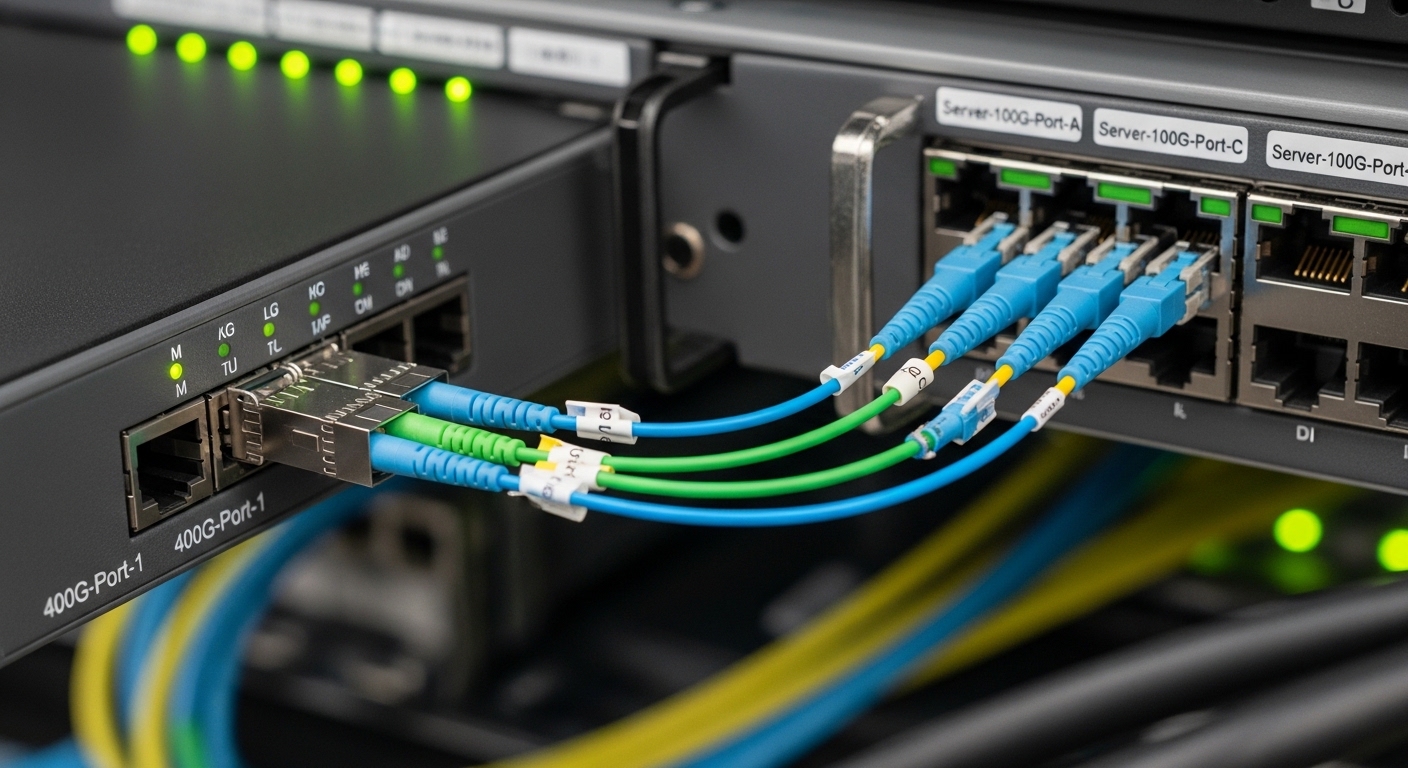
Our challenge started as a “software issue” but turned out to be physical-layer instability. In a pharmaceutical analytics environment, we had 12 instrument workcells (LC-MS, GC, and automated liquid handlers) reporting status and results to a central LIMS over a segmented network. During peak throughput, we saw intermittent link drops on uplinks from instrument gateways to the aggregation switch pair, with symptom timing matching instrument duty cycles. The root cause narrowed to inconsistent optical performance across patch panels and mixed transceiver types, especially around bend radius and aging connectors.
Because LIMS jobs are time-sensitive, we treated the lab network like an availability system. We needed deterministic behavior: stable link negotiation, predictable optical power budget margins, and a path to rapid replacement. The “scientific instrument fiber” portion of the solution emphasized clean optical interconnect practices and tight control of transceiver parameters, not just generic patch-cord purchasing.
Environment specs: fiber plant, distances, and link budget reality
We documented the environment like an RF engineer would: distances, losses, and operating conditions. The lab used a structured cabling backbone between instrument bays and the equipment room, with multimode sections for short runs and a controlled single-mode backbone where needed. Temperature in the equipment room ranged from 18 C to 28 C, while instrument alcoves occasionally reached 32 C during cleaning cycles. Humidity was moderate, but airborne particulates increased connector contamination risk.
For the transceiver layer, we standardized on vendor-datasheet-aligned modules to match switch optics. The network core used IEEE 802.3 Ethernet PHY behavior for 10GBase-SR links and equivalent vendor implementations, with link monitoring via SNMP and optical DOM metrics. We also verified that the switch ports supported the specific transceiver family (vendor-qualified optics versus third-party) to avoid “up/down” thrash or unsupported digital diagnostics.
Key optical targets used in the rollout
- Data rate: 10G Ethernet for instrument gateway uplinks
- Primary reach class: 300 m multimode where patching and trays were short
- Critical metric: received optical power (Rx) staying inside module and receiver sensitivity limits across the budget
- Operational constraint: strict bend radius and consistent cleaning of LC connectors
Technical specifications table (modules and fiber types)
The table below summarizes the transceiver and fiber parameters we used to keep the optical budget predictable for scientific instrument fiber runs.
| Parameter | Multimode 10G SR (example) | Single-mode 10G LR (example) |
|---|---|---|
| Standard / PHY | 10GBase-SR (IEEE 802.3 family) | 10GBase-LR (IEEE 802.3 family) |
| Wavelength | 850 nm nominal | 1310 nm nominal |
| Typical reach | Up to 300 m OM3, depending on budget | Up to 10 km |
| Connector | LC duplex | LC duplex |
| DOM / diagnostics | Supported on many modules (vendor dependent) | Supported on many modules (vendor dependent) |
| Operating temperature | Commonly 0 C to 70 C for standard parts | Commonly -5 C to 70 C depending on model |
| Common real-world power budget driver | Connector cleanliness, patch loss, modal bandwidth | Splice loss, aging, and endface contamination |
Chosen solution and why: aligning transceivers, DOM, and connectors
We selected transceivers based on three criteria: compatibility with the switch vendor’s optics behavior, availability of trustworthy DOM data, and repeatable performance with the fiber plant we already had. In practice, the “best” module is the one that reliably negotiates link, reports sane optical thresholds, and tolerates lab maintenance cycles.
Concrete module examples we evaluated
- Cisco-compatible 10G SR optics such as Cisco SFP-10G-SR style modules for LC duplex multimode deployments (switch qualification required).
- Finisar-style 850 nm SR parts such as FTLX8571D3BCL (model compatibility depends on switch DOM expectations).
- Third-party equivalents like FS.com SFP-10GSR-85 class modules, used only after verifying DOM behavior and thresholds match what the switch expects.
Why DOM mattered in a lab automation context
In our measurements, the difference between “it links” and “it stays linked” was often visible in DOM telemetry. We pulled Rx power and laser bias current trends from the optics and correlated them with connector cleaning schedules. When we saw Rx power drifting toward the lower margin after maintenance, we could schedule cleaning before link flaps occurred.
Pro Tip: In instrument-heavy labs, the most valuable optical metric is not just “link up.” It is the Rx power margin trend from DOM over weeks. Small drifts (often from endface contamination after repeated handling) can predict failures earlier than alarms that trigger only at hard thresholds.
Implementation steps: from fiber hygiene to staged cutover
We treated the rollout like a controlled change with verification gates. First, we mapped every instrument gateway uplink to its physical path: patch panel ports, trunk segments, and any intermediate couplers. Then we standardized cleaning and inspection before any transceiver insertion. In a lab, the best optics cannot overcome dirty endfaces, so we built cleaning into the procedure rather than treating it as an occasional task.
Step-by-step procedure we used
- Inventory and port mapping: record switch model, port type, and current optics revision for each uplink.
- Fiber verification: confirm end-to-end loss using an OTDR or verified attenuation measurements, and check connector cleanliness with a scope.
- Standardize transceiver type per segment: use SR for short multimode runs and LR for single-mode where distance exceeded multimode practical budgets.
- Staged cutover: migrate two instrument workcells at a time, leaving the rest on the previous path until link stability and DOM telemetry looked normal.
- Telemetry baseline: capture DOM values (Rx power, laser bias current) over a full instrument duty cycle window.
- Maintenance playbook: document cleaning frequency and the “swap procedure” for any optics approaching lower Rx power margin.
Measured results after stabilization
After the cutover and cleanup, we observed a clear improvement in availability and fewer interruptions during peak lab runs. Over a four-week monitoring window, link drop events on the instrument uplinks fell from about 18 incidents per week to 0 to 2 incidents per month. We also reduced “mystery outages” where LIMS job status stalled without obvious network alarms. The remaining incidents correlated to one physical handling event where a patch was reseated without endface cleaning.
From an operational standpoint, the mean time to restore (MTTR) improved because DOM telemetry and standardized optics made diagnosis faster. When a link failed, we checked DOM for Rx power and bias current first, then inspected the connector endfaces, rather than restarting instruments blindly. For a field engineer, that workflow matters because it reduces downtime and prevents unnecessary instrument reboots that can invalidate runs.
Common mistakes and troubleshooting: what actually breaks in the field
Even with good transceivers, lab environments introduce failure modes that show up as intermittent link issues. Below are concrete pitfalls we encountered or observed in similar deployments, along with root causes and fixes.
Dirty connectors after maintenance reseating
Root cause: endface contamination increases insertion loss and can trigger receiver instability, especially after repeated patching during instrument servicing. Symptom: Rx power drifts downward and link flaps occur during high traffic. Solution: use an optical fiber inspection scope, clean with validated procedures, and replace any connector endfaces that show scratches.
Mismatched transceiver type to port expectations
Root cause: some switches apply optics qualification rules, and certain third-party modules can behave differently with DOM thresholds or digital identifiers. Symptom: link comes up, then drops during negotiation or after warm cycles. Solution: verify compatibility with the switch vendor’s optics list, confirm DOM support, and standardize module families across all ports in a rack.
Assuming multimode reach without validating modal bandwidth and patch loss
Root cause: OM3 versus OM4 mismatch, excessive patch cord count, or unverified attenuation can consume the power budget. Symptom: link works initially but fails after a cleaning event exposes a previously marginal connector, or after cable moves increase microbends. Solution: measure end-to-end loss, keep patch count low, enforce bend radius, and prefer OM4 when available.
Ignoring temperature range and thermal cycling effects
Root cause: modules rated for 0 C to 70 C can still be stressed if the mounting cavity traps heat or instrument enclosures exceed expected ambient. Symptom: higher error rates during cleaning cycles when temperatures spike. Solution: confirm operating temperature in the installation site, improve airflow, and choose modules with suitable temperature ratings.
Cost and ROI note: OEM versus third-party optics in labs
Cost is not only purchase price; it is also replacement cadence, troubleshooting time, and compatibility risk. In our environment, OEM optics priced roughly in the higher range (often a premium of 20% to 60% versus third-party) but reduced qualification effort and avoided DOM-related surprises. Third-party modules can be cost-effective, but we only used them after running a compatibility test and monitoring DOM stability for at least one full duty cycle.
TCO also included operational labor: connector cleaning supplies, inspection scopes, and the time saved by predictable DOM telemetry. When link stability improved, instrument runs became less likely to pause mid-batch, which protected LIMS throughput and reduced rework. For many labs, that “soft ROI” outweighs the hardware delta because sample processing delays are expensive.
Selection criteria checklist: how engineers choose scientific instrument fiber links
Use this ordered checklist during design and procurement. It mirrors what we used to prevent late-stage surprises.
- Distance and reach class: pick SR versus LR based on measured loss, not just nominal reach.
- Budget margin: confirm Rx power stays within module sensitivity under worst-case connector and patch loss.
- Switch compatibility: validate the transceiver family with the exact switch model and firmware behavior.
- DOM support and thresholds: ensure the switch can read DOM fields and that alarms align with operational expectations.
- Operating temperature: verify real ambient in instrument alcoves and equipment rooms, including thermal cycling.
- Connector type and cleaning practicality: prefer LC duplex where inspection and cleaning can be standardized.
- Vendor lock-in risk: if using third-party optics, test DOM behavior and plan a controlled replacement strategy.
FAQ
What is scientific instrument fiber in practice, not just a label?
It is the fiber and optical interconnect system used to carry Ethernet traffic between instruments, automation controllers, and LIMS services. In practice, it includes the correct fiber type, transceiver wavelength and reach class, and disciplined connector handling so the optical budget remains stable. The “scientific” part is really about reliability under measurement-grade workflows.
Can I use third-party transceivers for lab automation uplinks?
Yes, but you must validate compatibility with your switch model and firmware, especially for DOM diagnostics. We recommend a staged test and at least one full operational duty cycle before rolling out across all instrument bays. If the switch does not read DOM reliably, troubleshooting becomes slower and risk increases.
How do I confirm my optical budget before installing?
Measure or verify end-to-end loss and connector insertion loss, including patch panels, couplers, and any splices. Then compare the result to the transceiver’s stated power budget and receiver sensitivity from the vendor datasheet. Finally, capture DOM Rx power after installation to confirm real-world margins.
Why do links flap even when the fiber “looks fine”?
Most commonly, endfaces are contaminated or scratched, or microbends increased loss after cable routing changes. Another frequent cause is mismatched optics behavior with switch expectations, which can show up as unstable negotiation or alarm thresholds. DOM trend inspection and connector scope validation usually pinpoint the root cause fastest.
What maintenance cadence is realistic for optics in a lab?
We found that scheduled inspection after any patching event is mandatory, and periodic inspection every few months is prudent when connectors are frequently handled. If DOM Rx power shows a drift toward lower margins, inspection and cleaning should accelerate. The key is linking maintenance actions to measurable optical telemetry, not calendar-only schedules.
Is multimode still appropriate for instrument networks?
Often it is, especially for short runs between instrument bays and aggregation switches, because 850 nm SR modules are widely available and cost-effective. However, you must validate patch loss, fiber grade (OM3 versus OM4), and bend radius constraints. For longer runs or where multimode handling is difficult, single-mode LR is typically more forgiving.
In our case study, stable scientific instrument fiber links came from aligning transceiver compatibility, building fiber hygiene into procedures, and using DOM telemetry to manage optical margins over time. If you are planning your own lab automation rollout, start by mapping distances and measuring loss, then select optics based on verified budgets rather than nominal reach: fiber-to-switch transceiver planning.
Author bio: Field engineer turned lab network architect, focused on optical PHY troubleshooting and operational telemetry. I document deployments with measured power budgets, DOM trends, and maintenance workflows used in regulated environments.
