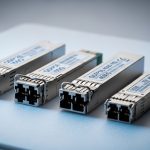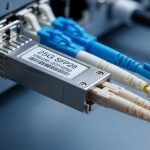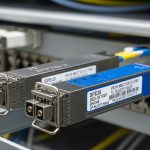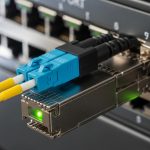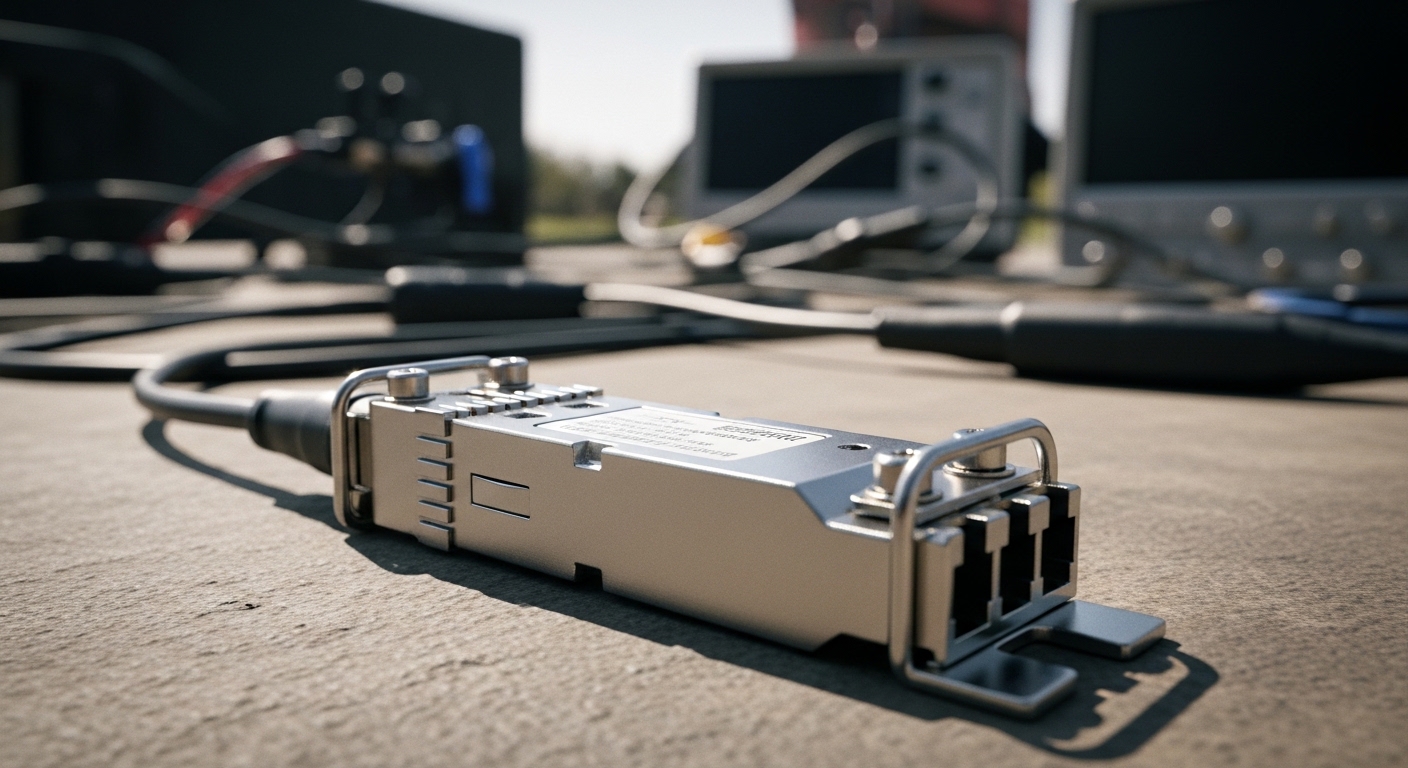
Defense and military optical networks fail in predictable ways: vibration loosens connections, temperature swings shift laser bias, and fiber plants get re-terminated under time pressure. This article helps network engineers, field technicians, and procurement leads choose a ruggedized SFP that can survive those realities. You will get a top-items ranking, a practical decision checklist, troubleshooting patterns seen in operations, and a specs comparison to speed approvals.
Top 8 ruggedized SFP options for defense-ready optical links
When you standardize on ruggedized SFP, you are really standardizing on optical safety margin, mechanical robustness, and manageability under harsh conditions. Below are eight common “classes” that show up in tactical backhaul, base infrastructure, and shipboard LAN segments. Each item includes key specs, best-fit scenarios, and operational trade-offs.
10G SR ruggedized SFP (850 nm, short reach)
For most base and camp environments, 10G SR (typically 850 nm) is the workhorse: it supports short-reach multimode fiber and simplifies logistics because multimode plants are already common. A typical module such as FS.com SFP-10GSR-85 targets 10.3 Gb/s over 300 m on OM3 (and often 400 m on OM4, vendor-dependent). Best-fit: buildings, controlled racks, and patch-panel to ToR runs where you still expect handling shocks.
- Pros: high availability, lower cost fiber plant, broad switch compatibility
- Cons: multimode cabling still needs correct OM grade and cleaning discipline

10G LR ruggedized SFP (1310 nm, extended reach)
When you must bridge between buildings or cross outdoor corridors, 10G LR (1310 nm) becomes the practical choice. Typical reach targets are 10 km over single-mode fiber using a standard LR optical budget. In defense deployments, LR helps reduce the number of intermediate cabinets and splices, which lowers maintenance workload and points of failure.
- Pros: long reach, better for outdoor or distributed facilities
- Cons: single-mode fiber handling and splice quality matter more
10G ER ruggedized SFP (1550 nm, far reach)
10G ER (1550 nm) is the “reach margin” option for remote sites and link budgets where you cannot tolerate repeaters. Many vendors target 40 km over single-mode fiber for ER-class modules. Best-fit: perimeter or valley-crossing links, or when you expect fiber aging and want operational headroom for conservative maintenance cycles.
- Pros: maximum reach class, supports conservative budgets
- Cons: higher module cost and stricter optical budget alignment
1G/2G ruggedized SFP for legacy and slow-control traffic
Not every defense network is “all 10G all the time.” 1G and 2G ruggedized SFPs often carry management, telemetry, and out-of-band control where latency and bandwidth are less critical. They also help you keep legacy switches alive during phased modernization, reducing downtime risk.
- Pros: cheaper optics, stable behavior for management plane
- Cons: limited throughput for data-plane consolidation
CWDM ruggedized SFP for dense wavelength planning
In multi-tenant or multi-mission fiber corridors, wavelength division multiplexing can reduce trenching and spare fiber consumption. CWDM ruggedized SFPs allow channelized transport, which can be valuable when you must fit many links into a limited single-mode bundle. Best-fit: base backbones where you cannot add fiber easily.
- Pros: better fiber utilization, scalable corridor design
- Cons: requires correct CWDM optics pairing and monitoring
Ruggedized SFP with enhanced mechanical retention and sealing
“Rugged” is not only optical. Field failures often come from physical stress: vibration, repeated insertion cycles, and dust ingress. Look for modules designed with improved latch geometry, robust housings, and sealing strategies that reduce connector contamination. The goal is to keep the transceiver stable through transport and repeated maintenance windows.
- Pros: fewer link drops from mechanical movement
- Cons: can increase unit cost and may require switch-specific fit checks
Extended temperature ruggedized SFP (industrial and beyond)
Laser bias and receiver sensitivity drift with temperature. Many ruggedized SFP families target -40°C to +85°C, and some extend higher depending on vendor design. Best-fit: outdoor shelters, containerized deployments, and vehicles where ambient swings are large and HVAC is imperfect.
- Pros: predictable optics behavior across harsh ambient conditions
- Cons: verify datasheet temperature rating versus your enclosure conditions
DOM-capable ruggedized SFPs for audit-ready maintenance
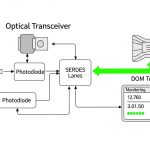
Digital diagnostics monitoring (DOM) matters operationally because it turns “mystery outages” into measurable trends: optical power, laser bias current, and temperature. SFPs aligned with SFF-8472 typically expose these metrics. Best-fit: high-availability defense networks where you need fast root-cause during incident response.
- Pros: measurable health signals, faster troubleshooting
- Cons: switch support varies by vendor and firmware

Spec comparison: wavelength, reach, connector, power, and temperature
Defense procurement often needs one table for engineering review and one for logistics. Use the specs below as a quick baseline, then validate exact parameters against the specific vendor datasheet and your switch’s transceiver compatibility matrix.
| Class (Typical) | Wavelength | Target Reach | Data Rate | Fiber Type | Connector | Temperature Range | DOM |
|---|---|---|---|---|---|---|---|
| 10G SR | 850 nm | 300 m (OM3) / 400 m (OM4) | 10.3 Gb/s | Multimode | LC | Common: -40°C to +85°C | Often SFF-8472 |
| 10G LR | 1310 nm | 10 km | 10.3 Gb/s | Single-mode | LC | Common: -40°C to +85°C | Often SFF-8472 |
| 10G ER | 1550 nm | 40 km | 10.3 Gb/s | Single-mode | LC | Vendor-dependent extended | Often SFF-8472 |
Standards alignment matters. SFP optical and electrical behavior is governed by SFF specifications, while physical layer performance expectations map back to IEEE 802.3 Ethernet requirements. For diagnostics behavior, consult SFF-8472 and the vendor’s DOM implementation notes. [Source: IEEE 802.3] [Source: [Source: SFF-8472]] [Source: vendor transceiver datasheets]
Pro Tip: In field audits, teams often find that DOM “works” but alarms do not trigger because the switch thresholds are tuned for standard industrial optics. Before acceptance testing, verify the switch alarm thresholds for Rx power and laser bias using the module’s DOM readouts under controlled temperature soak.
Selection checklist engineers use under procurement pressure
- Distance and fiber grade: confirm OM3 vs OM4 for SR, and verify single-mode attenuation for LR/ER budgets.
- Switch compatibility: check the exact SFP model family against your switch vendor’s compatibility list and firmware revision.
- DOM support: require SFF-8472-style diagnostics and confirm the switch actually displays or logs them.
- Operating temperature: compare module rating to enclosure conditions; do not assume ambient equals module internal temperature.
- Mechanical robustness: inspect latch design, retention force, and connector protection strategy for vibration environments.
- DOM and wavelength safety: ensure the optics are within the required spectral masks for your network plan.
- Vendor lock-in risk: balance OEM optics support with validated third-party options; require interoperability proof for each platform.
- Test and acceptance plan: mandate link tests at cold and hot extremes, plus receive sensitivity margin checks.
Common mistakes and troubleshooting patterns in ruggedized SFP deployments
Even strong optics fail when operational assumptions break. Below are common field failure modes and how teams typically resolve them.
Link flaps after transport: latch or connector contamination
Root cause: vibration loosens an inadequately retained module or micro-dust increases insertion loss. Solution: re-seat using consistent torque and inspection, then clean with fiber-grade wipes and proper alcohol or cleaning cartridges. Validate with a power meter and verify the Rx optical power stays within the module’s spec.
Works at room temperature, fails in cold or heat: temperature rating mismatch
Root cause: module internal temperature exceeds the assumed rating due to enclosure airflow constraints. Solution: perform temperature soak tests per acceptance criteria and measure DOM temperature and laser bias drift. If needed, switch to an optics family explicitly rated for your worst-case ambient.
DOM shows values but alarms never fire: threshold and firmware mismatch
Root cause: switch platform uses default alarm thresholds that do not match the optics’ expected operating window. Solution: