Industrial networks fail in ways that office switches never see: vibration, condensation, dust ingress, and temperature swings that push optics out of spec. This article helps plant engineers, OT network leads, and field technicians choose a ruggedized ethernet transceiver that matches IEEE 802.3-2018 expectations for factory-grade links. You will also get a troubleshooting checklist grounded in real installation patterns, plus a practical ranking table to speed procurement.
Start with the IEEE 802.3-2018 link you actually need
Before choosing housing style or connector type, confirm the Ethernet physical layer objective: copper vs fiber, and the data rate. In practice, many factory upgrades target 10G for machine vision, historian traffic, and east-west server replication, while retaining deterministic control networks. IEEE 802.3-2018 covers the transceiver interface standards that vendors implement via SFP/SFP+/QSFP variants and optical parameters.
Key specs to verify include supported line rate (for example 10GBASE-SR or 1000BASE-SX), modulation format, and whether the transceiver is specified for multi-mode fiber (MMF) or single-mode fiber (SMF). For industrial Ethernet, also check whether the module vendor provides a compliance statement aligned to the relevant IEEE clause set, and whether the transceiver is validated for the specific switch model.
- Best-fit scenario: Your line uses 10GBASE-SR over MMF to reduce cost and fiber complexity.
- Pros: Fewer surprises during link bring-up; better interoperability planning.
- Cons: Requires you to map port speed and fiber type at the design stage.
Understand optical reach: MMF vs SMF and how it changes BOM cost
Choosing MMF versus SMF affects both reach and installed cost more than most engineers expect. MMF (typical for short to medium distances) can be cheaper to deploy inside buildings, but it is sensitive to fiber plant quality and patch cord cleanliness. SMF supports longer distances but often drives higher per-meter spend and additional splicing discipline.
| Parameter | 10GBASE-SR (MMF) | 10GBASE-LR (SMF) | Example module families |
|---|---|---|---|
| Typical wavelength | ~850 nm | ~1310 nm | e.g., SR: Finisar/FS compatible 850 nm optics |
| Reach (typical) | Up to 300 m (OM3) | Up to 10 km | Exact reach depends on OM grade and budget |
| Connector | Usually LC | Usually LC | LC duplex common in industrial cabinets |
| Power class | Low to moderate | Low to moderate | Check vendor datasheet for max Tx power and Rx sensitivity |
| Temperature range | Often industrial: -20 to +70 C or wider | Often industrial: -20 to +70 C or wider | Ruggedized variants may specify extended ranges |
When procurement asks for “ruggedized,” they often mean the optics are rated to survive higher operating temperature and better mechanical tolerance. In the field, the optical budget and fiber plant condition still dominate link stability. Use fiber test results (OTDR and attenuation/reflectance) rather than cable labels.
- Best-fit scenario: You need 200 m from a line-side switch to a cell controller rack; MMF is already certified.
- Pros: Lower cost per port for short indoor runs.
- Cons: Dirty connectors and patch cord loss can cause intermittent link.
Mechanical ruggedization: what “ruggedized” should mean in OT cabinets
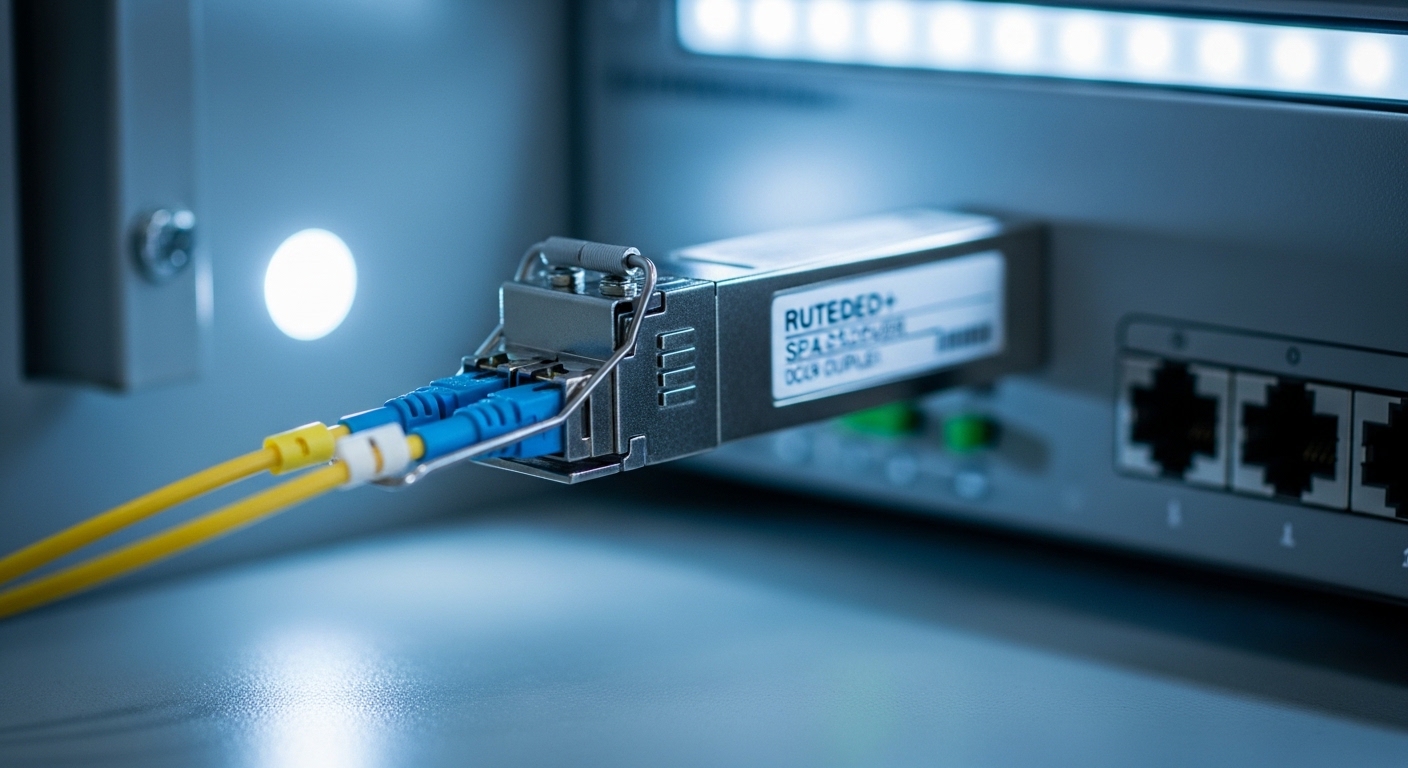
“Ruggedized” can be marketing shorthand, so translate it into measurable constraints. In harsh industrial rooms, engineers care about mechanical retention force, vibration survivability, and corrosion resistance. Look for modules built for industrial temperature and for compliance with typical mechanical endurance expectations used in industrial mounting environments.
Selection details to request from the vendor include: operating temperature range, storage temperature range, shock/vibration ratings if provided, and housing metallurgy/coating type. Also confirm whether the module supports digital diagnostics (DOM) over the standard management interface so you can trend Tx bias current, optical power, and alarms.
Pro Tip: In vibration-heavy plants, intermittent link events often correlate to a marginal LC patch cord insertion depth rather than the optics themselves. Teams that add a simple inspection routine and strain-relief checks during quarterly shutdowns see fewer “mystery” link flaps even when using fully ruggedized ethernet transceivers.
- Best-fit scenario: You mount switches on machine frames with recurring vibration and frequent cable motion during maintenance.
- Pros: Reduced mechanical failure rate and better stability under stress.
- Cons: You still must manage connector care and fiber cleanliness.
DOM, alarms, and remote maintenance: make optics observable
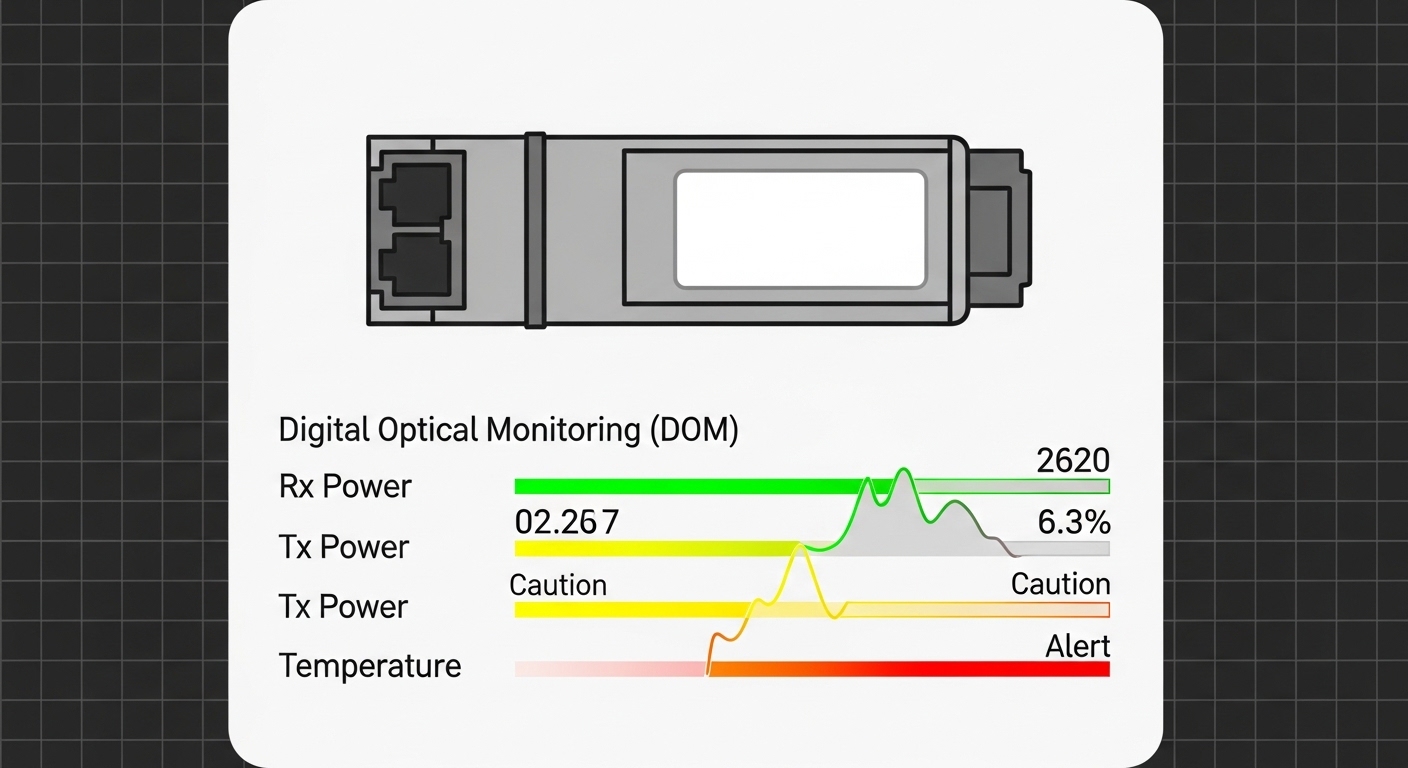
Operational visibility is a major part of reliability. Digital Optical Monitoring (DOM) lets you read real-time module diagnostics such as received power, transmitted power, laser bias current, and temperature. In many industrial deployments, this data is the earliest warning before a link fails, especially in zones with seasonal temperature drift or dust accumulation.
When you evaluate a ruggedized ethernet transceiver, verify DOM support and confirm the switch vendor can read and expose those values through standard telemetry paths. Many engineers integrate into NMS systems that poll interface diagnostics or export via vendor APIs. If DOM is missing or partially supported, you lose trend data that reduces mean time to repair.
- Best-fit scenario: You operate multiple cells with similar optics and want predictive maintenance across all of them.
- Pros: Faster root-cause analysis during outages.
- Cons: Requires switch firmware compatibility and monitoring maturity.
Compatibility and optics vendor strategy: avoid lock-in while staying safe
Industrial plants often run for a decade, so compatibility planning matters. Some switches are strict about optics identification, while others are tolerant of third-party modules. Before buying in volume, test the exact transceiver part number with the exact switch model and firmware revision you will deploy.
Examples of widely used optical ecosystems include Cisco-branded optics and third-party modules from vendors such as Finisar and FS. Illustrative part families include Cisco SFP-10G-SR (as a reference class), Finisar FTLX8571D3BCL (example of SR optics family), and FS.com SFP-10GSR-85 (example of compatible SR optics family). Always validate with your switch and confirm DOM behavior.
- Best-fit scenario: You need spare modules for a multi-site rollout and want a controlled sourcing plan.
- Pros: Lower procurement risk and better spares availability.
- Cons: Third-party modules may behave differently under DOM alarms or specific switch quirks.
Top 5 ruggedized ethernet transceiver selection checklist for factory installs
Use this ordered checklist when selecting a ruggedized ethernet transceiver for factory links. It is designed to prevent late-stage surprises during commissioning.
- Distance and fiber type: Confirm MMF/SMF, OM grade, and measured attenuation with OTDR where possible.
- Data rate and standard: Match the required Ethernet PHY (for example 10GBASE-SR) to IEEE expectations and switch port capability.
- Switch compatibility: Validate the exact module part number against your switch model and firmware.
- DOM and alarms: Ensure diagnostics are readable and integrated into your monitoring workflow.
- Operating temperature and reliability: Check industrial temperature rating, connector type, and any shock/vibration claims.
- Vendor lock-in risk: Decide whether you will standardize on OEM or allow controlled third-party spares with testing gates.
- Best-fit scenario: Greenfield rollout with predictable fiber plant and a commissioning window.
- Pros: Less downtime during cutover; clearer acceptance criteria.
- Cons: Requires upfront lab or staged validation.
Common Mistakes and Troubleshooting in Rugged Industrial Optics
Even with ruggedized ethernet transceivers, link reliability depends on disciplined installation and correct assumptions. Below are common failure modes seen in field commissioning, with root causes and practical solutions.
“It should work” fiber assumptions
Root cause: Teams assume cable runs match the labeled reach, but patch cords, splices, and connector loss reduce optical budget. In MMF, especially around 850 nm, small losses can matter. Solution: Use a light meter or OTDR to validate end-to-end loss and confirm OM grade; clean connectors and retest.
Dirty or damaged LC connectors
Root cause: Dust film or micro-scratches increase back reflections and reduce received power, leading to intermittent link flaps. This is more common after cabinet rework or frequent maintenance. Solution: Clean with approved fiber cleaning tools, inspect with a scope, replace any damaged ferrules, and verify insertion depth with strain relief.
DOM mismatch and monitoring blind spots
Root cause: The module may be electrically compatible, but DOM values may not map cleanly into switch telemetry, so alarms never trigger. Engineers then chase symptoms while the root optical degradation continues. Solution: Confirm DOM alarms under controlled temperature changes; validate telemetry output in your NMS before scaling deployment.
Temperature rating misunderstood
Root cause: The optics are rated for a certain ambient range, but the cabinet internal temperature can exceed expectations due to airflow limits or blocked cable trays. Solution: Measure cabinet air temperature during peak operation and compare to the module’s rated operating range; improve airflow or derate deployment.
For additional background on Ethernet transceiver requirements and operational expectations, consult IEEE 802.3-2018 and vendor datasheets. anchor-text: IEEE 802.3-2018 overview and anchor-text: IEEE 802.3 working group resources.
Cost and ROI: what ruggedization costs, and where it pays back
Ruggedized ethernet transceiver pricing varies by data rate, reach, and temperature grade. In many markets, OEM-branded optics often cost more per module than third-party equivalents, but they may reduce compatibility testing time and warranty disputes. A realistic planning assumption is that third-party modules can be materially cheaper, while the ROI comes from fewer commissioning hours and fewer repeated truck rolls when spares are correct.
TCO note: Factor technician time, downtime cost, and the cost of fiber rework if optical budgets fail. If your plant has frequent maintenance, ruggedization plus better DOM observability can reduce mean time to repair by catching degradation earlier. If your environment is mild and fiber plant is clean, the cheapest module that passes acceptance may be the most economical.
- Best-fit scenario: Multi-year plant operation with defined spares strategy and monitoring.
- Pros: Lower outage risk and better maintenance efficiency.
- Cons: Higher unit price and more validation work for new suppliers.
Summary ranking: fastest path to a safe choice
Use this ranking table to decide quickly under typical factory constraints. Scores reflect how well each selection approach reduces risk across distance, compatibility, and observability.
| Option | Best for | Risk reduction | Typical trade-off |
|---|---|---|---|
| Tested OEM ruggedized optics | Critical links with strict acceptance windows | High | Higher unit cost |
| Third-party ruggedized optics with DOM validation | Cost-controlled rollouts with controlled testing | Medium to High | Requires lab/stage validation |
| Unvalidated “compatible” optics | Non-critical links or temporary staging | Low | Higher commissioning and outage risk |
FAQ
What makes a transceiver “ruggedized” for industrial Ethernet?
In practice, ruggedization usually means extended operating temperature, improved mechanical retention, and better resilience to vibration and environmental stress. Always verify the vendor datasheet for operating range and any shock/vibration or housing claims, and confirm switch compatibility for stable link behavior.
Can I use MMF 850 nm optics in a factory with long patch cords?
It can work, but you must validate the optical budget end-to-end. Patch cords, connector cleanliness, and splices can consume margin quickly, especially at 850 nm. Test with OTDR or a light meter and clean connectors before final acceptance.
Do ruggedized ethernet transceivers always support DOM?
Not always. Many modern SFP/SFP+ and QSFP optics include DOM, but you should confirm explicitly in the datasheet and verify your switch exposes the diagnostics you need. DOM confirmation is a key acceptance criterion