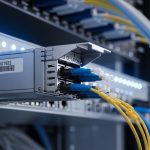
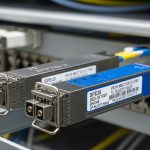
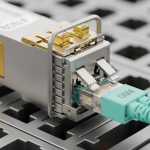
Telecom teams often hesitate to move from 400G to 800G transceivers because the optics bill looks immediate, while the benefits (more capacity, fewer ports, better power efficiency) show up over time. This article helps network engineers and planners estimate ROI realistically and then execute a low-risk upgrade in a live transport or access aggregation environment. You will get a deployment workflow, a spec comparison table, and troubleshooting for the top failure points that usually block a successful cutover.
Prerequisites: what you need before you calculate ROI
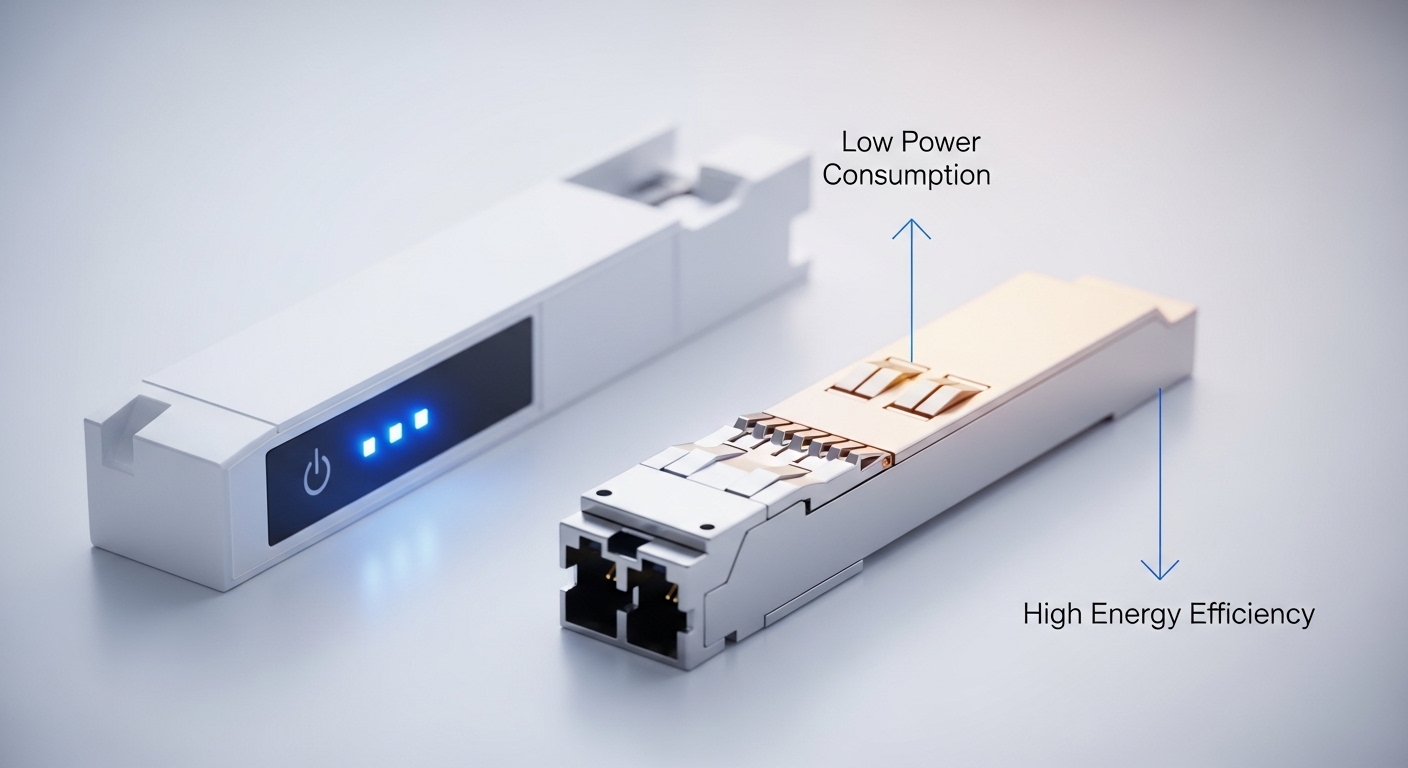
Before you price optics and plan downtime, confirm the physical layer constraints and the operational support model (DOM, diagnostics, and vendor interoperability). In telecom, the highest ROI usually comes when the upgrade reduces the number of line cards, ports, and powered optics per unit of throughput, without creating chronic maintenance tickets.
Inventory the current optics and link budget assumptions
Expected outcome: you can map each current transceiver type to an 800G candidate and quantify changes in port count, power, and cabling reuse.
- Pull a spreadsheet of active links: switch/router model, port number, current optics part number, fiber type (SMF or MMF), connector (LC/UPC), and span loss if available.
- Record measured receive power and error counters (for example, pre-FEC BER counters where supported) over the last 30 to 90 days.
- Capture current power draw at the chassis or line-card level when possible. If you cannot measure, use vendor datasheets for both optics and line cards.
Validate standards and what the optics must support
Expected outcome: you avoid buying optics that are electrically incompatible with the platform or lack the diagnostics your operations team requires.
- Check that the platform supports the intended 800G electrical interface profile (commonly based on 8x or 10x lanes depending on platform architecture) and the transceiver form factor.
- Confirm DOM behavior and telemetry fields your NMS expects (temperature, bias current, received power, laser output power, DDM alarms).
- For Ethernet over fiber, align with IEEE 802.3 physical layer rules and vendor implementation notes; for transport systems, align with the platform’s optics compatibility list.
Reference: IEEE 802.3 for optical Ethernet PHY concepts and link behavior. [Source: IEEE 802.3] and vendor compatibility documentation for your specific switch/router.
Define what “ROI” means in your telecom context
Expected outcome: you can compute ROI with defensible numbers and a timeline that matches your budget cycles.
Use a simple model that includes both capital and operating costs:
- CapEx: optics purchase price, installation labor, spares, and any cabling changes.
- OpEx: power consumption (optics and possibly line cards), maintenance labor, and downtime cost.
- Capacity value: avoided future upgrades, reduced port utilization, and improved utilization of scarce rack/slot resources.
Then define a target payback window (example: 24 to 36 months) based on your telecom procurement policy.
How 800G upgrades change cost structure: where ROI is won
Upgrading to 800G is not only about doubling line rate; it changes how many optics, ports, and optics-related power you need per terabit. The best ROI cases typically occur when you are port-constrained or need to consolidate multiple 400G links into fewer 800G links to reduce equipment footprint.
What typically improves ROI
- Fewer optics per throughput: if your platform supports 800G on fewer line-card ports, you reduce transceiver count.
- Power efficiency at the link: many 800G optics are designed with lower watts per bit than older generations, even if absolute watts per module is higher than some legacy optics.
- Operational efficiency: consolidated links simplify monitoring and reduce the number of optics endpoints to track and replace.
What can reduce ROI (honestly)
- Higher unit price: 800G optics often cost more than 400G optics, so the ROI depends on actual port and power reductions.
- Cabling constraints: if you must re-terminate fibers, add patch cords, or change connector types, labor costs can erase gains.
- Compatibility risk: some third-party optics may work but fail under certain temperature or DOM alarm thresholds, causing noisy alerts and extra troubleshooting time.
800G transceiver specs that matter for telecom planning
To estimate ROI without surprises, compare the optics you plan to deploy by wavelength, reach, connector, and operating range. Telecom teams also need to know whether the module supports the diagnostics workflow and whether it aligns with your platform’s maximum optical power and receiver sensitivity.
Technical specifications comparison table
Below is a practical comparison using common 800G optics families you will see in enterprise and telecom deployments. Exact values vary by vendor and exact part number, so treat this as a planning baseline and confirm against the specific datasheets you intend to buy.
| Optics family (examples) | Nominal wavelength | Typical reach | Connector | Data rate | Operating temperature | Power (planning) |
|---|---|---|---|---|---|---|
| 800G SR8-class (short reach) | 850 nm | ~70 m to 100 m (OM4, varies by vendor) | LC (8-fiber or MPO depending on design) | 800G | Commercial or extended (confirm) | ~8 W to 15 W typical range |
| 800G DR8-class (single-mode reach) | ~1310 nm | ~500 m (varies by budget) | LC or MPO (platform dependent) | 800G | Commercial or extended (confirm) | ~10 W to 18 W typical range |
| 800G FR8-class (longer reach) | ~1550 nm (varies) | ~2 km (varies by vendor budget) | LC or MPO (platform dependent) | 800G | Extended (confirm) | ~12 W to 22 W typical range |
Field note: for telecom, the decisive numbers are usually link budget (transmit power minus fiber loss minus connector loss plus receiver sensitivity margin) and whether your platform’s optics cage tolerances match the module’s laser parameters.
Reference: vendor datasheets for specific modules, and the platform optics compatibility guide from your switch/router manufacturer.
Step-by-step implementation plan for an 800G ROI upgrade
This section is written as an operational rollout workflow. The goal is to maximize ROI while minimizing downtime and minimizing “unknown unknowns” during cutover.
Choose an upgrade target that improves utilization
Expected outcome: you avoid paying for 800G where 400G capacity is already underutilized.
- Select links with utilization above your threshold (example: 70% average over 30 days) or where port scarcity is driving forced topology changes.
- Prefer consolidation cases: multiple 400G links that can be replaced with fewer 800G links, depending on your routing and line-card availability.
Build a link budget using measured receive power, not only theory
Expected outcome: you confirm reach and margin with your actual fiber plant.
- Use recent telemetry: received power at the receiver and any margin indicators.
- Estimate additional loss from connector rework, patch cords, and aging assumptions.
- Ensure margin meets your operations risk policy (for example, maintain a conservative buffer so that seasonal temperature swings do not push you close to alarm thresholds).
Validate optics compatibility and DOM alarms in a lab or staging rack
Expected outcome: you confirm the module type works with your exact platform firmware and management stack.
- Test at least one link per optics type and per vendor you plan to deploy.
- Verify DOM alarm behavior: threshold crossings, event logs, and whether the NMS interprets fields correctly.
- Confirm that the platform’s link bring-up does not require special transceiver settings beyond standard auto-negotiation.
Plan spares strategy to protect ROI during outages
Expected outcome: you reduce mean time to repair (MTTR) so the ROI is not erased by long replacement cycles.
Use a spares model based on your site’s risk profile:
- Critical routes: keep at least 1 spare per optics family per site (and more if you have many parallel links).
- Staged rollout: start with a limited pilot and keep spares ready before you scale.
Execute a controlled cutover with measurable acceptance criteria
Expected outcome: you can prove performance stability after upgrade.
- Schedule a maintenance window with rollback options.
- Bring links up one group at a time. Wait for stable error counters and verify interface health.
- Define acceptance criteria: no sustained increase in link errors, stable received power, and no persistent DOM alarms.
Selection checklist: decide fast, but with the right questions
To protect ROI, engineers use a repeatable checklist. Use this ordered list in planning reviews and vendor selection meetings.
- Distance and fiber type: confirm SMF vs MMF, connector type, patch cord lengths, and actual measured loss.
- Switch compatibility: verify the exact platform model supports the optics form factor and electrical interface profile.
- Data rate and FEC behavior: confirm the platform’s expected FEC mode and whether it matches the module’s capabilities.
- DOM support and telemetry: ensure the module exposes the fields your NMS and alerting rules require.
- Operating temperature: check whether the module is rated for your environment (commercial vs extended and whether the cage airflow meets requirements).
- Budget and total cost: include labor, spares, and any cabling rework, not only the optics unit price.
- Vendor lock-in risk: evaluate OEM vs third-party. If you accept third-party modules, validate long-term support and firmware compatibility.
Common pitfalls and troubleshooting tips during 800G cutovers
Even experienced teams hit recurring failure modes. Below are the most common issues, with likely root causes and corrective actions.
Pitfall 1: Link comes up but alarms flood the NMS
Root cause: DOM threshold mismatch or unsupported telemetry interpretation, often triggered by different vendor DOM scaling or event definitions. Solution: compare DOM fields and thresholds in staging; update NMS parser rules or alert thresholds; confirm firmware compatibility notes from the platform vendor.
Pitfall 2: High error counters after cutover, then intermittent flaps
Root cause: marginal optical power budget due to connector contamination, underestimated patch cord loss, or fiber aging. Solution: clean connectors with approved procedures, re-measure receive power, inspect MPO/MTP polarity and seating, and verify that the link budget includes realistic connector loss and safety margin.
Pitfall 3: Works in staging but fails at full load or higher ambient temperature
Root cause: insufficient airflow to the optics cage, or module operating temperature limits being exceeded under real traffic heat. Solution: measure cage and module temperature during peak load, confirm HVAC and fan health, and ensure the optics are rated for the environment (extended temp where required).
Pitfall 4: Incompatibility due to platform firmware or optics profile mismatch
Root cause: the module is electrically compatible in theory but not with the specific firmware build or required profile. Solution: check the platform’s optics compatibility matrix, upgrade platform firmware if approved, and test at least one link per firmware release before scaling.
Cost and ROI note: realistic price ranges and TCO thinking
Pricing varies widely by reach, vendor, and whether you buy OEM or third-party. As a planning benchmark, 800G optics can range from roughly several hundred to over a thousand US dollars per module depending on family and market conditions, while installation labor and testing time can add meaningful TCO.
To preserve ROI, include these TCO factors in your model:
- Power savings: if the upgrade consolidates ports and reduces the number of powered optics, power costs can drop even if each 800G module draws more than a legacy unit.
- Failure rates and spares: third-party optics may reduce unit cost but can increase time spent in troubleshooting if DOM events are noisier or replacements take longer.
- Downtime cost: a failed cutover can erase months of savings. Staging validation is usually cheaper than on-site firefighting.
In many field cases, ROI becomes compelling when you are both port-constrained and facing a capacity growth curve that would otherwise force additional line cards or racks.
Pro Tip: Before you finalize ROI, compute “watts per usable throughput” using measured port utilization. Engineers often compare only module power in isolation, but the ROI driver is how many optics you can remove by consolidating links while keeping error rates stable under real traffic and temperature.
FAQ
What is the fastest way to estimate ROI for an 800G optics upgrade?
Start with a link consolidation plan: identify how many 400G links you can replace with fewer 800G ports on your exact platform. Then model CapEx (optics plus labor and spares) and OpEx (power and maintenance), using measured utilization and receive power data for realism.
Are third-party 800G transceivers a good ROI choice in telecom?
They can improve ROI if compatibility is proven on your platform and if DOM telemetry integrates cleanly with your NMS. However, validate in staging for at least one full link path and confirm firmware compatibility and operating temperature behavior.
How do I choose between SR8, DR8, and FR8-like options?
Use the fiber plant and link budget. If you have short-reach multimode fiber, SR-class optics may be best; for metro or longer access aggregation, DR/FR-class options are often required. Always confirm with vendor datasheets and your measured connector and patch cord losses.
What acceptance criteria should I use after cutover?
Require stable interface health, no persistent DOM alarms, and no sustained increase in error counters over a defined window (often 24 to 72 hours). Also verify that received power stays within your operational thresholds across peak and off-peak traffic.
What causes the most expensive failures during optical upgrades?
Typically, marginal power budgets and temperature-related issues. Contamination, misseating MPO/MTP connectors, and insufficient airflow can lead to intermittent flaps that consume field time and downtime windows.
Will 800G upgrade require cabling changes?
Sometimes, but not always. If your existing fiber type and connector ecosystem match the 800G optics requirements, you can often reuse cabling with only patch cord adjustments. If you must re-terminate or change connector types, include that labor in your ROI model.
With a measured link budget, a staged compatibility test, and a spares plan, you can turn an 800G rollout into a predictable ROI improvement rather than a risky capacity gamble. Next, review your optical monitoring and alerting baseline using fiber link monitoring and DOM alerting so your operations team catches issues early.
Author bio: I have deployed and troubleshot optical transceiver upgrades in telecom and enterprise networks, focusing on compatibility validation, DOM telemetry, and link-budget rigor. My work emphasizes practical cutover runbooks and ROI calculations that survive real-world constraints.