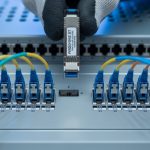
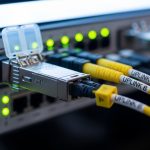
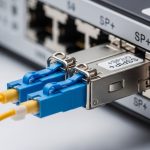
If your plant network runs on EtherNet/IP and you are swapping fiber for stability, a bad transceiver choice can turn uptime into a suspense novel. This article helps OT and network engineers select a Rockwell transceiver for SFP fiber links with clear specs, compatibility checks, and field-tested troubleshooting. You will also get a practical Top 7 shortlist, a ranking table, and a decision checklist you can actually use during a maintenance window.
Top 7 Rockwell transceiver picks for EtherNet/IP fiber SFP links
In most industrial deployments, the “right” Rockwell transceiver is the one that matches your switch or controller optics, fiber type, and link budget without creating surprise interoperability debt. Below are seven commonly used options and their best-fit scenarios, with pros and cons that reflect real operations: cold aisles, dusty cabinets, and switch vendors that love proprietary quirks.
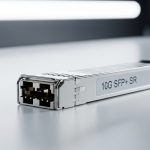
10GBase-SR SFP+ (multimode) for short plant runs
Best fit: Leaf-spine or access links inside a facility where multimode fiber is already installed. SR optics typically use 850 nm VCSEL signaling and work over OM3/OM4 within practical reach limits. For EtherNet/IP, the key is that your switch port supports SFP+ at the required speed and the optics meet the vendor’s DOM expectations.
Example parts: Cisco SFP-10G-SR, Finisar FTLX8571D3BCL, FS.com SFP-10GSR-85.
- Pros: Low cost per port, widely stocked, easy to validate with standard fiber testers.
- Cons: Limited reach versus LR; multimode cabling quality matters.
1GBase-LX SFP (single-mode) for longer cabinet-to-cabinet links
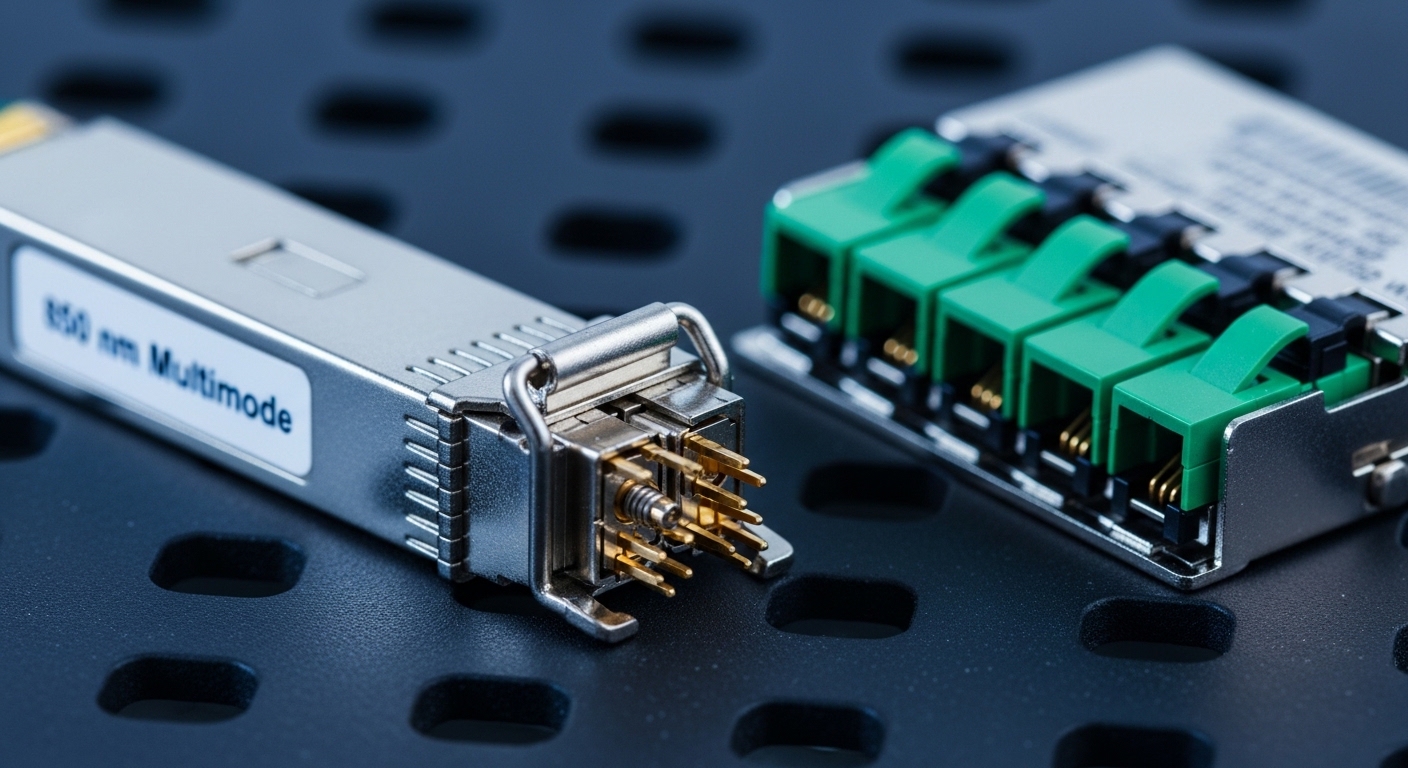
Best fit: When you have single-mode fiber already running between buildings, or you need more margin than SR can provide. LX optics typically run at 1310 nm and are designed for longer reach on SMF. For Rockwell environments, verify the switch or managed Ethernet module supports 1G SFP and that the controller’s link negotiation behavior matches your design.
Example parts: Common 1000BASE-LX SFPs listed for industrial switches and media converters.
- Pros: Better distance and less sensitive performance than many multimode links.
- Cons: Higher module cost; you must confirm SMF type and attenuation.
10GBase-LR SFP+ (single-mode) for building interconnects
Best fit: Inter-building EtherNet/IP backbone segments where you cannot justify active repeaters or dark fiber splicing risk. LR uses 1310 nm optics and is commonly deployed with SMF. In practice, you will validate with an OTDR trace and confirm end-to-end loss stays within the module’s budget with connector and splice penalties.
Example parts: Cisco SFP-10G-LR-S, Finisar LR SFP+ variants.
- Pros: Long reach with fewer “mystery” multimode issues.
- Cons: Must control dispersion and fiber quality; budget errors cause intermittent link flaps.
1000BASE-T SFP copper for quick fiber fallback
Best fit: When you need a Rockwell transceiver option that avoids fiber entirely for specific cabinet drops. Copper SFPs can reduce change control complexity during phased migrations. The tradeoff is noise immunity and the usual limits of Cat cable runs in industrial environments.
Example parts: 1000BASE-T SFP modules compatible with your switch’s SFP cage.
- Pros: Fast commissioning; fewer fiber troubleshooting steps.
- Cons: Higher cabling vulnerability to EMI and grounding mistakes.
Industrial-grade SFPs with extended temperature range
Best fit: Hot motor control rooms, outdoor substations, or cabinets with poor airflow. Many “enterprise” optics assume 0 to 70 C; industrial SFPs often support -40 to 85 C or similar. For EtherNet/IP, temperature margin is not a theoretical metric: link errors and CRC spikes often correlate with thermal stress and aging.
Example parts: Industrial temperature variants from major optics vendors and switch OEMs.
- Pros: More reliable under OT thermal realities; fewer RMA cycles.
- Cons: Slightly higher cost; you still must match wavelength and data rate.
OEM-authorized Rockwell-compatible transceivers (lower governance risk)
Best fit: Sites with strict change control, where the goal is to minimize vendor escalation time. Using OEM-authorized optics reduces the “it works on one port, fails on another” drama caused by compatibility quirks. If your Rockwell ecosystem includes managed switches with strict optical diagnostics, OEM optics often align better with expected DOM behavior.
Example parts: Rockwell-validated or switch-vendor-approved fiber SFPs used in industrial catalogs.
- Pros: Better interoperability consistency; fewer support loops.
- Cons: Higher unit price; availability can lag during supply shocks.
Third-party optics with strong DOM support (budget-friendly, if validated)
Best fit: Large-scale rollouts where optics cost matters and you can run a validation plan. Many third-party SFPs support digital optical monitoring (DOM) and implement the SFF-8472 management interface. In the field, you validate by swapping one module at a time, checking link status, optical power readings, and error counters.
Example parts: FS.com SFP-10GSR-85, Finisar-compatible optics, and other DOM-capable SFPs listed for your switch model.
- Pros: Cost savings; broad SKU coverage.
- Cons: Some switches reject non-OEM optics or show “compatibility” warnings.
Key specs that decide link success: wavelength, reach, power, DOM, and temperature
Optics selection is mostly physics plus governance. EtherNet/IP does not magically fix an out-of-spec optical budget, and a “compatible” SFP that runs warm can still produce intermittent errors. Start by mapping your required data rate and fiber type to the exact transceiver standard and then verify operational constraints from the datasheet.
| Spec | What to check | Typical values (common SFP) | Why it matters for Rockwell EtherNet/IP |
|---|---|---|---|
| Data rate | Match switch port speed (1G vs 10G) | 1.25 Gbps (1G SFP), 10.3125 Gbps (10G SFP+) | Prevents link training failures and speed mismatches |
| Wavelength | Match to fiber type and partner optics | 850 nm (SR), 1310 nm (LX/LR) | Ensures correct optical signaling and reach |
| Reach | Confirm with OM3/OM4 or SMF attenuation | SR: tens to ~hundreds of meters; LR/LX: typically kilometers on SMF | Prevents CRC bursts and flapping links |
| Connector | Ensure same connector type end-to-end | LC is most common for SFP | Mismatched connectors cause real downtime during swaps |
| DOM / diagnostics | Confirm DOM support and switch interpretation | DOM via SFF-8472 | Enables monitoring of Rx power, Tx power, and temperature |
| Operating temperature | Match enclosure thermal profile | 0 to 70 C typical; industrial may be -40 to 85 C | Reduces thermal-induced errors and aging drift |
For standards context, the physical layer behavior aligns with IEEE Ethernet specifications and SFP optics conventions. IEEE 802.3 covers 10GBase-SR and 10GBase-LR/LX variants, while DOM details are commonly tied to SFF-8472 behavior. If you want a governance-friendly baseline, treat datasheet specs as contractual, not suggestions, and log DOM readings during acceptance tests.
Reference pointers: IEEE 802.3 for Ethernet PHY behavior; SFF-8472 for optical module diagnostic interfaces; vendor datasheets for exact reach and power budgets. [Source: IEEE 802.3] [Source: SFF-8472] [Source: Cisco SFP module datasheets] [Source: Finisar/Viavi SFP datasheets]
Pro Tip: In OT networks, the “most reliable” Rockwell transceiver is often the one you can monitor. During commissioning, capture DOM Rx power and temperature at steady state; then set an operational threshold. When a link later degrades, you will see optical power drift before users notice packet loss.
Distance and fiber type: the link budget math you should actually do
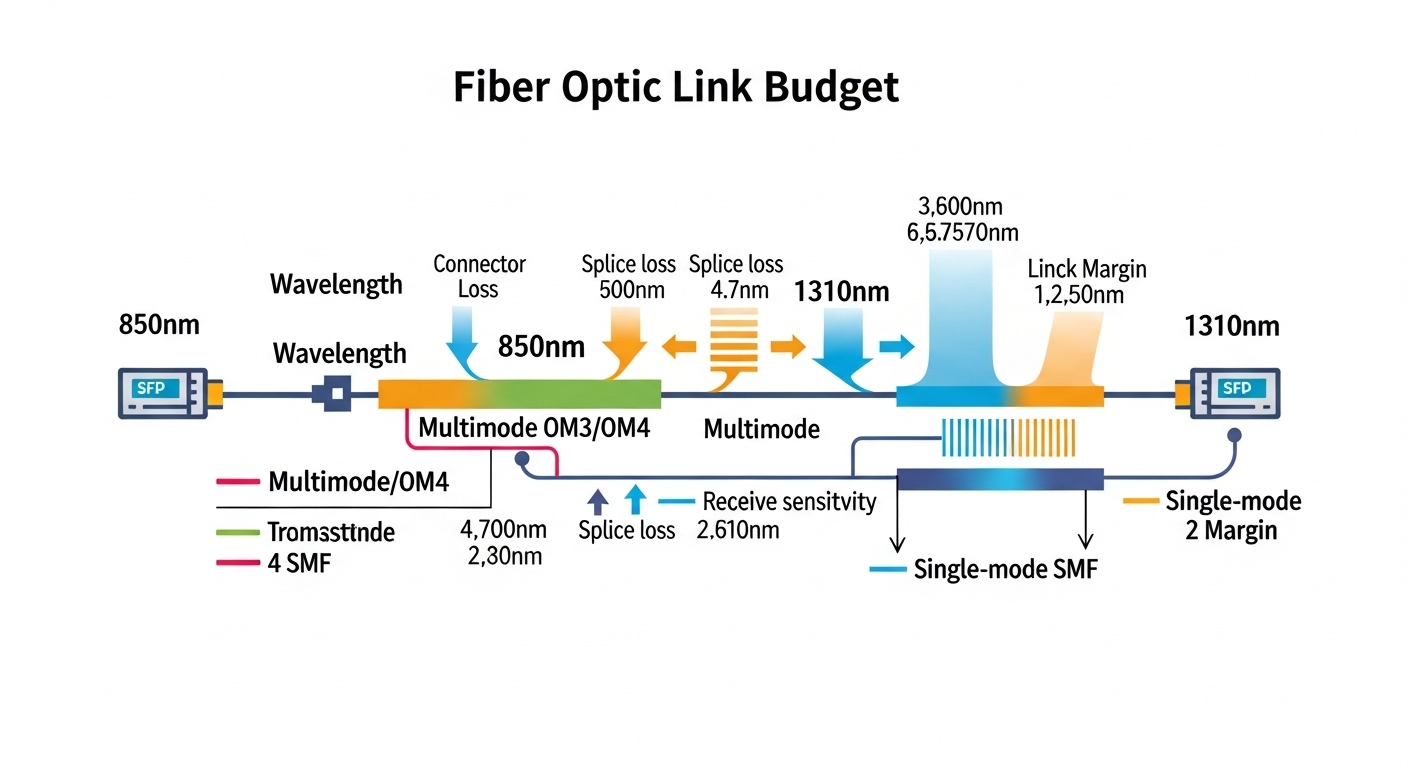
Most field failures come from incorrect reach assumptions, not from exotic incompatibility. For example, a 10GBase-SR design may look fine on paper but fail in reality if the fiber is OM2, connectors are dirty, or patch cords are swapped during maintenance. Your acceptance test should include both a physical inspection and an optical power budget check.
Practical acceptance steps
- Verify fiber type: OM3 vs OM4 for SR, SMF for LX/LR.
- Measure end-to-end attenuation with a calibrated OTDR and record connector/splice losses.
- Confirm patch cord lengths and any interposed media converters.
- During live testing, check link stability and error counters (CRC, FCS, interface drops).
If you are migrating from copper to fiber, remember that EtherNet/IP traffic is sensitive to sustained packet loss. A weak optical link might still “connect,” but you will see cyclic performance degradation that looks like application issues. That is how networking becomes the scapegoat.

Selection criteria checklist for Rockwell transceiver governance
Engineers rarely fail because they do not know optics; they fail because they skip the checklist and rely on memory. Use the ordered decision guide below so your procurement and maintenance teams do not improvise during a shutdown.
- Distance and fiber type: Choose wavelength (850 nm vs 1310 nm) and match SMF vs OM3/OM4.
- Switch and cage compatibility: Confirm exact SFP vs SFP+ support and speed (1G vs 10G).
- DOM behavior: Ensure your platform accepts DOM and does not alarm on “unknown” values.
- Operating temperature: Validate module spec against cabinet airflow and measured ambient temperature.
- Optical power budget: Confirm Tx/Rx power and receiver sensitivity are within datasheet limits for your loss.
- Connector and polarity: LC connector type, fiber polarity method, and patch cord mapping.
- Vendor lock-in risk: Weigh OEM-authorized optics versus third-party validated optics.
Governance note: if you are standardizing across sites, define an approved parts list with at least one OEM option and one validated third-party option. That reduces both downtime risk and procurement pain when supply chains do their favorite trick: disappearing.
Common mistakes and troubleshooting tips that save your weekend
Here are failure modes I have seen in real OT installs—each with a root cause and a practical fix. If you fix these in the right order, you cut mean time to repair and stop guessing.
“Link is up, but EtherNet/IP performance is terrible”
Root cause: Marginal optical budget causing intermittent CRC/FCS errors. Dirty connectors or too much attenuation are common culprits.
Solution: Clean connectors, re-seat SFPs, and verify with DOM Rx power. If available, run packet captures during peak load and check interface error counters.
“Works in one switch port, fails in another”
Root cause: Platform-specific compatibility rules, sometimes involving DOM interpretation or power class expectations.
Solution: Test the exact module SKU against the specific switch model and firmware. If third-party, validate DOM support and confirm the module is rated for the same optical class.
“Intermittent link flaps after cabinet heat soak”
Root cause: Temperature outside the module’s spec, leading to transmitter power drift or receiver sensitivity degradation.
Solution: Measure ambient temperature inside the cabinet, confirm module temperature rating, improve airflow, and replace with an industrial temperature-rated Rockwell transceiver.
“No link after a swap: wrong fiber polarity or connector type”
Root cause: LC polarity mismatch or accidental use of a different connector type. For bidirectional optics, polarity mapping mistakes are classic.
Solution: Verify polarity labeling, re-map patch cords, and perform a quick continuity check end-to-end before blaming the module.
Cost and ROI: OEM vs third-party optics in real TCO terms
Pricing varies by data rate and temperature grade, but a realistic budgeting view helps you avoid “cheap now, expensive later” optics decisions. OEM-authorized Rockwell transceivers often cost more per module, but they reduce support churn and compatibility uncertainty. Third-party optics can be significantly cheaper, yet you need a validation and spares strategy to protect uptime.
Typical price ranges (ballpark): 1G SFP optics often land in the tens of dollars; 10G SFP+ optics commonly range from roughly $80 to $250 depending on reach and temperature grade; industrial temperature variants and OEM-branded modules can be higher. TCO is driven by spares holding cost, failure rates, and the labor cost of troubleshooting. If your maintenance team logs hours per incident, one avoidable weekend outage beats any per-module savings.
ROI framing: if you cut failure incidents by even 20 percent through better DOM monitoring and temperature-appropriate modules, the savings in labor and downtime can dwarf optics unit price differences. Consider also power draw differences; while SFP power is usually small, reduced retransmissions and fewer link flaps improve overall network efficiency and reduce downstream CPU load on switches and controllers.
Ranking table: best Rockwell transceiver choice by scenario
| Rank | Option | Best fit | Primary risk | When to choose |
|---|---|---|---|---|
| 1 | 10GBase-SR (850 nm, OM3/OM4) | Short intra-site fiber | Multimode quality and reach margin | When OM3/OM4 is confirmed and ports are SFP+ |
| 2 | 10GBase-LR (1310 nm, SMF) | Longer backbone links | Link budget miscalculation | When OTDR shows loss within datasheet budget |
| 3 | Industrial temperature-rated SFP | Hot cabinets and harsh environments | Higher unit cost | When measured ambient exceeds consumer-grade optics assumptions |
| 4 | OEM-authorized Rockwell-compatible optics | Governance-heavy sites | Procurement lead time | When you need predictable support outcomes |
| 5 | 1GBase-LX (1310 nm, SMF) | Distance with 1G ports | SMF mismatch and budgeting | When your controller or switch is strictly 1G |
| 6 | Third-party DOM-capable optics | Budget rollouts with validation | Compatibility quirks | When you can run acceptance testing per switch model |
| 7 | 1000BASE-T copper SFP | Fiber fallback during migration | EMI and grounding issues | When fiber is temporarily unavailable |
FAQ
What makes a Rockwell transceiver “right” for EtherNet/IP fiber SFP links?
The right Rockwell transceiver matches your data rate, wavelength, and fiber type, and it behaves predictably with your switch or controller optics, including DOM diagnostics. Always validate against the exact port type (SFP vs SFP+) and your platform’s compatibility expectations.