If you are wiring a remote sensing network on a factory floor, you already know the pain: one bad optical budget, one wrong connector, or one incompatible transceiver can take an entire deployment offline. This article helps engineers and industrial IoT teams choose optics that actually survive vibration, temperature swings, and long fiber runs while keeping link budgets predictable. You will compare SFP, SFP+, and practical fiber cabling approaches for remote sensing data paths, with selection checklists, failure modes, and a decision matrix you can reuse on future sites.
Remote sensing optics: performance tradeoffs between SFP and SFP+
For remote sensing, the optical layer is not just “connectivity.” It is the difference between consistent telemetry and corrupted measurements that trigger false alarms. SFP and SFP+ modules commonly target 1G and 10G Ethernet-style links, while the underlying physics still matters: wavelength, receiver sensitivity, modal dispersion, and connector cleanliness. In industrial IoT, the real differentiator is whether the module meets the required optical budget across your actual fiber length and splice losses.
What changes from SFP to SFP+ at the link level
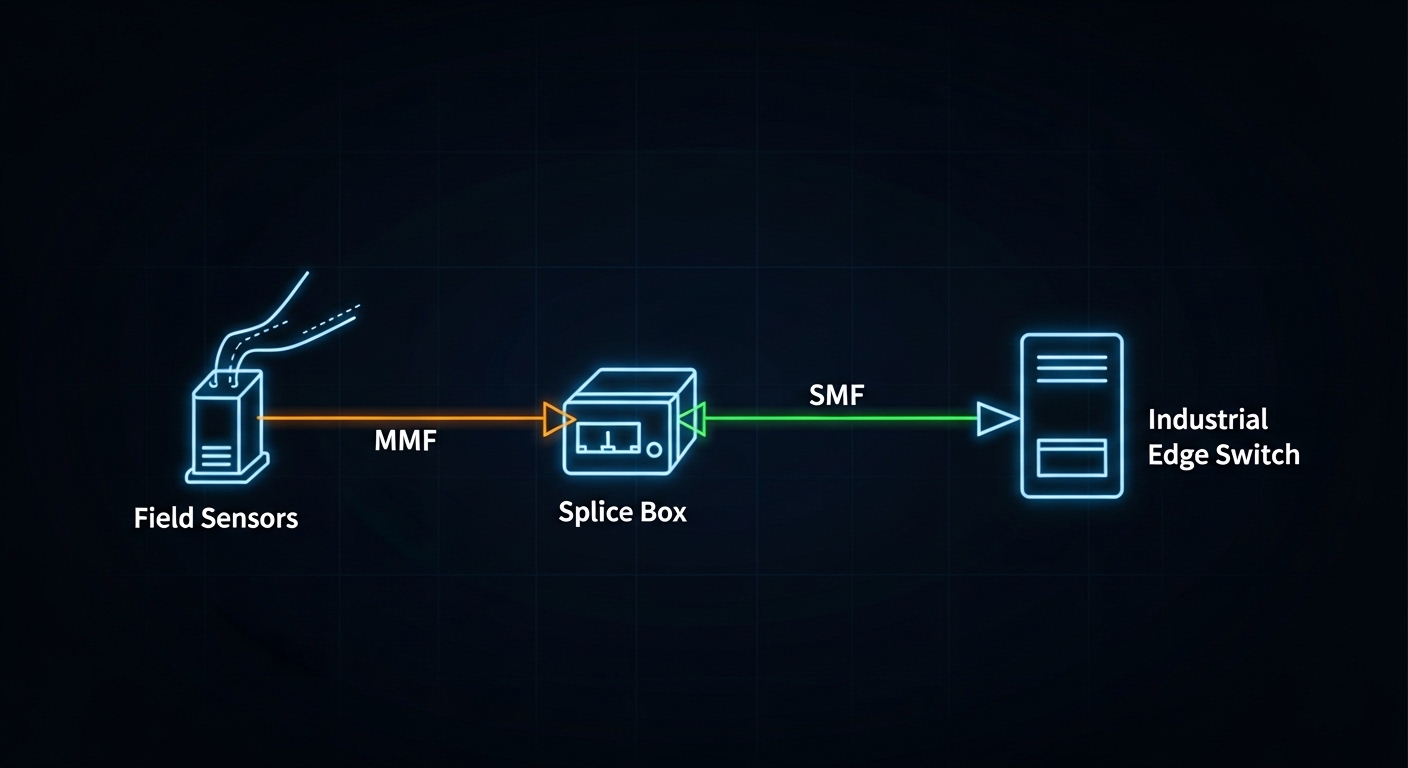
In many deployments, SFP modules (often 1.25G base) use designs like 1000BASE-SX or 1000BASE-LX, typically at 850 nm (MMF) or 1310 nm (SMF). SFP+ modules (10G) often support 10GBASE-SR at 850 nm for multimode fiber (MMF) or 10GBASE-LR at 1310 nm for single-mode fiber (SMF). Your sensor data rate may be modest, but the optics must handle bursts and retransmissions without degrading latency or availability.
Practical reach reality for industrial remote sensing
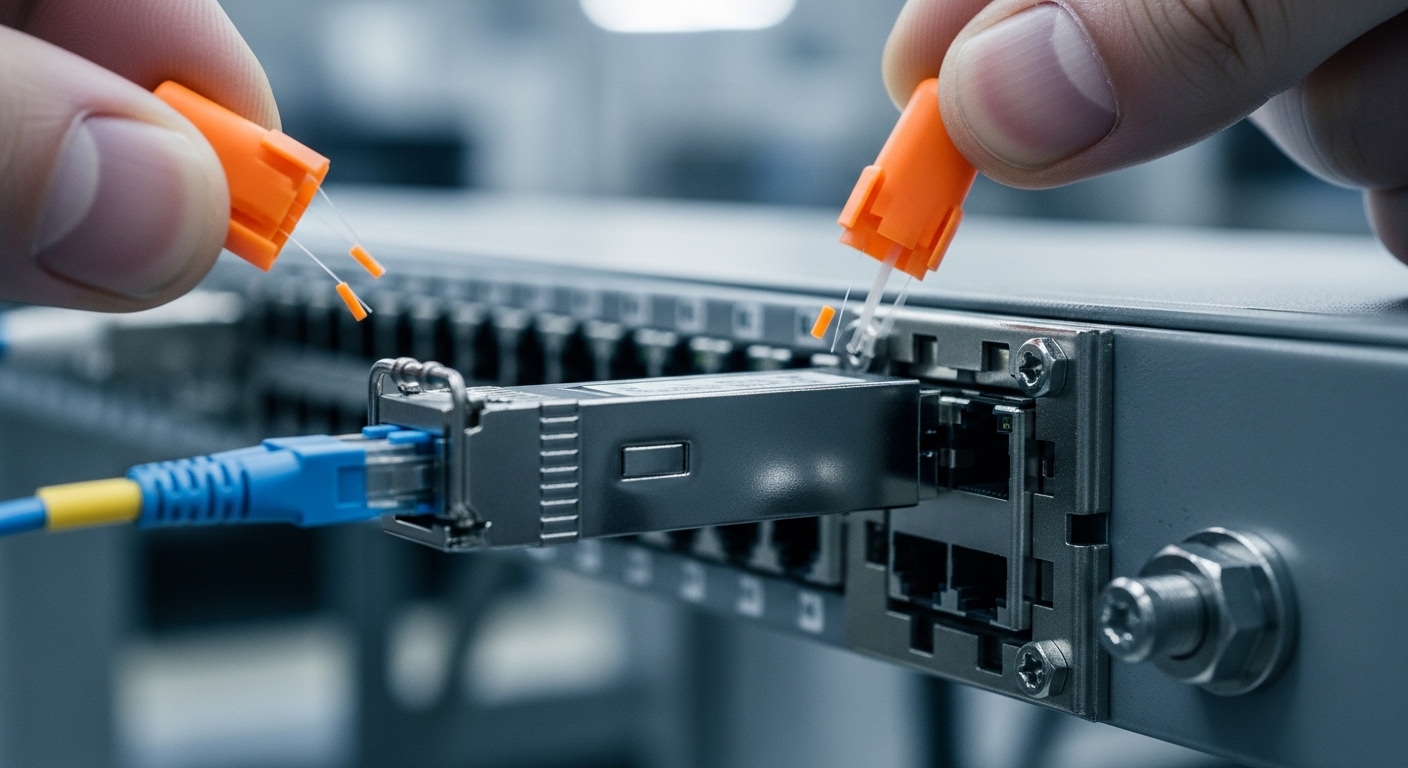
Reach depends on fiber type (OM3 vs OM4), transceiver class, and installation losses. For example, 10GBASE-SR implementations using OM4 multimode fiber are widely supported for short-reach links, but your actual run can exceed “datasheet” distance once you include patch panels, dirty connectors, and additional splices. A field-tested approach is to measure end-to-end fiber attenuation with an OTDR and confirm connector loss budgets before you lock the module choice.
Head-to-head spec comparison: wavelength, reach, power, and connectors
Remote sensing optics selection becomes easier when you compare concrete module families side-by-side. Below is a pragmatic comparison between common SFP and SFP+ optics used for industrial IoT backhaul. Use it as a starting point, then verify exact compliance with your switch vendor’s compatibility list and transceiver vendor datasheets.
| Parameter | SFP (1G-class examples) | SFP+ (10G-class examples) | Notes for remote sensing |
|---|---|---|---|
| Typical data rate | 1.25G (1000BASE-SX/LX) | 10.3125G (10GBASE-SR/LR/ER) | Sensor backhaul often needs headroom for bursts |
| Wavelength | 850 nm (SX), 1310 nm (LX) | 850 nm (SR), 1310 nm (LR) | Match to fiber type and distance |
| Connector types | LC common | LC common | Cleanliness is a top failure driver |
| Typical reach (MMF) | OM3/OM4 dependent; often shorter than 10G SR | 10GBASE-SR commonly engineered for MMF short reach | Confirm with OM3 vs OM4 and your loss budget |
| Typical reach (SMF) | 1310 nm LX engineered for longer reach | 10GBASE-LR commonly engineered for longer reach | SMF reduces modal dispersion concerns |
| Optical power class | Varies by module | Varies by module and vendor | Receiver sensitivity impacts maximum budget |
| Operating temperature | Usually commercial or industrial variants | Industrial-grade options exist | Industrial IoT often needs wider ranges than office gear |
| Form factor | SFP | SFP+ | Switch cage must match |
| Standards basis | IEEE 802.3 for Ethernet PHY | IEEE 802.3 for Ethernet PHY | See IEEE 802.3 relevant clauses for optical PHY |
If you want concrete model anchors, many teams start with known optics such as Cisco SFP-10G-SR (10GBASE-SR) or Finisar FTLX8571D3BCL (10GBASE-SR family variants), and FS.com SFP-10GSR-85 for cost-optimized alternatives. Still, the “right” module is the one that passes your switch compatibility checks and meets the optical budget after you account for measured losses. [Source: IEEE 802.3 Ethernet PHY specifications via IEEE 802.3 standard references] and vendor datasheets for each transceiver model.
Pro Tip: In remote sensing deployments, the biggest hidden variable is not the transceiver spec sheet; it is the connector cleanliness and patch-panel losses. A single poorly cleaned LC connector can wipe out margin, so schedule fiber inspection and cleaning between installation waves, not only at commissioning.
Compatibility and deployment: what actually breaks in industrial IoT
In industrial IoT, compatibility problems show up as link flaps, “unsupported transceiver” alarms, or intermittent CRC errors that only appear after temperature cycling. The root cause is usually not the optics alone; it is the interaction between the switch’s optics cage, the module’s EEPROM details, and the module’s timing/laser characteristics. Make remote sensing optics selection a system decision: switch platform, firmware behavior, and your physical layer installation quality.
Decision checklist engineers should use on every site
- Distance and fiber type: confirm MMF vs SMF, OM3 vs OM4, and measured attenuation with OTDR.
- Switch compatibility: verify the exact switch model’s transceiver support matrix for SFP vs SFP+ cages.
- Optical budget margin: include patch cords, splices, connectors, and aging; do not rely only on datasheet reach.
- DOM support and monitoring: check if the switch requires Digital Optical Monitoring; confirm thresholds and alarms.
- Operating temperature: choose industrial-grade modules if your enclosure can exceed commercial ranges.
- Vendor lock-in risk: evaluate OEM vs third-party certification, replacement lead times, and warranty terms.
- Connector and cleaning plan: standardize LC/SC types, dust caps, and cleaning tools across crews.
Real-world deployment scenario: remote sensing in a leaf-spine edge
In one 3-tier industrial IoT network, we connected remote sensing gateways from 12 plants into a central aggregation layer using rugged 10G uplinks. Each plant had 48 ToR-style access ports feeding a patch panel, then two uplinks to an aggregation switch. The fiber runs were 300–900 meters with multiple patch points and splice trays, and the environment saw enclosure temperatures from 5 C to 55 C during summer peaks. We selected 10GBASE-LR optics for the longest SMF runs and used 10GBASE-SR on OM4 MMF where the measured budget stayed within margin; link monitoring showed stable CRC and no link resets after we standardized LC cleaning and added spare modules pre-positioned for hot swap.
Cost and ROI: OEM vs third-party optics in remote sensing rollouts
Cost pressure is real when you are deploying remote sensing across multiple sites. OEM optics can be more expensive, but they often reduce compatibility risk and speed up RMAs. Third-party optics can cut BOM cost, yet you must factor in the extra validation effort, potential firmware quirks, and higher probability of “works in lab, fails in field” surprises.
What teams typically pay and how to think about TCO
In many markets, a 10G SR or LR transceiver often falls into a mid to high price range per unit, with OEM pricing commonly higher than third-party. As a rough planning model, OEM 10G optics might cost 2x to 4x more than some third-party equivalents, depending on lead times and warranty terms. TCO should include: installation labor for validation, downtime risk, spares inventory, and the cost of repeated troubleshooting when DOM readings or thresholds do not match expectations.
ROI levers that matter for remote sensing
ROI improves when you reduce field failures and shorten mean time to repair. If your optics choice affects monitoring visibility (DOM alarms, temperature and bias telemetry), it can also lower operational overhead by making degradation visible before a link drops. On the other hand, if third-party modules complicate switch behavior or require firmware tweaks, you may lose ROI through engineering time and delayed deployments. Always compare warranty and replacement turnaround, especially when remote sensing sites are in hard-to-reach locations.
Common mistakes and troubleshooting tips for remote sensing optics
Below are failure modes we have seen repeatedly in industrial IoT rollouts. Each includes a root cause and a practical fix, so you can act quickly during commissioning or during an outage.
Link flaps after temperature changes
Root cause: module operating outside its effective temperature spec for your enclosure, or marginal optical power that collapses as laser bias shifts with heat. Sometimes the enclosure has poor airflow, creating hotspots.
Solution: switch to an industrial-grade module variant with a wider temperature rating, verify the enclosure thermal design, and re-check optical budget using measured losses. Confirm that DOM thresholds are not triggering an aggressive alarm state on the switch.
“Unsupported transceiver” or intermittent link due to DOM mismatch
Root cause: switch firmware may expect specific EEPROM fields, DOM behavior, or vendor identifiers. Some third-party optics can be compatible at the electrical layer but still fail platform checks.
Solution: validate against the switch’s official compatibility list, and test with your exact firmware version. If you must use third-party modules, run a burn-in test at operational temperatures and log DOM readings during stability windows.
High CRC errors and sudden packet loss despite “link up”
Root cause: dirty connectors, damaged fiber end faces, or exceeding the optical budget due to unaccounted patch cord and splice losses. Remote sensing traffic can amplify the impact because it is often latency-sensitive and continuous.
Solution: inspect and clean all connectors using proper lint-free wipes and approved cleaning tools; replace suspect patch cords. Then measure with an OTDR and a power meter to confirm received power and margin. If using MMF, confirm you are not accidentally mixing OM3 and OM4 runs beyond engineered limits.
Wrong transceiver-to-cage pairing (SFP vs SFP+)
Root cause: physical form factor confusion or incorrect spare labeling, where an SFP module is inserted into an SFP+ cage that expects 10G PHY behavior (or vice versa).
Solution: label cages and spares clearly during staging, verify the switch port type in documentation, and perform a post-install link negotiation test. Maintain a configuration checklist that includes module type and wavelength.
Decision matrix: which remote sensing optics option fits your constraints
Use this matrix when you are choosing between SFP-class and SFP+-class optics for remote sensing backhaul, plus a cable-first fallback when you are standardizing fiber runs.
| Option | Best for | Strengths | Main limitations | Risk level |
|---|---|---|---|---|
| SFP (1G-class) | Lower sensor throughput, cost-sensitive links | More economical ports for basic telemetry, mature ecosystem | May lack headroom for higher-rate updates | Low to medium |
| SFP+ (10G-class) | Remote sensing streams with bursty telemetry or aggregation | More bandwidth, better future-proofing, common in industrial backhaul | Higher power and BOM cost; optical budget still strict | Medium |
| Fiber cabling standardization (patch panels, SMF vs MMF) | Multi-site remote sensing rollout standardization | Reduces variability, improves maintainability, easier troubleshooting | Requires upfront discipline and measured installs | Low |
Which Option Should You Choose?
If your remote sensing workload is mostly low-rate telemetry and your switch inventory is already optimized for 1G, start with an SFP-class approach, but validate optical budget and environmental tolerance. If you are aggregating multiple sensors, expect burst traffic, or want operational headroom for future firmware changes, choose SFP+ optics (especially with industrial temperature variants) and standardize on measured loss budgets. If your biggest pain today is inconsistent installs across crews or sites, prioritize cable and patch-panel standardization first, then lock optics to the fiber reality you measured.
For your next step, map each remote sensing link on paper with distance, fiber type, and measured connector/splice losses, then cross-check transceiver compatibility on your switch platform before you buy spares. If you want a practical checklist for the full physical layer, see fiber link budget planning for industrial IoT for the calculation workflow.
FAQ
What wavelength is most common for remote sensing optics in industrial IoT?
For short-reach multimode links, 850 nm is common; for longer reach over single-mode fiber, 1310 nm is typical. Your best choice depends on your existing fiber type and the measured link budget, not just the target distance.
Can I mix OEM and third-party optics for remote sensing deployments?
Yes, but only if your switch platform supports the specific module model and firmware version. Mix-and-match can work technically, yet compatibility checks and DOM behavior may differ, so validate with burn-in tests at operational temperatures.
How do I confirm my remote sensing fiber run will work before installing?
Use an OTDR and a power meter to measure end-to-end attenuation, including splices and connectors. Then compare your received power against the transceiver receiver sensitivity and keep margin for aging and connector cleaning variability.
Do I need DOM support for remote sensing optics?
DOM is not always required for link operation, but it is valuable for monitoring and early fault detection. If your operations team relies on telemetry for remote sensing alarms, ensure the switch supports DOM and that thresholds behave as expected.
What is the fastest way to troubleshoot “link up but data errors”?
Start with connector inspection and cleaning, then validate optical budget with measurements. After that, check DOM logs for laser bias or temperature anomalies and confirm the fiber type matches the module specification.
Are industrial-grade optics worth it for remote sensing sites?
Often yes, if your enclosures see wide temperature swings, vibration, or harsh dust conditions. Industrial-grade modules can reduce field failures, but you still need disciplined installation and cleaning to preserve optical margin.
Author bio: I have deployed optical backhaul for industrial IoT and remote sensing networks across rugged sites, focusing on repeatable link budgets, switch compatibility, and measurable uptime. I write from the perspective of rapid validation: test in the lab, verify in the field, and iterate until the deployment is predictable.