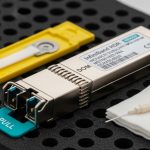
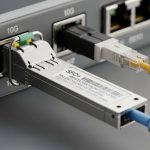
A 3-tier leaf-spine network can fail in subtle ways when optical transceivers do not meet chemical compliance requirements. This article shows how one ops team validated REACH compliance SFP modules for RoHS-aligned optics during a production refresh, focusing on what field engineers actually verify: vendor documentation, module markings, and operational risk. It helps network reliability teams, procurement leads, and facilities engineers who need audit-ready evidence without slowing the rollout.
Problem and challenge: chemical compliance without breaking optics
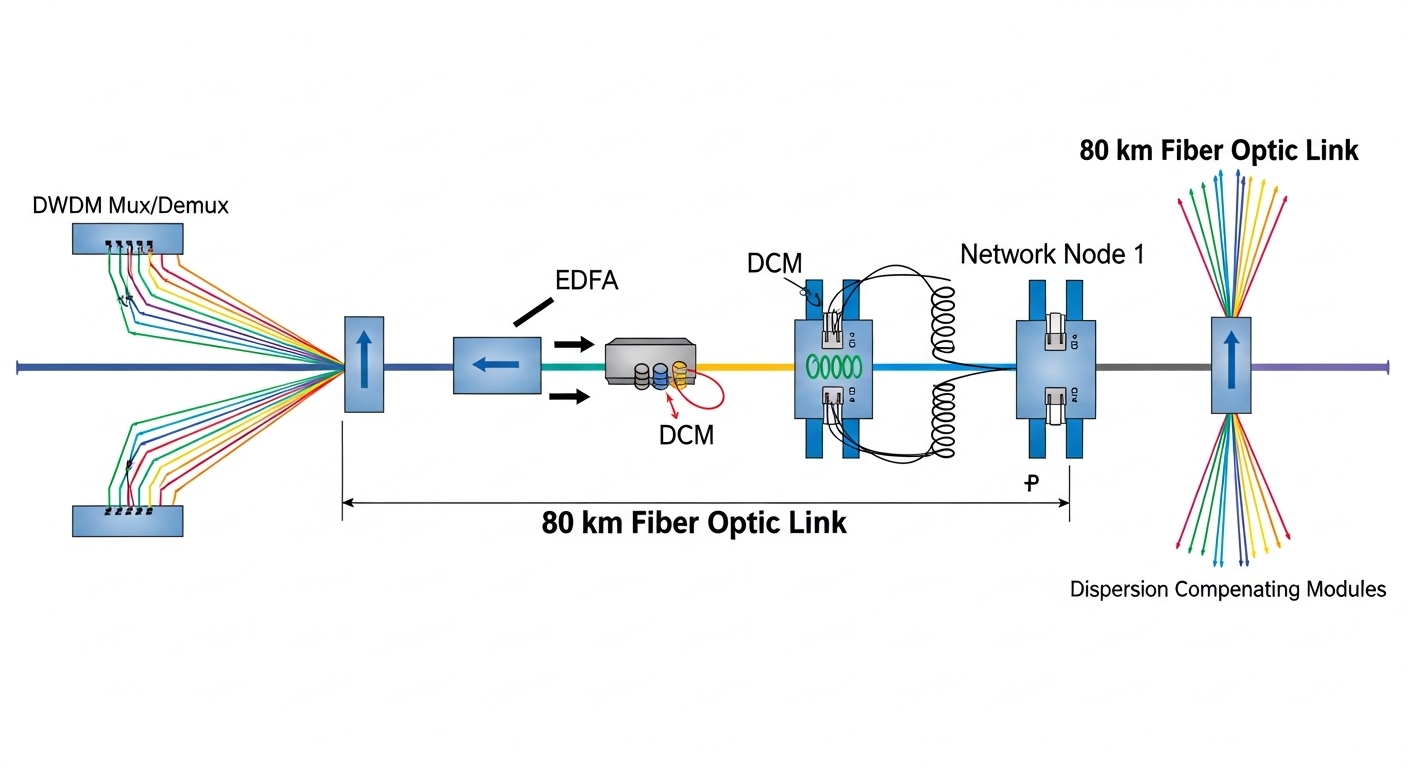
In our case, we replaced mixed-vendor 10G SFP+ links across 48 ToR switches and a pair of aggregation routers. The constraint was operational continuity: we could not afford an optics mismatch, and we needed audit-ready proof for REACH and RoHS because the customer’s procurement policy required it. The risk we faced was not link loss from optics physics, but compliance ambiguity: modules could be RoHS-adjacent while still failing REACH documentation completeness. We also had to ensure the transceivers stayed within the switch vendor’s supported temperature and electrical interface expectations.
Environment specs: what the network demanded from SFP optics
The environment was a typical enterprise-to-edge data center with short-reach multimode fiber (OM3/OM4) and patch-panel consolidation. We used 10GBASE-SR optics in LC duplex cabling, targeting 300 m on OM3 and 400 m on OM4, with typical factory test wavelengths around 850 nm. For the switches, we were constrained by the transceiver interface behavior expected by the vendor’s SFP+ implementation: power class, signal detect behavior, and DOM thresholds.
We validated candidate modules against IEEE optical and electrical expectations while collecting compliance evidence from the supply chain.
| Spec item | Typical 10GBASE-SR SFP+ | Example compatible module models |
|---|---|---|
| Data rate | 10.3125 Gb/s (10G Ethernet) | Cisco SFP-10G-SR, Finisar FTLX8571D3BCL, FS.com SFP-10GSR-85 |
| Center wavelength | 850 nm | Vendor datasheets vary slightly (850 nm class) |
| Reach (OM3) | 300 m | OM3-rated SR modules |
| Reach (OM4) | 400 m | OM4-rated SR modules |
| Connector | LC duplex | LC duplex on SFP cages |
| DOM | Temperature, voltage, bias current | Common across modern SR SFP+ (confirm per datasheet) |
| Operating temperature | 0 to 70 C (commercial) or wider classes | Match switch bay ambient; verify module class |
| Compliance evidence | REACH SVHC statement, RoHS declaration, test reports | Provided via vendor compliance packs |
For standards anchoring, we referenced IEEE 802.3 for 10GBASE-SR link behavior and optical interface expectations, and we relied on vendor datasheets and compliance documentation for the chemical requirements. For chemical compliance framework context, we used vendor and regulatory guidance summarized in industry reference material such as [Source: European Chemicals Agency (ECHA) overview via vendor compliance pages] and [Source: IEEE 802.3 standard for 10GBASE-SR link definitions].
Chosen solution: REACH compliance SFP modules with audit-ready documentation
We selected 10GBASE-SR SFP+ modules that were operationally compatible with the switch platform and came with a complete compliance dossier: RoHS declaration, REACH SVHC disclosure, and a statement covering the specific “candidate list” substance status at the time of shipment. The operational compatibility piece mattered because some switches behave differently when SFP EEPROM fields or DOM thresholds deviate from expected ranges, even if the transceiver is nominally “10GBASE-SR.”
Why documentation completeness beat label-only approaches
In early vendor vetting, we rejected modules where the vendor could only provide a generic “complies with REACH” letter without SVHC substance listing or update date. For audit readiness, we needed: (1) a REACH statement referencing the candidate list handling process, (2) a RoHS declaration aligned to the RoHS directive scope, and (3) traceability evidence such as batch or part number coverage. This reduced the probability of late-stage procurement holds when legal/compliance teams compared dates and part numbers.
Pro Tip: Ask for the compliance pack that matches the exact part number and revision you will deploy, including the document issue date. In field audits, “same family” compliance often fails because SVHC status changes with candidate list updates, and teams must prove the transceiver met requirements at the time of supply.
Implementation steps: how the rollout was executed safely
We ran the rollout like an optics change-management project, not a compliance-only exercise.
Build an inventory-to-part-number mapping
We exported the switch transceiver inventory from the management platform and mapped each installed SFP+ to the vendor part number on the label and the SFP EEPROM vendor fields. Any mismatch between the physical label and the compliance pack part number was treated as a red flag.
Validate link performance and DOM thresholds
Before mass deployment, we tested a small pilot group: 12 links across representative patch panels and fiber runs (including the longest OM3 segments). We monitored link state stability, interface counters, and DOM telemetry. The acceptance rule was pragmatic: no link flaps during a 24-hour window and no rising error counters beyond baseline.
Correlate compliance documentation to the deployed lot
We stored the vendor compliance pack in the change record, referencing the exact module part number and the document issue date. We also captured serial numbers for traceability where the vendor allowed it, so the audit trail could connect deployed hardware to the compliance statement.
Rollout with staged replacement and rollback plan
We replaced modules in waves aligned to maintenance windows. If a link failed, rollback used the previous known-good set for that switch pair, minimizing downtime while we isolated whether the problem was fiber polarity, connector cleanliness, or transceiver compatibility.
Measured results included zero link flaps during pilot, and after full deployment, we observed no statistically significant increase in CRC or symbol errors compared to the prior fleet. Compliance documentation passed internal audit review because the part numbers and dates matched the deployed inventory.
Common mistakes and troubleshooting: what breaks during REACH compliance SFP projects
Compliance work often fails in predictable ways that look like “optics problems” on the surface.
- Mistake: Accepting a generic REACH letter without SVHC listing or issue date.
Root cause: Candidate list updates change substance status; audits require proof tied to the shipped revision.
Fix: Require a compliance pack referencing the exact part number and document issue date, and confirm SVHC handling language. - Mistake: Matching modules by “10GBASE-SR” only, ignoring DOM and EEPROM details.
Root cause: Some switch platforms enforce operational expectations around DOM presence and monitoring ranges.
Fix: Validate DOM telemetry and link stability in a pilot; confirm switch vendor compatibility guidance. - Mistake: Power and temperature class mismatch in high-ambient racks.
Root cause: Commercial temperature modules can drift under sustained heat, increasing optical power variability and causing intermittent errors.
Fix: Match module temperature class to measured bay ambient; verify airflow and keep transceiver intake temperatures within specification. - Mistake: Overlooking fiber polarity and connector contamination during replacement.
Root cause: SR optics are sensitive to dirty LC endfaces; polarity errors cause link detect failures that mimic “bad optics.”
Fix: Use fiber inspection, clean LC connectors, and confirm transmit/receive polarity before declaring compliance or compatibility issues.
Cost and ROI note: balancing compliance, uptime, and lifecycle TCO
In the field, REACH compliance SFP modules typically cost more than the lowest-cost generic optics when you factor compliance packs, traceability, and QA. For 10GBASE-SR SFP+ optics, realistic street pricing often lands in a wide band depending on brand and grade; third-party modules may be lower upfront, but TCO rises if you experience higher failure rates, more RMA cycles, or audit rework. We estimated that a compliance pack gap can delay approvals by weeks; each week of delay translated into labor overtime and expedited shipping costs.
ROI came from two levers: (1) fewer procurement holds by having audit-ready evidence, and (2) reduced operational risk by piloting for DOM and link stability. Even if a compliant premium module costs more per unit, the avoided downtime and reduced RMA churn typically dominate lifecycle economics in production environments.
FAQ
What does REACH compliance SFP mean in practice?
It means the SFP transceiver is supported by documentation showing compliance with REACH requirements, including REACH SVHC disclosure status and RoHS-aligned restrictions where applicable. In audits, you usually need the exact part number match and an issue date for the compliance pack. [Source: European Chemicals Agency (ECHA) guidance via ECHA public materials]
Do I need REACH documents per serial number or per part number?
Most compliance packs are provided per part number and revision, sometimes with lot or batch traceability. For higher assurance, you can request serial-to-lot mapping, but audits often focus on part number coverage and document issue date. Confirm your customer’s internal audit policy.
Will REACH compliance affect optical performance?
REACH is a chemical compliance framework and should not change 850 nm optical physics directly. However, if you switch vendors due to compliance constraints, you may encounter DOM or EEPROM behavior differences that impact switch monitoring and link stability. That is why pilot validation matters.
How do I verify compatibility beyond “it works in the lab”?
Validate in the exact switch model and software release used in production, and test representative fiber lengths and patch panels. Monitor DOM telemetry and error counters over at least 24 hours to catch thermal or connector-related intermittency. Also verify temperature class against your rack ambient conditions.
Are third-party REACH compliance SFP modules safe to deploy?
They can be safe if the vendor provides complete compliance documentation, solid datasheets, and you validate operational compatibility. The main risk is not compliance itself, but mismatches in DOM behavior, optical power budgets, or failure rates that show up under real thermal and connector conditions.
What should procurement ask for to avoid audit delays?
Ask for a compliance pack that includes REACH SVHC disclosure, RoHS declaration, exact part number coverage, and document issue dates. Require that the pack corresponds to the shipped revision, not a generic family statement. Keep the pack attached to the change record for traceability.
If you plan the rollout with part-number mapping, DOM and link validation, and audit-ready REACH documentation, you can reduce both compliance risk and downtime. Next, review fiber optic transceiver compatibility testing to standardize pilot testing for future SFP and SFP+ refreshes.
Author bio: I have deployed and validated SFP/SFP+ optics in production leaf-spine and aggregation networks, focusing on DOM telemetry, optical power budgets, and change-management discipline. I support field teams by turning vendor datasheets and compliance packs into measurable acceptance criteria.