
You are building a private 5G campus network and need reliable, low-latency fiber backhaul between baseband units, switches, and edge compute. This article helps network and field engineers select fiber transceivers, plan optics reach, and implement a serviceable topology using repeatable steps. You will get selection checklists, a real deployment scenario with measured link budgets, and troubleshooting for the most common optics failures.
Prerequisites: what to measure before you buy private 5G fiber optic transceivers
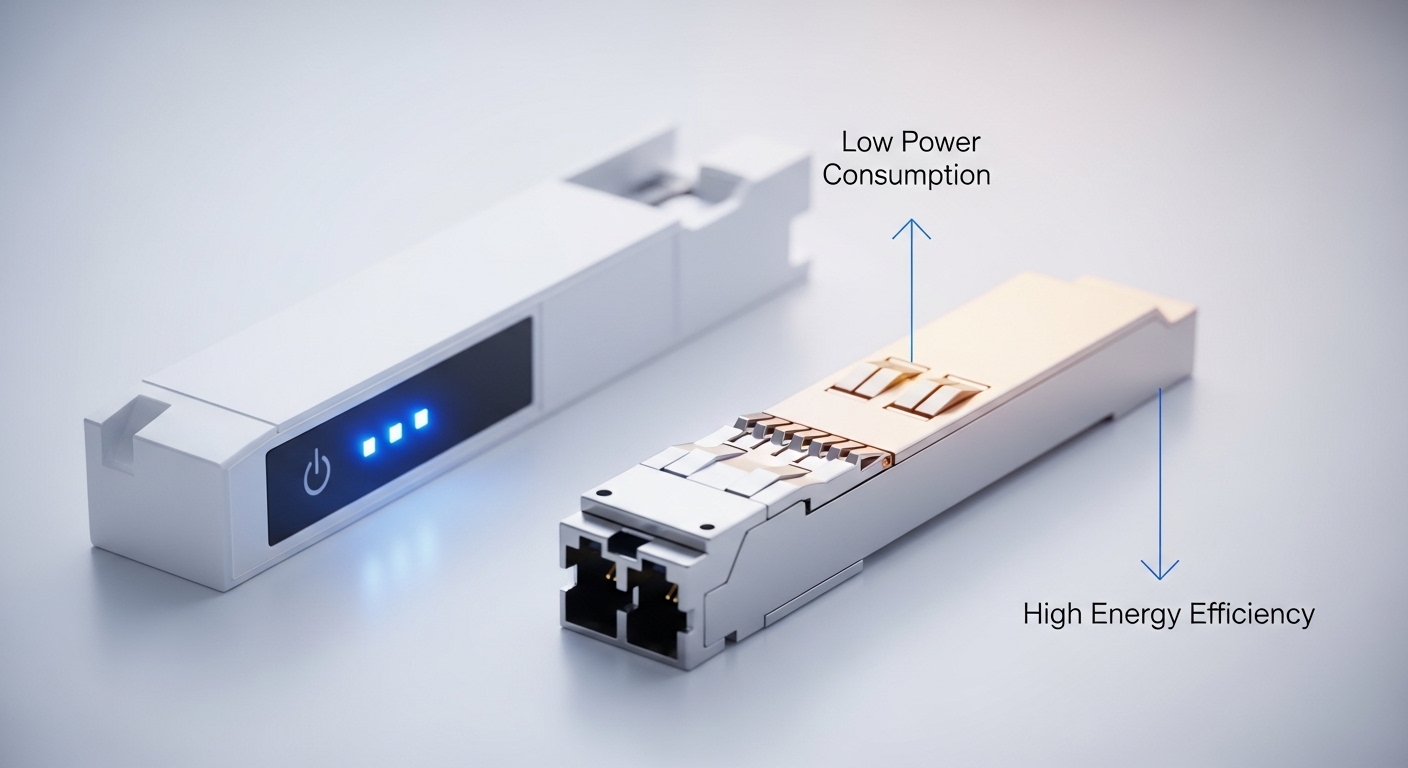
Before selecting optics, confirm the physical and electrical constraints of your campus design. Private 5G deployments often carry fronthaul or time-sensitive backhaul traffic where link stability, deterministic latency, and serviceability matter. You also need to align optics vendor compatibility with your switch/router transceiver acceptance policy and monitoring stack. Finally, document environmental conditions because optics temperature limits and connector contamination are frequent hidden causes of downtime.
Lock the campus topology and traffic direction
Define where the 5G equipment terminates and how traffic flows. For example, you may connect distributed radios to a centralized baseband pool via a leaf-spine switch fabric. In many campus builds, you will run 10G or 25G Ethernet toward aggregation switches, then uplink to edge compute. Private 5G fiber optic planning should specify whether links are used for fronthaul, backhaul, or both, because required latency and oversubscription differ.
Expected outcome: A one-page map listing each optics hop, its data rate, target reach, and whether the link is critical for radio synchronization.
Measure fiber plant loss and connector quality
Use an OTDR and end-to-end attenuation tests, not assumptions from cable labels. For short campus runs, connector and splice loss can dominate; typical engineering targets are < 0.5 dB per connector and < 0.3 dB per splice when workmanship is controlled. Record APC vs UPC connector type and confirm polarity mapping for duplex links. If you cannot re-terminate or clean, plan for conservative power budgets and choose optics with higher receive sensitivity margins.
Expected outcome: A table of each link’s measured budget: fiber attenuation, splice/connector loss, and estimated worst-case margin.
Confirm switch optics constraints and monitoring requirements
Validate that your access/aggregation switch models support the transceiver type and DOM monitoring features you need. Many enterprise switches accept only specific vendor part numbers or require matching optics encoding and compliance. If you need temperature alarms, lane-level diagnostics, or vendor-neutral monitoring, ensure the platform supports Digital Optical Monitoring (DOM) via standard management interfaces. Also confirm whether the switch uses auto-negotiation for optics ports or requires fixed speed configuration.
Expected outcome: A compatibility matrix: switch model, port speed modes, DOM support, and any transceiver allow-lists.
Choosing the right transceiver: wavelengths, reach, and power budget
Private 5G fiber optic links typically use short-reach optics over multimode or medium-reach optics over single-mode, depending on campus distances and cabling strategy. The most common engineering decision is whether you should standardize on SR (multimode) or LR/ER (single-mode). The second decision is the connector family and polarity method because miswiring is a top failure mode in the field.
Select multimode vs single-mode based on measured distance
If your campus uses OM4/OM5 multimode fiber and measured link lengths are within the transceiver reach envelope, SR modules often reduce cost and simplify splicing logistics. If you have long runs, heterogeneous cabling, or want the lowest long-term maintenance risk, single-mode LR/ER modules can be more robust. Use measured loss to validate the power budget rather than relying only on datasheet nominal reach.
Expected outcome: A per-link fiber type decision that is justified by OTDR loss and connector losses.
Match wavelength and connector: operational compatibility first
Multimode SR modules usually operate at 850 nm, while single-mode typically uses 1310 nm (LR) or 1550 nm (ER). Confirm connector type (LC is common for high-density switches) and ensure the transceiver is duplex LC for Ethernet. Also verify polarity mapping: most duplex LC links require consistent A-to-A and B-to-B conventions, but many installers swap patch cords during maintenance. Your deployment plan should include a polarity labeling rule and a post-install optical verification step.
Expected outcome: A transceiver bill of materials with exact wavelength, connector, and duplex/polarity requirements.
Validate power budget and receiver sensitivity margins
Compute worst-case received optical power using measured link loss plus a margin for aging and cleaning variation. Then compare to the module’s receive sensitivity and maximum input optical power. For example, a field engineer might design for at least 3 dB extra margin on top of measured loss when connectors are frequently accessed for maintenance. This helps prevent intermittent link flaps that appear only after thermal cycling or dust exposure.
Expected outcome: A documented pass/fail power budget per link hop, signed off before shipping optics to the site.
| Module type | Typical wavelength | Target reach (engineering use) | Connector | Data rate | DOM | Operating temp range (typ.) |
|---|---|---|---|---|---|---|
| 10GBASE-SR | 850 nm | Up to ~300 m over OM3; ~400-550 m over OM4/OM5 (depends on module) | LC duplex | 10G | Commonly supported | 0 to 70 C or wider variants |
| 10GBASE-LR | 1310 nm | Up to ~10 km (single-mode) | LC duplex | 10G | Commonly supported | -5 to 70 C (varies by model) |
| 25GBASE-SR | 850 nm | Up to ~70-100 m (OM4) or higher with OM5 and module-specific limits | LC duplex | 25G | Commonly supported | 0 to 70 C (varies) |
| 25GBASE-LR | 1310 nm | Up to ~10 km (single-mode) | LC duplex | 25G | Commonly supported | -5 to 70 C (varies) |
For standards context, Ethernet transceiver interoperability is governed by IEEE 802.3 optical module specifications and vendor implementations, while optical safety and test practices follow common industry guidance. Reference: IEEE 802.3 and vendor datasheets for specific receive sensitivity and power budget numbers. Example modules you might evaluate in the field include Cisco SFP-10G-SR, Finisar FTLX8571D3BCL, and FS.com SFP-10GSR-85; always confirm the exact datasheet for the power budget and temperature grade. [Source: IEEE 802.3 overview; vendor datasheets for specific part numbers].
Implementation guide: deploy private 5G fiber optic links end to end
Once optics choices are validated, you can implement in a repeatable way that reduces downtime. The key is to treat fiber optics as a managed system: physical handling, polarity discipline, configuration, and verification. Below is a step-by-step method suitable for a campus maintenance window and for scaling across multiple radio sites.
Stage optics and verify DOM compatibility before installation
Before plugging modules into live ports, inspect them visually and confirm connector cleanliness. If modules support DOM, check that your switch reads temperature/bias/power values after insertion. Many field teams log DOM readings at install time as a baseline so that later link degradation can be detected early. Ensure that the switch port is configured to the correct speed mode if it does not auto-detect reliably.
Expected outcome: DOM values appear in the switch telemetry and match expected ranges from the module datasheet.
Install patch cords using a polarity labeling rule
Use a consistent patching method for duplex LC links. Label both ends of each patch cord and document which cable goes to A and which goes to B based on your polarity standard. In practice, teams often adopt a “label-first” workflow: write port labels before insertion, then confirm link light levels after insertion. This avoids the classic scenario where the link stays dark due to swapped transmit/receive fibers.
Expected outcome: All duplex links light up and pass basic optical receive thresholds.
Configure switch ports and verify link health
Set port speed explicitly if your platform requires it, and verify that the link is up with no errors. Collect counters for CRC errors, FCS errors, and physical layer errors after traffic starts. For private 5G fiber optic applications, you should verify that latency and jitter remain within your application target under load. If you have time-sensitive networking requirements, confirm the network supports the needed QoS and scheduling behavior.
Expected outcome: Stable link up with clean counters and telemetry baselines.
Perform traffic and failover validation
Generate controlled traffic flows that match your expected radio/backhaul patterns and confirm throughput and loss. Then test a failure scenario: disconnect one patch cord or disable one uplink path to validate that your routing and redundancy behave as designed. In campus deployments, this step is the difference between “it links” and “it survives maintenance.”
Expected outcome: Verified service behavior under both normal and induced failure conditions.
Pro Tip: In many campus installs, the fastest early predictor of future optics issues is not link up/down events but DOM drift. Track transmit bias current and receive optical power at install time, then schedule a quarterly comparison; a slow downward trend in received power often correlates with connector contamination before the link completely fails.
Real-world scenario: campus private 5G with mixed SR and LR optics
Consider a 3-tier campus network serving a private 5G deployment: 48-port 10G ToR switches at each radio zone, aggregated at 12-port 25G uplinks to an edge core, then connected to edge compute. Total fiber runs range from 60 m patch-panel distances to 3.5 km backbone connections between buildings. The design uses 25G SR for short intra-building links (OM4/OM5) and 25G LR for inter-building backbone segments on single-mode fiber. Engineers measured end-to-end loss with OTDR and reserved 3-5 dB extra margin for connector access points.
In this scenario, the team deploys Cisco SFP-10G-SR equivalents on 10G ToR ports where cabling is OM4, and uses 1310 nm LR optics on single-mode backbone where distances exceed SR limits. They enable DOM telemetry collection into the monitoring system and record baseline receive power for each port. During commissioning, they run a 24-hour soak test with sustained traffic and confirm no CRC spikes. This reduces the probability of intermittent radio-backhaul jitter during peak operating hours.
Selection criteria checklist for private 5G fiber optic infrastructure
Engineers typically evaluate optics in the same order across vendors to avoid late surprises. Use this checklist per link and per switch model.
- Distance and measured loss: validate with OTDR and connector/splice losses; do not rely only on nominal reach.
- Data rate alignment: ensure the module matches your switch port speed (10G vs 25G vs 40G) and lane mapping.
- Fiber type and wavelength: pick SR (850 nm) vs LR/ER (1310/1550 nm) based on fiber plant.
- Connector and polarity: confirm LC duplex, polarity mapping, and patch cord labeling rules.
- Switch compatibility and allow-list risk: verify vendor certification or switch acceptance policy; mitigate lock-in where possible.
- DOM support and telemetry needs: confirm the platform reads standard DOM fields and thresholds.
- Operating temperature and airflow: match module temperature grade to the rack thermal environment.
- Power and TCO: compare transceiver cost, expected failure rates, and spares strategy; include downtime costs.
Common mistakes and troubleshooting: top failure points in private 5G optics
Even well-designed private 5G fiber optic links can fail due to practical field issues. Below are the most common pitfalls with root cause and corrective action.
Troubleshooting failure point 1: link stays down after installation
Root cause: swapped transmit/receive fibers on duplex LC, or polarity mismatch after patch cord replacement. Sometimes the module is compatible but the patching convention differs between teams.
Solution: verify polarity labeling, re-terminate or swap patch cords to restore correct A-to-A and B-to-B mapping, then re-check link light and DOM receive power.
Troubleshooting failure point 2: intermittent link flaps under temperature change
Root cause: connector contamination or marginal optical budget that only fails during thermal cycling. Dust can cause slow degradation that later crosses the receiver sensitivity threshold.
Solution: clean connectors using proper inspection and lint-free procedures, replace patch cords if damage is visible, and re-measure received power versus datasheet sensitivity. Add margin by selecting a module with higher receive sensitivity or improving the fiber plant if allowed.
Troubleshooting failure point 3: high CRC/FCS errors and rising physical counters
Root cause: dirty optics face, damaged fiber, or exceeding optical power limits due to incorrect patching or unexpected loss characteristics. In some cases, an incompatible transceiver triggers marginal signal integrity.
Solution: inspect with a fiber microscope, clean or replace components, confirm that the transceiver meets IEEE 802.3 optical compliance for the specific speed/format, and validate port configuration (speed, FEC if applicable, and MTU/QoS settings).
Cost and ROI note: budgeting optics for private 5G campus readiness
Optics pricing varies widely by vendor, speed grade, reach, and temperature grade. In typical enterprise purchasing, OEM transceivers may cost roughly 1.5x to 3x third-party equivalents, but OEM programs can provide stronger switch compatibility guarantees and faster RMA processing. For private 5G fiber optic deployments, the ROI often comes less from raw module cost and more from reduced downtime and faster spare replacement. A realistic TCO model should include spares inventory, commissioning labor, and the operational cost of field failures.
Power consumption differences between SR and LR modules are usually small relative to switching and compute power, but optics can still matter in dense racks. For a field team, the bigger cost lever is avoiding repeated truck rolls and cleaning cycles by implementing DOM baselining and connector inspection discipline. [Source: vendor datasheets for typical power consumption and receiver sensitivity; operational practice discussions in enterprise networking engineering].
FAQ
What fiber type is most common for private 5G fiber optic campus links?
Many campus networks start with OM4/OM5 multimode for short links and use single-mode for inter-building backbone segments. The decision should be based on OTDR-measured loss and connector/splice quality rather than nominal reach alone. If you expect frequent maintenance around patch panels, plan extra optical margin.
How do I know if my switch will accept third-party transceivers?
Check the switch model’s transceiver compatibility documentation and any allow-list or certification notes from the vendor. In practice, you should test one module per type in a lab or staging rack before rolling out at scale. DOM telemetry support is also a key compatibility dimension.
Do I need DOM for private 5G fiber optic operations?
DOM is not strictly required for the link to function, but it is highly useful for predictive maintenance. Monitoring transmit bias and receive power lets you identify degradation before complete failure. For private 5G backhaul, this can reduce the risk of intermittent radio service impact.
What is the most common optics installation mistake?
Swapped polarity on duplex LC patch cords is the most frequent “it is dark” problem. A second common issue is connector contamination leading to intermittent flaps. Both are preventable with inspection, labeling, and a post-install verification step.
How much optical margin should I plan for?
A practical engineering target is to retain at least 3 dB margin beyond measured end-to-end loss when connectors are likely to be accessed. If the plant is new and workmanship is controlled, you may be able to use less, but private 5G deployments generally benefit from conservatism. Always align margin with the module’s datasheet power budget.
Which standards should I cite for optics selection and interoperability?
Use IEEE 802.3 for Ethernet PHY and optical module behavior context, then rely on vendor datasheets for the module-specific parameters like receive sensitivity, optical power limits, and DOM fields. For safety and handling, follow standard fiber optic cleaning and inspection practices referenced by reputable vendors. IEEE 802.3 provides the baseline interoperability framework.
If you want a repeatable rollout, start by measuring loss with OTDR, selecting SR vs LR per link, and then implementing polarity discipline plus DOM baselining. Next, map your redundancy and maintenance windows to the same verification workflow; see private 5G campus redundancy design for a practical resilience plan.
Author bio: Field engineer and network architect focused on optical transport for low-latency Ethernet in campus and industrial environments. I deploy and troubleshoot transceiver-based links using OTDR validation, DOM telemetry baselines, and switch-level counter analysis.
Author bio: Research-minded practitioner who documents failure modes from commissioning to operations, aligning implementation details with IEEE 802.3 behavior and vendor optical specifications.
