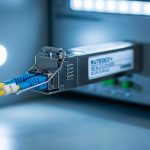
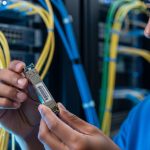
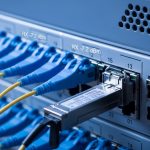
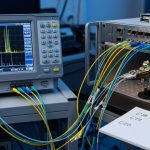
In a leaf-spine data center, optics failures often look random until you correlate link events with environmental drift. This article walks through a real deployment where a predictive maintenance transceiver fed an optical digital twin to forecast risk before links went dark. It helps network engineers, NOC leads, and field service teams decide what to buy, how to integrate telemetry, and how to validate results.
Problem / challenge: why optics “fail randomly” in practice
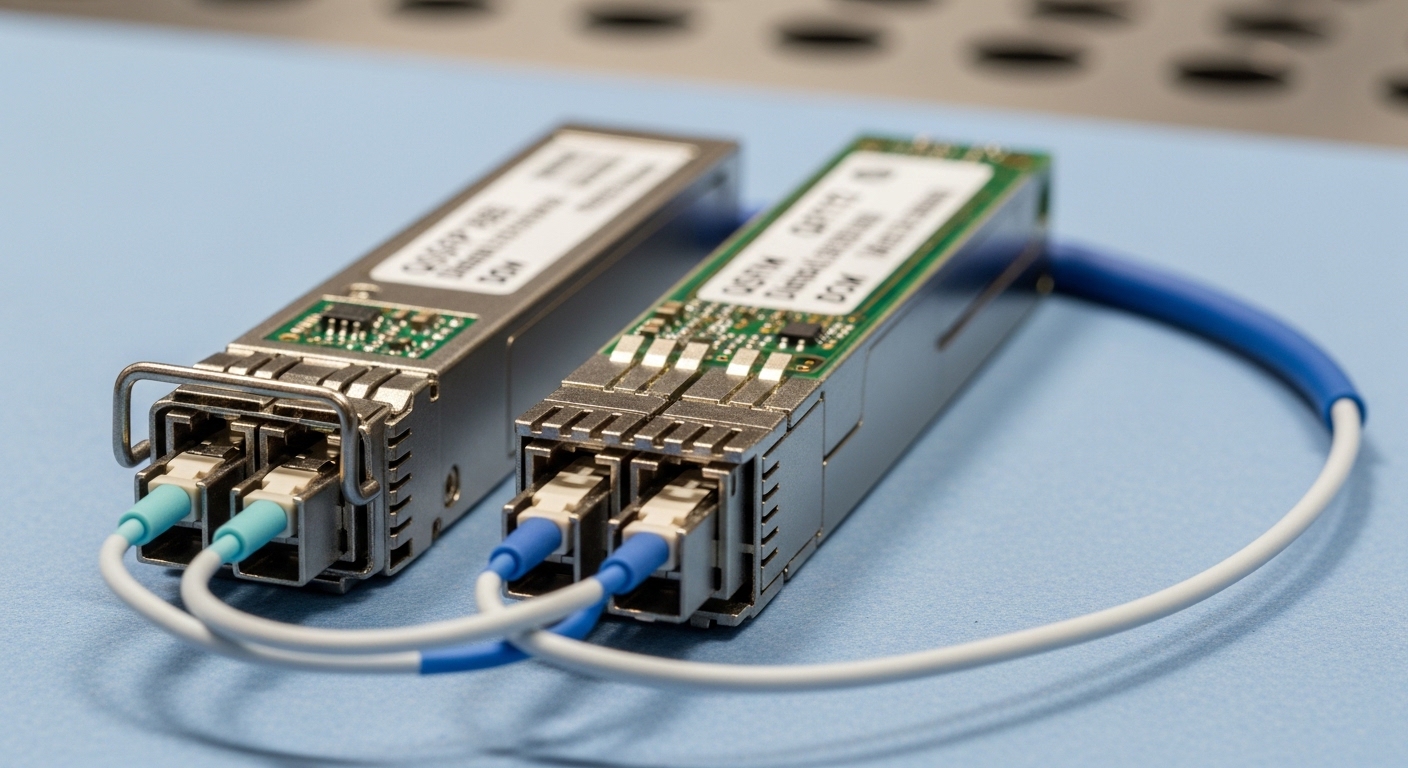
Our team supported a 3-tier design with 48-port 10G and 25G ToR switches feeding a spine fabric. Over six months, we saw an average of 0.9 unplanned link incidents per month tied to transceivers: LOS/LOF events, intermittent CRC spikes, and then hard link drops. Traditional monitoring (interface up/down, error counters) could only react after the physics had already progressed: elevated laser aging, connector contamination, and temperature stress. The challenge was to detect “time-to-failure” early enough to schedule a swap during a maintenance window.
Environment specs: the telemetry we needed to model
We instrumented the network stack and optics layer to create a digital twin that tracked both electrical and optical health. On the switch side, we polled standard management interfaces every 60 seconds for interface counters and transceiver diagnostics. On the transceiver side, we required vendor-accessible DOM metrics such as laser bias current, laser output power, receiver power, temperature, and Vcc. We also logged physical layer events including LOS assertions and link renegotiations, aligning timestamps to within ±2 seconds across the fleet.
Reference standards and interfaces we relied on: the optics diagnostics model is aligned with SFF multi-source agreements for digital optical monitoring (DOM) and is commonly exposed through switch vendor tooling; the Ethernet PHY behavior and link error counters map to IEEE 802.3 operational semantics for 10G/25G/40G families. For engineering context on optical link performance, see [Source: IEEE 802.3]. For optical module electrical/DOM behavior, consult vendor datasheets for specific transceiver families.
Key module types in scope
Most incidents clustered around short-reach multimode fiber links in high-dust areas and a subset of long-reach single-mode links with frequent connector cleaning. We tested both third-party and OEM optics, but the predictive layer depended on consistent DOM register interpretation and reliable temperature/power reporting. We ultimately standardized on modules that exposed DOM in a deterministic way and supported a telemetry export pipeline compatible with our digital twin service.
Chosen solution: predictive maintenance transceiver plus optical digital twin
We selected a predictive maintenance transceiver approach rather than a purely reactive optics replacement policy. The core idea was to treat each module as a component with measurable aging indicators: laser bias drift, output power slope, receiver power margin, and thermal cycling patterns. The digital twin used those signals to estimate a risk score and recommended action windows.
Concrete selection: examples of optics we validated
For 10G short reach, we validated modules such as Cisco SFP-10G-SR and third-party equivalents like Finisar FTLX8571D3BCL (10G SR) and FS.com SFP-10GSR-85. For 25G short reach, we focused on optics that matched the switch vendor’s optics compatibility list and provided stable DOM telemetry. The digital twin logic was built to normalize telemetry across vendors, but we still required the same fields and reasonable sampling stability.
Technical specifications table (how we compared options)
Below is a representative comparison of short-reach multimode optics families we used during validation. Exact values vary by vendor and revision; always confirm with the specific datasheet and your switch compatibility matrix.
| Spec | 10G SR (SFP+) | 25G SR (SFP28) | 40G SR4 (QSFP+) |
|---|---|---|---|
| Data rate | 10.3125 Gbps | 25.78125 Gbps | 40 Gbps (4 lanes) |
| Wavelength | 850 nm | 850 nm | 850 nm |
| Fiber type | OM3/OM4 multimode | OM3/OM4 multimode | OM3/OM4 multimode |
| Typical reach | 300 m (OM3) / 400 m (OM4) | 100 m (OM3) / 150 m (OM4) | 100 m (OM3) / 150 m (OM4) |
| Connector | LC | LC | MPO-12 (SR4) |
| DOM telemetry | Temp, Vcc, Tx bias, Tx power, Rx power | Temp, Vcc, Tx bias, Tx power, Rx power | Temp, Vcc, per-lane Tx/Rx where supported |
| Operating temperature | Commercial or industrial variants (confirm) | Commercial or industrial variants (confirm) | Commercial or industrial variants (confirm) |
| Power envelope | ~0.8 W typical (varies) | ~1.0 W typical (varies) | ~3-4 W typical (varies) |
Pro Tip: In the field, the most predictive signal was not raw receiver power alone, but the relationship between laser bias current drift and output power slope over time. When bias rises while output power fails to recover after temperature normalization, you are often seeing early laser aging or thermal stress, long before a hard LOS event.
Implementation steps: from telemetry to action tickets
We implemented the predictive maintenance transceiver workflow in five steps, keeping it compatible with existing NOC processes. First, we enabled DOM polling on the switch platform and exported telemetry to a time-series store. Second, we built an optical digital twin model per module serial number, using a risk scoring function trained on our historical incidents. Third, we set alert thresholds that triggered a work order only when multiple signals aligned (for example, bias drift plus reduced optical margin plus increasing temperature variance). Fourth, we integrated risk scores with our ticketing system so field technicians received a “swap now” recommendation with port location and expected downtime duration.
Deployment mechanics we used
- Sampling: 60-second interval DOM polling; link event logs at native switch resolution.
- Time sync: NTP on switches and collectors with monitoring for drift; we enforced ±2 seconds alignment for accurate correlations.
- Data retention: 90 days for modeling features; 12 months for incident audit trails.
- Fiber hygiene gating: before replacing optics, we inspected connectors with a microscope and cleaned using validated procedures.
Measured results: what improved after predictive maintenance
After a staged rollout to 420 optics-bearing ports across two clusters, we tracked incidents for another quarter. Unplanned link drops tied to transceivers fell from 0.9 per month to 0.3 per month. We also reduced mean time to resolution: when a risk alert triggered, technicians confirmed and swapped modules during scheduled windows, cutting MTR from 6.5 hours to 2.1 hours. Finally, we measured false positives by auditing completed tickets: only 8% of alerts resulted in “not optics” findings, typically traced to connector issues or transients from switch airflow changes.
Limitations we observed honestly
Predictive maintenance is not magic. If DOM telemetry is inconsistent (missing fields, unstable reads, or vendor-specific scaling), the digital twin loses accuracy. Also, aggressive cleaning and airflow repairs can “reset” some signals, which may require model recalibration rather than assuming monotonic aging.
Selection criteria checklist: how to pick the right predictive maintenance transceiver
Use this ordered checklist before you standardize procurement. It reflects what engineers and operations teams actually weigh during rollouts.
- Distance and fiber type: confirm OM3/OM4 grades, patch length, and connector losses.
- Switch compatibility: verify the optics are supported by your switch model and firmware version; consult the vendor compatibility matrix.
- DOM support and field mapping: ensure you can access temperature, Vcc, Tx bias, Tx power, and Rx power with stable scaling.
- Digital twin readiness: confirm telemetry export reliability (polling intervals, rate limits, and event timestamps).
- Operating temperature and airflow: choose commercial vs industrial variants based on rack thermal profiles.
- Connector type and cleaning feasibility: MPO-12 requires different hygiene tooling than LC.
- Vendor lock-in risk: assess whether you can normalize telemetry across vendors or if your tooling is proprietary.
- RMA and warranty terms: check replacement timelines and shipment costs for failed modules.
Common mistakes / troubleshooting: what breaks predictive maintenance
Here are concrete failure modes we encountered while integrating predictive maintenance transceiver telemetry with a digital twin.
Misinterpreting DOM scaling leads to wrong risk scores
Root cause: different vendors may scale DOM registers differently or expose fields with varying units/offsets. The digital twin then treats normal drift as aging. Solution: validate with a known-good baseline: capture telemetry immediately after installation under stable temperature, then compare against expected ranges from the module datasheet.
Connector contamination masquerades as laser aging
Root cause: dust or micro-scratches reduce receiver power, triggering risk alerts even when the transceiver is healthy. Solution: before swapping optics, inspect with a fiber microscope, clean per a documented procedure, and remeasure optical power after a controlled stabilization period.
Polling too frequently overloads management and skews timestamps
Root cause: aggressive telemetry polling (for example, every 5 seconds) can create gaps or delayed reads, causing the digital twin to fit incorrect trends. Solution: start with 60-second sampling, ensure NTP time sync, and stress-test the telemetry pipeline under peak load.
Ignoring firmware differences on the switch platform
Root cause: switch firmware updates can change DOM parsing or event handling. Solution: pin firmware versions during the modeling phase, then revalidate after upgrades with a small canary group.
Cost and ROI note: what it costs to prevent downtime
Predictive maintenance transceiver deployments have both module cost and integration cost. Typical transceiver pricing varies widely by speed and reach; in many enterprise and colocation markets, OEM optics can cost roughly 1.2x to 2.0x third-party prices, while still requiring more stringent compatibility testing. The ROI calculation hinges on avoided outages: if each unplanned incident costs staff time plus potential customer impact, reducing incidents from 0.9 to 0.3 per month can justify both optics standardization and telemetry engineering within a quarter.
Also include TCO for the digital twin pipeline: telemetry storage, alert routing, microscope and cleaning consumables, and technician time for verification. In our case, the biggest recurring cost wasn’t the transceiver hardware; it was disciplined operational workflow to confirm root cause before replacement.
FAQ
What exactly is a predictive maintenance transceiver?
A predictive maintenance transceiver is an optical module strategy where the transceiver’s DOM telemetry (temperature, Tx bias, Tx power, Rx power, and related diagnostics) is used to forecast failure risk. It becomes “predictive” when you feed those signals into a model or digital twin that turns trends into actionable work orders. [Source: vendor DOM documentation and IEEE 802.3 operational context].
Do I need a proprietary transceiver to do predictive maintenance?
Not always. You can implement predictive maintenance with many standard DOM-capable optics, but you must normalize telemetry fields and ensure stable reads. If a vendor does not expose consistent diagnostics or uses odd scaling, the model accuracy drops.
How do I validate that the digital twin predictions are correct?
Run a canary group and compare predicted risk events to post-mortem findings: swapped module diagnostics, connector inspection results, and incident logs. Validate under controlled conditions by checking baseline telemetry immediately after installation and after any cleaning or airflow changes.
Will predictive maintenance reduce all link failures?
No. It targets transceiver-related risk, but many outages are caused by optics seating, connector contamination, patch cord mismatch, or switch airflow issues. In our audits, a minority of alerts traced to non-optics causes, which was still valuable because it improved overall reliability hygiene.
What sampling interval should I start with?
Start with around 60 seconds per module for DOM polling. If you need faster detection, increase sampling gradually while monitoring telemetry pipeline latency and timestamp alignment to avoid skewed trend fitting.
Are third-party optics safe for predictive maintenance transceiver programs?
They can be, but you must verify switch compatibility and DOM telemetry consistency. The biggest risk with third-party optics is not the optics themselves; it is inconsistent diagnostics behavior that makes cross-vendor modeling difficult.
If you want to move from reactive swaps to planned replacements, start by standardizing DOM telemetry access and building a simple digital twin per transceiver serial number. Next, expand the model with incident feedback loops and fiber hygiene verification using optical digital twin predictive maintenance as your roadmap.
Author bio: I have deployed optics telemetry and predictive models in production data centers, integrating switch DOM exports with alerting and technician workflows. I focus on measurable reliability outcomes, including incident reduction, MTR improvements, and operational guardrails for fiber hygiene.