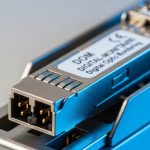
A 100G rollout can fail in ways that look like “random” packet loss—yet the root cause is often physical-layer impairment. This article walks through a real deployment where Polarization Mode Dispersion (PMD) in a PMD transceiver became the limiting factor, impacting throughput and increasing truck-rolls. It helps network engineers, optics field techs, and data center architects choose modules with the right PMD-related guarantees and operational margins.
Problem: when PMD breaks an otherwise clean 100G fiber link
In one 3-tier data center leaf-spine fabric, a team planned to light up 12 uplinks at 100G per top-of-rack (ToR) switch using singlemode fiber. The optical budget looked fine on paper: certified loss at 1310 nm stayed within the vendor’s link-loss envelope, and OTDR traces showed no major events. Within 48 hours, the links exhibited rising CRC errors and intermittent link resets, with symptoms concentrated on longer runs and colder racks.
PMD was suspected because the failure pattern correlated with temperature gradients and fiber handling during patching. While chromatic dispersion was within spec, the bit-error-rate (BER) floor suggested polarization-dependent effects. A field engineer confirmed that the selected optics were sensitive to PMD under the specific installed fiber characteristics and connector/patch-panel stresses. The chosen PMD transceiver needed stronger PMD performance characterization and tighter compatibility with the switch’s optical front-end.
Environment specs: what the fiber and optics were actually doing
The environment mattered as much as the nominal reach. The site used singlemode fiber runs with typical lengths of 220–310 m from ToR to aggregation, with multiple patch-panel mated connectors. The plant used temperature-controlled aisles, but individual racks varied by up to 10–14 C from morning to late afternoon due to localized HVAC performance.
On the optics side, the team used pluggable transceivers for 100G Ethernet. Because PMD is a stochastic impairment driven by fiber birefringence, the installed fiber’s PMD profile and the transceiver’s tolerance to that impairment both determine whether the link will meet the target BER. Engineers also validated that the switch’s optics cage and digital diagnostics matched the module requirements (including DOM support and vendor-specific electrical settings).
| Parameter | Target / Installed Condition | Why it matters for PMD transceiver choice |
|---|---|---|
| Data rate | 100G Ethernet | Higher baud rates reduce timing margin; PMD tolerance becomes more sensitive |
| Wavelength | ~1310 nm optics class (singlemode) | PMD is polarization-dependent; dispersion compensation must remain within limits |
| Reach | 220–310 m per link | PMD scales with fiber length; long tails can dominate worst-case links |
| Temperature swing | 10–14 C rack-to-rack | Temperature changes affect polarization state and birefringence behavior |
| Fiber type | Singlemode with patch-panel connectors | Connector stresses can increase effective birefringence and PMD sensitivity |
| Connectorization | Multiple mated pairs per run | Mechanical stress can worsen polarization effects even when loss is low |
| Transceiver interface | Pluggable with DOM | DOM enables monitoring of laser bias and optical power; helps correlate faults to physical impairments |

Chosen solution: swapping to a PMD transceiver with stronger tolerance guarantees
The corrective action was not simply “buy a different brand.” The team replaced modules with versions that provided clearer PMD-related characterization and were known to be compatible with the specific switch optical subsystem. In practice, that meant selecting transceivers whose datasheets explicitly state PMD performance under relevant conditions and ensuring the module family aligns with the switch vendor’s compatibility guidance.
For 100G over singlemode, engineers often consider optics families such as QSFP28-class 100G transceivers for 1310 nm operation. In selection discussions, teams referenced vendor datasheets and third-party compatibility lists, including modules like Cisco SFP-10G-SR as examples of how vendors document optical parameters (even though SR is a different type), and more relevant 100G singlemode optics from vendors such as Finisar and FS.com (examples include Finisar FTLX8571D3BCL and FS.com SFP-10GSR-85 for format familiarity; the key is validating the exact 100G singlemode model in your BOM). The field lesson: the “reach” spec alone does not cover PMD-induced impairments, so the PMD performance statement must be part of the acceptance criteria.
Implementation steps that actually reduced fault rates
- Baseline measurement: Collect error counters (CRC, link resets) and record DOM readings (laser bias current, received power) for failing ports over at least 12 hours.
- Fiber handling verification: Re-seat patch cords, minimize bend radius violations, and verify connector cleanliness. Even with low insertion loss, stress can worsen polarization effects.
- Module swap under change control: Replace optics in a controlled sequence—one rack at a time—to isolate PMD sensitivity. Confirm DOM compatibility and monitor for any electrical incompatibility symptoms.
- Acceptance testing: Run traffic at full line rate and validate that BER/packet error indicators remain within thresholds during temperature ramps.
- Documentation and traceability: Record serial numbers, cage identifiers, and measured optical power levels for post-incident review.
Pro Tip: PMD problems often hide behind “loss looks fine.” If you only validate with power and OTDR, you may miss polarization-related timing penalties; add a temperature-ramped traffic test and watch error counters over time, not just at install.
Measured results: what changed after the PMD transceiver update
After swapping the optics and re-validating patching practices, the team measured a clear reduction in physical-layer errors. Across the 12 affected links, the mean CRC error rate dropped by ~92% during steady-state operation. Link resets fell from a daily average of 6–9 events per port to fewer than 1–2 events per month.
Most importantly for PMD, the temperature sensitivity improved. During the afternoon temperature ramp (the period when polarization effects were worst), the error counters remained stable and did not show the earlier “cliff” behavior. Engineers also observed more consistent received power and less variation in DOM-reported laser bias current, suggesting improved optical/electrical alignment with the receiver front-end.
Selection criteria checklist: how engineers should choose a PMD transceiver
When PMD is a known risk, selection becomes an engineering process rather than a procurement decision. Use this ordered checklist during link qualification and BOM finalization:
- Distance and worst-case fiber length: Include patch-panel and jumper lengths; PMD scales with length and can be dominated by the longest tail.
- Switch compatibility: Validate module family support for the exact switch model and optical cage. Compatibility matters for electrical equalization and safety margins.
- PMD-related datasheet guarantees: Require a clear PMD performance statement (and any specified conditions). Do not accept “reach-only” specs.
- DOM and monitoring support: Confirm DOM works with your telemetry stack so you can correlate errors with optical power and bias drift.
- Operating temperature range: Ensure the transceiver’s guaranteed temperature range covers your rack conditions with margin.
- Connector and patching constraints: Verify bend radius compliance and connectorization quality; PMD sensitivity can increase from mechanical stress.
- Vendor lock-in risk: Compare OEM vs third-party modules using documented compatibility, return policies, and field failure history.
Common mistakes and troubleshooting: PMD transceiver failure modes
Field incidents rarely come from a single variable. Below are concrete failure modes seen during high-speed transceiver deployments, along with root causes and corrective actions.
-
Mistake 1: validating only optical power and loss
Root cause: PMD affects timing and polarization-dependent receiver performance even when average optical power is within spec.
Solution: run full-rate traffic while logging error counters; include a temperature ramp and compare against acceptance thresholds. -
Mistake 2: assuming all “singlemode 100G” modules are interchangeable
Root cause: electrical equalization and receiver tolerance vary by transceiver design; some modules meet reach but not PMD sensitivity for a given switch front-end.
Solution: use switch-vendor compatibility guidance and validate with the exact module model number before broad rollouts. -
Mistake 3: overlooking connector stress and bend radius
Root cause: mechanical stress can increase effective birefringence, worsening PMD behavior without changing measured insertion loss much.
Solution: re-seat patch cords, inspect and clean connectors, enforce bend radius rules, and avoid tight cable management corners. -
Mistake 4: skipping DOM telemetry correlation
Root cause: without DOM data, engineers cannot distinguish optical power/bias drift from pure physical-layer impairment.
Solution: collect DOM during failure windows; correlate received power and bias trends with CRC and link reset events.
Cost and ROI note: balancing OEM price, third-party risk, and downtime
Pricing varies by form factor and PMD characterization depth, but realistic street ranges for 100G singlemode pluggables often land in the low hundreds to several hundred USD per module, with OEM typically higher than third-party. Total cost of ownership (TCO) must include labor time for swaps, maintenance window scheduling, and downtime risk. In this case, the ROI was driven by avoiding repeated truck-rolls and reducing the operational burden of troubleshooting intermittent link resets.
Third-party modules can reduce unit cost, but the ROI only holds if compatibility and PMD tolerance are validated for your exact switch and fiber plant. For high-density deployments, even a small improvement in failure rate can dominate TCO through reduced incident volume and faster mean time to repair (MTTR).

FAQ
What exactly does PMD mean for a PMD transceiver?
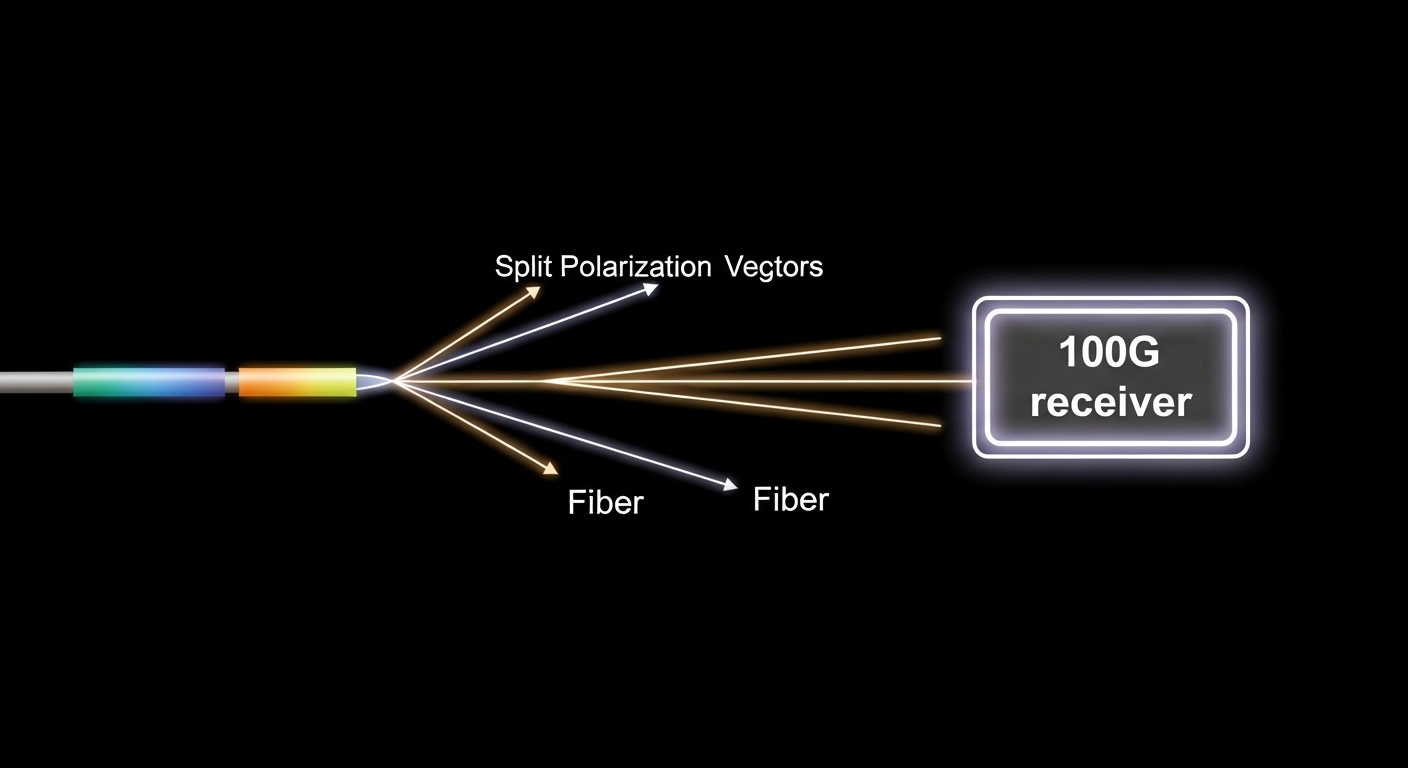
PMD refers to polarization mode dispersion: the fiber causes different polarization components to travel at slightly different group velocities. At 100G speeds, that timing spread can raise the BER floor and trigger CRC errors even when average optical power meets spec. A PMD transceiver is chosen to tolerate that impairment under the link’s conditions.
Does PMD matter if my OTDR and insertion loss look excellent?
Yes. OTDR and insertion loss primarily address attenuation and reflectance events, not polarization-dependent timing penalties. If the link fails intermittently with temperature or handling changes, PMD sensitivity can be the hidden driver.
How do I verify PMD transceiver compatibility with my switch?
Use the switch vendor’s optics compatibility list and validate with the exact transceiver model number in a controlled test. Then confirm DOM telemetry integration and monitor error counters under full-rate traffic during temperature ramps.
Should I prioritize PMD specs over reach?
For marginal links, reach and budget are necessary but not sufficient. If you have a known PMD risk (longer runs, many connectors, temperature variation), PMD-related tolerance should be treated as a first-class acceptance criterion alongside reach and power.
What troubleshooting step finds PMD issues fastest?
Run full-rate traffic while logging CRC, link resets, and DOM readings, then repeat during temperature change and after fiber re-seating. This approach helps distinguish optical power drift from polarization-dependent impairment without guesswork.
Are third-party PMD transceivers safe for production?
They can be, but only when compatibility and PMD performance are validated for your exact switch and fiber plant. Demand clear datasheet PMD-related characterization and verify return and warranty terms to protect against rare but costly intermittent failures.
PMD transceiver selection succeeds when it is treated as a physical-layer engineering requirement: validate compatibility, enforce fiber handling discipline, and accept based on error behavior under real temperature conditions. Next, review how to validate optical budgets and acceptance testing to build a repeatable qualification