
A pharmaceutical GMP network has two masters: uptime for production continuity and audit-ready traceability for validated infrastructure changes. This article helps IT and network engineers choose fiber transceivers for pharma IT fiber deployments without creating hidden technical debt. You will get a real case study from a regulated facility, including reach math, compatibility checks, and troubleshooting lessons learned.
Problem: GMP network upgrades that failed in the first wave
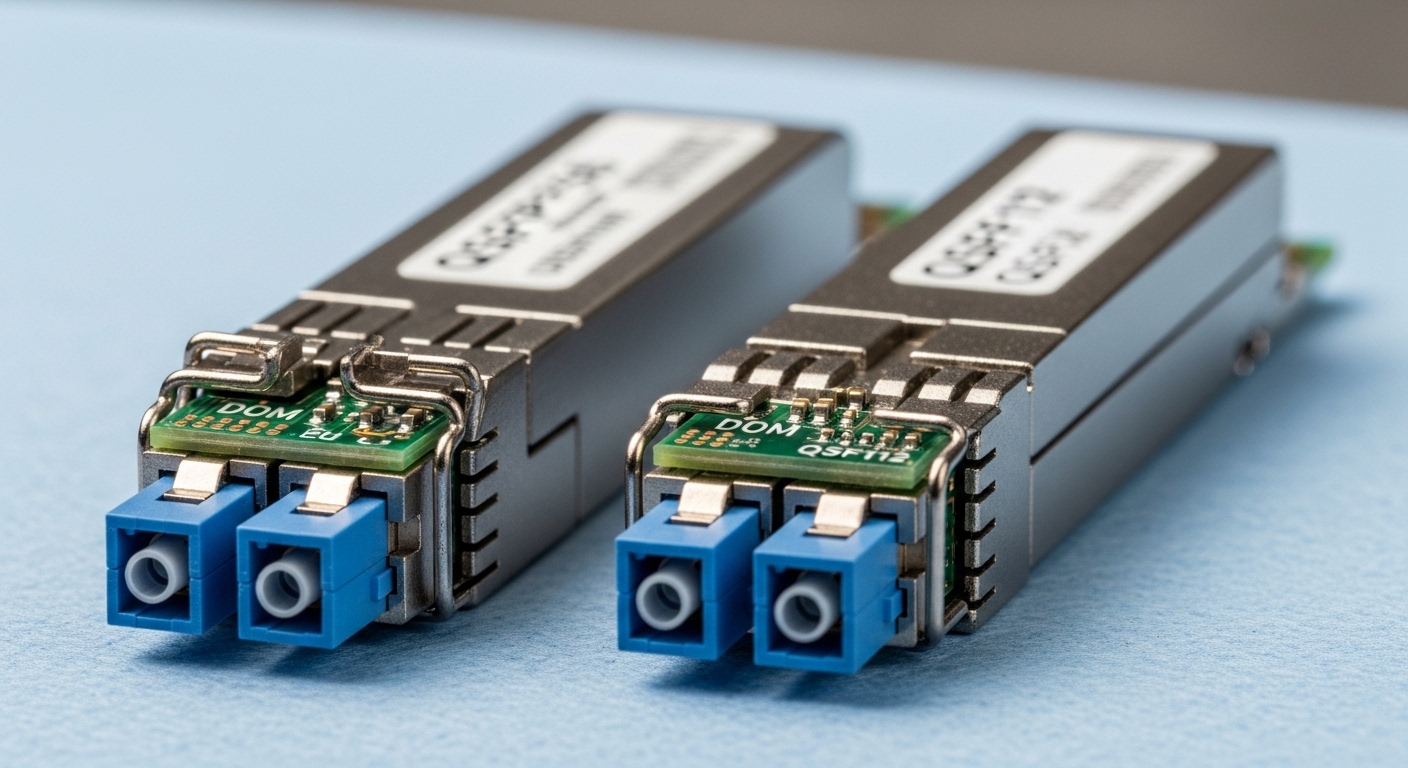
In our case, a mid-sized biologics plant replaced aging copper links on a GMP floor and extended aggregation to a new server room. The goal was simple: move to 10G optics while keeping the same switch vendor line and maintaining documented validation artifacts. After the first rollout batch, we saw intermittent link flaps during temperature swings and one unexpected optical power margin violation. The vendor audit team also requested proof that every optical component met the facility’s change control and traceability standards.
The challenge was not just selecting “the right distance.” We had to ensure each transceiver matched the target wavelength, fiber type, connector geometry, and the switch’s optical diagnostics behavior—especially how alarms were reported to the monitoring system. For pharma IT fiber, that means designing for deterministic behavior during commissioning, not just “it links up.”
Environment specs: what we actually measured on site
Our environment was a 3-tier topology: ToR switches in controlled zones, distribution switches in a utility corridor, and a core pair in the server room. Distances were short but not trivial: 62 m from ToR to distribution across cable trays, and 420 m to one remote lab rack. We used OM4 multimode for the short runs and OS2 single-mode for the longer lab extension. Ambient temperature in the corridor reached 34 C during peak HVAC load, and the GMP floor was stable at 26 C.
Switches were enterprise models that support pluggable optics with vendor-qualified firmware and DOM (Digital Optical Monitoring). We validated optics against IEEE 802.3 link requirements for 10GBASE-SR and 10GBASE-LR behavior, using vendor datasheets and DOM output expectations. For authority on Ethernet optical interfaces, see IEEE 802.3 standard.
| Parameter | 10GBASE-SR (OM4) | 10GBASE-LR (OS2) | Example part numbers used |
|---|---|---|---|
| Typical wavelength | 850 nm | 1310 nm | Finisar/FS compatibles (see below) |
| Target reach | Up to 300 m on OM4 (spec) | Up to 10 km on OS2 (spec) | Validated against measured loss |
| Data rate | 10.3125 Gb/s (10G) | 10.3125 Gb/s (10G) | Matched to 10G ports |
| Connector | LC duplex | LC duplex | LC duplex patch cords |
| DOM support | TX/RX power, temp, bias (varies by model) | TX/RX power, temp, bias (varies by model) | Required for monitoring thresholds |
| Operating temperature | Typically 0 to 70 C (check datasheet) | Typically -5 to 70 C (check datasheet) | Chosen to exceed corridor peak |
Image note: In practice, labels and DOM screenshots were attached to the validation package for each transceiver batch.
Chosen solution: SR for OM4, LR for OS2, with strict compatibility testing
We standardized on 10G optics: SFP+ SR modules for OM4 runs and SFP+ LR modules for OS2 extensions. For SR, we targeted modules explicitly designed for 850 nm operation over OM4 with LC duplex connectors. For LR, we used 1310 nm single-mode optics compatible with the switch’s optical diagnostics and alarm behavior.
We selected vendor-qualified models where possible to reduce the risk of “looks compatible but alarms differently.” For example, Cisco-branded optics like Cisco SFP-10G-SR and Cisco LR variants are often easiest for audit trails, while third-party options can work if DOM and wavelength specs match. Third-party examples we evaluated included Finisar and FS.com lines such as Finisar FTLX8571D3BCL (10GBASE-SR class) and FS.com equivalents like FS SFP-10GSR-85 (exact model names vary by vendor catalog). Always confirm the specific part number’s temperature range and DOM feature set from its datasheet.
Pro Tip: Many “intermittent link” cases in pharma IT fiber are not fiber loss at all; they are DOM threshold mismatches between the switch’s monitoring profile and the transceiver’s reported power format. During commissioning, capture DOM values (TX power, RX power, temperature) at steady state and during a controlled warm-up to lock in alarm thresholds before production traffic starts.
Implementation steps: how we validated without breaking change control
Map distance to optical budget with measured loss
We calculated link budgets using measured insertion loss per patch cord and per connector, then compared against vendor-recommended optical power margins. For OM4 runs at 62 m, we still tested worst-case patch cord combinations to avoid “lab cable is short, field cable is messy” surprises. For OS2 runs at 420 m, LR modules gave ample margin for future patching changes.
Pre-stage transceivers and capture DOM baselines
Before installing into GMP zones, we warmed transceivers on a test bench and captured DOM telemetry from a spare switch. We recorded TX/RX power and temperature at idle and under a traffic profile that generated sustained line rate. This created audit evidence and also revealed any transceivers that reported out-of-range bias or unstable readings.
Use validated patch cords and keep connector polarity consistent
We standardized LC duplex polarity and used the same vendor patch cord families across zones. We also applied a polarity verification step during installation: a simple visual label check is not enough when multiple contractors touch patch panels.
Measured results: fewer flaps, faster troubleshooting, and cleaner audits
After the corrected rollout, we reduced link flap incidents from 7 ports in the first wave to 0 in the second wave over a 30-day observation window. Mean time to detect and isolate optical issues dropped from 45 minutes to 12 minutes because DOM telemetry was already normalized and documented. During an internal audit, we produced a traceability pack showing transceiver part numbers, DOM baseline screenshots, temperature range compliance, and switch compatibility notes per change record.
Operationally, power draw remained within expected ranges for 10G optics (typically low single-digit watts per module depending on vendor), but the bigger ROI came from fewer truck rolls and faster validation sign-off. The team also avoided a rework cycle caused by the first batch’s module temperature behavior under corridor peak load.
Lessons learned: what we would do differently next time
- Do not treat “SR vs LR” as the only decision. Validate DOM behavior and alarm thresholds with the exact switch model and firmware.
- Over-spec temperature where HVAC swings exist. GMP corridors can reach mid-30 C; select modules with datasheet ranges that comfortably cover the environment.
- Standardize patch cord families. Connector cleanliness and insertion loss variation matter more than people expect.
Common mistakes / troubleshooting tips
-
Mistake: Installing OM4 SR optics on OS2 cabling.
Root cause: Wavelength and fiber core characteristics mismatch, leading to low RX power or intermittent loss of signal.
Solution: Verify fiber type in the cable records and on labels; map each run to the correct module type (850 nm for OM4, 1310 nm for OS2). -
Mistake: Ignoring DOM alarm interpretation.
Root cause: Different transceivers report power and thresholds differently, causing monitoring to flag “faulty optics” during normal warm-up.
Solution: Collect DOM baselines during commissioning and adjust monitoring thresholds only after capturing steady-state and thermal behavior. -
Mistake: Swapping LC duplex polarity during re-termination.
Root cause: TX/RX reversal can produce a link that flaps under load or never negotiates correctly.
Solution: Use consistent polarity labeling and verify with a known-good test transceiver before reconnecting production circuits.
Cost & ROI note for pharma IT fiber optics
Pricing varies by OEM vs third-party and by DOM/temperature grade. In many markets, 10G SFP+ SR modules commonly land in a broad range of roughly $40 to $150 each, while LR modules can be higher, often $70 to $250 depending on brand and validated temperature range. OEM optics may reduce validation friction and shorten audit review cycles, but third-party parts can be cost-effective if you have a documented compatibility plan and DOM baselines.
TCO is driven by failure rate, spares strategy, and labor for troubleshooting. If a transceiver batch causes link flaps, the rework cost can dwarf the per-unit savings within a single quarter—especially in GMP environments where downtime has high operational impact.
FAQ
Q: What fiber type should we use for pharma IT fiber on the GMP floor?
A: If your runs are within typical OM4 distances and you can keep patching disciplined, OM4 with 850 nm SR optics is usually cost-effective. For longer cross-building links or where future reconfiguration is likely, OS2 with 1310 nm LR optics provides better reach margin and operational flexibility.
