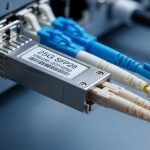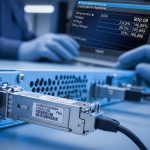
In modern rack planning, the fastest way to stall a rollout is a transceiver mismatch: a port that won’t link, higher error counters, or a cooling-induced thermal shutdown. This article helps data center engineers and procurement leads choose a generic SFP module by comparing OEM and third-party optics using real compatibility and operational criteria. You will get spec-level guidance, a decision checklist, and troubleshooting playbooks for fiber links that must stay stable under load.
Why “generic SFP module” choices can make or break link stability
At the physical layer, an SFP module must satisfy IEEE 802.3 requirements for signaling, optical power, receiver sensitivity, and management behavior via the SFP MSA interface. In practice, “generic” usually means a third-party or non-OEM transceiver that targets the same electrical and optical envelope as the vendor part. The risk is not that optics magically fail; the risk is that the module’s firmware, DOM implementation, or laser characteristics drift outside what your switch expects.
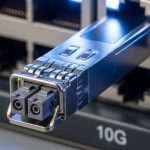
For fiber, the two most common SFP families are 10GBASE-SR (850 nm, multimode short reach) and 10GBASE-LR (1310 nm, single-mode longer reach). Your switch vendor often qualifies specific brands and firmware revisions, so even when the optics are “compatible,” the operational tolerances might differ. That difference shows up as CRC errors, increasing BER, or intermittent link flaps during temperature swings.
OEM vs third-party: what changes under the hood
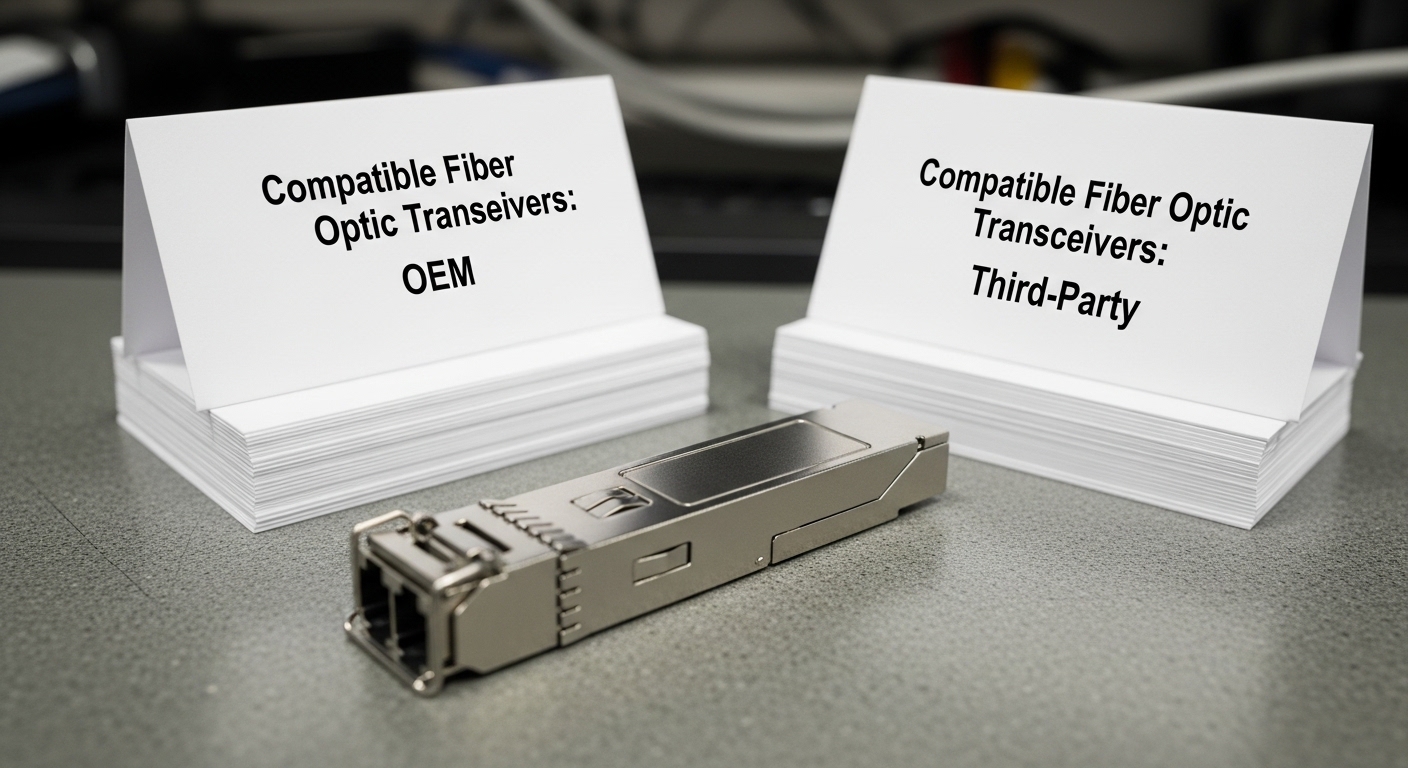
OEM optics are manufactured and validated by the same ecosystem that built your switch ASICs and optics calibration routines. Third-party optics can be fully compliant with MSA electrical specs, yet still vary in DOM calibration tables, laser bias behavior, and how they handle low-power standby. When you are scaling leaf-spine networks or upgrading ToR switches, those differences affect mean time to recovery and spare inventory planning.
What engineers typically validate during procurement
Before buying, teams validate compatibility with the target switch models and firmware versions, not just the transceiver type. Ask for a compatibility matrix, and verify whether the module supports Digital Optical Monitoring (DOM) with the expected thresholds and alarms. Also confirm the optical budget: for SR, ensure your multimode fiber plant supports the required link margin; for LR, confirm fiber attenuation and connector cleanliness.
Technical specifications comparison (typical 10G SFP)
The table below compares common optics characteristics you will see when selecting a generic SFP module for 10G deployments. Always cross-check the exact model datasheet, because power and DOM behavior vary by vendor.
| Spec | 10GBASE-SR SFP (850 nm MMF) | 10GBASE-LR SFP (1310 nm SMF) |
|---|---|---|
| Data rate | 10.3125 Gbps (10G) | 10.3125 Gbps (10G) |
| Wavelength | 850 nm | 1310 nm |
| Typical reach | Up to 300 m over OM3; up to 400 m over OM4 | Up to 10 km over single-mode fiber |
| Connector | LC (duplex) | LC (duplex) |
| DOM | Usually supported; verify vendor thresholds | Usually supported; verify vendor thresholds |
| Operating case temperature | Typically -5 C to 70 C (check datasheet) | Typically -5 C to 70 C (check datasheet) |
| Power class | Laser class per IEC/EN; verify eye-safety labeling | Laser class per IEC/EN; verify eye-safety labeling |
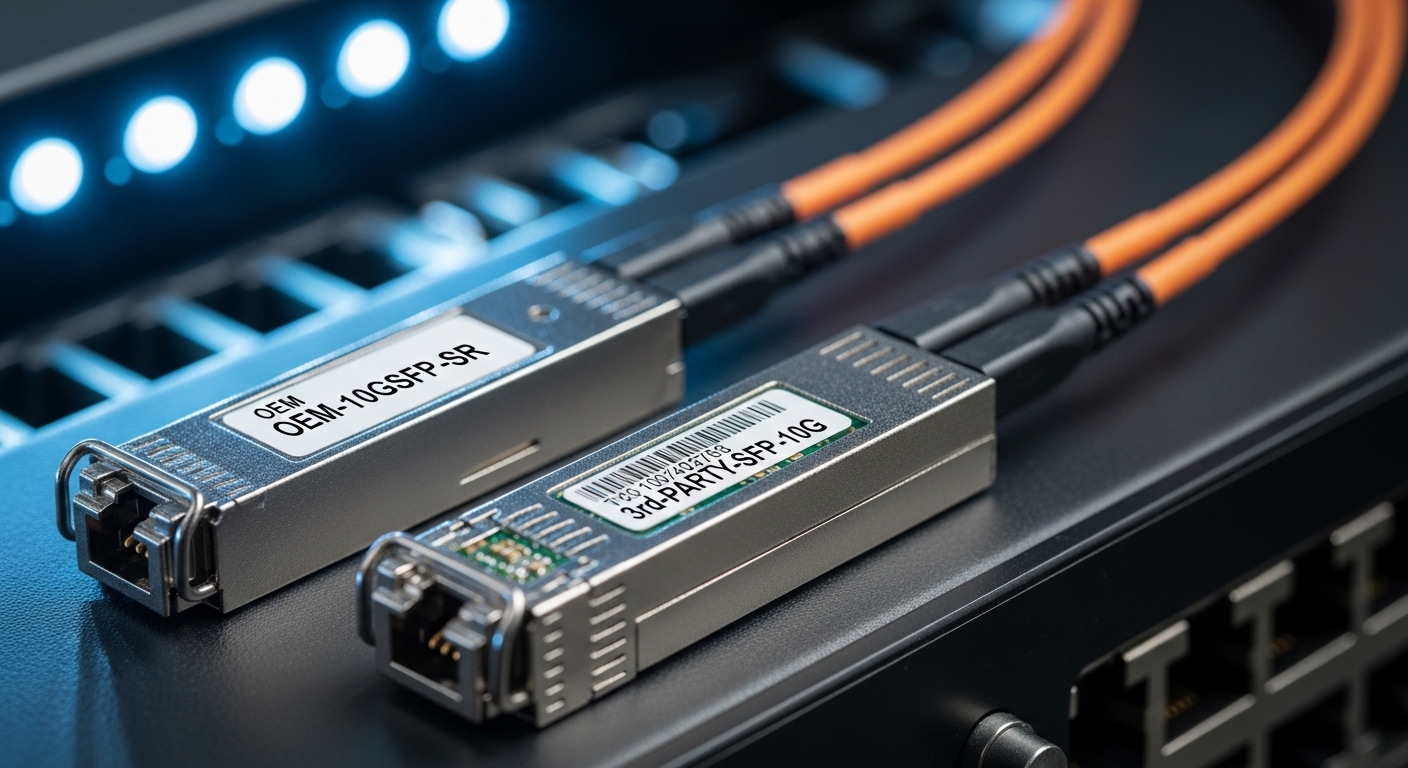
A real deployment scenario: third-party optics in a leaf-spine upgrade
In a 3-tier data center leaf-spine topology with 48-port 10G ToR switches, our team planned a phased upgrade from 1G to 10G on 12 racks. Each ToR required 24 uplink optics and 24 downlink optics, totaling 576 SFP modules across the first wave. We standardized on 10GBASE-SR for OM4 links at 120–220 m, and we used a mix of OEM and third-party optics to balance cost without risking rollout schedules.
We ran a pilot with 60 third-party generic SFP module units, monitoring link stability and counters for 30 days. We checked switch interface stats for CRC errors and monitored DOM telemetry for received power trends during peak cooling loads. The pilot passed when we saw stable signal levels and no interface flaps; however, one vendor batch showed higher temperature drift, which correlated with elevated error counters near the end of the day during hot-aisle conditions.
The fix was not “reject third-party forever.” We replaced that batch with a different revision, and we also tightened airflow verification behind the racks. After that, the remaining rollouts used third-party optics at scale, while keeping OEM optics for the most mission-critical uplinks where we had strict vendor support contracts.
Selection criteria checklist: how to choose safely
Use this ordered checklist to decide between OEM and third-party optics for your generic SFP module purchases. The goal is to reduce surprises during the first 72 hours after install.
- Distance and fiber type: confirm OM3 vs OM4 grading, connector loss, and end-to-end attenuation. For SR, verify link margin for the specific reach class.
- Switch compatibility: confirm the exact switch model and firmware revision supports the module. Some platforms enforce vendor optics allowlists.
- DOM support and thresholds: verify the module provides DOM and that alarms match your monitoring expectations (power levels, temperature, laser bias current).
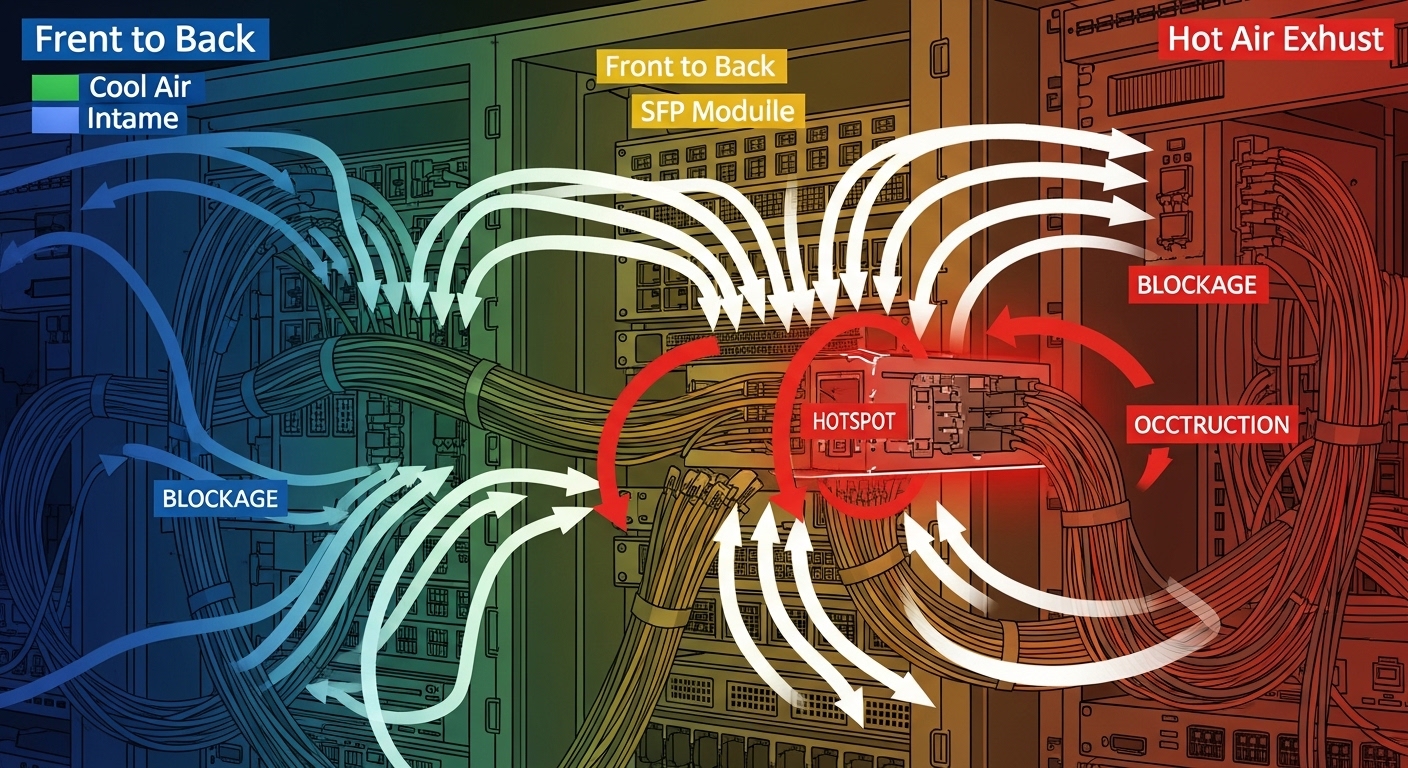
- Operating temperature: check the module’s case temperature range and ensure rack airflow prevents overheating. SFPs are sensitive to local hotspots behind dense cable bundles.
- Optical power and receiver sensitivity: compare transmit power and sensitivity ranges from datasheets, not just “10G SR compatible.”
- Vendor lock-in risk: evaluate whether you need OEM-only support for warranty claims. If yes, isolate OEM to critical paths and use third-party for lower-risk ports.
- Quality controls and revisions: ask whether batches are tested and whether DOM tables are consistent across revisions.
Pro Tip: If your switch supports DOM-based threshold alarms, treat received optical power drift as a leading indicator. A module that “links” but gradually shifts RX power toward the lower threshold can reveal marginal fiber polarity issues, aging connectors, or a thermal airflow problem before you see hard failures.
Common pitfalls and troubleshooting tips (field-tested)
Even when a generic SFP module is nominally compatible, these failure modes show up repeatedly in real deployments. Use the root cause and solution pairing to accelerate diagnosis.
-
Pitfall 1: Link up/down flapping during peak load
Root cause: thermal stress in a crowded rack or a marginal module revision with higher temperature drift.
Solution: verify front-to-back airflow, check case temperature behavior via DOM, and test the same module in a cooler port group. Swap to a different revision if drift correlates with temperature. -
Pitfall 2: High CRC/late errors with a “working” link
Root cause: insufficient optical power budget due to dirty connectors, excessive patch-panel loss, or wrong fiber type (OM3 vs OM4 assumptions).
Solution: clean LC connectors with approved procedures, inspect with a fiber microscope, and re-measure with an optical power meter to confirm margin. -
Pitfall 3: DOM alarms not matching your monitoring thresholds
Root cause: third-party DOM calibration values or threshold mapping differ from OEM expectations, leading to false positives or missed warnings.
Solution: update monitoring baselines using observed telemetry from a pilot set, and confirm that your NMS interprets DOM fields correctly for that module vendor. -
Pitfall 4: Works on one switch, fails on another
Root cause: vendor-specific transceiver qualification behavior, including allowlists, transmitter disable behavior, or timing quirks in host PHY management.
Solution: validate compatibility per switch model and firmware. Maintain per-switch spare part lists instead of assuming universal behavior.
Cost, ROI, and TCO: when third-party pays off
On price, OEM optics often cost more because they include vendor validation and tighter warranty alignment. Third-party generic SFP module units can reduce purchase cost, but the total cost depends on your failure rates, replacement logistics, and how fast you can troubleshoot field issues.
Typical street pricing for 10G SFP optics varies by reach and brand. In many enterprise and colocation environments, you may see OEM units roughly 1.5x to 2.5x the cost of reputable third-party optics for the same SR or LR class. If your operations team can quickly validate DOM telemetry and optical power, third-party can deliver strong ROI by lowering capex while keeping spares effective.
However, TCO must include: downtime cost during swaps, time spent on connector cleaning and optical measurements, and the administrative overhead of managing multiple vendor revisions. A practical approach is to keep OEM optics for the most critical uplinks or for environments with strict vendor support clauses, while using third-party optics on non-critical ports and running a pilot before scaling.
FAQ: OEM vs third-party generic SFP module
Is a generic SFP module always IEEE compliant?
Many third-party optics follow IEEE 802.3 electrical and optical requirements and target SFP MSA behavior, but compliance alone does not guarantee switch-level compatibility. Always validate with your exact switch model and firmware, and confirm DOM support if your monitoring depends on it.
Do OEM optics reduce troubleshooting time?
Often yes, because OEM parts are usually validated against the vendor’s platform behavior and monitoring expectations. That said, third-party modules can be equally reliable if you pilot them, verify DOM thresholds, and standardize cleaning and optical budget checks.
What fiber issues most commonly cause link errors with SFPs?
Dirty LC connectors, wrong fiber type assumptions, and polarity mistakes are frequent culprits. Even with a correct module, a small loss margin can push signals near receiver sensitivity limits and increase errors.
How can I verify DOM compatibility before full rollout?
Run a pilot with a representative mix of ports, then compare DOM telemetry for temperature, laser bias current, and received power. Confirm that your NMS or telemetry pipeline interprets the values correctly and that thresholds behave as expected.
Should I mix OEM and third-party optics in the same switch?
It is usually feasible, but you should keep a controlled mapping of which ports use which vendor during the pilot. If you see alarm noise or inconsistent telemetry, isolate the affected vendor revision and standardize on the version that matches your monitoring baseline.
Where do I look for authoritative compatibility guidance?
Start with your switch vendor’s optics compatibility documentation and the transceiver vendor’s datasheet. For standards context, review IEEE 802.3 and SFP MSA guidance, and cross-check with vendor field notes when available. IEEE 802.3 Standards
Choosing a generic SFP module is less about brand labels and more about verified compatibility: distance, DOM behavior, thermal realities, and optical budget discipline. For your next step, review your link inventory and plan a pilot using the fiber transceiver compatibility checklist approach so your rollout stays fast, predictable, and supportable.
Author bio: I am a data center engineer who has deployed rack-scale fiber and transceiver fleets, balancing cooling, power budgets, and optics qualification. I translate vendor datasheets into field-ready acceptance tests that reduce downtime and protect TCO.