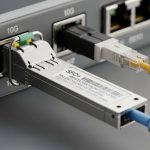
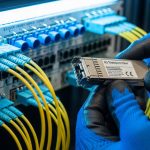
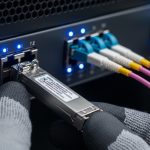
If your fronthaul is failing link stability during O-RAN bring-up, the issue is often the xhaul transceiver choice, not the radios. This article helps network and field engineers pick an O-RAN compliant SFP that survives real temperature swings, optics budgets, and switch quirks. You will get practical selection criteria, troubleshooting patterns, and a ranked shortlist of what to buy for common fronthaul distances.
Start with the O-RAN fronthaul interface reality (what the SFP must do)
O-RAN fronthaul commonly maps CPRI-like transport needs onto Ethernet-based methods, but the transceiver still must meet the physical layer expectations of the O-RAN radio unit and the transport unit. In practice, the SFP must support the right data rate, optical wavelength, and electrical/optical budget for the link length and connector losses. Before buying, confirm the exact front-haul line spec your deployment uses (vendor radio integration guides often specify the exact optics class and expected link budget).
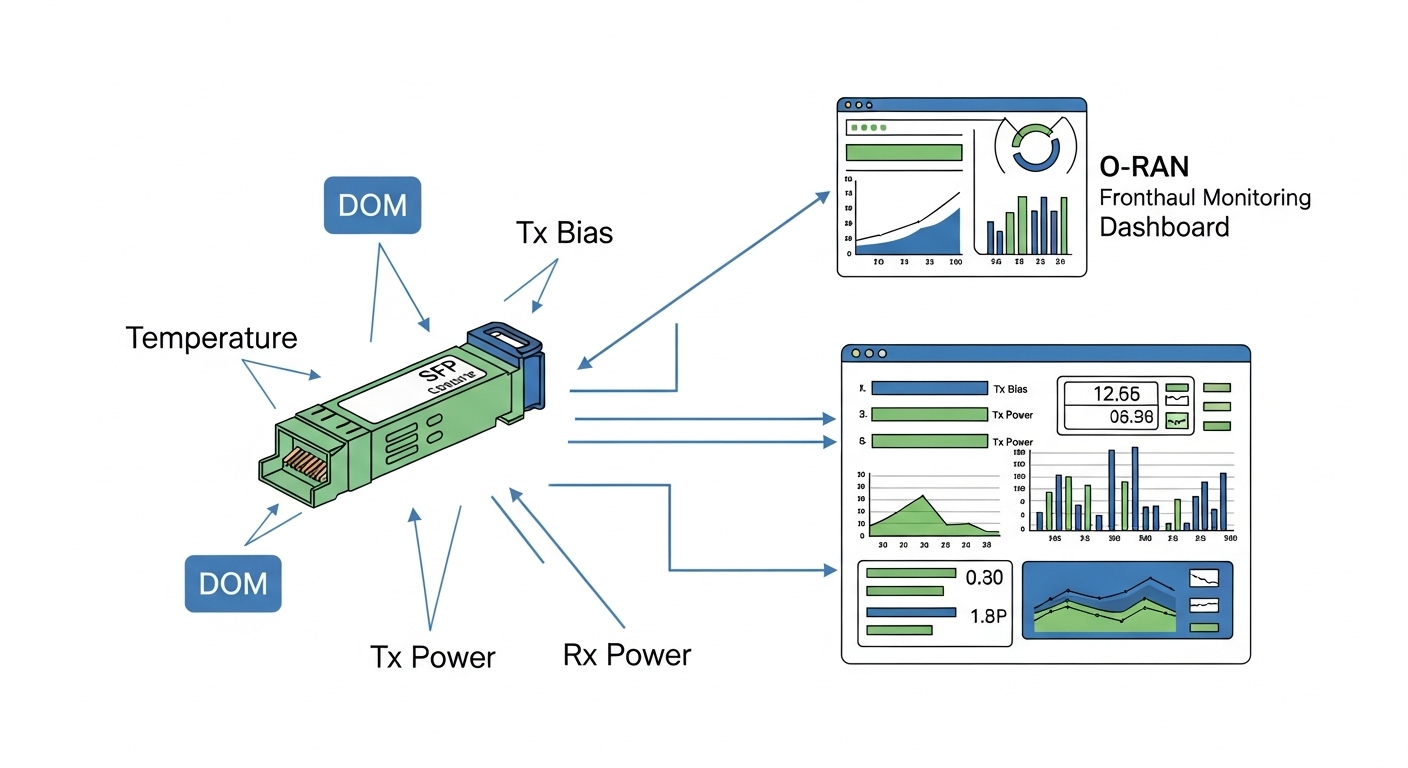
For field work, I recommend you verify the negotiated line mode on the transport device and then check that the transceiver DOM reports match expected thresholds (laser bias current, received power, and temperature). If the radio side enforces strict timing, marginal optics can show up as intermittent CRC errors or PRACH timing drift symptoms.
Best-fit scenario: You are integrating O-RAN radios across a campus or small metro ring where the transport side is programmable but optics are the fixed constraint.
Pros: Fewer bring-up surprises; aligns with O-RAN integration guides. Cons: Requires you to confirm exact line rates and optics class early.
Match wavelength and reach to your fiber plant, not to marketing claims
Most fronthaul SFP choices revolve around two optics families: multi-mode (typically 850 nm) for shorter reaches, and single-mode (typically 1310/1550 nm) for longer spans. Your fiber plant losses are rarely flat; splice counts, patch panel aging, and connector contamination swing the loss. Always compute a real budget using measured attenuation if you can, and include safety margin.
Below is a practical comparison of common SFP optics classes engineers see in O-RAN fronthaul xhaul deployments. Treat it as a starting point; always validate against the radio vendor’s interoperability matrix and the switch or OLT/DU/CPRI-over-Ethernet device requirements.
| Optics type | Typical wavelength | Common reach (example) | Connector | Target data rate | DOM support | Operating temperature |
|---|---|---|---|---|---|---|
| 10G SR (MMF) | 850 nm | ~300 m (MMF) | LC | 10G | Yes (typical) | 0 to 70 C (often) |
| 10G LR (SMF) | 1310 nm | ~10 km (SMF) | LC | 10G | Yes (typical) | -5 to 70 C (often) |
| 25G/40G SR (MMF) | 850 nm | ~100-150 m (MMF) | LC | 25G or 40G | Yes (typical) | 0 to 70 C (often) |
| 25G/40G LR (SMF) | 1310 nm | ~10 km (SMF) | LC | 25G or 40G | Yes (typical) | -5 to 70 C (often) |
Best-fit scenario: Your fronthaul spans 200 to 800 m between O-RAN DU and RU sites and you have a measured MMF run with predictable splice loss.
Pros: Better link margin; fewer receiver overload or underpower issues. Cons: Wrong wavelength class can cause total link failure.
Choose the right SFP form factor and electrical profile for fronthaul xhaul
O-RAN fronthaul integrations often rely on specific transceiver families: SFP (1G/10G), SFP+ (10G), SFP28 (25G), or QSFP/QSFP-DD for higher aggregates, but your prompt focuses on O-RAN compliant SFP selection. The critical point is that the device expects a particular electrical signaling and management behavior (including DOM readings, LOS behavior, and rate support). A mismatch can appear as link flaps, “unsupported module” alarms, or a link that comes up at a lower rate than required.
When I deploy these in the field, I start with the vendor’s approved optics list for the exact SKU of the transport unit (DU/transport node). If you must use a third-party xhaul transceiver, confirm that it passes the host’s module authentication checks and that it reports expected DOM fields.
Pro Tip: In many switches and O-RAN transport nodes, the “link up” green LED can mask a bad parameter set. Always poll DOM and watch received optical power and laser bias current right after link bring-up; otherwise you may miss a transceiver operating near its margin until traffic load increases.
Best-fit scenario: You are standardizing optics across multiple O-RAN sites and need consistent DOM telemetry for NOC alerts.
Pros: More deterministic bring-up; easier monitoring. Cons: Compatibility checks can slow procurement.
Validate DOM thresholds and alarms against your monitoring system
Most modern xhaul transceivers provide DOM via the standard digital interface, and that DOM becomes your early warning system for contamination, aging, and thermal drift. The goal is to ensure that your monitoring stack interprets the DOM correctly and that alarm thresholds are realistic for your temperature range. If your site runs hot in cabinets or remote enclosures, a transceiver with a narrow operating temperature might still “work” briefly and then degrade.
Operationally, I’ve seen alarms where the platform expects certain vendor-specific calibration ranges, causing false “weak RX” alerts. The fix is either to align threshold profiles in the monitoring system or to use an optics vendor whose DOM behavior matches the host expectations.
Best-fit scenario: You are rolling out dozens of O-RAN fronthaul links and want fleet-wide visibility for proactive maintenance.
Pros: Faster fault isolation; fewer truck rolls. Cons: DOM interpretation differences can require tuning.
Power, thermal design, and enclosure constraints decide your actual success rate
Even when optics specs match, field failures often come from thermal and mechanical realities. SFPs are sensitive to airflow and connector stress; in cabinets with blocked vents, you can see elevated temperatures that push the laser bias current higher and reduce lifetime. For O-RAN fronthaul, where uptime matters during busy traffic windows, you should verify the enclosure’s cooling strategy and ensure it maintains stable inlet temperatures.
Also account for physical handling: repeated insertions, bent fiber pigtails, and connector misalignment can cause intermittent link loss. Use proper torque and strain relief practices where patch cords hang.
Best-fit scenario: You deploy in outdoor cabinets or in mechanical rooms with seasonal temperature swings from near-freezing to high summer peaks.
Pros: Improves reliability and reduces aging-related dropouts. Cons: Requires some site survey and mechanical diligence.
Selection checklist: the ordered factors that actually drive purchase decisions
Engineers usually don’t fail on one spec; they fail on sequencing. Use this ordered checklist for your xhaul transceiver buy for O-RAN fronthaul SFP links.
- Distance and fiber type: compute budget from measured loss and connector/splice counts; decide MMF vs SMF early.
- Required data rate and line mode: match SFP electrical profile to the host’s supported transceiver table.
- Switch and radio compatibility: confirm the exact host SKU supports the optics (including authentication behavior).
- DOM support and telemetry mapping: ensure the monitoring system can ingest DOM fields and alarms.
- Operating temperature: choose industrial or extended range transceivers if your enclosure exceeds consumer ranges.
- Vendor lock-in risk: evaluate OEM-only vs third-party procurement, including warranty and RMA logistics.
- Power and thermal headroom: confirm airflow and verify that the transceiver’s power dissipation won’t raise cabinet temperatures.
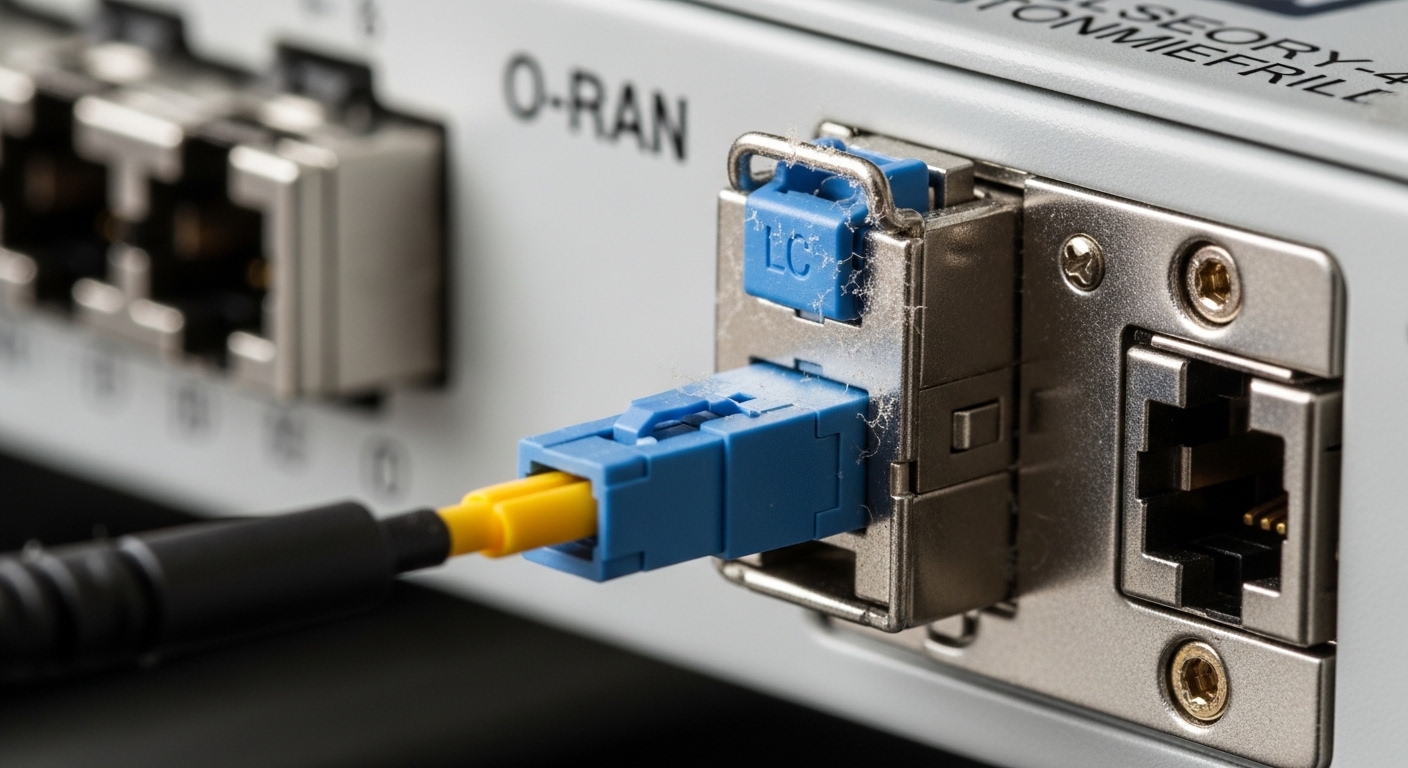
- Connector and cleaning plan: plan for LC cleaning tools and inspection; contamination is a top root cause.
Pros: Reduces rework and failed acceptance tests. Cons: Takes discipline and early coordination with fiber and radio teams.

Top common mistakes and troubleshooting outcomes in O-RAN fronthaul bring-up
Here are concrete failure modes I’ve seen during acceptance testing and ongoing operations, with root cause and fixes.
- Mistake 1: Wrong optics class for fiber plant — Root cause is selecting 850 nm SR for a run that has too many splices or is effectively long for MMF. Solution: re-run OTDR/OLTS, convert budget, and move to 1310 nm SMF optics when needed.
- Mistake 2: Dirty LC connectors — Root cause is micro-contamination causing high insertion loss and intermittent LOS. Solution: inspect with a fiber scope, clean with validated procedures, and re-terminate if scratches are visible.
- Mistake 3: Ignoring DOM alarm thresholds — Root cause is monitoring tuned for one vendor’s DOM calibration; your alarms either never trigger or trigger constantly. Solution: compare DOM values during stable traffic, then adjust thresholds to match the new transceiver’s telemetry.
- Mistake 4: Thermal overshoot in enclosures — Root cause is blocked airflow or seasonal heating leading to laser bias drift and late-life failures. Solution: verify inlet temps, add airflow, and choose extended temperature optics.
Best-fit scenario: You need a fast playbook for troubleshooting when a link comes up but errors rise under load.
Pros: Faster MTTR; fewer repeat visits. Cons: Requires basic test gear: scope, power meter, and OTDR/OLTS access.
Cost and ROI note: OEM vs third-party xhaul transceivers
In many markets, OEM xhaul transceivers cost more upfront but reduce compatibility risk and shorten RMA cycles. Third-party options can be meaningfully cheaper, but you must budget time for interoperability testing, DOM validation, and documentation that your procurement process can support. For typical enterprise and telecom fronthaul, you may see street pricing roughly in bands like $80 to $250 for common 10G optics and $150 to $600 for higher-rate or long-reach classes, depending on vendor and temperature grade.
ROI comes from reduced downtime, fewer field swaps, and better telemetry that prevents silent degradation. If your acceptance test window is strict, the cheapest module can be the most expensive over the lifecycle.
Pros: Better lifecycle predictability; fewer integration surprises with OEM. Cons: Higher initial capex and potential vendor lock-in.
| Rank | Best selection target | Why it wins for O-RAN fronthaul | Watch-outs |
|---|---|---|---|
| 1 | Host-approved OEM or certified compatible SFP | Highest probability of clean bring-up and stable DOM behavior | Higher unit price; may limit procurement diversity |
| 2 | Third-party with proven DOM telemetry and documented compatibility | Lower cost with comparable monitoring if validated | Must test in your exact host SKU and enclosure conditions |
| 3 | Industrial/extended temperature optics where enclosures run hot | Lower thermal aging risk and more stable optical power | May cost more; still must match wavelength and rate |
| 4 | MMF SR when you have measured short reach and clean connectors | Lower cost and simpler installation indoors | Budget can collapse with extra splices or contamination |
| 5 | SMF LR where distance is uncertain but fiber is already SM-ready | More margin for long links and future expansion | Need correct wavelength and proper SMF plant verification |
FAQ
Q1: What does “O-RAN compliant” mean for an xhaul transceiver?
It generally means the optics meet the integration requirements of the specific O-RAN radio and transport equipment you are connecting. In practice, compliance is proven through interoperability testing and host compatibility documentation from the radio and DU/transport vendors. Always confirm the exact