Telecom teams planning Open RAN rollouts face a practical bottleneck: selecting transceivers that keep latency stable, optics budget predictable, and interoperability clean across vendor ecosystems. This article helps network architects, field engineers, and procurement leads choose the right fiber transceivers for a 2026-ready path in network evolution, with concrete specs, deployment math, and troubleshooting lessons from real deployments. You will leave with a selection checklist, a comparison table, and failure-mode guidance you can apply during commissioning.
Why Open RAN accelerates network evolution at the optics layer
In Open RAN, functional split options move traffic between RU, DU, CU, and transport with tighter timing expectations than many legacy mobile backhaul designs. That shifts pressure onto the physical layer: link stability, deterministic latency behavior, and optics that tolerate temperature swings in huts, cabinets, and outdoor enclosures. While Ethernet standards cover most of the data framing, optics selection still governs whether you meet reach, power, and error-rate targets under real fiber conditions.
From an operations perspective, the “right” transceiver is the one that sustains low BER across the operating envelope, supports the switch platform’s requirements (including DOM telemetry), and avoids silent incompatibilities that show up only after burn-in. In field terms, you want predictable eye margin, stable transmit power with aging, and a DOM profile your vendor tools can read without triggering port flap or alarm states.
For authority, the optical Ethernet fundamentals align with IEEE 802.3 physical layer specifications (for example, 10GBASE-SR style optics and 25G/100G variants). For connector and cabling practices, engineers also reference ANSI/TIA-568 for structured cabling guidelines and fiber handling practices. [Source: IEEE 802.3 Ethernet PHY specifications] [Source: ANSI/TIA-568 structured cabling standards]
2026 selection starts with link budget math and DOM reality
Before you compare part numbers, compute your optics budget using your fiber type, measured loss, and connector/splice assumptions. In commissioning, a common operational approach is to take OTDR traces for each route and capture end-to-end attenuation at the wavelengths you will use. Then you map that attenuation against the transceiver’s stated launch power and receiver sensitivity to estimate margin for worst-case temperatures and aging.
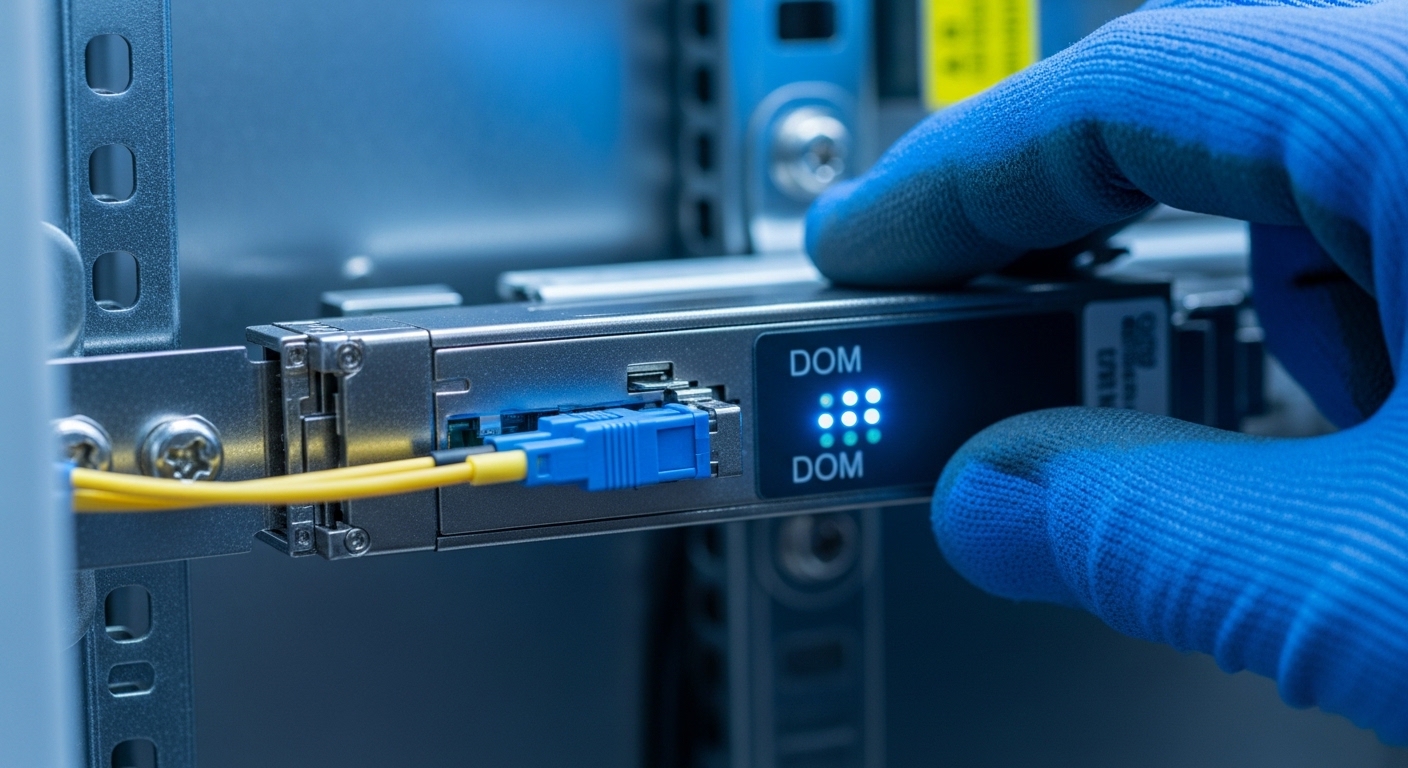
Next, validate compatibility expectations. Most modern pluggables support Digital Optical Monitoring (DOM) over I2C, but the interpretation and thresholds differ by switch vendor and transceiver family. If a platform expects alarm thresholds or calibration curves in a certain way, you may see “link up but unstable” behavior after temperature transitions, even when nominal power is within spec.
Pro Tip: In Open RAN transport, do not trust only “reachable” distance ratings. During acceptance testing, force a controlled temperature cycle (for example, from the cabinet’s minimum night temperature to peak daytime heat) and watch DOM alarms and interface counters. Many field failures appear as rising Tx bias current or receiver power drift that only shows up after thermal soak.
Key optics parameters that actually move the needle
Engineers usually focus on wavelength and reach, but the operationally critical parameters are: transmitter launch power, receiver sensitivity, optical budget class behavior, and the transceiver’s temperature range. Also check connector type (LC duplex is common), fiber core size (OM3/OM4/OM5 for multimode; OS2 for singlemode), and whether the module is designed for the target data rate and coding.
If you are standardizing for 2026, also consider that Open RAN transport often mixes short-reach and medium-reach links. That makes a consistent DOM experience and consistent cabling discipline more important than any single “best” wavelength.
Practical comparison table for common 2026 choices
Below is a realistic comparison of pluggable options frequently evaluated in telecom and data center transport planning. Values vary by vendor and revision, so always confirm in the exact datasheet for the ordering part number.
| Transceiver (example part) | Data rate | Wavelength | Reach (typical) | Fiber type / core | Connector | DOM | Operating temperature |
|---|---|---|---|---|---|---|---|
| Cisco SFP-10G-SR (example) | 10G | 850 nm | Up to ~300 m (multimode, depends on OM3) | MMF OM3/OM4 | LC duplex | Supported (varies by SKU) | 0 to 70 C typical (check exact module) |
| Finisar FTLX8571D3BCL (example) | 10G | 850 nm | Up to ~400 m (OM4 typical) | MMF OM4 | LC duplex | Supported | 0 to 70 C typical (check exact module) |
| FS.com SFP-10GSR-85 (example) | 10G | 850 nm | Up to ~550 m (OM4 typical, depends on budget) | MMF OM4 | LC duplex | Supported | -10 to 70 C typical (check exact module) |
| 100G QSFP28 SR4 (example category) | 100G | ~850 nm | Up to ~100 m (multimode, depends on OM4/OM5) | MMF OM4/OM5 | MT/MPO-12 or MPO-16 | Supported | Commercial or extended (varies) |
| 100G QSFP28 LR4 (example category) | 100G | ~1310 nm | Up to ~10 km (singlemode) | OS2 singlemode | LC duplex | Supported | Commercial or extended (varies) |
Notice how the table separates “reach rating” from “deployment reality.” In acceptance tests, the same module may behave differently depending on patch panel cleanliness, connector inspection, and measured fiber attenuation at the exact wavelength. For telecom huts and outdoor cabinets, temperature range and airflow matter just as much as nominal reach.
Architecture patterns in Open RAN: where each transceiver family fits
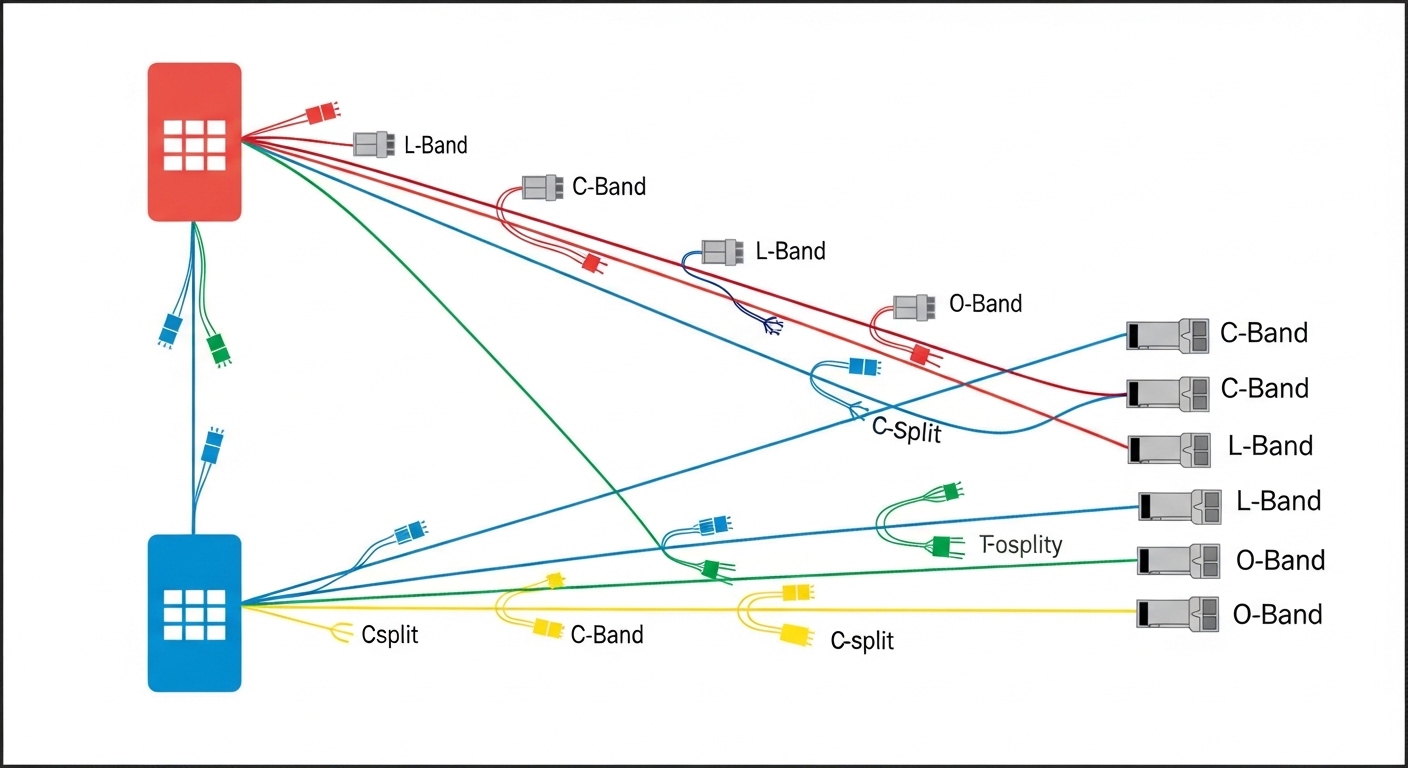
In a typical Open RAN transport design, RU-to-DU links often prioritize low latency and deterministic behavior over short distances, while DU-to-CU and aggregation paths can extend across campuses or metro rings. That creates a hybrid optics mix. Engineers commonly use multimode optics for short in-building runs where OM3/OM4 fiber exists, then switch to singlemode for longer haul where you need larger reach and more consistent power budgets.
For 2026 planning, teams often standardize on a small set of transceiver families to reduce training time and spares complexity. A common pattern is: SFP+ or SFP modules for 10G leaf-to-spine or intermediate aggregation, QSFP28 SR4 for dense 100G within data halls, and QSFP28 LR4 for longer singlemode segments. Your exact choice depends on the switch port speeds, the transport vendor’s optics expectations, and your fiber plant.
Real-world deployment scenario you can map to your site
In a 3-tier data center leaf-spine topology supporting Open RAN aggregation, a team deployed 48-port 10G ToR switches feeding a pair of 100G aggregation switches. They used 10GBASE-SR-class SFP modules on server and ToR uplinks across patch panels totaling 90 to 160 meters of OM4 cabling, with measured end-to-end loss around 1.8 dB to 3.2 dB after connector cleaning. For DU-to-CU segments spanning a campus corridor with 2.5 km of OS2 fiber, they used 100G LR4-class optics with LC duplex and validated receiver power margin against worst-case attenuation plus 1.0 dB connector aging allowance.
Operationally, the team used DOM telemetry to confirm Tx power stability during thermal ramps and monitored interface error counters for early warning. The acceptance checklist included cleaning verification and OTDR trace review before final patching, which prevented intermittent link issues that would have otherwise appeared after maintenance windows. This is the kind of disciplined approach that makes network evolution predictable rather than reactive.
Selection checklist for network evolution readiness in 2026
Use this ordered checklist during procurement and engineering review. It is designed to reduce the most common integration surprises across switch platforms and vendor optics ecosystems.
- Distance and link budget margin: Use OTDR or measured attenuation, then confirm against launch power and receiver sensitivity with at least a practical safety margin.
- Fiber type and connector standardization: Confirm OM3/OM4/OM5 for multimode and OS2 for singlemode, plus LC vs MPO patching conventions.
- Switch compatibility and transceiver form factor: Match SFP/SFP+/QSFP28/QSFP modules to the exact port type and speed. Verify vendor interoperability notes where available.
- DOM support and monitoring behavior: Ensure DOM is supported and that the switch reads key telemetry without alarming. Confirm thresholds and alert handling.
- Operating temperature and enclosure airflow: Choose commercial vs extended temperature modules based on hut, cabinet, and outdoor conditions; confirm airflow assumptions.
- Vendor lock-in risk and spares strategy: Decide whether OEM-only transceivers are required or if third-party modules are acceptable with documented compatibility testing.
- Burn-in and acceptance testing plan: Include a thermal soak test and error-counter monitoring window, not just a “link up” check.
Where OEM vs third-party typically lands on cost
For cost and ROI, OEM transceivers often carry higher unit pricing but can reduce integration risk. Third-party modules can be cost-effective, yet they may require compatibility validation and can complicate RMA workflows. In many deployments, the TCO difference often comes from fewer field swaps and shorter troubleshooting time rather than the purchase price alone.
As a practical range, 10G SR SFP modules frequently land in a broad market range depending on brand, temperature grade, and DOM features; 100G QSFP28 modules can be materially higher due to denser optics and tighter performance requirements. Your ROI improves when you standardize optics families, maintain a tested spares kit, and enforce cleaning and fiber handling procedures that reduce repeat failures. For measurable guidance on physical layer performance, keep your acceptance criteria aligned with IEEE 802.3 requirements and vendor datasheet specs. [Source: IEEE 802.3 Ethernet PHY specifications] [Source: Vendor transceiver datasheets]
Common mistakes in telecom optics and how to troubleshoot them fast
Even well-engineered designs can fail during installation. Below are concrete pitfalls that commonly show up during network evolution projects and Open RAN transport rollouts, along with root causes and fixes.
“Reach is fine” but the link flaps after thermal soak
Root cause: DOM telemetry thresholds differ, or the module is operating near the edge of its temperature or power budget due to aging and cabinet heat. In some cases, the switch reacts to alarm states by resetting the PHY.
Solution: Confirm module temperature grade, verify Tx power and Rx power via DOM, and run a controlled temperature cycle while monitoring interface counters. If needed, swap to an extended-temperature module or adjust the optics path by re-terminating to reduce loss.
Intermittent errors with “link up” status after maintenance
Root cause: Connector contamination. Even a small dust particle on an LC or MPO ferrule can degrade optical power enough to increase BER, especially on marginal links.
Solution: Use a disciplined cleaning workflow: inspect with a fiber scope, clean with appropriate lint-free methods, and re-test with a power meter or DOM readings. Add cleaning and inspection steps to the work order checklist.
Wrong fiber type selection during patching
Root cause: Mixing OM3/OM4/OM5 and OS2 assumptions, or using the wrong patch cords. This can pass initial tests at room temperature but fail at higher loads or after reconfiguration.
Solution: Enforce fiber labeling verification and maintain an inventory that maps each patch panel to fiber type and route. Confirm attenuation and wavelength compatibility before final activation.
DOM alarms ignored during acceptance
Root cause: Teams sometimes focus on “no link down events” and ignore rising bias current, falling Tx power, or Rx power drift. These are early indicators of trouble.
Solution: Define acceptance thresholds for DOM telemetry and review historical trends. If you see drift during burn-in, replace the module before it becomes an outage risk.

FAQ: transceivers for Open RAN and telecom network evolution
Q1: What matters more for network evolution: reach rating or measured link budget?
Measured link budget usually matters more. Reach ratings are based on assumptions about fiber quality and connector loss; OTDR and power checks reveal the real attenuation and margin at your site. Build slack into the plan so thermal and aging effects do not push you into an unstable region.
Q2: Can I mix OEM and third-party transceivers on the same Open RAN transport switches?
Sometimes yes, but you must verify platform compatibility and DOM behavior. Even when the optics meet IEEE 802.3 requirements, switch vendor firmware can interpret telemetry differently. Plan a lab validation and document the exact ordering part numbers that work reliably.
Q3: Why do DOM warnings appear even when traffic seems normal?
DOM warnings can indicate early drift in Tx power, Rx power, or bias current. Traffic may continue briefly, but the error rate can rise under temperature changes or during peak utilization. Treat DOM alarms as engineering signals, not as background noise.
Q4: Should telecom teams standardize on multimode or singlemode for 2026 planning?
Most teams standardize based on route length and existing fiber plant. Multimode can be cost-effective for short in-building runs, while singlemode is typically preferred for campus and metro segments. A hybrid approach often minimizes disruption while enabling network evolution.
Q5: What is the fastest way to troubleshoot a new transceiver that won’t link?
Start with physical layer checks: confirm correct module type, verify fiber type and connector standard (LC vs MPO), and inspect/clean connectors. Then confirm switch port configuration, DOM telemetry visibility, and whether the optics are within expected power levels. If possible, test with a known-good module to isolate whether the fault is optical or configuration-related.
Q6: What acceptance tests should be mandatory for Open RAN optics?
At minimum, include a burn-in window with error-counter monitoring and a temperature cycle that matches cabinet conditions. Also validate DOM telemetry trends and confirm that alarms do not trigger unintended resets. Align the pass criteria with IEEE 802.3 performance expectations and the vendor datasheet limits.
Network evolution in telecom and Open RAN becomes manageable when optics decisions are grounded in measured link budgets, verified DOM behavior, and disciplined installation practices. Next step: map your routes to fiber type and distance, then build a tested transceiver shortlist using the checklist above via transceiver compatibility testing for a smoother 2026 rollout.
Author bio: I have deployed and commissioned fiber transceivers across telecom aggregation and Open RAN transport labs, validating DOM telemetry under thermal soak and monitoring BER-sensitive counters. I write with a field engineer mindset: measurable margins, repeatable acceptance tests, and pragmatic compatibility checks.