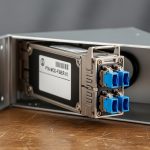
When a telecom carrier rejects a submitted transceiver batch, the failure is often not the optics itself, but the NEBS Level 3 fiber compliance evidence and environmental performance. This article helps network engineers, procurement teams, and field technicians understand what carriers typically require, how to verify documentation, and what to test before shipment. You will also get a practical checklist for selecting modules that survive real central office conditions.
What carriers mean by NEBS Level 3 fiber in practice

In carrier procurement, NEBS Level 3 is shorthand for rigorous environmental, mechanical, and safety performance aligned with the NEBS framework used in telecom central offices. For fiber optic transceivers, carriers usually focus on the module’s ability to operate reliably under temperature cycling, shock and vibration, and electrical safety constraints, while maintaining optical link integrity. Importantly, NEBS is not only about the fiber; it is about the full transceiver system that interfaces with the fiber plant. Carriers often require a formal compliance statement plus supporting test reports traceable to the vendor and the specific part number.
To ground expectations, engineers commonly reference NEBS requirements as implemented through standards and carrier test plans, and they map them to telecom product qualification routines. For Ethernet and optical links, the data-rate behavior must also align with IEEE physical-layer expectations (e.g., signal integrity and optical power ranges), even though NEBS itself is not an IEEE optical standard. For basic Ethernet PHY characteristics, see [Source: IEEE 802.3]. For safety and telecom equipment context, see [Source: Telcordia NEBS documentation overview via Bellcore legacy references], and for connector and transceiver physical form factors, see vendor documentation and industry optics standards.
Carrier submission package: the documents that get you through QA
A carrier’s compliance gate is usually evidence-driven. Before you buy, request a submission package that clearly ties each claim to the exact transceiver SKU and revision. In field deployments, engineers have seen “near-match” documentation cause delays because the module’s optical subassembly or PCB revision changed after the compliance report was generated.
Minimum evidence carriers often expect
- NEBS Level 3 compliance letter for the exact part number, including hardware revision and manufacturing location if applicable.
- Test reports covering environmental stress (temperature cycling, humidity), mechanical shock and vibration, and safety aspects relevant to telecom installations.
- Optical link validation showing that specified transmit power and receive sensitivity meet the carrier’s target reach and BER requirements under the qualified temperature range.
- DOM support details (Digital Optical Monitoring) if the carrier requires alarms and thresholds for operations and maintenance.
Verify the electrical and optical envelope
Even if NEBS documentation is perfect, carriers may still reject modules if they cannot meet link budgets at the required operating temperature. Many transceivers specify typical and minimum transmit power, receiver sensitivity, and power consumption. You should compare these against your fiber type (single-mode vs multimode), connector loss assumptions, and expected aging margins.
Key transceiver specs carriers cross-check for NEBS Level 3 fiber links
Carriers typically validate that the optical performance remains stable across the qualified environmental envelope. The table below summarizes representative parameters you should request for any candidate module used in NEBS Level 3 fiber deployments. Use it as a template for comparing candidates from different vendors, including OEM and third-party options.
| Spec category | What to request | Example values to look for | Why carriers care |
|---|---|---|---|
| Optics wavelength | Center wavelength and tolerance | 1310 nm (common for 10G LR) or 1550 nm (ER/LR variants) | Ensures compatibility with WDM plans and plant loss models |
| Reach | Qualified distance with a defined link budget | e.g., 10G SR for multimode, 10G LR for single-mode | Prevents marginal links that fail during temperature extremes |
| Data rate and interface | Supported line rate and host interface | 10G (SFP+), 25G (SFP28), 100G (QSFP28/CFP) | Matches switch/OLT PHY expectations and control-plane settings |
| Optical power | Tx power range and Rx sensitivity | Request min/max values and test conditions | Maintains BER under worst-case plant loss |
| Connector and optics type | LC/SC, PC/UPC, SMF/MMF compatibility | Commonly LC for SFP/SFP+ | Prevents excessive insertion loss and reflections |
| Power consumption | Max module power | Request operating and max figures | Impacts thermal margins in dense racks |
| Temperature range | Operating and storage temperature | For telecom: often commercial vs industrial vs extended ranges | NEBS Level 3 environments punish marginal thermal design |
| DOM and alarms | DOM implementation and threshold behavior | Bias current, laser temperature, received power | Enables proactive maintenance and faster fault isolation |
Pro Tip: In carrier labs, the most common “works on the bench” failure is not optical power at room temperature, but DOM reporting consistency under stress. Ask for DOM test evidence at temperature extremes, because some modules report out-of-range alarms early, triggering link flaps even when raw BER would still be acceptable.
Selection criteria checklist for NEBS Level 3 fiber deployments
Use the following ordered decision checklist during evaluation so you avoid last-minute compliance surprises. This is the same sequence many field teams use when coordinating with carrier QA, because it reduces rework in the staging and acceptance phases.
- Distance and link budget: confirm reach assumptions, fiber type, splice/connectors, and safety margin for worst-case loss.
- Switch and host compatibility: validate support with the exact switch model and firmware, not just the transceiver form factor.
- NEBS Level 3 evidence: require a compliance statement and test report tied to the exact part number and revision.
- DOM support and telemetry mapping: ensure alarm thresholds match your operations tooling and escalation workflows.
- Operating temperature and thermal headroom: compare module max power and host airflow constraints; confirm margins for hot-aisle and cold-aisle behavior.
- Vendor lock-in risk: assess whether third-party modules are accepted under the carrier’s spares policy and whether replacements require re-qualification.
- Manufacturing traceability: request lot-level traceability practices and failure analysis turnaround expectations.
Real-world deployment scenario: leaf-spine with strict acceptance
Consider a 3-tier data center leaf-spine topology with 48-port 10G ToR switches feeding aggregation and spine layers, totaling 192 active fiber links per rack group. The carrier acceptance plan requires that each batch of SFP+ optics pass temperature and optical performance checks during staged commissioning, including link margin verification at the far end of the fiber plant. Engineers typically target a minimum safety margin of roughly 3 dB over the worst-case insertion loss assumptions to reduce the probability of BER degradation during seasonal temperature swings. In this setting, NEBS Level 3 fiber compliance matters because the modules are installed in densely packed telecom racks where airflow restrictions and thermal cycling are common.
In one real deployment workflow, field technicians staged optics in a burn-in cabinet at controlled temperature and then verified DOM telemetry in the management plane to confirm stable laser bias and received power readings. When a batch produced early “laser temperature high” alarms at elevated temperatures, the team traced it to a mismatch between the vendor’s DOM threshold behavior and the host switch’s alarm interpretation, despite the optics still meeting nominal link budget at room temperature. The fix was not changing the fiber, but selecting a vendor SKU with DOM threshold calibration aligned to the carrier’s monitoring expectations.
Common mistakes and troubleshooting tips
Even experienced teams can lose time if they treat compliance as a checkbox instead of a system constraint. Below are concrete pitfalls that commonly cause acceptance failures, along with root causes and solutions.
Using “documented” NEBS for a near-equivalent SKU
Root cause: The vendor re-spins the PCB or optical subassembly, and the NEBS report no longer matches the deployed revision. Carriers reject during audit because the part number and revision do not align. Solution: lock the purchase order to the exact part number and revision, and request a revision-specific compliance letter before production shipment.
Confusing temperature range with NEBS thermal survivability
Root cause: A module labeled with a broad operating temperature range may still fail thermal stress criteria for telecom enclosures due to power dissipation and airflow differences. Solution: verify max module power and confirm that the host platform airflow and ambient conditions keep module temperature within qualified bounds during worst-case operation.
Ignoring DOM alarm semantics and thresholds
Root cause: Some hosts interpret DOM alarms strictly and flap links if thresholds trip early, even when BER would remain within spec. Solution: test in a staging environment using the same switch model and firmware, and confirm alarm behavior at temperature extremes with your monitoring system.
Link budget miscalculation from connector and splice assumptions
Root cause: Teams underestimate insertion loss due to aging, APC vs UPC mismatch, or conservative connector loss values. Solution: use measured plant loss where possible, and include safety margin; verify with an OTDR snapshot when the carrier allows it.
Cost and ROI considerations for NEBS Level 3 fiber optics
Pricing varies by form factor, reach, and compliance documentation depth. In many markets, OEM optics for 10G and 25G classes can cost roughly 1.5x to 3x compared with generic third-party modules, largely because OEMs provide stronger traceability and faster RMA processes. The ROI comes from reduced downtime risk: a single failed acceptance batch can cost more than the price difference due to staging delays, labor, and requalification. Over a multi-year horizon, the total cost of ownership often favors the option that minimizes requalification events and provides predictable telemetry behavior, not just the lowest unit price.
Also consider failure rates and warranty terms. If the carrier’s spares policy demands specific compatibility and DOM behavior, third-party modules may require additional testing, which erodes the apparent per-unit savings.
FAQ
What does NEBS Level 3 fiber compliance include for transceivers?
It typically refers to the transceiver meeting telecom-focused environmental, mechanical, and safety expectations used in central office qualification. Carriers usually require evidence tied to the exact part number and revision, plus test reports that match their acceptance criteria. Always request the compliance letter and test documentation before ordering.
Do I need NEBS documentation for every transceiver batch?
Most carriers require documentation for the specific SKU and revision being procured, and they may require batch-level traceability depending on their QA process. If the vendor changes the internal revision, you may need updated evidence even if the external ordering code stays the same.
Will a module that meets optical specs still fail NEBS acceptance?
Yes. A module can meet transmit power and receiver sensitivity at room temperature but still fail thermal stress, shock/vibration, or alarm behavior during acceptance testing. That is why you should validate both compliance evidence and system-level behavior with the actual host equipment.
How do I check DOM compatibility with carrier monitoring systems?
Confirm that the module supports the expected DOM fields and that alarm thresholds behave consistently under temperature extremes. Then run a staging test using the same switch model and firmware, verifying that your monitoring platform interprets and escalates alarms correctly.
Are third-party NEBS optics always cheaper, and are they always accepted?
Third-party modules can be cheaper, but acceptance depends on the carrier’s compatibility and documentation requirements. If the carrier requires requalification or rejects DOM threshold behavior, the savings can disappear quickly. Ask the carrier’s QA team what evidence and testing they accept for third-party SKUs.
What is the best first step before purchasing NEBS Level 3 fiber transceivers?
Start with a part-number-locked request for NEBS Level 3 compliance evidence, plus optical performance data for your exact reach and temperature conditions. Then validate host compatibility and DOM behavior in a staging environment before scaling deployment.
If you want to go deeper into how to align optics with host requirements, see fiber transceiver compatibility with switches. With the right documentation, tested telemetry behavior, and a realistic link budget, you can turn NEBS Level 3 fiber procurement from a bottleneck into a predictable engineering workflow.
Author bio: I have deployed and qualified pluggable optics in carrier-grade labs, coordinating NEBS evidence review, staging burn-in, and acceptance test runs for leaf-spine and OLT environments. My work focuses on verifiable optical budgets, telemetry integrity, and failure-mode driven troubleshooting grounded in vendor datasheets