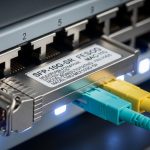
SR-MPLS can move traffic fast, but the network only stays predictable if the physical layer is equally deterministic. This article helps engineers and data center operators choose MPLS optics transceivers that match Segment Routing with Optical (SR-MPLS) requirements, including wavelength, reach, DOM telemetry, and temperature headroom. You will get practical selection criteria, common failure modes, and a ranked summary you can use during procurement.
Top 7 MPLS optics considerations for SR-MPLS transceivers
In SR-MPLS designs, the routing control plane may converge quickly, but optical link instability can still trigger packet drops, tail latency spikes, and retransmissions. For field reliability, you must align optics behavior with switch optics cages, link budgets, and monitoring requirements.
Match wavelength and fiber type to your SR-MPLS path budget
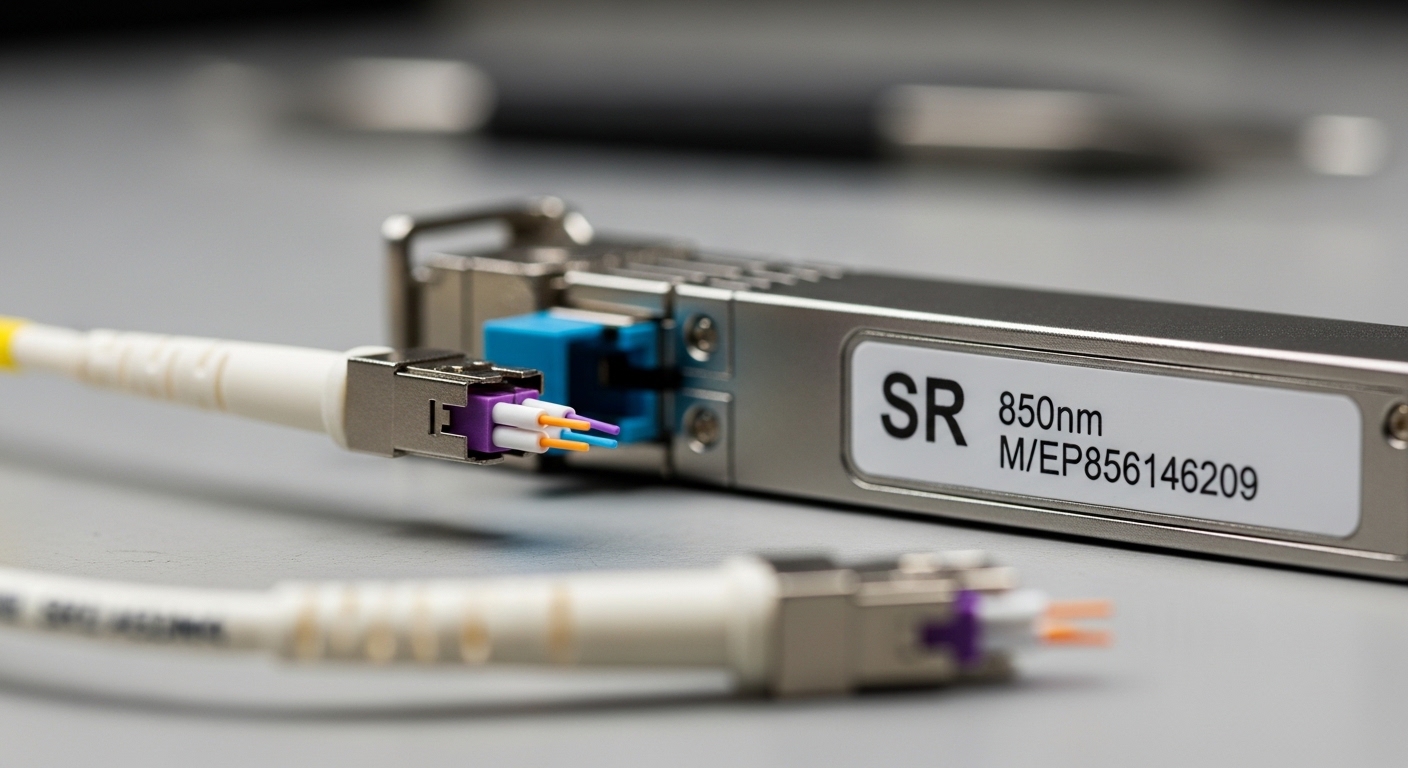
Most SR-MPLS deployments in modern fabrics run over multimode (MMF) for short reach and single-mode (SMF) for metro and long-haul segments. For example, 10GBASE-SR typically uses 850 nm over OM3/OM4 MMF, while 10GBASE-LR uses 1310 nm over SMF. On the transceiver side, ensure the vendor’s wavelength and fiber grade align with your measured attenuation and patch cord loss.
Best-fit scenario: A leaf-spine SR-MPLS fabric using 10G/25G interconnects over OM4 with 70 m average patch-and-cable reach. You keep budget by selecting 850 nm SR optics rather than forcing 1310 nm SMF where MMF is already validated.
- Pros: Lower cost per port on MMF short links; easy density upgrades.
- Cons: MMF reach is sensitive to connector quality and patch cord type.
Choose the right data-rate and form factor for SR-MPLS convergence
SR-MPLS is often deployed where you need deterministic microbursts and fast reroute behavior. That pushes optics selection toward the correct electrical lane mapping and standardized module form factors: SFP+, SFP28, QSFP+, QSFP28, and QSFP-DD depending on port speed. Mismatched optics family can cause link flaps, especially if the switch uses strict optics compatibility checks.
Best-fit scenario: Upgrading a spine tier from 10G to 25G while keeping SR-MPLS policies intact. You select 25G SFP28 or 100G QSFP28 optics that match the switch’s transceiver programming model and lane configuration.
- Pros: Avoids electrical mismatch; improves utilization and reduces oversubscription pressure.
- Cons: Higher-speed optics can demand better optics cages and airflow.
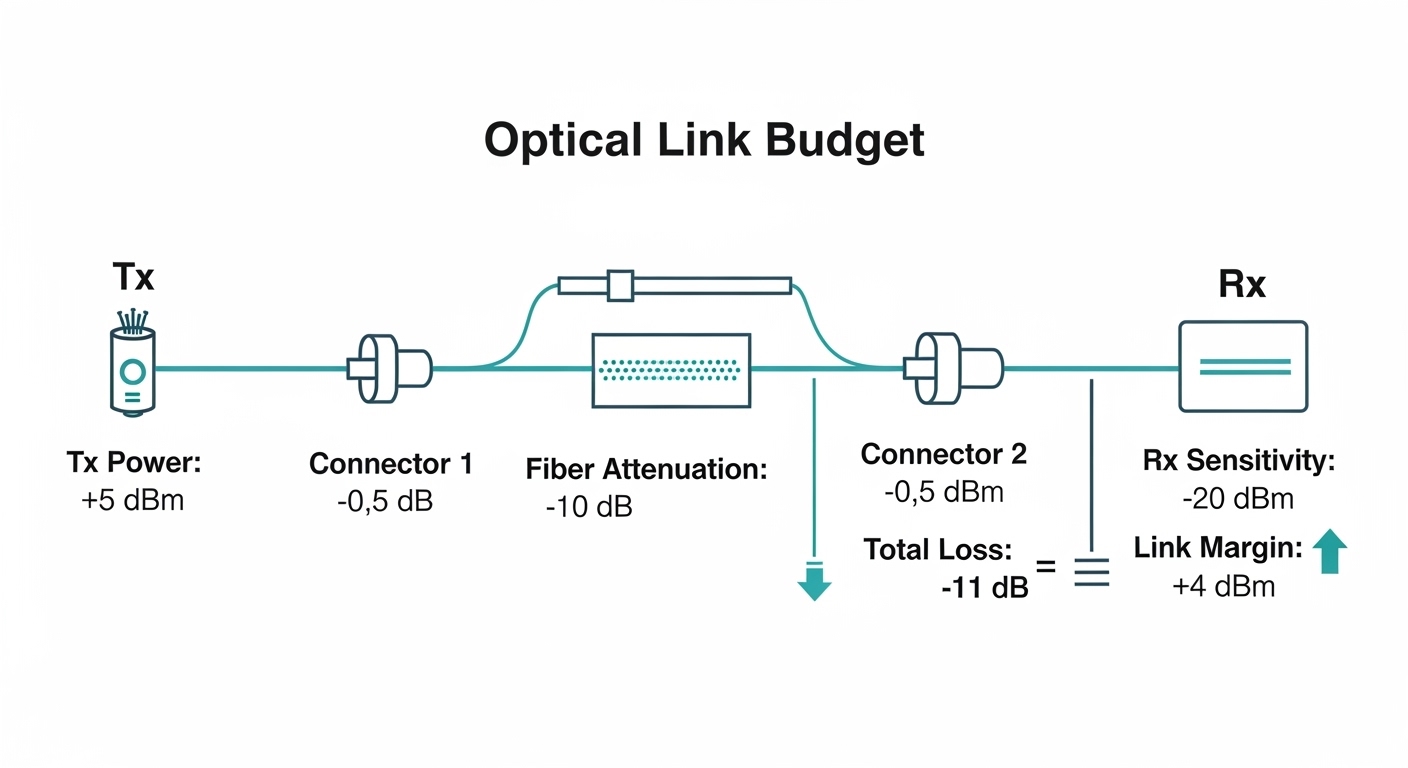
Verify reach using link budget math, not marketing distance
Vendor “up to” reach numbers assume ideal conditions. For MPLS optics, you should calculate a conservative link budget: transmitter output power, receiver sensitivity, connector/patch loss, and fiber attenuation at the specified wavelength. If you have patch cords, include the exact number of mated connections and measured dB loss from your fiber management system.
Best-fit scenario: A metro SR-MPLS ring where typical working distances are 2.5 km but patching adds 0.8 dB per interface. You validate with SMF LR optics at 1310 nm and keep margin for future re-cabling.
- Pros: Fewer latent link errors after maintenance.
- Cons: Requires disciplined fiber inventory and measurement.
Demand DOM support for SR-MPLS observability and operations
DOM (Digital Optical Monitoring) is how you keep SR-MPLS behavior measurable. You want reliable access to Tx bias current, Tx power, Rx power, and temperature so you can correlate optical drift with routing events. In practice, you monitor thresholds and alert before the link enters a marginal regime that causes CRC errors and micro-outages.
Best-fit scenario: A 100G SR-MPLS core where you poll optics telemetry every 30 seconds. When Rx power trends downward by 1.5 dB over two weeks, you schedule preventive cleaning and patch cord replacement before packet loss impacts RSVP-TE or SR policies.
- Pros: Faster fault isolation; better MTTR; proactive maintenance.
- Cons: Some third-party modules expose partial telemetry.
Control operating temperature and airflow around the optics cage
Optical transceivers are temperature-sensitive. Most SFP/SFP28/QSFP classes define an operating range; if your switch’s airflow is marginal, you can see higher error rates under load. For MPLS optics in SR-MPLS networks, you should verify your chassis thermal map, ensure front-to-back airflow, and confirm that fan tray behavior during maintenance does not push optics beyond their safe region.
Best-fit scenario: A multi-tenant facility where partial fan redundancy is used. You validate optics with the switch vendor’s supported thermal conditions and set conservative thresholds for temperature alarms.
- Pros: Reduces temperature-induced drift and CRC spikes.
- Cons: Requires thermal discipline and correct cabling airflow.
Favor standards-aligned modules and check switch compatibility matrices
SR-MPLS deployments often involve multiple vendors over time, but optics behavior is still constrained by switch firmware compatibility and standards. IEEE 802.3 defines electrical and optical interfaces for Ethernet transceivers, yet vendor implementations differ in thresholding, DOM scaling, and supported diagnostics. Always confirm compatibility with the switch’s optics matrix and validate in a staging lab with loopback and traffic tests.
Best-fit scenario: You standardize on Cisco SFP-10G-SR, Finisar FTLX8571D3BCL, and FS.com SFP-10GSR-85 equivalents only after confirming the exact transceiver IDs are accepted by the target switch platforms.
- Pros: Fewer unexpected link negotiation issues.
- Cons: Compatibility checks can slow procurement.
Compare power draw and failure modes for TCO, not just module price
Optics power affects switch thermal load, and repeated failures drive operational waste. QSFP-class modules can consume meaningfully more power than older SFP variants, impacting fan speed and energy cost. You should also consider warranty terms, RMA turnaround, and observed field failure patterns like connector wear, latch issues, and marginal solder joints that fail under thermal cycling.
Best-fit scenario: A high-density SR-MPLS spine where you buy OEM optics for critical links and third-party optics for non-critical edge. You track annual RMA rates and adjust the mix based on measured uptime.
- Pros: Lower overall TCO through smarter stocking and reduced downtime.
- Cons: Requires data collection and disciplined inventory.
Key MPLS optics spec comparison for common SR-MPLS link types
Use the table below as a fast sanity check when you map SR-MPLS segments to Ethernet optics types. Real compatibility still depends on your switch platform, optics cage wiring, and firmware behavior.
| Optics type (Ethernet) | Wavelength | Typical reach | Connector | Data rate | Operating temp (typical) | Common SR-MPLS use |
|---|---|---|---|---|---|---|
| SFP-10G-SR | 850 nm | Up to 300 m (OM3) / 400 m (OM4) | LC | 10G | 0 to 70 C (varies by vendor) | Leaf-spine short hops on MMF |
| SFP28-25G-SR | 850 nm | Up to 100 m (OM3) / 150 m (OM4) | LC | 25G | 0 to 70 C (varies) | Higher-speed fabric interconnects |
| QSFP28-100G-LR4 | ~1310 nm (WDM lanes) | Up to 10 km | LC | 100G | -5 to 70 C (varies) | Metro SR-MPLS aggregation rings |
| QSFP28-100G-ER4 | ~1550 nm (WDM lanes) | Up to 40 km | LC | 100G | -5 to 70 C (varies) | Longer metro spans with margin |
Authority refs: Ethernet transceiver definitions are grounded in IEEE 802.3 specifications, and module behavior is detailed in vendor datasheets. See IEEE 802.3 standards and Cisco product documentation portals for platform-specific guidance. [Source: IEEE 802.3, vendor datasheets]
Pro Tip: In SR-MPLS rollouts, treat optics telemetry as part of your routing SLO. Operators who alert on Rx power drift rate (dB per day) catch aging patch cords earlier than threshold-only alarms, reducing “mystery” micro-outages during peak traffic.
Selection checklist for MPLS optics in SR-MPLS networks
When time is tight, this ordered checklist prevents expensive mistakes. It also aligns with what I see during field turnups: the best optics are the ones that match your measured fiber, your switch firmware, and your observability workflow.
- Distance and link budget: Use measured fiber attenuation and patch cord loss; keep conservative margin.
- Fiber type and wavelength: Confirm MMF grade (OM3/OM4) or SMF grade; match 850/1310/1550 nm expectations.
- Switch compatibility: Verify optics part numbers against the switch vendor’s compatibility matrix.
- DOM and monitoring: Ensure DOM telemetry is exposed and your NMS can read the thresholds you will alert on.
- Operating temperature and airflow: Validate thermal headroom, especially during fan redundancy events.
- Power draw and thermal impact: Compare module power class so you do not exceed chassis thermal limits.
- Vendor lock-in and risk: Balance OEM reliability with third-party cost; plan RMA and stocking strategy.
Common MPLS optics mistakes and troubleshooting tips
Optics issues can look like routing problems in SR-MPLS because packet loss and retransmissions manifest at higher layers. Below are concrete failure modes I have debugged in the field.
Pitfall 1: “It negotiated once” but errors spike after a maintenance window
Root cause: Patch cord re-seating, dirty ferrules, or a swapped connector type increases insertion loss and leads to marginal Rx power. Solution: Clean with proper connector-grade procedures, re-seat carefully, and confirm Rx power readings under load. If available, run an optical power baseline before and after change.
Pitfall 2: Using the wrong optics type that is “similar” but not identical
Root cause: Mixing SR and LR optics families (850 nm vs 1310 nm) or using incompatible transceiver IDs can force link instability or intermittent failures. Solution: Confirm wavelength and reach specs from the transceiver label and compare against the switch’s optics compatibility list. Perform a staged test with a traffic generator before deploying widely.
Pitfall 3: Ignoring temperature and airflow during partial fan operation
Root cause: During fan tray swaps or degraded airflow, optics temperature rises, causing laser drift and rising BER/CRC errors. Solution: Validate chassis airflow paths, avoid blocking vents, and confirm optics remain within the vendor’s operating range. Set alarms for optics temperature and correlate with error counters.
Pitfall 4: DOM telemetry mismatch breaks monitoring and delays triage
Root cause: Third-party modules may present DOM fields differently, or thresholds are not mapped to your monitoring system. Solution: Use a telemetry validation step in staging: confirm DOM values appear correctly, and verify your NMS thresholds trigger on meaningful changes.
Cost and ROI note for MPLS optics procurement
Typical pricing varies by speed, vendor tier, and warranty. In many enterprise and data center programs, OEM optics may run roughly 1.5x to 3x the cost of mainstream third-party equivalents, but the ROI comes from lower RMA rates, higher compatibility success, and fewer outages. TCO should include downtime cost, technician time for cleaning/replacement, and the thermal and power impact across high-density spines.
Practical approach: Stock OEM optics for critical SR-MPLS trunk links (where MTTR is tightly controlled) and use vetted third-party modules for non-critical access or lab environments, with DOM telemetry validation and a defined RMA SLA. Track failures per 1,000 ports per quarter and adjust your vendor mix based on measured reliability.

Summary ranking table: best MPLS optics picks by SR-MPLS use case
Below is a practical ranking to guide purchasing decisions. “Best” assumes your fiber plant and switch compatibility are validated.
| Rank | SR-MPLS segment type | Recommended MPLS optics class | Why it wins | Main watch-outs |
|---|---|---|---|---|
| 1 | Leaf-spine short hops on MMF | 850 nm SR (SFP+/SFP28/QSFP depending on speed) | Cost-effective, high density, proven with OM3/OM4 | Connector cleanliness and MMF patch cord quality |
| 2 | Metro aggregation on SMF | 1310 nm LR4 (QSFP28) for 10G/100G-class links | Strong reach with manageable dispersion assumptions | Budget margin for patches and aging fiber |
| 3 | Longer metro spans | 1550 nm ER4 (QSFP28) when needed | Extended reach for SR-MPLS ring resiliency | Higher cost; be strict about link budget |
| 4 | Mixed-speed upgrades | Correct form factor per switch lane mapping | Reduces negotiation and compatibility surprises | Firmware and optics matrix validation required |
| 5 | Ops-heavy environments | DOM-forward modules with stable telemetry | Faster triage and proactive maintenance | Telemetry mapping must be tested in staging |
FAQ
What does MPLS optics mean in practice for SR-MPLS?
In practice, it means the