
Ventilation and mine automation networks live on borrowed time: vibration, dust ingress, temperature swings, and long copper or fiber runs can turn “working on the bench” into repeated field failures. This article helps maintenance engineers, reliability managers, and network designers choose the right mine automation SFP for fiber links feeding PLCs, SCADA gateways, and environmental sensors. You will get a field-oriented selection checklist, common failure modes, and a ranked comparison table so you can reduce downtime and truck rolls.
10G SR SFP+ for short-haul fan and PLC fiber rings
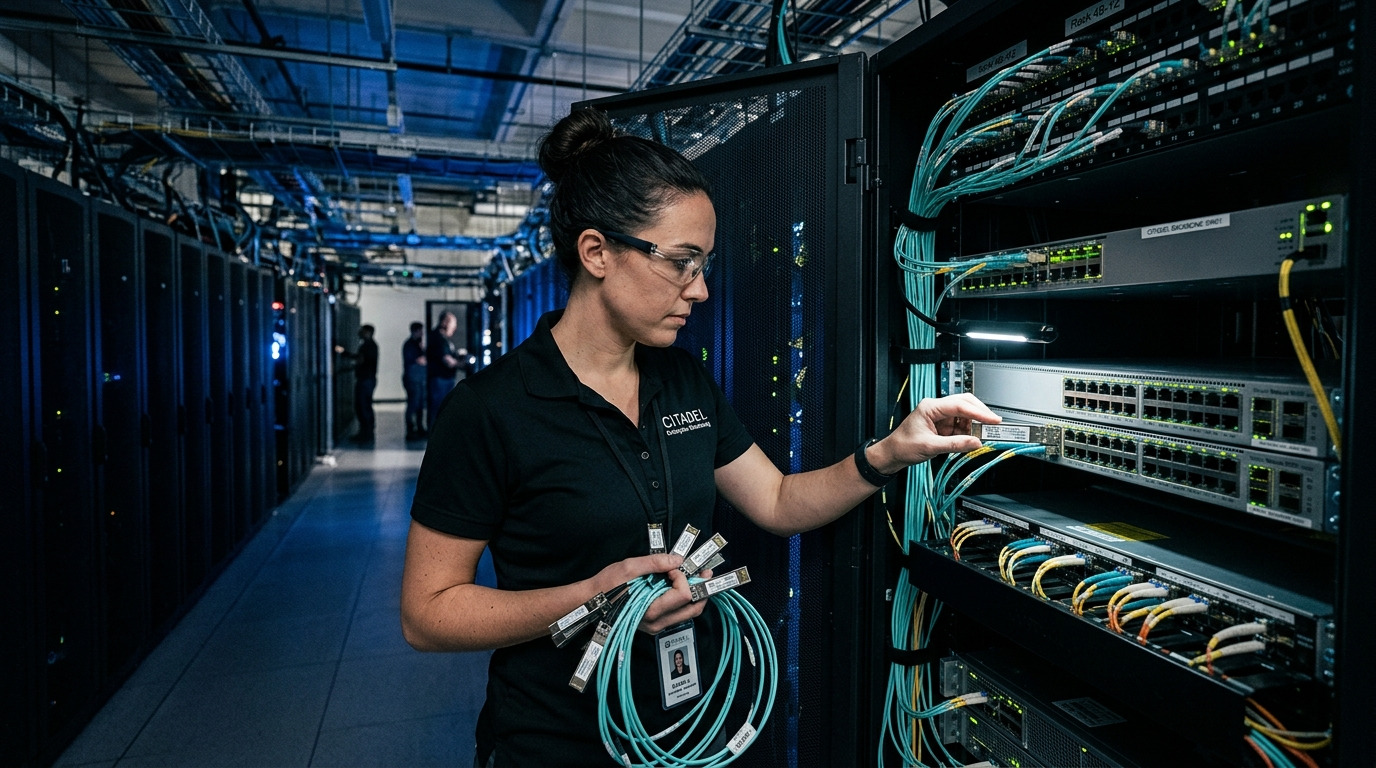
If your ventilation controllers and local PLC I/O are within a few hundred meters, 10GBASE-SR SFP+ is usually the fastest path to stable throughput. SR uses 850 nm multimode optics and is typically deployed with OM3 or OM4 fiber to reach up to 300 m (OM3) and 400 m (OM4) depending on the transceiver and fiber attenuation. In practice, I have seen 10G SR used to interconnect a fan controller cabinet to a leaf switch in a mine substation where dust exposure forced fiber rather than copper.
Key specs to verify: 10.3125 Gbps line rate (10G Ethernet), 850 nm wavelength, LC connector, and a temperature range that matches your enclosure. Look for modules that explicitly support DOM (Digital Optical Monitoring) so you can trend receive power and avoid silent degradation. For standards context, see IEEE 802.3 for 10GBASE-SR electrical/optical behavior. anchor-text: IEEE 802.3 overview
Best-fit scenario: 3-tier mine automation topology where each ventilation zone has a local switch; fan drives connect through managed switches to a zone controller within 250 to 350 m multimode runs.
Pros: high availability with mature optics; lower cost than long-reach single-mode; DOM-friendly for proactive maintenance. Cons: multimode reach depends on OM grade and patch panel cleanliness; connector contamination can cause intermittent alarms.
10G LR SFP+ for zone-to-zone ventilation backhaul over single-mode
When ventilation sensors and PLCs are spread across long corridors or multiple levels, single-mode becomes unavoidable. 10GBASE-LR SFP+ uses 1310 nm optics with typical reach up to 10 km on standard single-mode fiber (SMF) under correct link budgets. LR is often the “default” for mine backbone segments that route through cable trays where splices and bends are unavoidable.
Selection details: confirm whether the module is truly LR (not ER) and verify receiver sensitivity and transmitter optical power in the datasheet. In field commissioning, I routinely measure received power with an optical power meter and compare it to the module’s specified min/max. If you plan redundancy, ensure both left and right transceivers support the same DOM thresholds so alerts trigger consistently.
Best-fit scenario: single-mode fiber ring connecting ventilation zone controllers separated by 4 to 7 km, with splices in manholes and occasional re-termination.
Pros: long reach without changing fiber; robust in harsh environments when connectors are properly cleaned. Cons: higher module cost than SR; budget for cleaning tools and fiber inspection.
25G SR SFP28 for higher sensor density without new fiber layouts
Many mines are upgrading from basic telemetry to richer streaming: higher-rate vibration monitoring, higher sampling environmental data, and more frequent status updates for fan and damper actuators. 25GBASE-SR SFP28 can reduce congestion while still using 850 nm optics and multimode fiber. This is particularly useful when you cannot pull new fiber but you can replace switch ports and transceivers.
Specs to confirm: 25.78125 Gbps line rate, SR reach for OM4, and compatibility with your switch optics profile. Some switches are picky about vendor-specific feature sets; confirm that the SFP28 is supported on the exact switch model and software version. For interoperability guidance, review vendor compatibility matrices and transceiver vendor notes.
Best-fit scenario: a ventilation monitoring layer where uplinks from multiple sensor aggregation switches feed a zone controller, moving from 10G to 25G to keep latency predictable under peak sampling bursts.
Pros: more bandwidth on existing multimode; forward-looking for automation growth. Cons: not all switches accept all SFP28 vendors; OM3 reach may be insufficient at higher loss.
25G LR SFP28 for mixed-length single-mode links in ventilation corridors
LR at 25G is often the compromise when you have single-mode backbone but need more throughput than 10G. 25GBASE-LR SFP28 typically operates at 1310 nm and targets up to 10 km class reach depending on the exact module and link budget. In mines, LR is valuable where you have long distances but want to keep optical standards consistent across new and legacy segments.
What to measure: check the module’s transmit power and receiver sensitivity, then compute link budget including splice and connector loss. In commissioning, I often apply conservative margins of 1 to 2 dB for future maintenance and temperature-induced drift, especially when patch panels are frequently reworked. Use fiber inspection and cleaning SOPs; LR modules will reveal contamination as dropped frames long before outright “fail” events.
Best-fit scenario: ventilation corridor backhaul where 2 to 9 km single-mode runs connect distributed fan controllers to a regional switch fabric.
Pros: higher throughput than 10G; consistent with single-mode plant. Cons: requires careful budgeting and connector hygiene; cost is higher than SR.
SFP (1G) for legacy ventilation PLC islands that still matter
Some ventilation PLC islands still run on 1GBASE-LX or 1GBASE-SX for straightforward telemetry and status. Even when the rest of the mine upgrades, those islands can remain operational for years because replacement would require re-qualification and downtime windows. A correctly chosen mine automation SFP for legacy 1G links can stabilize patching and reduce troubleshooting time during staged migrations.
Specs to verify: wavelength (typically 1310 nm for LX or 850 nm for SX), connector type (LC is common), and DOM support if your switch can read it. Ensure link partner compatibility, especially if a managed switch expects specific diagnostics or if the PLC gateway uses a vendor-specific optics profile. IEEE 802.3 covers 1GBASE-SX and 1GBASE-LX behavior at a high level. anchor-text: IEEE 802.3 standards page
Best-fit scenario: legacy ventilation damper controller network where you must keep uptime while upgrading upstream aggregation switches.
Pros: low bandwidth can still meet automation needs; easier to source; often lower power draw. Cons: may not meet future data requirements; legacy optics may have narrower temperature specs.
“Rugged” third-party SFPs with DOM for predictable maintenance
Not every mine can afford constant OEM replacement pricing, but reliability requirements mean you still need predictable behavior. Many third-party transceivers now offer DOM and consistent optical performance when sourced from reputable vendors with traceable testing. The practical advantage is maintenance: you can trend receive power, detect aging optics, and plan swaps during planned outages.
How I evaluate rugged third-party: I verify that the module provides DOM readings for Tx bias current, Tx power, Rx power, and temperature. Then I validate on the exact switch model using a short test loop and a staged production rollout. If your mines require strict vendor governance, confirm whether your procurement policy allows third-party optics and whether the switch will block non-OEM modules.
Best-fit scenario: cost-controlled deployments where you want DOM observability and can standardize on a small set of vetted transceiver part numbers.
Pros: lower cost; better fleet standardization; DOM supports predictive actions. Cons: compatibility caveats by switch and firmware; ensure you avoid unbranded “compatibles.”
High-temperature SFPs for enclosed fan cabinets and sun-warmed cable trays
Mine environments can swing rapidly: enclosed fan cabinets may see elevated internal temperatures due to drive losses, and outdoor segments can warm under sun even underground entrances. If your enclosure runs hotter than the transceiver’s rated range, you may see intermittent link drops that look like “random faults.” Choosing higher temperature optics—when available—can prevent that class of failure.
What to check: the module’s operating temperature range (common values are industrial like -20°C to 70°C or extended like -40°C to 85°C depending on vendor). Also verify whether the switch’s airflow and cage design reduce thermal headroom. In commissioning logs, I have seen links stabilize after moving from standard temperature modules to extended temperature units in poorly ventilated fan cabinets.
Best-fit scenario: enclosed ventilation drive cabinets with limited airflow where optics are mounted close to heat sources.
Pros: fewer thermal-induced dropouts; improved long-term stability. Cons: extended-temperature optics may cost more; still requires connector hygiene.
DOM-capable SFPs for proactive link health in dust and vibration
In harsh mines, the most expensive failure is the one that appears without warning. DOM-capable optics let you detect optical power drift and temperature changes before frames start dropping. When paired with switch telemetry (SNMP, streaming telemetry, or vendor APIs), you can alert on thresholds such as low Rx power or high temperature.
Operational detail: set thresholds based on your measured baseline during commissioning, not on generic datasheet values. For example, if your Rx power is -2.0 dBm at install, alert at -4.0 dBm rather than waiting for link-down. In my deployments, this approach reduced emergency visits because connector contamination events triggered early warnings during routine monitoring windows.
Best-fit scenario: high-availability ventilation zones where maintenance windows are scheduled weekly and you cannot tolerate surprise outages.
Pros: predictive maintenance; faster root cause isolation; better ROI through fewer truck rolls. Cons: requires telemetry integration and threshold tuning to avoid false positives.
SFPs that match your switch compatibility and DOM expectations
Even if the optics meet the standard, compatibility can still fail due to switch firmware checks, EEPROM vendor fields, or how the switch interprets DOM. This is the most overlooked risk in mine automation: the network seems fine on day one, then a firmware upgrade or a port-profile change triggers optics rejection or altered threshold behavior.
My compatibility process: I create a short list of approved transceiver part numbers per switch model and firmware release. Then I test each transceiver in the same physical port type, including any breakout or high-density optics mode. Finally, I document the exact DOM behavior and any quirks in the change record so future upgrades do not surprise operations.
Best-fit scenario: mines running managed switches with strict optics policies and frequent software lifecycle changes.
Pros: fewer operational surprises; smoother upgrades; predictable alerts. Cons: requires governance and a controlled procurement list.
Key mine automation SFP specs comparison (what engineers actually verify)
Use this table to compare the most common SFP classes for ventilation and automation links. Note that exact reach depends on fiber grade, link loss, and transceiver vendor implementation; always confirm with datasheets and measured link budgets.
| Transceiver class | Data rate | Wavelength | Typical connector | Typical reach class | DOM | Common operating temp range |
|---|---|---|---|---|---|---|
| 10GBASE-SR SFP+ | 10.3125 Gbps | 850 nm | LC duplex | Up to 300 m (OM3) / 400 m (OM4) | Often supported | -20°C to 70°C (varies) |
| 10GBASE-LR SFP+ | 10.3125 Gbps | 1310 nm | LC duplex | Up to 10 km on SMF | Often supported | -20°C to 70°C (varies) |
| 25GBASE-SR SFP28 | 25.78125 Gbps | 850 nm | LC duplex | Up to 100 m (OM3) / 150 m+ (OM4, varies) | Often supported | -20°C to 70°C (varies) |
| 25GBASE-LR SFP28 | 25.78125 Gbps | 1310 nm | LC duplex | Up to 10 km on SMF | Often supported | -20°C to 70°C (varies) |
| 1GBASE-SX/LX SFP | 1.25 Gbps | 850 nm (SX) / 1310 nm (LX) | LC duplex | Typically 550 m (SX class) / 10 km (LX class) | Sometimes supported | -20°C to 70°C (varies) |
Pro Tip: In dust-heavy mines, the most common “optics problem” is not the transceiver. It is connector contamination that causes a slow Rx power decline. If you enable DOM alarms and alert on Rx power drift by about 2 dB from baseline, you can schedule cleaning before links intermittently flap.
Selection criteria checklist for mine automation SFP choices
Engineers typically make decisions under time pressure, but the following ordered checklist prevents expensive rework. Use it for ventilation networks, sensor backhaul, and SCADA uplinks.
- Distance and fiber type: Confirm SMF vs OM3 vs OM4 and measure end-to-end loss including splices and patch cords.
- Data rate and switch port mode: Ensure the module matches the port speed (SFP+ vs SFP28) and any breakout configuration.
- Budget for optics and spares: Compare OEM vs third-party pricing and include lead times for spares.
- Switch compatibility: Validate against the exact switch model and firmware; avoid unknown compatibility behavior.
- DOM support and monitoring hooks: Prefer modules with DOM so you can trend Tx/Rx power and temperature.
- Operating temperature and enclosure airflow: Select industrial or extended-temperature optics when cabinets run hot.
- Vendor lock-in risk: Standardize on a small set of approved part numbers to reduce future procurement surprises.
- Connector and cleaning readiness: Confirm you have fiber inspection tools, lint-free wipes, and approved cleaning methods.
- Environmental ruggedness: Check shock/vibration and dust ingress expectations in the transceiver datasheet when available.
Real-world deployment scenario: ventilation rings with measurable link health
In a 3-tier mine automation deployment, a contractor ran fiber rings between 48-port 10G access switches in ventilation zone cabinets and a zone aggregation switch in each of 6 areas. The average run length was 280 m on OM4 patch-and-splice fiber, with an estimated total link loss of 2.5 to 3.5 dB including two patch panels and four mechanical splices. We deployed 10GBASE-SR SFP+ modules with DOM and enabled switch telemetry to poll Rx power every 60 seconds. During acceptance testing, baseline Rx power averaged -1.8 dBm across 12 critical ports; after a connector re-termination event, Rx power dropped by about 2.1 dB and alerts fired before any packet loss was observed, allowing cleaning during the weekly maintenance window.
Common mine automation SFP mistakes and troubleshooting tips
Below are field-proven failure modes I have seen in ventilation and sensor networks. Each includes root cause and a practical remedy.
-
Mistake: Installing the wrong fiber type (OM3 vs OM4) and assuming reach is “close enough.”
Root cause: Higher-than-expected attenuation and patch cord mismatch reduce optical margin, especially when connectors age or get contaminated. Solution: Measure link loss with a meter, verify OM grade, and keep at least a conservative margin (often 3 dB or more depending on module specs and spares policy).
-
Mistake: Ignoring DOM thresholds and waiting for link-down alarms.
Root cause: DOM is available but not monitored, so degradation is detected only after errors increase and traffic drops. Solution: Set alerts based on baseline Rx power and temperature during commissioning; alert on drift (for example, 2 dB from baseline) rather than a single absolute value.
-
Mistake: Using “compatible” optics without validating switch firmware behavior.
Root cause: Some switches enforce optics vendor fields or interpret DOM differently, leading to intermittent port flaps after upgrades. Solution: Validate each part number on the exact switch model and firmware; maintain an approved optics list and document test results.
-
Mistake: Poor connector cleaning and skipping fiber inspection.
Root cause: Dust and oxidation on ferrules create high insertion loss and intermittent receive failures. Solution: Implement a cleaning SOP: inspect ferrules before insertion, clean with approved methods, and
