In modern data centers, the machine learning impact shows up where you least expect it: in how you choose optical transceivers, validate optics, and keep latency stable while traffic patterns mutate hourly. This article helps network and field engineers select SFP/SFP+/QSFP modules by mapping AI-driven workload behavior to concrete optical specs, switch compatibility, and operational risk. You will get a practical top-8 list, a troubleshooting playbook, and a final ranking table you can actually defend in a change review.
Top 8 items: how machine learning impact changes transceiver choices
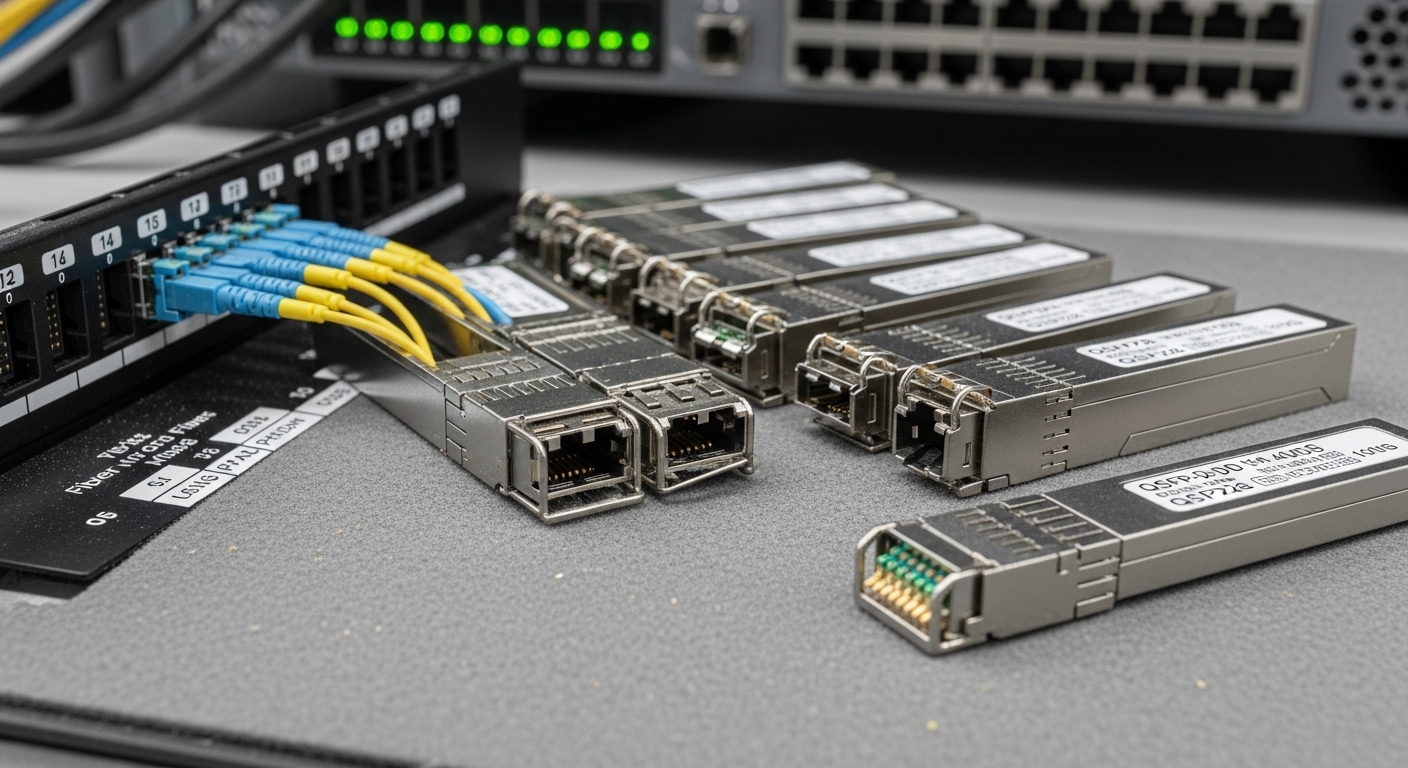
AI training and inference workloads create bursty traffic, frequent micro-congestion, and tighter jitter budgets, which pushes optical links from “it works” to “it keeps working under stress.” Vendors increasingly expose telemetry (DOM, diagnostics, FEC capability, temperature alarms), and ML-driven orchestration tends to surface marginal optics faster than traditional batch traffic. Below are eight selection items engineers should prioritize, each with specs, best-fit scenarios, and quick pros/cons.
Reach vs margin: stop guessing and start budgeting
Machine learning impact increases the number of times you re-route traffic and the number of active flows, so your link margin matters more than your original lab distance. For short-reach links, you typically choose multimode fiber (MMF) with nominal reach, then confirm link budget using vendor parameters and your actual patch panel losses. IEEE 802.3 defines Ethernet PHY requirements, but your installed plant determines whether you land comfortably above the receiver sensitivity floor. [Source: IEEE 802.3-2022]
What to measure in the field
Verify fiber type (OM3 vs OM4), end-to-end attenuation, connector cleanliness, and patch cord lengths. In practice, engineers commonly see 0.3 to 0.5 dB per connection loss variability and 1 to 2 dB difference between “cleaned with air” and “properly cleaned with lint-free wipes plus isopropyl or approved cleaner.”
- Best-fit scenario: Leaf-spine fabric using 10G/25G SR optics over OM4 with patch panels totaling 1.5 dB worst-case.
- Pros: Fewer intermittent CRC bursts; better stability during ML traffic spikes.
- Cons: Requires real OTDR/trace validation, not just spreadsheet assumptions.
Data rate alignment: 10G, 25G, 40G, 100G must match the ML fabric
AI workloads often shift from steady utilization to synchronized bursts, and that can expose oversubscription assumptions. If your switches run 25G to ToR and 100G uplinks, then using a mixed optical fleet that forces downshifts (for example, a 10G-capable module on a 25G port) can create hidden bottlenecks when training jobs scale out. Your selection should align with the exact PHY speed and breakout modes supported by the switch.
Practical compatibility checkpoints
Confirm port speed negotiation behavior (especially on older platforms), ensure the transceiver’s electrical interface matches the platform’s expected lane mapping, and validate that the optics are on the vendor’s compatibility list. Many operators require DOM alarms (temperature, laser bias current, received power) to be readable by the switch.
- Best-fit scenario: 3-tier DC with 48-port 25G ToR switches feeding 100G spine uplinks; ML traffic bursts demand consistent port utilization.
- Pros: Avoids silent downspeed events and link flaps.
- Cons: Requires disciplined optics inventory management.
Connector and fiber type: LC, MPO, and MMF vs SMF are not interchangeable
Machine learning impact increases the rate of cable moves during scaling and incident response, which makes connector quality and fiber type selection a reliability issue. For example, QSFP28 100G SR typically uses MPO/MTP trunks on MMF, while 100G LR/ER uses LC on SMF. Mixing fiber types or selecting the wrong connector standard can lead to immediate failure or “works until it doesn’t” intermittence.
Specs that actually matter
Choose MMF for short reach (lower cost, simpler patching) and SMF for longer reach (higher cost, more distance headroom). Then validate polarity and MPO keying orientation to avoid lane swaps.
- Best-fit scenario: High-density rack where MPO trunks reduce port-to-rack cable sprawl.
- Pros: Better physical density; fewer cable runs.
- Cons: Polarity errors can look like “random” ML-induced outages.
DOM and diagnostics: telemetry is the new “eyes on the optics”
AI-driven orchestration tends to increase churn: autoscaling, rolling updates, and rapid redeployments. With that churn, you want deterministic visibility into link health. Digital Optical Monitoring (DOM) provides real-time metrics like transceiver temperature, laser bias current, and received optical power, which can correlate with error bursts and allow preemptive replacement.
Operational details you can use
Many teams poll DOM via switch CLI or controller APIs, then alert on thresholds (for example, high temperature or low received power). Some workflows also log DOM snapshots during incident windows to prove whether the optics degraded before the ML job triggered the spike.
- Best-fit scenario: Multi-tenant cluster where you need audit trails for link degradation during noisy neighbor events.
- Pros: Faster MTTR; better root cause for CRC/FEC errors.
- Cons: Third-party optics may expose fewer diagnostics or different threshold defaults.
FEC capability and error budget: ML traffic demands tighter control
With higher speeds, forward error correction (FEC) becomes central to maintaining stable throughput under marginal conditions. Machine learning impact increases the consequences of micro-errors because workloads expect consistent throughput and low jitter for synchronized training steps. Your transceiver and switch PHY must agree on FEC mode and supported coding.
Use an error-budget mindset
Track CRC error counts, link resets, and FEC corrected/uncorrected counters where supported. If you see frequent link renegotiation during peak ML windows, investigate whether it correlates with temperature swings, received power drift, or connector contamination.
- Best-fit scenario: 100G/200G links in a hot aisle where optics temperature varies by rack position.
- Pros: Predictable performance; fewer throughput collapses.
- Cons: Requires careful alignment of switch firmware, PHY settings, and optics.
Module type selection: SR vs LR vs ER based on actual plant distance
Engineers often choose SR because it is “standard,” then discover that the installed plant and patch panel routing exceed the comfort zone. ML workloads can amplify the pain because they drive sustained utilization and reduce the time window where a marginal link can “recover gracefully.” A correct SR/LR/ER decision reduces both failure probability and operational noise.
Example optics families with real numbers
Below is a comparison of commonly deployed modules. Always confirm the exact model and vendor specs in the datasheet for optical power, receiver sensitivity, and DOM behavior.
| Optics example (model) | Data rate | Wavelength | Reach | Connector | Typical fiber | DOM | Operating temp |
|---|---|---|---|---|---|---|---|
| Cisco SFP-10G-SR | 10G | 850 nm | Up to 300 m (OM3) / 400 m (OM4) | LC | MMF | Yes (DOM) | 0 to 70 C (verify SKU) |
| Finisar FTLX8571D3BCL | 10G | 850 nm | Up to 400 m (OM4) | LC | MMF | Yes (DOM) | -5 to 70 C (verify datasheet) |
| FS.com SFP-10GSR-85 | 10G | 850 nm | Up to 300 m (OM3) / 400 m (OM4) | LC | MMF | Varies by SKU | 0 to 70 C class |
| Cisco QSFP-100G-SR4 (example family) | 100G | 850 nm | Up to 100 m (typical MMF limits; verify spec) | MPO/MTP | MMF | Yes (DOM) | 0 to 70 C class |
| 100G LR4 example (vendor-dependent) | 100G | 1310 nm | Up to 10 km (OS2) | LC | SMF | Yes (DOM) | Vendor-dependent |
Note: Reach values depend on fiber grade, patching, and power budget; treat these as starting points, not absolutes. [Source: IEEE 802.3; vendor datasheets for each model listed]
- Best-fit scenario: 10G SR on OM4 for ToR within 70 m patch lengths, leaving margin for connectors and aging.
- Pros: Lowest cost per port when distance fits.
- Cons: If plant loss is high, SR links can fail under ML peak utilization.
Vendor lock-in vs operational continuity: manage the risk, not the vibes
Machine learning impact increases change frequency and incident frequency. If optics procurement is delayed due to strict vendor part-number gating, your “availability” risk rises. Still, third-party optics can be perfectly fine when validated, but you must manage compatibility and diagnostics expectations.
Decision checklist you can run in procurement
- Distance: Confirm fiber grade, patch panel loss, and connector counts with OTDR or certified test results.
- Budget: Compare per-port cost plus spares strategy; include expected failure rates and lead times.
- Switch compatibility: Use the switch vendor’s compatibility matrix; validate lane mapping and speed negotiation.
- DOM support: Ensure alarms and received power reporting work with your monitoring stack.
- Operating temperature: Match your installed thermal profile; verify module temp class and airflow assumptions.
- Vendor lock-in risk: Evaluate OEM-only sourcing vs qualified third-party with documented validation steps.
- Firmware interaction: Test with the exact switch OS version used during ML traffic peaks.
- Best-fit scenario: Mid-size cluster where you want third-party optics but require DOM telemetry and documented compatibility tests.
- Pros: Reduced TCO when validated; faster spare replenishment.
- Cons: Without validation, you risk “it works in the lab” failures.
Real deployment scenario: ML cluster uplinks and a field-worthy selection process
In a 3-tier data center leaf-spine topology with 48-port 25G ToR switches and 100G uplinks, an ML platform runs distributed training jobs that ramp from 10% to near 90% utilization within 5 minutes. The team standardized on 25G SR for ToR within 60 m patch-and-rack distance over OM4, and 100G LR4 on OS2 for longer spine segments. During rollout, they polled DOM every 60 seconds and set alerts for received power dropping below a calibrated threshold tied to their acceptance tests. Within two weeks, a single “green check” optics batch was flagged by rising temperature and reduced RX power correlation, preventing link flaps during a training window.
- Pros: Better stability during ML burst cycles; faster incident triage via DOM correlation.
- Cons: Requires monitoring integration and a disciplined validation gate for new optic lots.
Common mistakes / troubleshooting: where things go wrong (and how to fix them)
Optics problems are rarely mysterious; they are usually just very stubborn. Here are common failure modes engineers hit after ML workloads increase traffic intensity.
-
Mistake: Selecting SR reach based on nominal distance, ignoring patch panel losses and connector variability.
Root cause: Link budget is too tight; ML traffic increases sustained utilization so marginal links fail more often.
Solution: Re-run distance validation with worst-case loss, count connectors, and add optical margin; clean and re-test fibers. -
Mistake: MPO polarity errors after re-cabling or rack swaps.
Root cause: Lane mapping mismatch causes link negotiation to fail or intermittent bit errors.
Solution: Verify MPO keying, polarity method (for example, polarity A/B), and patch with a known-good polarity reference. -
Mistake: Ignoring temperature class and airflow differences between aisles.
Root cause: ML racks often run hotter; transceiver temperature rises, affecting laser bias and receiver margin.
Solution: Compare installed airflow against vendor guidance; set DOM temperature alerts; swap in temp-qualified optics. -
Mistake: Assuming third-party optics are “drop-in” without validating DOM and monitoring thresholds.
Root cause: Diagnostics behavior differs, so your monitoring stack misses early warnings or misreads alarm states.
Solution: Validate with your switch firmware, confirm DOM fields, and align alert thresholds with acceptance test results.
FAQ
Q: How does machine learning impact change optical transceiver selection?