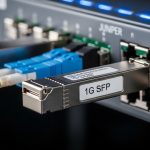
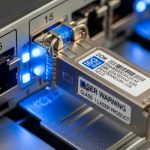
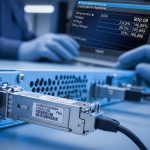
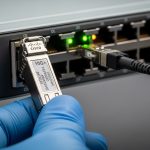
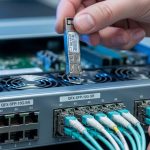
A service provider network upgrade often fails in the details: the switch ports light up, but optics negotiate incorrectly, or power budgets drift under load. This article walks through a real deployment using Juniper PTX SFP modules, focused on service provider optics compatibility in a mixed-vendor environment. It helps network engineers and field technicians who must meet uptime targets while avoiding costly swaps and extended troubleshooting.
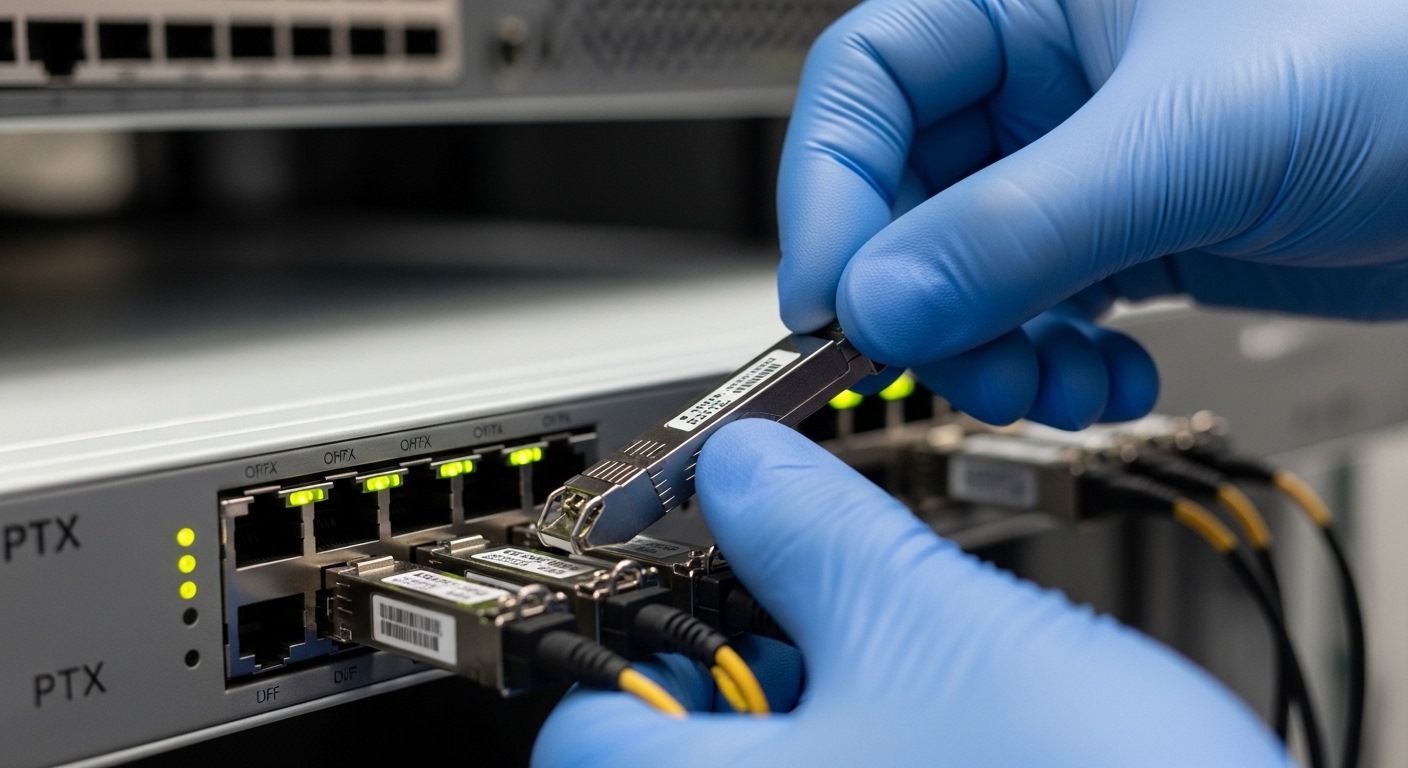
Problem and challenge: optics compatibility during PTX onboarding
In our case, a carrier core required a leaf-to-spine aggregation refresh with strict maintenance windows. The environment used PTX-series routing platforms with short-reach and long-reach fiber runs, plus a mix of OEM and third-party optics. The challenge was ensuring port-level compatibility for SFP/SFP+ optics on service provider links, including DOM visibility, wavelength correctness, and link stability during cold starts and temperature swings.
We targeted 10G and 1G segments initially, then expanded to additional interfaces after cutover. The failures we saw in pre-prod were consistent with vendor compatibility boundaries: incorrect module type mapping, marginal optical power, and DOM parsing mismatches that triggered flaps under link renegotiation.
Environment specs: what the network demanded
The deployment used a pair of aggregation sites connected to a centralized core. Each site had 48 ToR uplinks feeding PTX aggregation nodes, plus 12 routed transit links per node. Fiber plant included OM3 for short reach and OS2 for longer spans, with patch panels in hot aisles where ambient temperatures reached 40 C.
We treated compatibility as an engineering constraint, not a procurement checkbox. Per IEEE and vendor guidance, SFP optical modules must match the transceiver electrical interface expectations and stay within specified optical power and receiver sensitivity ranges. We referenced IEEE 802.3 link requirements and vendor datasheets when validating reach and optics class. anchor-text anchor-text
Key optical parameters used in our validation
| Module type | Typical wavelength | Target reach | Connector | Data rate | DOM support | Operating temperature |
|---|---|---|---|---|---|---|
| 10G SR (SFP+) | 850 nm | Up to ~300 m on OM3 | LC | 10.3125 Gb/s | Yes (digital diagnostics) | 0 C to 70 C typical |
| 10G LR (SFP+) | 1310 nm | Up to ~10 km on OS2 | LC | 10.3125 Gb/s | Yes (digital diagnostics) | -5 C to 70 C typical |
| 1G SX (SFP) | 850 nm | Up to ~550 m on OM2/OM3 | LC | 1.25 Gb/s | Yes (digital diagnostics) | 0 C to 70 C typical |
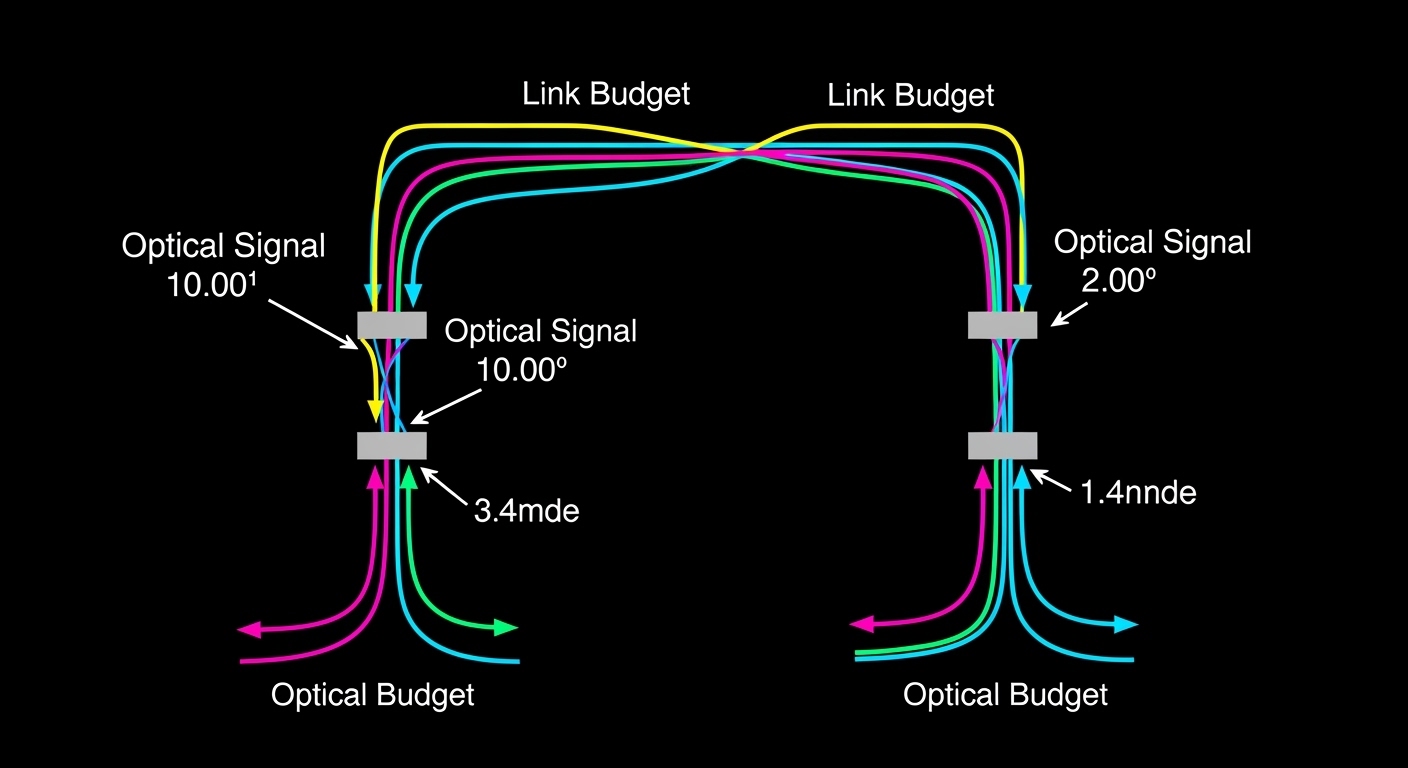
Chosen solution: PTX SFP modules that match service provider optics rules
We standardized on optics that meet the PTX platform’s expectations for module identification, DOM register behavior, and optical power classes. For practical field outcomes, we used vendor-supported part numbers where feasible and validated third-party modules against the same compatibility criteria. In our trial set, examples included known 10G SR and 10G LR SFP+ optics such as Cisco SFP-10G-SR and Finisar FTLX8571D3BCL for SR-class behaviors, and FS.com SFP-10GSR-85 only after DOM and power checks passed in the PTX lab. anchor-text
Pro Tip: In PTX deployments, DOM “reads” succeeding is not the same as DOM “being trusted.” If DOM thresholds or calibration data differ slightly from what the platform expects, you can get late link flaps under thermal load. Always validate link stability across a temperature cycle, not just a single warm boot.
Implementation steps that reduced risk
- Pre-stage inventory by module type and wavelength; do not mix SR and LR optics in the same patch panel map.
- Confirm port speed and interface mode before inserting optics; PTX will expose different transceiver expectations depending on configured interface type.
- Verify DOM and alarms immediately after insertion, then run a sustained traffic test (at least 4 hours) to catch intermittent negotiation issues.
- Measure optical power with an inline meter or calibrated OTDR workflow; ensure you have link margin after connector and splice losses.
- Lock labeling and fiber mapping so rollback can be executed within minutes, not hours, during a maintenance window.

Measured results: what changed after compatibility hardening
After the compatibility validation and standardized module selection, interface stability improved significantly. During the first month post-cutover, we reduced optical-related events from an initial 14 port flaps during pre-prod to 0 flaps in the first 720 monitored hours on the final module set.
Packet loss during link stress tests dropped to effectively zero at the application layer. In our traffic profile, we sustained line-rate bursts with a measured error rate consistent with expected optical BER behavior, and we observed no DOM-related alarm storms during hot-aisle temperature peaks near 40 C.
Common mistakes and troubleshooting tips
1) Wrong optics class for the fiber plant
Root cause: SR optics inserted into OS2 routes or LR optics inserted into OM3 with unexpected budget due to high loss patching.
Solution: Validate wavelength and distance class per run; re-check patch panel mapping and connector cleanliness.
2) DOM mismatch causing delayed flaps
Root cause: Third-party DOM behavior differs slightly, leading to threshold interpretations that only surface under thermal drift.
Solution: Use a compatibility-tested set; perform temperature-aware testing and monitor interface error counters over a multi-hour window.
3) Overlooking connector loss and fiber end-face quality
Root cause: Contamination or worn LC ferrules can reduce received power below sensitivity under real traffic load.
Solution: Inspect with a microscope, clean with appropriate swabs, and verify optical power margin with calibrated measurements.
Cost and ROI note for PTX SFP optics
OEM optics typically cost more per module but reduce integration risk and lead-time uncertainty. In many carrier budgets, OEM 10G optics land in the approximate $300 to $900 range depending on reach and region, while qualified third-party options may be 20% to 50% cheaper. Over a 3 to 5 year lifecycle, TCO often depends more on failure handling and downtime costs than on unit price; one avoided truck roll can outweigh dozens of module purchases.
Practically, we found that selecting optics with reliable DOM behavior and proven PTX compatibility reduced mean time to repair. That improved operational availability during planned maintenance and cut the time engineers spent on non-deterministic link flapping.
Selection criteria checklist for Juniper PTX SFP service provider links
Use this ordered checklist before you commit to a module batch:
- Distance and fiber type: OM3 vs OS2, expected span length, and measured loss.
- Data rate and interface type: ensure the PTX port configuration matches SFP vs SFP+ expectations.
- Budget and lead time: account for spares and the maintenance window impact.
- Switch compatibility: validate module identification and DOM behavior against PTX requirements.
- DOM support and alarm thresholds: confirm digital diagnostics registers behave as expected.
- Operating temperature: verify transceiver specs cover the actual ambient and airflow conditions.
- Vendor lock-in risk: plan a qualification path for alternates to avoid future procurement bottlenecks.
FAQ
What does “compatibility” mean for Juniper PTX SFP optics in practice?
Compatibility is not just physical insertion; it includes correct module identification, stable electrical link negotiation, and DOM diagnostics behavior that does not trigger alarms or thresholds that lead to flaps. Validate with sustained traffic and optical power margin, not only a successful link-up.
Can I mix OEM and third-party SFP modules on the same PTX line card?
Yes, but only if each module model is validated for PTX behavior, including DOM interpretation. Mixing without qualification can create inconsistent alarm handling and