
Highway network optics in tunnel and road monitoring systems fail in predictable ways: wrong reach, unsupported DOM, temperature drift, or connector contamination. This article helps field engineers and network managers choose the right SFP transceivers for roadside cabinets, control rooms, and roadside IP cameras. You will get a practical selection checklist, common failure modes with fixes, and a ranked recommendation table for typical deployment patterns.
Top 8 SFP optics picks for tunnel and road monitoring links
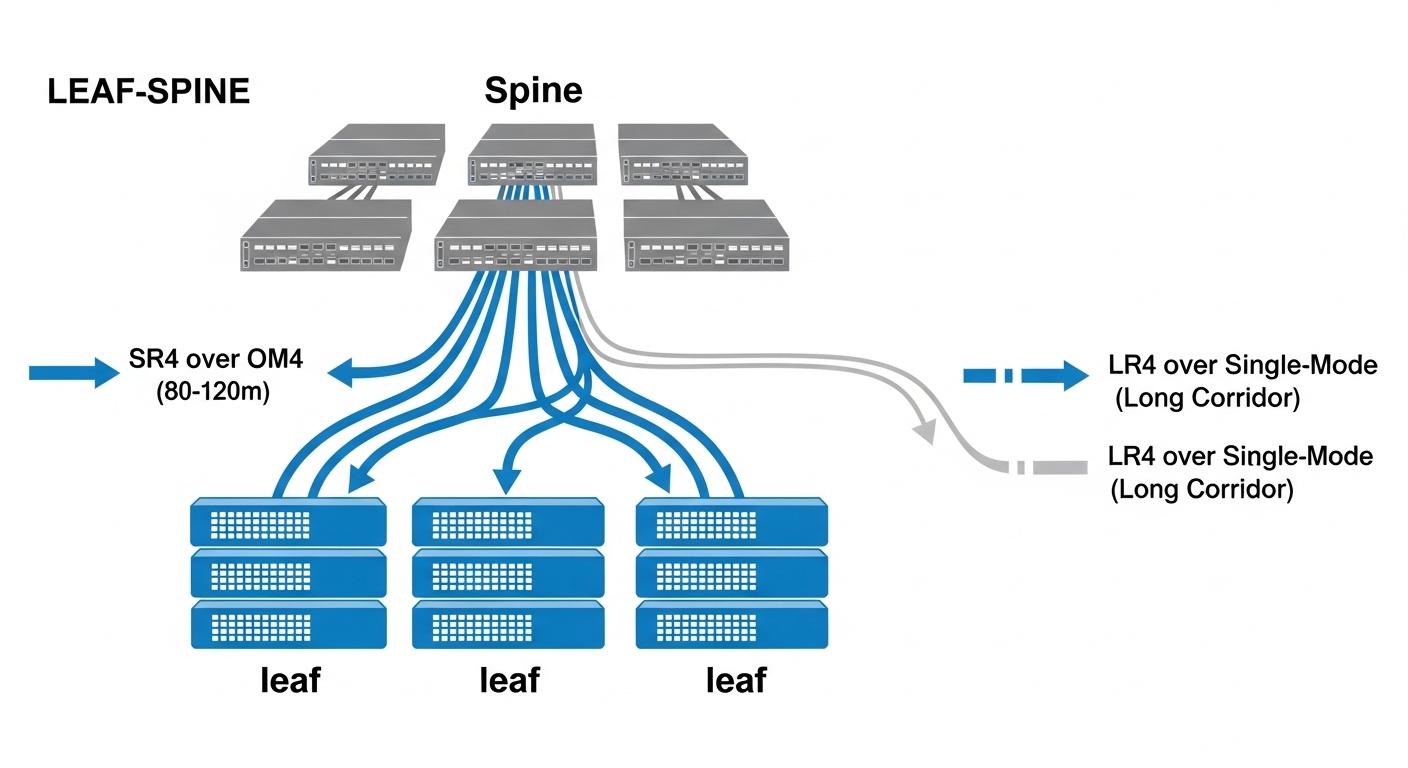
Below are the most common SFP options used when you need stable Ethernet connectivity for sensors, PTZ cameras, and traffic analytics. The “best” choice depends on fiber type, distance, and your switch or media converter’s optics compatibility. In highway network optics deployments, you also need real temperature headroom for summer sun and winter icing.
10GBase-SR over OM3: short run, high density
Best fit: cabinet-to-aggregation runs under about 300 m on OM3 multimode fiber. Use it when you want cost-effective capacity and you have clean, short patching inside tunnel ducts.
Typical optics: 10G SFP+ SR transceivers such as Cisco SFP-10G-SR or third-party equivalents (for example, FS.com SFP-10GSR-85 variants).
- Pros: lower cost than long-reach optics, widely supported by switches
- Cons: limited reach on multimode; sensitive to poor patch cleanliness
10GBase-LR over OS2: medium distance for camera corridors
Best fit: up to 10 km single-mode for tunnel sections where you run fiber along a service corridor. LR optics are common for backhaul from repeater points to a fiber distribution cabinet.
Typical optics: 10G SFP+ LR units aligned to 1310 nm on OS2, such as Finisar FTLX8571D3BCL class optics.
- Pros: longer reach on cheaper single-mode infrastructure than multimode
- Cons: requires OS2 cabling and careful splice/patch loss budgeting
1GBase-LX over OS2: legacy-friendly monitoring refresh
Best fit: upgrading older monitoring networks where switch ports are mostly 1G and you still have OS2. This is often the fastest path when you cannot replace every switch.
Typical optics: 1G SFP LX at 1310 nm (distance depends on vendor specs; commonly up to a few km on OS2).
- Pros: strong compatibility with many switches and media converters
- Cons: lower throughput for new high-frame-rate camera workloads
1GBase-SX over OM3/OM4: short multimode runs with low power
Best fit: short indoor tunnel runs, especially where you can terminate multimode in patch panels near equipment racks. SX optics are stable and typically power-efficient.
Typical optics: 1G SFP SX at 850 nm for multimode.
- Pros: simple, cost-effective for short distances
- Cons: distance and budget dependent on OM3 vs OM4 and connector quality
5G SFP (when used with newer monitoring switches)
Best fit: networks adopting 2.5G uplinks for moderate camera traffic without jumping to 10G everywhere. This can reduce cost compared to 10G while improving over 1G.
Typical optics: 2.5G SFP variants that match the vendor’s transceiver spec and wavelength plan.
- Pros: balanced upgrade path; better utilization of existing fiber
- Cons: fewer universal compatibility guarantees than common 1G/10G profiles
10GBase-ER over OS2: long corridor links where LR is tight
Best fit: up to 40 km class links where you have long backhaul in rural tunnel networks. ER helps when fiber loss budget or span length makes LR marginal.
Typical optics: 10G SFP+ ER at 1550 nm on OS2 class fibers (exact reach depends on vendor power and receiver sensitivity).
- Pros: supports long distance backhaul; resilient for sparse splicing
- Cons: higher cost; requires careful optical budget verification
DOM-capable optics for operational visibility
Best fit: any deployment where you need field diagnostics for aging modules and optical power drift. DOM (Digital Optical Monitoring) adds telemetry so you can spot weak transmit power before outages.
Practical requirement: DOM support must match the switch or media converter’s expected interface. Many vendors support SFF-8472 compliant diagnostics, but behavior can vary.
- Pros: early warning; faster incident triage
- Cons: DOM incompatibility can trigger alarms or link flaps on some platforms
Hardened temperature-rated optics for harsh roadside environments
Best fit: cabinets exposed to sun, dust, and freeze-thaw cycles. Choose optics with a documented operating temperature range that exceeds your site extremes.
Field reality: many roadside sites see wide swings; if an optic is rated to a narrow commercial range, it may work initially but degrade under thermal cycling.
- Pros: fewer intermittent failures and better long-term uptime
- Cons: premium pricing; confirm vendor temperature rating on the datasheet
Key SFP specs that matter for highway network optics
Engineering selection starts with reach and wavelength, then moves to power and temperature. For tunnel monitoring, you also need stable link budgets across splices, splitters, and patch panels.
| Optical profile (SFP type) | Wavelength | Typical reach | Fiber type | Connector | DOM | Operating temperature |
|---|---|---|---|---|---|---|
| 10GBase-SR (SFP+) | 850 nm | Up to ~300 m (OM3) | OM3/OM4 multimode | LC | Often supported | Verify datasheet (commercial vs industrial) |
| 10GBase-LR (SFP+) | 1310 nm | Up to ~10 km (OS2) | OS2 single-mode | LC | Often supported | Verify datasheet |
| 10GBase-ER (SFP+) | 1550 nm | Up to ~40 km class | OS2 single-mode | LC | Often supported | Verify datasheet |
| 1GBase-SX (SFP) | 850 nm | Short runs (OM3/OM4 dependent) | OM3/OM4 multimode | LC | Often supported | Verify datasheet |
| 1GBase-LX (SFP) | 1310 nm | OS2 dependent (commonly a few km) | OS2 single-mode | LC | Often supported | Verify datasheet |
Standards and diagnostics: optics behavior is tied to Ethernet PHY requirements in IEEE 802.3 and transceiver diagnostic conventions such as SFF-8472. Always cross-check vendor datasheets for DOM implementation and optical power levels. [Source: IEEE 802.3 Working Group; Source: SFF-8472 Digital Diagnostic Monitoring]
Pro Tip: In tunnel monitoring cabinets, the most common “mystery outage” is not the SFP itself but a partially contaminated LC endface or a patch lead with micro-scratches. Cleaning with the correct inspection scope workflow often restores link margin even when the module reports normal DOM values.
Real-world deployment scenario: tunnel-to-control-room backhaul
In a 3-tier highway monitoring design, a tunnel segment uses 48-port 10G access switches at the tunnel equipment rooms, uplinking to a central aggregation rack over OS2 single-mode. Field data shows an average camera corridor length of 6.5 km with roughly 6 splices and 2 patch panels per direction. Engineers typically select 10GBase-LR SFP+ optics at 1310 nm, then validate the
