In modern data centers, a single failed transceiver can trigger link flaps, congestion, and costly truck rolls. This article helps network owners, field engineers, and procurement teams evaluate a fiber module support contract as an “insurance layer” over optics warranties. You will learn how to compare coverage terms, validate switch compatibility, and avoid the most common failure modes that turn warranty claims into downtime.
Warranty vs insurance: what a fiber module support contract actually covers
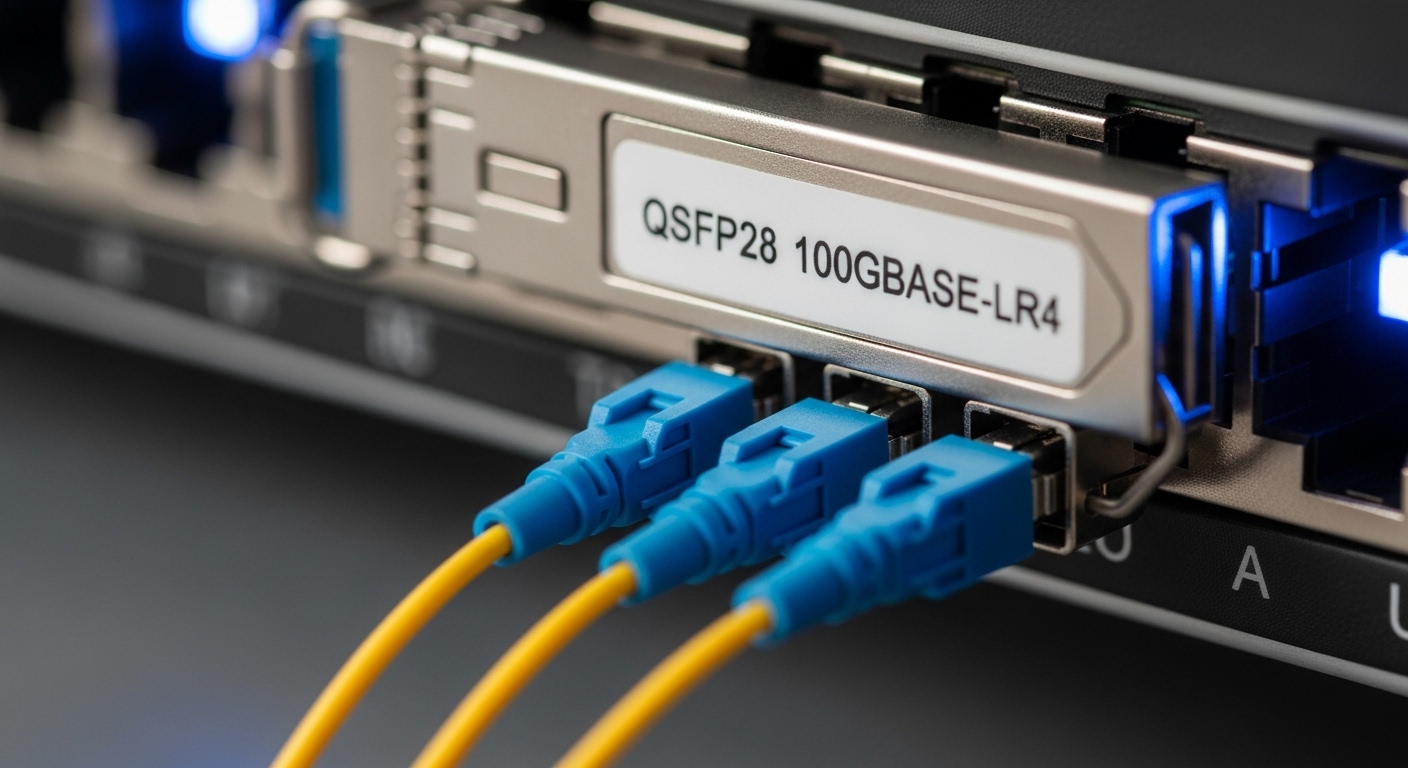
Most optical vendors provide a standard product warranty, typically covering defects in materials and workmanship for a fixed period. A fiber module support contract aims to reduce operational risk beyond that baseline by adding replacement logistics, extended coverage windows, and sometimes broader incident handling. In practice, coverage can include advance replacement, expedited shipping, and credit or replacement for modules that fail under supported operating conditions.
However, “insurance” is not a universal term. Some contracts cover only the module itself, while others cover associated transceiver-related incidents such as port retraining time, onsite swap labor, and documentation support for maintenance records. Always map the contract language to the physical failure modes you actually see: laser aging, receiver sensitivity drift, connector contamination, and intermittent link negotiation problems.
Coverage terms engineers should request in writing
- Replacement SLA: target hours to ship and hours to deliver (example: “ship within 4 business hours” and “deliver within 1 business day”).
- Condition definitions: failure under temperature, optical power, and supported data rate; exclusion language for out-of-spec installation.
- Claim workflow: RMA steps, required screenshots/logs, and whether you must preserve failed modules for return testing.
- Compatibility guardrails: whether the provider guarantees operation with specific switch models and optic part numbers.
Pro Tip: In field deployments, the fastest claims are the ones where you already collect proof at failure time. Keep a standard runbook that captures interface counters, transceiver DOM readings (vendor-specific), and link event timestamps; it turns “it failed” into a traceable incident within the contract’s claim window.
Performance and reach tradeoffs: coverage only matters if optics meet IEEE specs
A support contract does not make an out-of-spec transceiver perform like a compliant one. The contract protects the business outcome, but your technical selection must satisfy the relevant physical layer requirements defined by IEEE 802.3 and the vendor’s electrical/optical budgets. Before buying coverage, confirm that the module type matches the port optics standard and that the reach target (for example 100 m vs 300 m) aligns with your fiber plant.
Key parameters include wavelength, nominal optical power, receiver sensitivity, and supported data rate. If you run 10G SR optics on a link budget that effectively requires more margin than the receiver can tolerate, you may see intermittent errors that look like “module failure” during aging seasons. In that case, the contract may still require you to prove the incident was a module defect rather than a plant issue.
Common module classes tied to reach and wavelength
- 850 nm multimode (MMF) for short reach: common with 10G SR and 25G SR.
- 1310 nm single-mode (SMF) for longer reach: typical for 10G LR and 25G LR variants.
- 1550 nm SMF for extended reach: sometimes used in long-haul or enterprise campus runs.
| Module / Standard | Wavelength | Typical Reach | Data Rate | Connector | DOM / Diagnostics | Operating Temp Range |
|---|---|---|---|---|---|---|
| Cisco SFP-10G-SR | 850 nm | Up to ~300 m (MMF, spec-dependent) | 10G | LC | Supported (vendor DOM) | 0 C to 70 C (verify exact datasheet) |
| Finisar FTLX8571D3BCL | 850 nm | Up to ~300 m (MMF) | 10G | LC | Supported (vendor DOM) | 0 C to 70 C (verify exact datasheet) |
| FS.com SFP-10GSR-85 | 850 nm | Up to ~300 m (MMF) | 10G | LC | Supported (varies by SKU) | 0 C to 70 C (verify exact datasheet) |
| IEEE alignment | Per PHY | Per link budget | Per 802.3 clause | Per module design | Not mandated by IEEE | Per module vendor |
When evaluating a support contract, ask the provider to specify whether they cover failures caused by marginal fiber links. Some providers will replace a failing module, but will not treat “errors due to plant attenuation” as a module defect. The best contract language ties coverage to supported conditions and includes a troubleshooting assistance path before replacement.
Cost and ROI: comparing OEM, third-party, and contract add-ons
Budget decisions often treat optics as consumables, but outage risk is the real line item. A fiber module support contract can raise upfront costs, yet reduce total cost of ownership (TCO) through faster swaps, lower labor time, and fewer prolonged service degradations. In many operations, the ROI appears when you consider truck roll costs, spare inventory carrying costs, and the labor hours spent on diagnosis.
In real deployments, teams compare three models: OEM optics with OEM warranty, third-party optics with extended warranty/contract, and mixed estates where OEM modules are covered by one program and third-party modules by another. Expect price differences by density and form factor (SFP, SFP+, QSFP+, QSFP28) and by reach class (SR vs LR). While exact pricing varies widely, field experience commonly sees extended coverage add-ons that cost a meaningful fraction of the module price per year.
ROI math you can use during procurement
- Direct replacement cost: module list price or contracted unit price.
- Labor cost: onsite technician hourly rate plus travel and scheduling overhead.
- Downtime cost: measured in lost throughput, SLA credits, or customer impact.
- Spare inventory cost: capital tied up and risk of obsolescence.
If your mean time to failure is low but your mean time to restore service is high, a contract that improves the swap and shipping SLA can dominate the ROI. Conversely, if your organization already holds robust spares and has a fast logistics path, a contract may deliver less value unless it includes labor coverage or clear claim outcomes.
Compatibility and claim success: DOM, switch support lists, and lock-in risk
A support contract only helps if the optics work in your specific switch environment. Many vendors publish optic compatibility matrices by switch model and transceiver part number; others rely on standards-based behavior. For engineers, the practical question is whether the switch will accept the module and whether the module’s DOM thresholds align with the switch’s alarm handling.
DOM is a major operational detail: the switch reads optical power, temperature, and bias current via the module’s digital diagnostics interface. If you use third-party optics, you can encounter differences in how thresholds are reported, which can cause false alarms or, in worst cases, port disable actions. A strong contract should explicitly cover module compatibility with specified switch models and include a remediation path if a claim fails due to compatibility disputes.
Decision checklist for fiber module support contract selection
- Distance and reach requirements: confirm MMF versus SMF and target span length under your measured link budget.
- Switch compatibility: validate against the switch vendor’s optic support list and confirm firmware interactions.
- DOM support and alarm behavior: ensure the contract provider tests or documents DOM compatibility with your platform.
- Data rate and modulation: match exact port speed (for example 10G vs 25G) and ensure correct transceiver class.
- Operating temperature: verify the contract covers failures within the module’s rated range and your cabinet thermal profile.
- DOM and serial traceability: ask whether coverage requires unique serial number registration.
- Vendor lock-in risk: clarify whether you must buy only the provider’s optics or whether any third-party module is eligible.
- Claim SLA and logistics: confirm shipping and replacement timelines, plus whether you can get advance replacement.
Common mistakes and troubleshooting tips that break fiber module support contracts
Most failed warranty or support claims share a pattern: teams did not collect the right evidence, or the root cause was the fiber plant rather than the module. Below are concrete failure modes with root causes and field-ready fixes. Use these steps before you open a claim so you do not lose coverage due to missing diagnostics.
Mistaking fiber contamination for module failure
Root cause: Dirty LC or MPO endfaces increase insertion loss and cause intermittent link. Optical modules may appear “bad” after repeated attempts.
Solution: Clean connectors with lint-free wipes and approved cleaning tools, inspect with a microscope, then retest. Capture link error counters and optical power before and after cleaning; many providers require proof you performed basic remediation.
Running out-of-spec temperature or airflow conditions
Root cause: Cabinets with blocked airflow or failed fans push transceivers beyond their rated operating range, accelerating aging and causing DOM alarms.
Solution: Compare your measured ambient and module temperature readings against module datasheet limits. Fix cooling first, then retest; otherwise a provider may classify the issue as installation environment misuse.
Ignoring switch compatibility and DOM threshold differences
Root cause: Some third-party optics trigger port errors due to threshold mismatches or firmware expectations for diagnostics.
Solution: Confirm the exact module SKU and switch model pairing is supported. If you see repeated “optic out of range” alarms, verify DOM readings and check switch logs for vendor-specific rejection behavior before declaring the module defective.
Late evidence capture during intermittent failures
Root cause: Intermittent link flaps disappear before the RMA team sees the symptom, leaving only a vague “it failed.”
Solution: Run a short capture: interface counters, link state transitions, and DOM snapshots at failure time. In many environments, a 5 to 10 minute recording period around the event is enough to establish a timeline for the claim.
Which option should you choose? A head-to-head recommendation by buyer profile
Use this decision matrix to compare three practical paths: OEM warranty only, third-party optics with standard warranty, and a dedicated fiber module support contract with explicit SLA and compatibility terms. The “best” choice depends on your operational maturity, spare inventory strategy, and risk tolerance.
| Buyer Profile | Primary Risk | Recommended Option | Contract Must-Haves | Why It Fits |
|---|---|---|---|---|
| Small enterprise with limited spares | Long recovery time | Support contract with advance replacement | SLA shipping, simplified claim workflow | Reduces downtime when you cannot stock every SKU |
| Mid-size data center with stable inventory | Budget control | Third-party optics plus contract add-on | DOM compatibility documentation, temperature coverage | Balances cost while improving restore speed |
| Large operator with strict change control | Compatibility disputes | OEM optics with contract escalation path | Switch-specific compatibility guarantee | Minimizes negotiation friction and accelerates approvals |
| Multi-vendor network with diverse platforms | Lock-in and inconsistent outcomes | Contract that supports eligible third-party SKUs | Clear eligibility rules, serial traceability | Avoids being forced into a single optic ecosystem |
Clear recommendations
- If your biggest pain is restore time, choose a contract with advance replacement and a measurable SLA.
- If your biggest pain is compatibility, require switch-specific validation and DOM behavior documentation.
- If your biggest pain is budget predictability, negotiate contract pricing tied to measured failure rates and include predictable logistics costs.
Regardless of your choice, the contract should complement a disciplined optical hygiene program: cleaning, inspection, and thermal monitoring. Next, align your procurement language with your operational runbooks using optical-transceiver-warranty-claims-checklist.
FAQ
What should a fiber module support contract include for claims to be fast?
Ask for a written claim workflow, an advance replacement option, and an explicit replacement SLA. Also confirm what evidence is required: interface logs, DOM snapshots, and serial number registration. Contracts that specify these up front reduce back-and-forth that delays restoration.
Does DOM diagnostics matter if the contract covers replacement?
Yes, because DOM readings often determine whether the provider classifies the event as a module defect versus an installation issue. If DOM thresholds differ and trigger alarms, the claim review may require additional compatibility validation. Strong contracts document DOM behavior for your switch models.
Can I use third-party optics under the same fiber module support contract?
Sometimes, but only if the contract explicitly defines eligible SKUs and switch compatibility. Without eligibility language, providers may deny coverage due to “unsupported optics.” Always request a compatibility matrix or a documented testing statement.
How do I prove the failure is the module and not the fiber plant?
Use a structured test: clean and inspect connectors, swap the module with a known-good unit, and compare link error counters and optical power. If the failure follows the module across ports, that is strong evidence. If it stays with the fiber path, it is likely a plant or patching issue.
What temperature checks should I perform before opening an RMA?
Record ambient cabinet temperature, airflow status, and the module’s reported temperature via DOM. Compare readings to the module datasheet operating range and your cabinet’s thermal design. If the module exceeded limits due to cooling problems, providers may classify it as environmental misuse.
Is a support contract worth it for 850 nm short-reach optics?
It can be, especially if you cannot stock enough spares or you have strict uptime requirements. Short-reach links still experience failures from aging lasers, connector contamination, and thermal stress. The contract is most valuable when it shortens the time to replace and includes compatibility assurances.
Alex Morgan is a field-focused network engineer who designs optical maintenance programs for high-density switching environments. Jamie Patel is an operations lead who audits vendor warranties and contract terms against IEEE-aligned physical layer requirements.