When an SFP link flaps after a “clean” install, the cause is often not the transceiver at all. In this case study, a data center team traced repeatable link loss back to fiber bend radius violations near rack sides and patch panel strain relief. This helps rack planners, facility engineers, and network ops teams prevent silent optical margin erosion before it becomes an outage.
Problem and challenge: link loss after “standard” patching
We supported a leaf-spine fabric where ToR switches used 10G SFP+ optics and uplinks crossed a 42U aisle from patch panels to rack rows. Within 72 hours of a maintenance window, multiple 10G links showed CRC growth and occasional LOS, then stabilized only after operators re-routed fibers. The incident pattern matched cable handling: fibers ran tightly around a vertical cable manager corner and entered SFP cages with minimal slack.
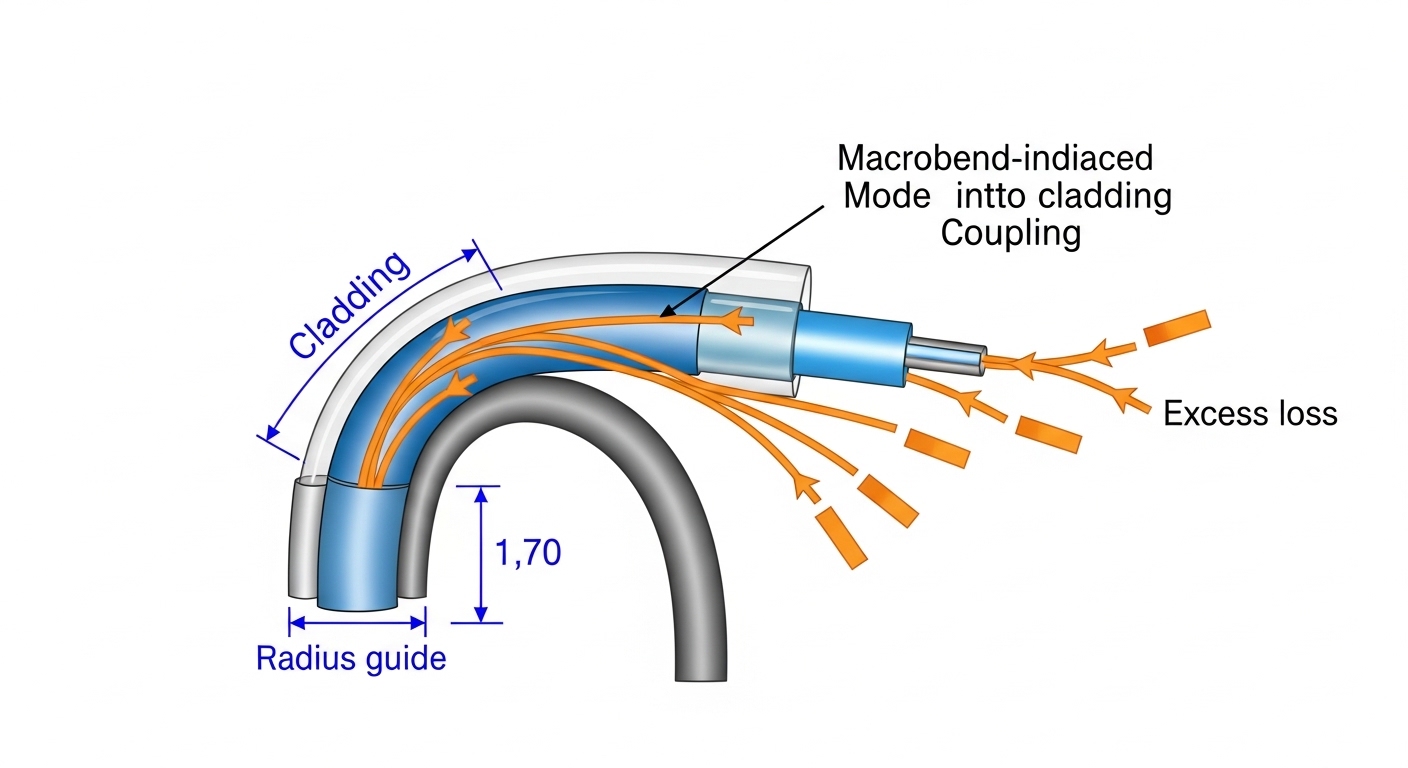
Optical symptoms were consistent across ports: link negotiation stayed up, but error counters rose under normal load. After measuring receive power with a handheld meter at the patch point, we found the same downward shift on impacted runs, suggesting an excess loss event rather than a bad transceiver. The key variable was routing geometry: the bend radius near the rack side panels was tighter than the manufacturer’s recommended minimum.
Environment specs: SFP optics, fiber type, and bend-loss reality
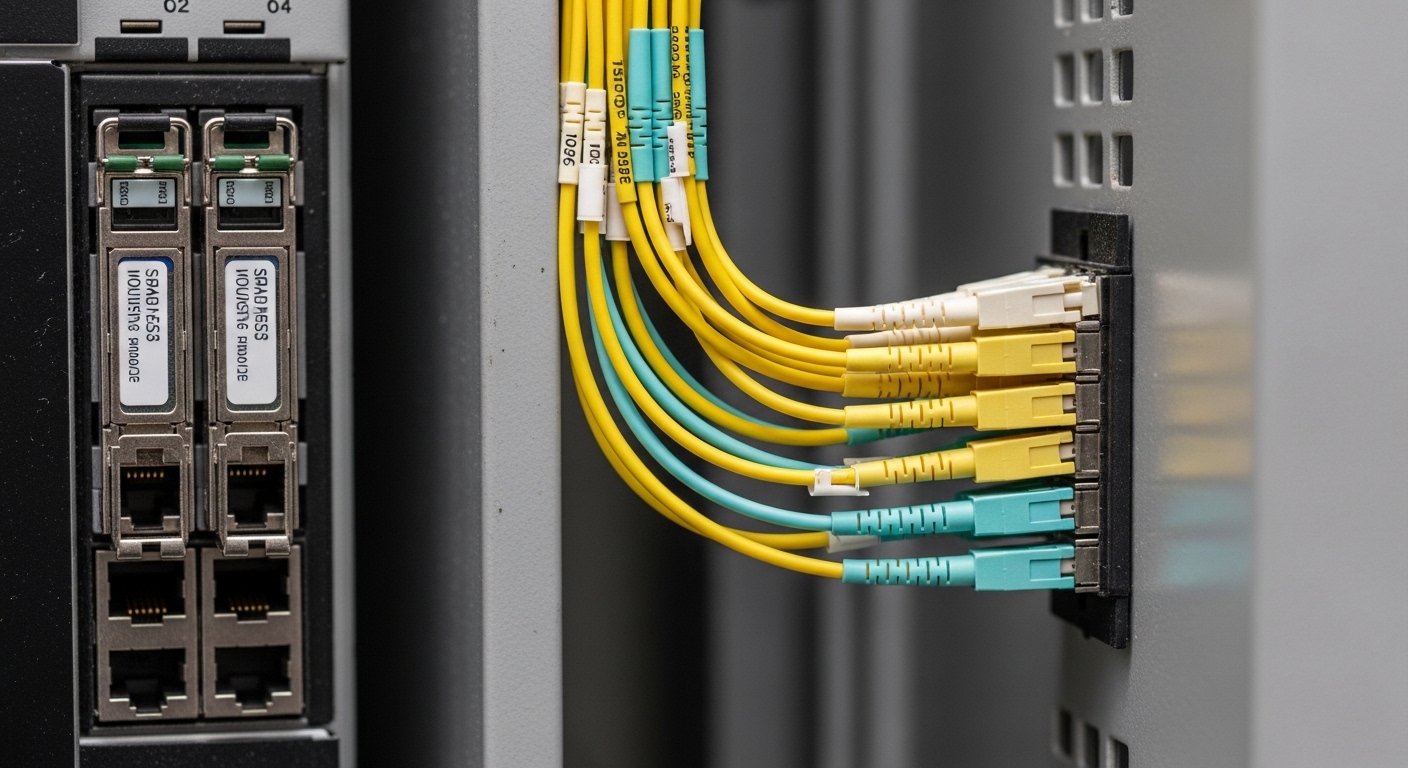
We were using 10G SR optics (850 nm) for short reach inside the row. The transceivers were Cisco-compatible SFP+ modules (examples in our spares included Cisco SFP-10G-SR and third-party 10G SR optics such as Finisar FTLX8571D3BCL and FS.com SFP-10GSR-85) that all rely on graded-index multimode fiber. In parallel, we had a few 40G LR4 runs elsewhere in the same building, where single-mode bend sensitivity is even more unforgiving when routing is sloppy.
Field measurements focused on two things: (1) minimum bend radius compliance along the entire path from patch panel to transceiver and (2) total link budget margin at the receive end. Standard references for optical performance and transceiver behavior include IEEE 802.3 for Ethernet physical layers, plus vendor datasheets for optical budgets and recommended cable handling. For bend-loss fundamentals, we relied on generic fiber handling guidance from fiber manufacturers and standard connector/cable recommendations summarized in vendor documentation.
| Parameter | 10G SR (850 nm, MMF) | 40G LR4 (1310 nm, SMF) | What bend radius affects |
|---|---|---|---|
| Typical SFP data rate | 10.3125 Gbps | 40 Gbps | Launch/receive power margin |
| Wavelength | 850 nm | 1310 nm | Mode behavior under stress |
| Fiber type | OM3/OM4 MMF | OS2 SMF | Macrobend vs microbend sensitivity |
| Connector style | LC (common) | LC (common) | Insertion loss + handling stress |
| Minimum bend radius (cable handling) | Vendor-dependent (often 10x cable OD) | Vendor-dependent (often 20x cable OD) | Excess loss from macrobends |
| Operating temperature (typical) | Commercial: ~0 to 70 C | Commercial: ~0 to 70 C | Does not fix bend-loss; can worsen it |
| Link loss impact | Often seen as reduced receive power and CRC/LOS events | Often faster to fail under tight routing | Optical budget erosion |
Update date: 2026-04-30. Bend radius values must be taken from the exact fiber/cable part number installed; “10x OD” or “20x OD” rules are starting points, not universal truth. [Source: IEEE 802.3, vendor SFP and fiber cable datasheets, fiber manufacturer handling guidance summarized in distributor technical notes such as IEEE 802.3 and IEEE 802.3 working group]
Pro Tip: In racks, the worst bend radius is rarely where you can see it. Watch the first 2 to 5 cm after the patch panel exit and the last 1 to 3 cm before the transceiver cage; those “transition zones” are where installers unintentionally create a tighter macrobend than the visible loop indicates.
Chosen solution and why: re-route with slack, radius control, and validation
We did not replace optics first. Instead, we treated the problem as an optical loss mechanism and engineered routing geometry. The fix used three controls: (1) a larger bend radius path with a dedicated vertical ladder for patch cords, (2) defined slack loops so fibers did not get pulled tight during tie-down, and (3) strain relief that prevented load transfer onto the LC jumpers.
Implementation included swapping impacted patch cords with the same fiber type and connector polish (LC) but routing them through a cable management channel with radius guides. For transceivers, we validated that the SFPs matched the intended MMF/SMF type and speed grade; then we performed receive power checks at the patch end to confirm margin recovery. We kept transceiver models consistent where possible to avoid confounding differences in transmitter output and receiver sensitivity.
Implementation steps: from rack planning to measured results
Map the exact fiber path and measure constraints
We started at the patch panel and traced each impacted run to the SFP cage. For each fiber type, we confirmed the installed cable OD and looked up the manufacturer’s minimum bend radius requirement for both installation and long-term conditions. Then we inspected the actual routing: cable managers, rack side obstacles, Velcro tie points, and any corner wraps.
Correct routing geometry and tie-down method
We re-routed jumpers so they avoided “tight corners” and instead used a smooth channel that maintained bend radius compliance. We also changed tie-down practice: instead of pulling fibers taut to reduce clutter, we used service loops sized for future moves. This reduced micro-movement stress when doors closed or when operators adjusted adjacent patch cords.
Validate with optical measurements, not just link LEDs
After re-routing, we re-measured receive power at the same location used during troubleshooting, then compared error counters under a controlled traffic profile. In parallel, we verified that link up/down events stopped and CRC rates returned to baseline. This approach distinguishes bend-loss issues (steady degradation and occasional LOS) from optics incompatibility (immediate or consistent failures at link bring-up).

Measured results: how bend radius violations translated into errors
Before correction, impacted 10G SR links showed elevated CRC counts and intermittent LOS during normal traffic bursts. Receive power at the patch point was down by approximately 1.2 to 2.0 dB versus healthy runs on the same switch. After re-routing to comply with minimum bend radius and adding slack, receive power returned to within 0.2 dB of the healthy baseline, and CRC counters dropped to baseline levels within the next monitoring interval.
Operationally, the change eliminated the maintenance-window recurrence. Over the next quarter, we saw no repeat LOS events on those ports, and we reduced “re-seat and reboot” actions because the physical layer stabilized. This also improved predictability for DR and change control: fewer surprise transceiver swaps and fewer disruption windows during cable moves.
Common mistakes / troubleshooting tips
-
Mistake: Tight tie-downs that pull patch cords into a smaller bend radius than the visible loop suggests.
Root cause: Load transfer during bundling creates a hidden macrobend in the transition zone near the rack side or connector entry.
Fix: Add slack service loops, route through radius-friendly channels, and use strain relief that keeps force off LC connectors. -
Mistake: Assuming SFP compatibility guarantees stable links regardless of fiber handling.
Root cause: SFPs can meet nominal specs at the factory but still fail the installed link budget when excess loss is added by bends, dirt, or connector stress.
Fix: Measure receive power and check link budget margins; confirm the correct MMF/SMF type for the optic. -
Mistake: Cleaning connectors without correcting the bend geometry.
Root cause: Connector cleaning addresses insertion loss from contamination; bend-loss remains and can still trigger LOS under margin pressure.
Fix: First correct routing and strain relief, then clean and re-test; use a fiber inspection scope for polish quality. -
Mistake: Using mixed cable grades or undocumented patch cord part numbers during a swap.
Root cause: Different cable constructions have different OD and minimum bend radius requirements, changing excess loss behavior.
Fix: Standardize patch cord part numbers and verify bend radius from the exact datasheet for each installed cable.
Selection criteria: how engineers choose fiber bend radius SFP paths
- Distance and link budget: Confirm reach requirements and available margin for the exact transceiver and fiber type.
- Fiber and cable bend radius: Use the installed cable OD and manufacturer minimum bend radius for installation and long-term conditions.
- Switch and transceiver compatibility: Verify supported optic types in the switch datasheet; confirm DOM capability if your ops process enforces it.
- Operating temperature and airflow: Bend-loss is optical geometry, but temperature can worsen connector issues and micro-movement stress.
- Vendor lock-in risk: Standardize on a small set of qualified optics and patch cord part numbers to reduce variability during repairs and DR events.
Cost and ROI note: OEM optics typically cost more per unit than third-party equivalents, but the real TCO comes from reduced truck rolls and fewer failed change windows. In practice, third-party 10G SR optics often land in a lower purchase price band, yet if they cause compatibility churn or higher failure rates, the labor and downtime cost dominates. Bend-radius compliant patch management is inexpensive compared to repeated troubleshooting: a radius-guided ladder and standardized patch cords cost far less than an outage-driven rollback, especially when you include cooling and power continuity costs during maintenance.
FAQ
What is fiber bend radius, and why does it show up as SFP link loss?
Fiber bend radius is the tightness of the curve the cable experiences. Tight macrobends (and sometimes microbends from movement) increase excess loss, reducing received optical power until the SFP receiver crosses its sensitivity threshold, causing LOS or elevated errors. [Source: vendor fiber handling guidance and IEEE 802.3 physical layer behavior]
Do all SFP optics fail the same way when bend radius is exceeded?
No. MMF SR and SMF LR variants differ in sensitivity to mode coupling and installed geometry, and different patch cord constructions have different OD and bend specs. Even within the same wavelength family, receiver sensitivity and transmitter power variations affect how quickly links degrade.
How can I confirm bend-loss without guessing?
Measure receive power at a consistent point before and after re-routing, then compare to healthy reference ports. If receive power improves after correcting routing while transceiver models remain unchanged, bend-loss is the likely root cause.
Will SFP DOM help pinpoint the problem?
DOM can confirm optical power levels and sometimes temperature and bias trends, but it will not directly measure bend radius. DOM is still useful for correlating power drops with the specific physical run that was re-routed.
What minimum bend radius should I use for my SFP fiber?
Use the value from the exact cable and fiber part number installed, including whether you are checking installation or long-term conditions. General rules like multiples of cable OD can help, but they are not a substitute for datasheet requirements.
Should I replace SFP modules or patch cords first?
Correct routing and strain relief first, then clean and re-test. Replacing optics can waste time if the real issue is excess loss from geometry, connector stress, or dirty endfaces.
For the next step, standardize your rack patching design with radius-compliant cable paths and validated patch cord part numbers, then document it in your change procedures using fiber management and rack cooling best practices. That single process update is usually the fastest way to prevent repeat SFP link loss events.
Author bio: I deploy and troubleshoot rack-scale fiber and transceiver systems, including optics qualification, patch panel design, and optical margin validation. I’ve field-verified failure modes tied to fiber routing, strain relief, and DR change windows across multi-vendor SFP fleets.