
Distributed compute at the edge breaks the usual “one rack, one campus” assumptions. You may have short patch runs, harsh ambient swings, limited vendor support, and strict optics budgets. This article helps network and infrastructure teams choose the right edge data center SFP for fiber-based connectivity, covering selection criteria, failure modes, and a practical ranking of common module options.
Top 8 edge data center SFP options by use case and link physics
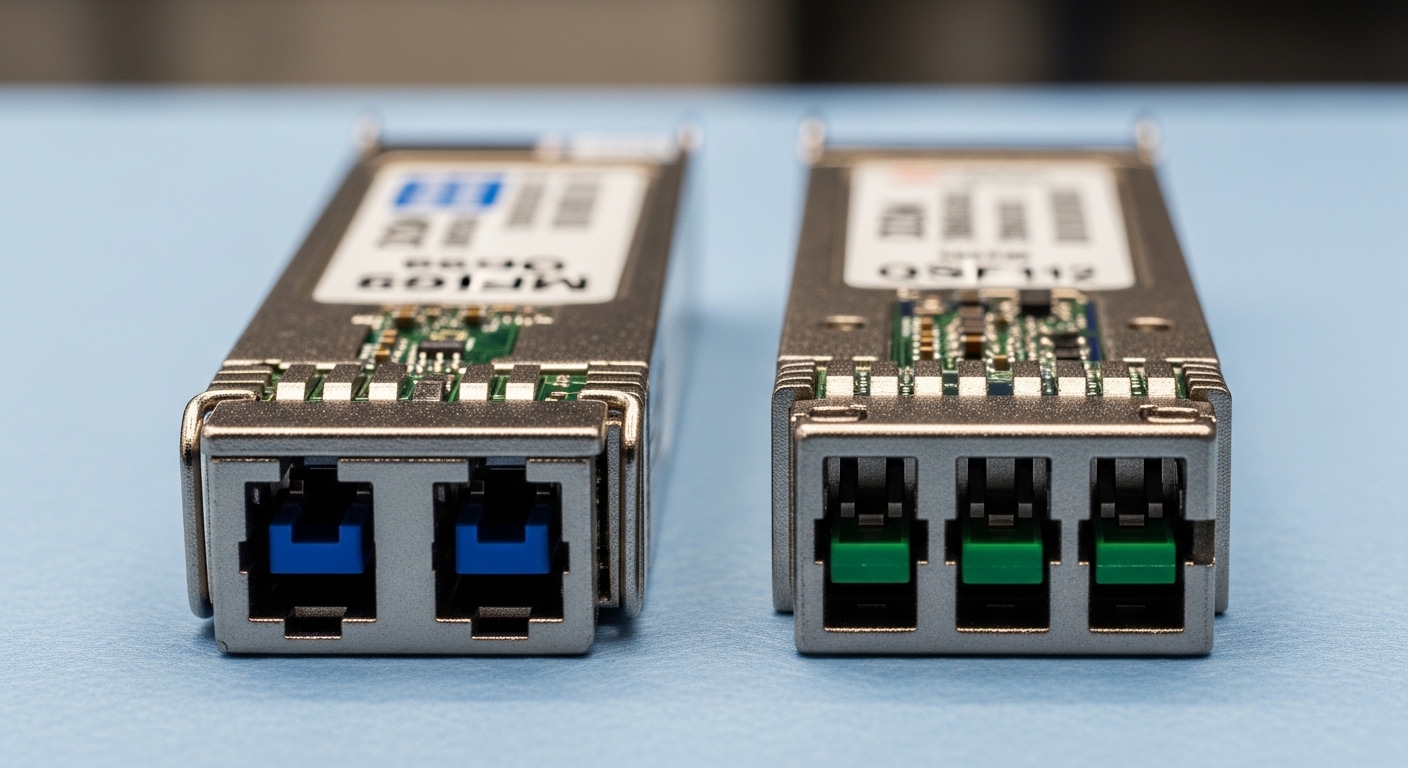
In edge sites, the “best” SFP is the one that survives your distance, temperature, and switch optics profile while meeting uptime targets. The selection is driven by wavelength (850 nm vs 1310 nm), lane rate (1G/10G), and link budget realities like fiber attenuation and connector loss. You also need correct electrical behavior for the host switch, including DOM support and vendor-specific thresholds. Below are eight SFP choices that commonly show up in leaf, aggregation, and distributed compute deployments.
10GBASE-SR (850 nm) multimode SFP for short intra-site links
Key specs: 10.3125 Gb/s line rate for 10GbE, typically 850 nm, LC connector, and common reach values of 300 m on OM3 and 400 m on OM4 (exact reach depends on module and fiber grade). Power draw is often around ~1 W to 1.5 W per module, which matters when you populate many ports at the edge. Temperature ranges frequently span 0 to 70 C for standard and -5 to 85 C for extended variants.
Best-fit scenario: A municipal edge hub with 12 distributed compute nodes where patch lengths are 30 to 120 m across the same building. Using OM4 with conservative margins keeps you inside the SR link budget while staying cost-effective.
Pros: Lower cost than long-reach optics; easy availability; good performance in data center cabling plants. Cons: Limited by multimode reach; sensitive to poor fiber handling and connector cleanliness.
10GBASE-LR (1310 nm) singlemode SFP for longer building-to-building runs
Key specs: 10GBASE-LR uses 1310 nm over singlemode fiber with typical reach around 10 km depending on module class and fiber attenuation. Connector is usually LC. Transceiver power is commonly near ~1 W to 2 W, and optical safety requirements apply for Class 1 lasers per IEC 60825-1.
Best-fit scenario: A distributed compute site where racks are 2 to 8 km apart using buried singlemode trunk fiber. LR gives you more distance headroom than SR without moving to higher-cost coherent optics.
Pros: Works over longer distances with stable performance; fewer multimode-related issues. Cons: Requires singlemode fiber and correct splicing/cleaning; can be more expensive than SR.
1GBASE-SX (850 nm) multimode SFP for legacy edge gear
Key specs: 1.25 Gb/s line rate, 850 nm, LC, and typical reach values like 550 m on OM2 and 275 m on OM1 (values vary by module and fiber). Power is usually lower than 10G equivalents, often around <1 W.
Best-fit scenario: An edge gateway that still runs 1GbE uplinks to a managed firewall cluster. You want to keep older switch ports active while upgrading compute nodes gradually.
Pros: Cheapest optics for short multimode links; lower thermal load. Cons: Not suitable for 10G performance needs; depends heavily on fiber quality and patch practices.
10GBASE-LRM (1310 nm) for “almost singlemode” or mixed fiber plants
Key specs: LRM uses 1310 nm optics designed to improve performance over limited-reach multimode or legacy cabling where you cannot fully standardize fiber immediately. Reach is typically in the 220 m to 220 m-class range depending on fiber type and module generation. DOM availability varies by vendor.
Best-fit scenario: A retrofit where the edge cabling plant includes older multimode runs and you cannot re-pull fiber before the next compute deployment cycle. LRM can bridge the gap when SR would fail due to modal dispersion or higher attenuation.
Pros: More forgiving than SR in some mixed-plant conditions; helps avoid immediate cabling replacement. Cons: Higher cost than SR; still requires careful cleaning and verification.
25G SFP28 SR (850 nm) for higher density in edge switches
Key specs: 25.781 Gb/s line rate using SFP28, typically 850 nm multimode with reach commonly around 70 m on OM3 and up to 100 m on OM4 for many mainstream modules. Power often lands around ~1.5 W to 2 W.
Best-fit scenario: An edge aggregation switch with many 25G uplinks to distributed compute servers using short multimode patching. This is common when you need more throughput without moving to 100G optics.
Pros: Better bandwidth per port; fits modern server NIC ecosystems. Cons: Multimode distance is shorter than 10G SR; higher sensitivity to link loss and connector quality.
25G SFP28 LR (1310 nm) for singlemode edge uplinks
Key specs: 25G line rate at 1310 nm over singlemode fiber with typical reach around 10 km depending on module and fiber. LC connector is standard, and DOM is often provided on enterprise-class optics.
Best-fit scenario: A remote edge location where the compute rack room is connected to an aggregation closet via a singlemode trunk run of 3 to 6 km.
Pros: Long reach on singlemode; supports higher throughput than 10G LR. Cons: Requires singlemode fiber and careful budgeting for splice loss.
DWDM-capable SFP variants for spectrum-managed edge backhaul
Key specs: Some SFPs used in edge backhaul integrate with DWDM systems, where wavelength channels are tightly controlled. Typical specs include fixed center wavelength plus narrow spectral tolerances, and they must match the DWDM mux/demux plan. Reach can vary widely by system design.
Best-fit scenario: You have multiple edge sites sharing fiber with spectrum-multiplexing, and you must allocate channels to avoid interference. In this case, your “SFP choice” is inseparable from the optical transport plan.
Pros: Maximizes fiber utilization; supports scalable backhaul. Cons: Higher complexity; compatibility depends on the entire optical chain, not just the SFP.
Ruggedized or extended-temperature SFPs for outdoor cabinets and unconditioned rooms
Key specs: Extended temperature modules commonly cover -5 to 85 C or wider, with the same nominal wavelengths and data rates as their standard-temperature counterparts. DOM support varies, but the key difference is thermal/aging tolerance and shock/vibration robustness.
Best-fit scenario: A fiber cabinet in a utility corridor where HVAC fails seasonally. You need optics that keep link stability through heat soak and cold starts while you schedule a site visit.
Pros: Fewer site outages due to thermal drift; better resilience in the field. Cons: Often higher cost; verify your switch compatibility and DOM behavior.
Pro Tip: Many “it links up but performance is unstable” edge failures trace back to connector cleanliness and fiber contamination, not the transceiver. In practice, teams that standardize end-face inspection with a handheld microscope and enforce lint-free cleaning prevent a large share of intermittent CRC bursts and link flaps, especially when using higher-speed SFP28 optics.
Specs that matter most for edge data center SFP selection
For an edge data center SFP, the “spec sheet” must be interpreted through link budget and host behavior. You need the correct wavelength and distance class, but you also need to confirm the host switch supports the module family and that DOM readings (if present) match your monitoring thresholds. Temperature range and power draw affect thermal design, especially when you run many ports in a constrained enclosure. Finally, connector type and fiber grade determine whether your theoretical reach becomes a real operational link.
| Module type (example class) | Data rate | Wavelength | Typical reach | Fiber type | Connector | Common temperature range | DOM |
|---|---|---|---|---|---|---|---|
| 10GBASE-SR SFP+ | 10.3125 Gb/s | 850 nm | 300 m (OM3) / 400 m (OM4) | Multimode | LC | 0 to 70 C (or extended) | Often supported |
| 10GBASE-LR SFP+ | 10.3125 Gb/s | 1310 nm | ~10 km (varies) | Singlemode | LC | 0 to 70 C (or extended) | Often supported |
| 25G SFP28 SR | 25.781 Gb/s | 850 nm | 70 m (OM3) / 100 m (OM4) | Multimode | LC | 0 to 70 C (or extended) | Common |
| 25G SFP28 LR | 25.781 Gb/s | 1310 nm | ~10 km (varies) | Singlemode | LC | 0 to 70 C (or extended) | Common |
Compatibility note: IEEE Ethernet PHY specifications define behavior at the electrical/optical interface, but host switches still apply vendor-specific validation. For standards framing, consult IEEE 802.3 for 10GBASE-SR/LR and 25G Ethernet PHY families via approved PHY definitions. [Source: IEEE 802.3]
anchor-text: IEEE 802.3 standard portal
Deployment reality: how teams choose edge data center SFP modules under constraints
In edge deployments, the “right” SFP is often the one that meets your operational limits on the first truck roll. Consider a 3-tier topology in a distributed compute program: ToR switches at each compute pod, an aggregation switch in a small site room, and an uplink into a regional router. You might run 48 x 10G server access links at the pod, then aggregate to 8 x 10G uplinks. If the patch runs from ToR to aggregation average 80 m across OM4, 10GBASE-SR is typically the cost-effective choice; if one pod spans 2.5 km of singlemode trunk, the uplink becomes 10GBASE-LR.
In the same program, you may monitor DOM telemetry to detect aging. Teams often graph Tx bias current and Rx optical power; if Rx power drifts toward the lower threshold, they schedule cleaning or replacement before CRC storms appear. This is especially important when using higher-speed SFP28 SR optics, where margin is narrower and connector cleanliness has a sharper impact. Vendor datasheets and DOM documentation matter because “compatible” does not always mean “identical telemetry scaling.” [Source: Cisco transceiver documentation and datasheets; vendor SFP+ / SFP28 datasheets]
Selection criteria checklist for edge data center SFP purchases
Use an ordered checklist so your procurement and engineering teams converge on the same decision. This reduces rework when the site is offline and you need spares that actually work in your host hardware.
- Distance and fiber type: Measure end-to-end length and verify OM grade (OM3 vs OM4) or singlemode specs (typically OS2). Add a conservative margin for patch cords, splices, and connectors.
- Data rate and port capability: Confirm the switch port supports the exact form factor and speed (SFP+ vs SFP28; 10G vs 25G). Avoid “close enough” assumptions.
- Wavelength class: Match SR (850 nm) to multimode, LR (1310 nm) to singlemode, and use LRM only when your cabling plant is known to benefit from it.
- Switch compatibility and vendor validation: Check the host vendor’s transceiver compatibility list and note any restrictions on third-party optics. [Source: vendor compatibility matrices in switch guides]
- DOM support and monitoring thresholds: Ensure DOM is supported and that your monitoring system expects the same telemetry fields and units. If you rely on alarms, validate them in a staging rack.
- Operating temperature and thermal design: Choose extended-temperature optics when the enclosure can exceed standard ranges. Validate airflow and confirm that module heat does not compound with chassis ambient.
- Vendor lock-in risk and spares strategy: Decide whether you will standardize on OEM modules (lower risk, higher cost) or use third-party modules with documented compatibility (lower cost, more validation work).
Common mistakes and troubleshooting tips for edge data center SFP links
Edge environments amplify small issues. Below are concrete failure modes teams see in the field, with root causes and practical fixes.
Link flaps after cleaning “looks fine”
Root cause: Micro-scratches or residue on the fiber end faces, often from repeated connect/disconnect without proper inspection. Higher-speed optics (SFP28 SR) also reduce margin. Solution: Inspect with a scope under magnification, clean with lint-free swabs and approved cleaning supplies, and replace patch cords if scratches are visible.
“Works on one port, fails on another” in the same switch
Root cause: Port-specific thresholds, speed negotiation quirks, or host-side optics validation that differs by port group/ASIC. Solution: Confirm the exact port mapping and transceiver profile in the switch CLI; test the same transceiver in a known-good port; if it fails consistently, use a module confirmed for that platform.
Excess CRC errors increase slowly over weeks
Root cause: Aging of optics or gradual connector contamination due to dust ingress in the edge cabinet. Temperature cycling can worsen this by pumping air through imperfect seals. Solution: Track DOM telemetry and error counters over time; schedule periodic end-face inspection; add protective dust caps when transceivers are removed.
Wrong module class for the fiber plant (SR vs LR vs LRM)
Root cause: Purchasing the correct “speed” but incorrect “wavelength/reach class,” especially after cable inventories are outdated. Solution: Verify fiber type in the field using labeling plus OTDR or certified testing; match module class to the measured attenuation and expected connector loss.
Cost and ROI note: how to budget SFPs at the edge
Typical procurement ranges vary by speed and reach. As a rough planning assumption, many 10GBASE-SR SFP+ modules are often priced in a mid-range per unit, while 10GBASE-LR and 25G modules can cost more due to tighter optical tolerances and higher demand. OEM optics from major switch vendors may cost more per module but can reduce compatibility and RMA cycles, which matters when an edge site is hard to access. Third-party options can lower unit cost, but TCO can rise if you spend engineering time validating compatibility and if return rates are higher.
ROI improves when you standardize module families across sites, keep spares on-hand, and align your monitoring to DOM telemetry so you replace optics proactively. A small reduction in failure probability can prevent a high-cost downtime event, especially when compute workloads depend on stable uplink throughput. [Source: vendor RMA policies and transceiver datasheets; reliability discussions in reputable tech publications]
edge fiber monitoring
Ranking table: which edge data center SFP to choose first
Use this ranking as a starting point based on common edge constraints: limited run lengths, need for predictable compatibility, and operational simplicity. Your final decision should still follow the checklist above and your host switch compatibility matrix.
| Rank | Edge data center SFP option | Best for | Primary constraint | Compatibility risk | Operational simplicity |
|---|---|---|---|---|---|
| 1 | 10GBASE-SR (850 nm) SFP+ | Short intra-site multimode links | Multimode reach and fiber plant quality | Low to medium | High |
| 2 | 10GBASE-LR (1310 nm) SFP+ | Medium to long singlemode runs | Singlemode availability and splice budget | Low to medium | High |
| 3 | 25G SFP28 SR (850 nm) | Higher density short multimode links | Narrower margin at higher speed | Medium | Medium |
| 4 | 25G SFP28 LR (1310 nm) | Higher throughput over singlemode | Module cost and singlemode discipline | Medium | Medium |
| 5 | 1GBASE-SX (850 nm) | Legacy edge gateways and slow links | Throughput ceiling | Low | High |
| 6 | 10GBASE-LRM (1310 nm) | Mixed or legacy multimode plants | Higher cost and site-specific performance | Medium | Medium |
| 7 | DWDM-capable SFP variants | Spectrum-managed backhaul | Optical transport system constraints | High | Low to medium |
| 8 | Extended-temperature ruggedized SFPs | Outdoor cabinets and HVAC failures | Higher cost and platform validation | Low to medium | Medium |
FAQ
What makes an edge data center SFP different from a standard data center SFP?
The key difference is operational tolerance and system behavior under edge conditions: wider ambient temperature swings, more dust contamination risk, and sometimes more variable cabling plants. You often need extended-temperature optics and stricter connector hygiene processes. Compatibility with the host switch still follows the same PHY and optics validation logic.
Can I use third-party edge data center SFP modules in enterprise switches?
Sometimes, but you must verify compatibility in the switch vendor’s transceiver guidance and test in a staging environment. Many issues come from DOM telemetry differences, threshold expectations, or host validation policies. For mission-critical edge sites, OEM optics can reduce operational risk.
How do I choose between 10GBASE-SR and 10GBASE-LR?
Choose SR when your runs are short enough for your multimode grade and you can guarantee connector cleanliness. Choose LR when you have longer distances or singlemode trunks. If your fiber plant is mixed or legacy, consider LRM only after measured testing or documented performance expectations.
Why do I see CRC errors even when the link comes up?
CRC errors often indicate marginal optical power, dirty connectors, or fiber damage. DOM telemetry can help you confirm whether Rx power is
