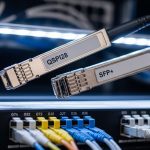
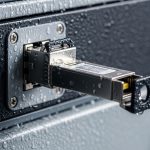
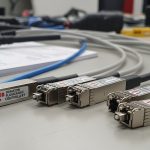
Edge sites rarely fail loudly; they degrade quietly when optics, link budgets, or compatibility assumptions are wrong. This article compares 10G SFP+ and 25G SFP28 for edge computing optics in practical deployments, helping data center engineers, field techs, and network architects pick modules that will actually stay up. You will get specifications, a decision checklist, common failure modes, and cost and ROI considerations grounded in real switch and optical behavior.
Performance tradeoffs: 10G SFP+ versus 25G SFP28 at the edge
For edge computing optics, performance is not just line rate; it is how reliably the transceiver maintains signal integrity under temperature swings, connector contamination, and imperfect patching. In practice, 10G SFP+ (IEEE 802.3ae family) is widely supported and often tolerates older cabling plants, while 25G SFP28 (IEEE 802.3by family) gives more headroom for bursty workloads like video analytics and near-real-time telemetry. Many edge networks start at 10G and later add 25G aggregation, so the migration path matters.
In the field, the most visible differentiator is reach versus margin. Short-reach multimode (MMF) optics can work well with OM3/OM4, but the margin collapses faster when patch cords are long or connectors are dirty. Single-mode (SMF) options trade higher module cost for longer reach and more stable performance over time. Vendors also publish power and receiver sensitivity; those numbers determine how much link budget you truly have once losses are counted.
Typical module examples used in edge builds
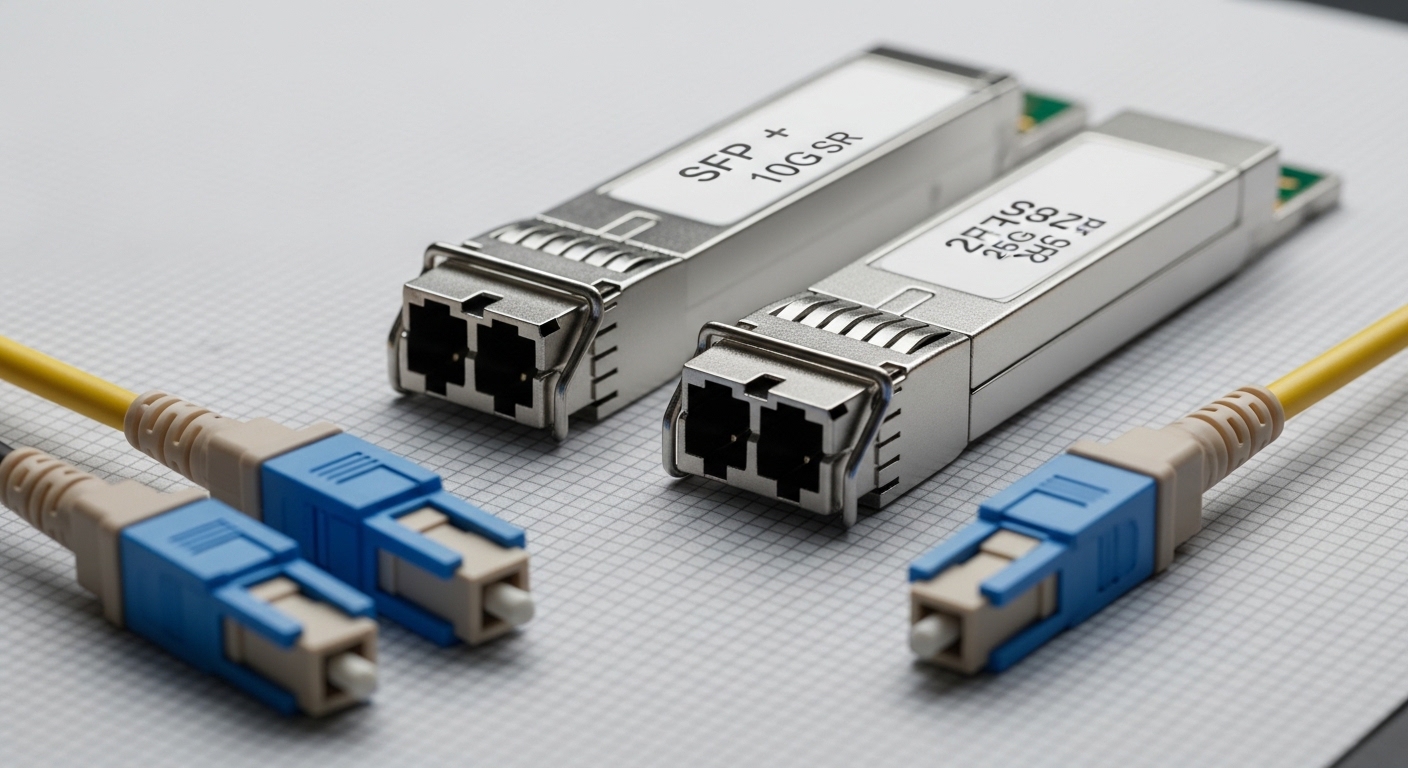
Common selections include 10G SR modules such as Cisco SFP-10G-SR and Finisar FTLX8571D3BCL-class parts, plus third-party equivalents. For 25G SR, engineers often choose SFP28 SR variants like FS.com SFP-25GSR-85 (example class) that target 100 m over OM4 with appropriate link budgets. Validate exact part numbers against your switch vendor compatibility matrix before ordering large quantities.
Specs that decide links: wavelength, reach, power, and temperature
Edge environments can run from refrigerated cold aisles to warm outdoor huts, and optics must survive that range while staying within thermal limits. Below is a practical comparison using representative SR (MMF) and LR (SMF) classes that engineers map to their fiber plant. Always treat these as starting points; confirm the exact data sheet for each module model and vendor.
| Spec | 10G SFP+ SR (MMF) | 25G SFP28 SR (MMF) | 25G SFP28 LR (SMF) |
|---|---|---|---|
| Data rate | 10.3125 Gbps | 25.78125 Gbps | 25.78125 Gbps |
| Wavelength | 850 nm class | 850 nm class | 1310 nm class |
| Typical reach | ~300 m OM3 / ~400 m OM4 (module-dependent) | ~70-100 m OM4 (module-dependent) | ~10 km (module-dependent) |
| Connector | LC duplex | LC duplex | LC duplex |
| TX optical power | Vendor-specific (often single-digit dBm) | Vendor-specific (often single-digit dBm) | Vendor-specific (higher budget) |
| Receiver sensitivity | Vendor-specific (check data sheet) | Vendor-specific (check data sheet) | Vendor-specific (check data sheet) |
| Temperature range | Commonly 0 to 70 C or industrial variants | Commonly 0 to 70 C or industrial variants | Commonly -10 to 70 C or industrial variants |
| Form factor | SFP+ | SFP28 | SFP28 |
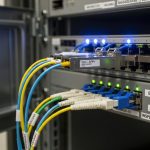
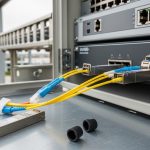
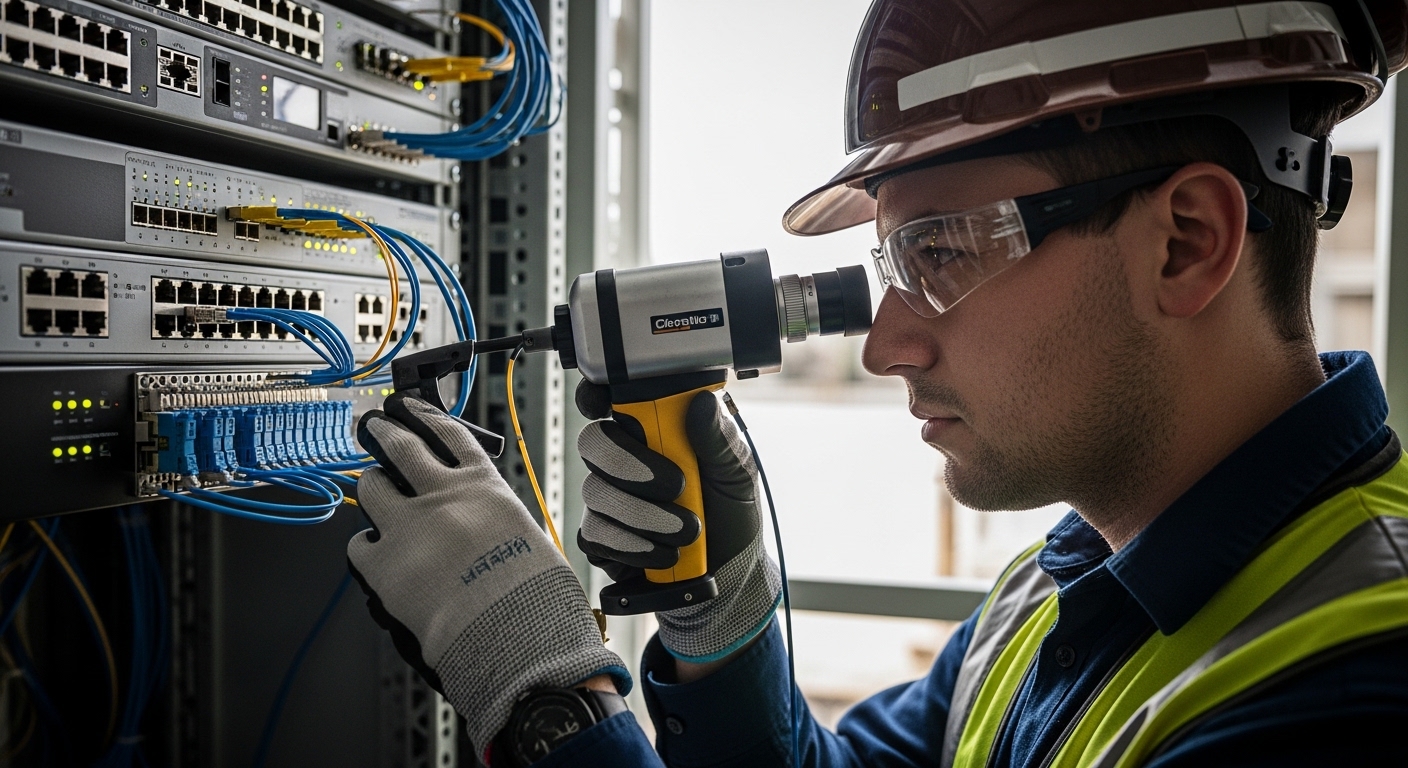
For edge computing optics, temperature and link margin are often more important than the headline reach. If your patch cords are older, replace them or at least clean and inspect connectors before commissioning. Follow a consistent cleaning method (for example, APC/UPC matching and proper lint-free wipes) and verify with a fiber inspection scope.
Pro Tip: In edge deployments, the fastest “mystery outage” cause is not the transceiver itself but marginal optical budget after field patching. If you can, run a repeatable connector inspection routine and keep a spare set of known-good optics; then compare received power readings in the switch DOM to isolate budget loss versus a failing module.
Cost and ROI: what you pay now versus what you avoid later
Upfront module cost differs by data rate, reach, and whether you choose OEM parts or third-party optics. In many procurement cycles, 10G SFP+ SR modules are cheaper per port than 25G SFP28 SR, but the ROI depends on whether you need 25G capacity at the edge or you are buying time for a future upgrade. If your edge aggregation links are already saturated, paying for 25G early can reduce the number of uplink bottlenecks and avoid re-cabling.
Total cost of ownership (TCO) also includes power, spares, and failure handling. Higher-speed optics can draw more power and may be more sensitive to marginal cabling, which increases commissioning effort. On the other hand, 25G can reduce the number of parallel links needed for the same throughput, potentially lowering switch port counts and cabling density.
Realistic budget planning guidance
As a rule of thumb, expect OEM pricing to be higher than third-party, and long-reach SMF optics to be the most expensive. For ROI, model spares and downtime: if an edge site has limited technician access, a slightly higher module price can be justified by reduced mean time to repair. Track reported DOA (dead on arrival) rates by vendor lot when possible and keep a short list of optics that your specific switch models accept.
Compatibility and operations: DOM, switch support, and migration paths
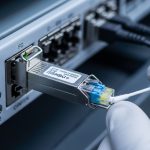
Edge computing optics must work with the switch or router’s transceiver management, especially if you rely on alarms, optics health monitoring, and automated ticketing. Most modern platforms support Digital Optical Monitoring (DOM) over an I2C bus, exposing temperature, laser bias, transmit power, and received power. However, compatibility is not guaranteed across all third-party vendors, and some switches enforce vendor-specific transceiver thresholds.
Before selecting 25G optics, confirm that your exact switch SKU supports SFP28 electrically and that the optics profile is accepted. For example, a platform that supports SFP28 SR may still reject certain third-party LR optics due to EEPROM programming differences or timing constraints. Validate interoperability with a small pilot batch, not just a general “works with SFP28” claim.
Decision matrix: quick head-to-head comparison
| Criterion | 10G SFP+ | 25G SFP28 |
|---|---|---|
| Edge link capacity | Good for existing 10G uplinks | Better headroom for growth |
| Reach over MMF | Often more forgiving on OM3/OM4 | Typically shorter for SR; SMF LR is longer |
| Connector and patch margin | Usually more tolerant | More sensitive to extra loss |
| Power and density | Lower speed, often lower power | Higher speed; may still reduce link counts |
| Switch compatibility risk | Lower due to mature ecosystem | Higher; verify EEPROM/DOM support |
| Migration strategy | Stays in 10G world longer | Enables 25G aggregation earlier |
Selection criteria checklist for edge computing optics
Use this ordered checklist to reduce commissioning churn and avoid late-stage optics swaps. It is written the way field engineers actually make calls: start with distance and fiber quality, then move to switch acceptance and operational constraints.
- Distance and fiber type: Determine OM3/OM4 vs SMF, then map to vendor reach for the exact wavelength and connector type.
- Link budget margin: Include patch cords, splices, and connector loss; target a safety margin rather than “at spec maximum.”
- Switch and line card compatibility: Confirm the specific switch model and transceiver support list (not just the port label).
- DOM and monitoring needs: Ensure the module exposes the DOM fields you alert on (temperature, laser bias, TX/RX power).
- Operating temperature and airflow: Choose industrial-grade optics if the site can exceed standard ranges.
- Vendor lock-in risk: If you plan third-party optics, run an interoperability pilot and standardize on a small approved catalog.
- Spare strategy: Stock spares by part number and lot if your edge sites are remote.
Common mistakes and troubleshooting tips
Even strong designs fail in the field when small assumptions break. Below are common failure modes specific to edge computing optics, with root causes and fixes.
- Mistake: Buying “SR reach” based on marketing numbers without accounting for patch cords and connector cleanliness.
Root cause: Optical budget shortfall after extra loss from field-terminated patch leads.
Solution: Inspect connectors, clean properly, measure link loss where possible, and select optics with additional margin. - Mistake: Mixing transceiver vendors across links and assuming DOM alarms will be consistent.
Root cause: Different EEPROM calibration, threshold behavior, and DOM scaling can trigger “bad optics” events even when the link is marginally up.
Solution: Standardize vendor/part numbers per site and validate DOM thresholds with your switch configuration. - Mistake: Deploying SFP28 SR in a plant that is marginal for 25G without validating with an inspection scope.
Root cause: Higher-speed signaling has less tolerance for contaminants and micro-bends.
Solution: Verify fiber cleanliness, check cable routing for bend radius, and consider SMF LR for long runs. - Mistake: Overlooking temperature grade during outdoor or unconditioned cabinet installs.
Root cause: Standard commercial optics can drift or fail at extremes, causing intermittent link drops.
Solution: Use industrial temperature-rated modules and validate cabinet airflow and thermal mapping.
Which option should you choose?
If you are upgrading aggregation capacity at the edge or you expect sustained growth in telemetry and video workloads, choose 25G SFP28—especially when you can use OM4 with good patching discipline or you can move to SMF LR for longer distances. If your edge sites are already stable at 10G and your fiber plant is older or patch-heavy, 10G SFP+