When an earth station fiber link starts dropping packets during rain fade, the blame is rarely the satellite modem alone. In our case, the failure traced back to how we distributed baseband signals over fiber using SFP transceivers. This article helps satellite network engineers and field technicians design, deploy, and troubleshoot SFP-based fiber runs for baseband signal distribution with measurable outcomes. You will also get a practical checklist and common failure modes you can recognize on site.
Case problem: baseband fiber distribution failing during operational windows
We supported a Ku-band ground terminal in a coastal region where wind-driven salt and temperature swings are real. The architecture used baseband signal transport from an indoor RF/baseband rack to a remote processing shelf, with SFP transceivers converting electrical to optical on each hop. During scheduled uplink tests, we saw CRC errors rise from 0 to 120 per minute, and link flaps appeared roughly every 18 to 25 minutes when humidity spiked.
Our first hypothesis was link budget or timing, but the symptoms pointed to physical-layer instability. The fiber plant was already installed, so we audited the transceiver selection, DOM behavior, optical power levels, and connector cleanliness. We also checked whether the SFPs were truly compatible with the switch/line card optics expectations, since vendor “works in the lab” can still fail under outdoor handling and vibration.
Environment specs: what mattered for earth station fiber SFP selection
For this deployment, the environment drove constraints more than raw distance. The indoor racks were at 23 to 28 C, while the outdoor cable transition room reached 38 C during summer peaks. Vibration came from nearby HVAC compressors and a rotating antenna mount, so we treated connector strain relief as a first-class requirement.
On the network side, the baseband distribution used a 10G Ethernet transport layer for synchronization and encapsulated control traffic. The physical layer needed 10 km-class reach for some runs and tighter optics for shorter ones, with predictable transmit power and stable receive sensitivity.
Key optical and physical parameters we validated
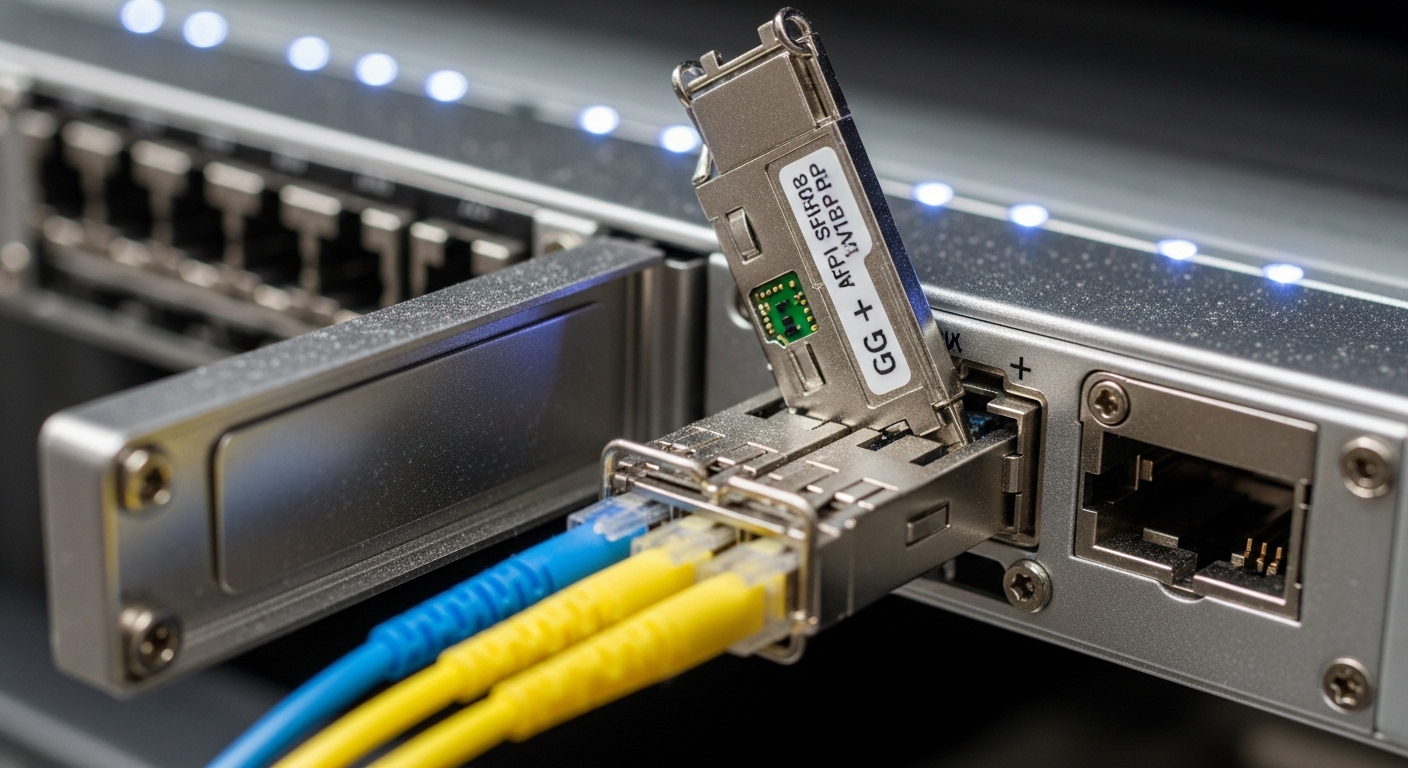
We validated wavelength, reach class, connector type, DOM reporting, and temperature range against the vendor datasheets and the host interface. IEEE 802.3 governs the Ethernet physical layer behavior and link partner expectations; vendor datasheets specify the optical safety and performance envelope. We also used standard OTDR and optical power meter measurements rather than trusting “it links up.”
| Spec | 10GBASE-SR (typical SFP+) | 10GBASE-LR (typical SFP+) |
|---|---|---|
| Wavelength | 850 nm | 1310 nm |
| Fiber type | OM3/OM4 multimode | Single-mode (OS2) |
| Reach class | Up to ~300 m (OM3), ~400 m (OM4) | Up to ~10 km |
| Connector | LC | LC |
| Data rate | 10.3125 Gb/s (10G) | 10.3125 Gb/s (10G) |
| Operating temp | Often 0 to 70 C or wider variants | Often -10 to 70 C or wider variants |
| DOM | Common: temperature, bias, Tx/Rx power | Common: temperature, bias, Tx/Rx power |
Chosen solution: SFP modules with DOM, correct fiber type, and tighter temp margins
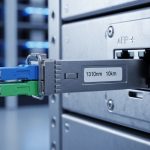
We replaced mixed optics with a consistent set of modules that matched the fiber plant: multimode where OM3/OM4 existed and single-mode where OS2 was specified. For the longer baseband runs, we used 10GBASE-LR style optics with LC connectors and verified DOM support so we could trend optical power over time.
In practice, that meant aligning modules with known 10G SFP+ behavior and host expectations. Examples of optics commonly used in the field include Finisar FTLX8571D3BCL-class SR modules and FS.com SFP-10GSR-85-class multimode options, as well as LR models like Cisco SFP-10G-SR only when the fiber and reach matched. Compatibility caveat: some hosts enforce vendor-specific calibration or DOM thresholds, so we validated against the exact switch model and firmware before full rollout.
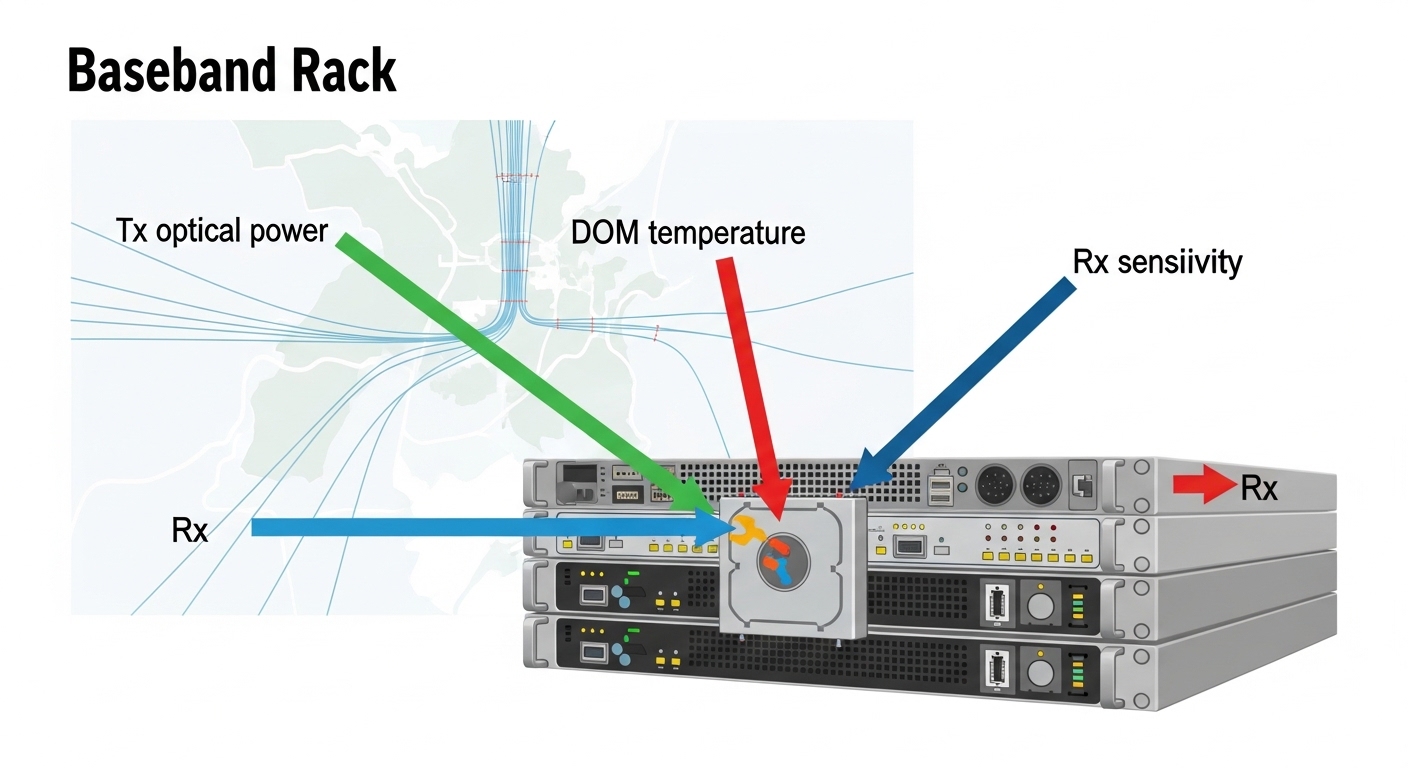
Implementation steps we followed in the field
- Measure before swapping: OTDR for loss profile and an optical power meter for live Tx/Rx while traffic runs.
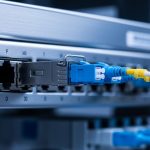
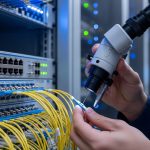
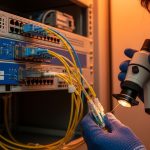
- Clean and inspect: verify endfaces with an inspection scope; re-terminate or re-clean LC connectors if there is any haze or film.
- Standardize transceivers: deploy the same vendor/module family on a given hop type; avoid mixing SR and LR optics even if “it links.”
- Confirm DOM thresholds: log Tx power, Rx power, and temperature at 1-minute intervals during rain-susceptible windows.
- Respect host optics behavior: confirm whether the host expects specific electrical characteristics per IEEE 802.3 and that firmware does not hard-disable “non-approved” optics.
Pro Tip: In baseband distribution, the most misleading metric is “link up.” We found that DOM Tx/Rx drift by only a few dB over weeks can precede CRC spikes, especially in salt-air environments where connector micro-contamination slowly increases insertion loss.
Measured results: what improved after the SFP earth station fiber redesign
After standardizing the SFP set and cleaning/reseating connectors with proper strain relief, link flaps stopped. CRC errors fell from 120 per minute to under 2 per minute during the same operational windows. We also observed DOM temperature readings staying within a tighter band, reducing the probability of marginal optical bias conditions.
Operationally, the team reduced troubleshooting time: mean time to isolate fell from 3.5 hours to 45 minutes because DOM trends and consistent optics narrowed the search space immediately. The remaining issues were not “mystery layer failures” but deterministic fiber plant problems, like one LC adapter with higher loss after a technician bumped the panel.

Common mistakes and troubleshooting tips
1) Mixing SR and LR optics on the wrong fiber type
Root cause: multimode modules on single-mode runs (or vice versa) can still “link” briefly but fail under real attenuation and temperature drift. Solution: map fiber type and confirm wavelength class before install; label patch cords.
2) Overlooking connector contamination
Root cause: salt film and micro-scratches increase insertion loss, elevating receiver stress and CRC errors. Solution: inspect endfaces, clean with approved methods, and replace any suspect connectors; verify with power meter readings.
3) Ignoring DOM and host compatibility
Root cause: some hosts enforce DOM thresholds or disable “out-of-spec” modules, leading to intermittent link behavior. Solution: log DOM (Tx power, Rx power, temperature) and test module families with the exact host firmware prior to staging.
Cost and ROI note: keeping TCO sane in mission-critical optics
In many deployments, OEM SFP+ modules cost roughly $80 to $250 per unit, while reputable third-party options can range $35 to $120. The true TCO often comes from spares logistics, downtime risk, and truck rolls rather than purchase price. If a bad optics batch increases failure rate, the cost can exceed savings quickly; field-tested DOM monitoring can prevent repeat replacements.
We treated spares as a reliability tool: maintaining a small inventory of the exact validated module family reduced operational uncertainty during weather windows. That improved uptime and reduced labor hours, which is where ROI typically shows up first for earth station fiber baseband paths.
FAQ
What does “earth station fiber” mean in a baseband distribution context?
It refers to the fiber links inside and between ground station subsystems that carry baseband signaling, control traffic, and synchronization data. In this case study, the SFPs converted electrical interfaces to optical transport for stable 10G baseband distribution.
How do I choose between SR and LR SFP modules?
Start with fiber type (OM3/OM4 for SR, OS2 for LR) and measure real insertion loss. Then confirm the required reach with a margin for connector loss and temperature effects, using vendor datasheets and measured optical power.
Do I need DOM support for troubleshooting?
DOM is not strictly required for link operation, but it is extremely valuable when diagnosing intermittent CRC errors. DOM lets you trend Tx power