
Deep space fiber links demand a level of discipline that typical data-center optics do not. This article helps engineers and field technicians select and operate deep space fiber SFP transceivers for ground-station ground truth paths, where link budget margins, connector cleanliness, and telemetry visibility matter. You will get practical selection criteria, a specs comparison table, and troubleshooting patterns seen during commissioning of mission-critical RF-over-fiber and baseband transport.
Why deep space links stress SFP transceivers differently
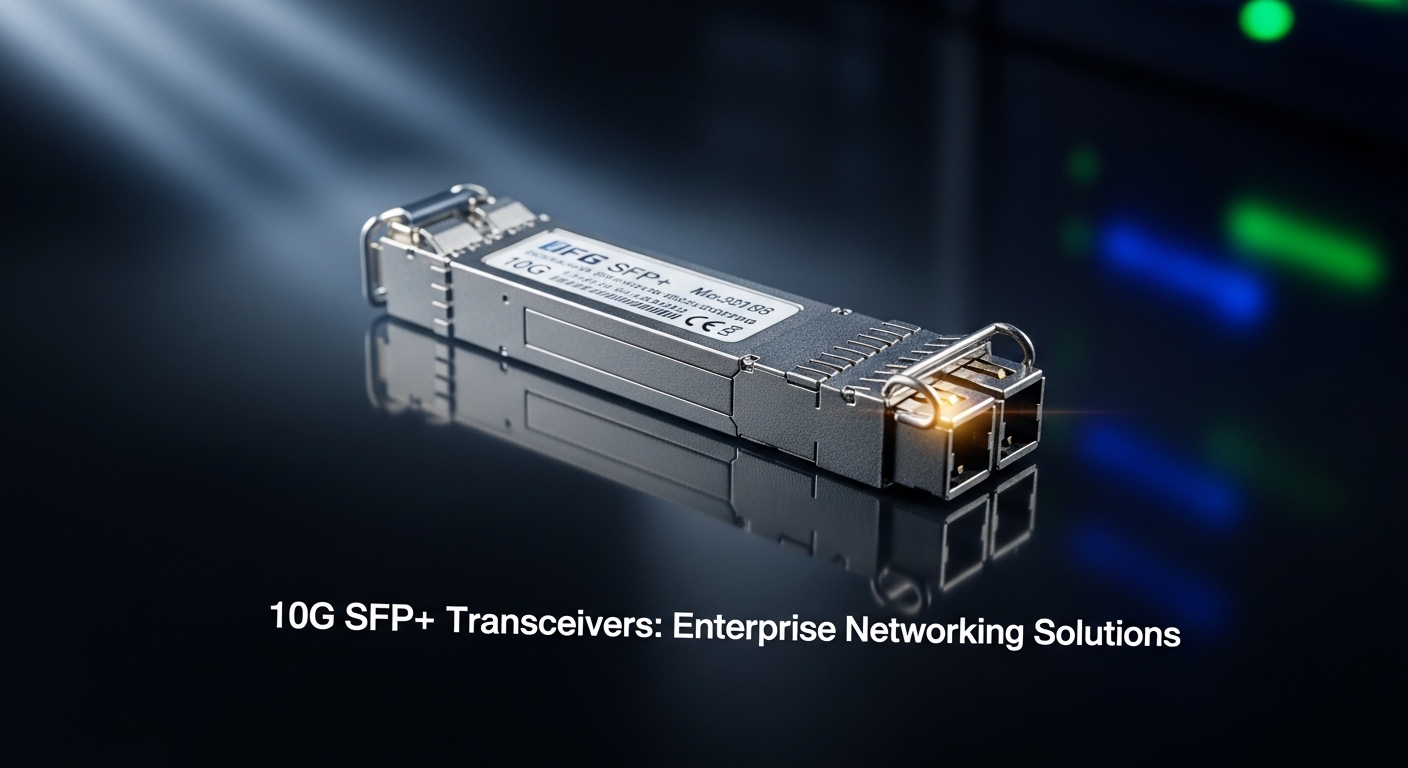
In a ground station, your fiber transceiver is rarely “just a plug-in.” The optical path may span patch panels, long indoor cable runs, and sometimes outdoor-to-indoor transitions that stress temperature swings and vibration. Even when the physical reach is modest, the system-level requirement is often “error-transparent” transport: you need stable optical power, predictable receiver sensitivity, and trustworthy diagnostics for operations and anomaly triage.
For deep space fiber SFP, the most important difference versus short-reach Ethernet is operational observability. Many missions require DOM (Digital Optical Monitoring) for alarms like transmit power drift and bias current anomalies, because it is often the earliest indicator of a degrading component or contamination event. Vendors document these diagnostics differently, but the underlying control loop behavior is consistent with the SFF-8472 ecosystem and related optical monitoring practices. For standards grounding, also see IEEE 802.3 (for electrical/optical module usage at specific PHYs) and vendor SFP datasheets for absolute maximums and timing requirements. anchor-text: IEEE 802.3 standard
Key technical specs you must validate before procurement
Before comparing part numbers, define the link: data rate, fiber type, wavelength, expected optical budget, connector interface, and environmental envelope. Then map those requirements to the transceiver class you will deploy. For ground stations, engineers frequently standardize on small-form pluggables with known wavelength bins and predictable DOM behavior to reduce integration risk and simplify spares.
Below is a practical comparison template you can use when evaluating candidate modules for a mission ground-station fiber segment (for example, baseband transport feeding a demodulator farm). Typical choices include 1310 nm single-mode variants for longer reach and 850 nm multimode only when your plant design and modal dispersion budget allow it.
| Spec | 1310 nm SMF SFP (typical) | 850 nm MMF SFP (typical) | 1550 nm SMF SFP (typical) |
|---|---|---|---|
| Nominal wavelength | 1310 nm | 850 nm | 1550 nm |
| Reach class (example) | 10 km (common) | 300 m (common) | 40 km+ (common) |
| Fiber type | Single-mode (SMF) | Multimode (MMF) | Single-mode (SMF) |
| Connector options | LC (most common) | LC or MPO variants (rare for SFP) | LC (most common) |
| DOM support | Usually SFF-8472 compliant | Usually SFF-8472 compliant | Often SFF-8472 compliant |
| Operating temperature | -5 C to +70 C (typical) | 0 C to +70 C (typical) | -10 C to +80 C (sometimes) |
| Power budget sensitivity | Receiver sensitivity critical | Modal bandwidth/OM3 grade critical | Nonlinear and dispersion considerations |
When selecting specific products, use vendor datasheets for absolute values rather than marketing reach. For example, Cisco and third-party vendors publish receiver sensitivity, transmit power, and DOM thresholds per part number. As concrete examples, models such as Cisco SFP-10G-SR (850 nm multimode) and long-reach small pluggables like Finisar/FS.com 10G variants for 1310 nm or 1550 nm are typical catalog references; however, you must still validate compatibility with your exact PHY and switch/optical transponder interface. anchor-text: Cisco support and datasheets portal
Deployment scenario: ground-station fiber for baseband transport
Consider a 3-tier ground-station topology used for near-real-time demodulation. In one commissioning run, a team connected 48-port 10G Ethernet line cards at the baseband ingest layer to a leaf aggregation switch, then to a core router that feeds the mission processing cluster. The fiber segment between the ingest and aggregation racks was engineered for 1310 nm SMF with an estimated plant loss of 3.5 dB plus connector losses of ~0.5 dB per mated pair. They targeted a transceiver budget with at least 3 dB margin to account for aging and cleaning variability during maintenance windows.
In that environment, the deep space fiber SFP requirement was not simply “it links.” Operators needed DOM alarms integrated into the station monitoring system so that transmit power and bias current could be trended. During a scheduled maintenance cycle, the team detected a gradual transmit power decline on a single path, traced it to a contaminated LC connector, and restored power after cleaning and re-termination. The key outcome was reduced mean time to repair because the anomaly surfaced through diagnostics rather than after a link flap.
Selection criteria checklist engineers actually use
The ordering below reflects how teams reduce risk during procurement and acceptance testing.
- Distance and link budget: verify wavelength, fiber type, expected loss (cable + connectors + splices), and confirm receiver sensitivity against worst-case loss. Include aging margin and cleaning variability.
- Data rate and PHY compatibility: ensure the module electrical interface matches the switch or transponder PHY requirements (10GBASE-SR/LR/ER style constraints under IEEE 802.3 where applicable). Confirm whether your platform requires specific class behavior for SFP initialization.
- Wavelength bin and dispersion tolerance: for SMF, 1310 nm vs 1550 nm impacts dispersion and plant losses. If you use any long-reach configuration, validate dispersion and any optical amplifier or filter behavior in the path.
- DOM and telemetry mapping: confirm SFF-8472-style DOM availability and whether your monitoring stack can read thresholds for high/low laser bias, transmit power, and receiver power.
- Connector and cleaning strategy: match LC/SC/MPO requirements and confirm your station’s cleaning tooling and connector inspection process can maintain the required cleanliness level.
- Operating temperature and reliability envelope: select temperature grade aligned to rack cooling behavior and any outdoor-to-indoor transitions. Validate cold-start behavior if the station experiences winter standby.
- Vendor lock-in and spares strategy: decide whether you will standardize on OEM modules or allow third-party optics. Track performance drift across lots and keep an acceptance test procedure for each batch.
Pro Tip: In ground-station practice, the fastest way to prevent “mystery link flaps” is to trend DOM receiver power and laser bias current in your monitoring system and set alarms on slope, not just absolute thresholds. Many degradations start as a slow drift that remains within factory min/max until the day you least want it to change.
Common pitfalls and troubleshooting patterns
Even experienced teams get derailed by predictable failure modes. The list below captures root causes that show up during fiber acceptance and later during operational anomalies.
Pitfall 1: Connector contamination that looks like a power budget issue
Root cause: LC end-face contamination increases insertion loss and may cause intermittent receiver overload or marginal receiver sensitivity behavior. Because the visible symptoms are “link up but errors increase,” teams may misattribute it to transceiver mismatch. Solution: inspect with a fiber microscope, clean with the correct cleaning method, and re-test optical power with an optical power meter for both TX and RX direction. Verify that your test uses the same fiber patch cords and that you account for test connector loss.
Pitfall 2: SFP not fully compatible with the switch or optical transponder PHY
Root cause: Some platforms require specific electrical characteristics (TX disable behavior, timing for module presence detect, or compliance with vendor expectations around signal detect). A transceiver may “work” but only in a narrow mode, or it may fail during link renegotiation. Solution: validate with the exact platform and firmware revision. If using third-party optics, run a burn-in and verify link stability under temperature cycling and repeated interface resets.
Pitfall 3: Temperature and bias drift causing intermittent receiver sensitivity
Root cause: Rack airflow differences and nearby heat sources can raise module temperature beyond what your assumption model used. Laser bias current then drifts, changing optical output and receiver margins. Solution: measure actual module temperature (or use DOM temperature if available), then correlate with error counters and link events. If needed, adjust airflow, add baffles, or relocate modules to equalize thermal gradients.
Pitfall 4: Wrong wavelength expectation in a mixed plant
Root cause: In legacy ground-station wiring, patch panels may contain both 850 nm and 1310 nm fibers. A transceiver installed in the wrong wavelength segment can show “no light” or very weak signals that appear as a receiver fault. Solution: label fiber runs with wavelength, verify with a wavelength meter or optical test set, and enforce a change-control checklist that includes wavelength verification before swapping optics.
Cost, ROI, and spares planning for mission-critical optics
Pricing varies by wavelength, data rate, and whether the module is OEM-branded. In many markets, common 10G short-reach SFPs (850 nm) may be in the range of $50 to $200 per module, while 1310 nm long-reach and 1550 nm variants can be higher, often $150 to $600 depending on vendor and temperature grade. Third-party optics may reduce unit cost, but the ROI depends on acceptance test time, compatibility risk, and the probability that a batch exhibits higher drift.
For total cost of ownership, include failure handling and operational downtime. If your ground station requires manual swap and verification, a single problematic module can cost more in technician hours than the savings from buying cheaper optics. A pragmatic approach is to keep a small spares pool for each validated transceiver type, test each spares lot under your station’s temperature profile, and track DOM drift over months. Vendor datasheets and monitoring logs become your evidence base when you decide whether to expand third-party procurement.
Operational acceptance testing and monitoring workflow
To make deep space fiber SFP deployment reliable, treat acceptance like a mini commissioning. Start with electrical link verification at the PHY layer, then validate optical parameters with calibrated instruments. Finally, integrate DOM alarms into your station monitoring so that operators see early warning signals.
Step-by-step acceptance checklist
- Confirm module ordering details: wavelength, reach class, connector type, DOM support, and temperature grade.
- Verify interface compatibility using your exact switch or transponder model and firmware version.
- Measure optical TX power and RX receive power using an optical power meter or test set with the correct wavelength setting.
- Inspect connectors before mating; document microscope images and cleaning steps if your process requires it.
- Enable DOM collection and verify that your monitoring system reads temperature, bias current, transmit power, and receiver power.
- Run link stability tests: repeated interface resets, sustained traffic, and temperature cycling if your environment supports it.
FAQ
What exactly counts as a deep space fiber SFP?
It is not a different physical form factor; it is a transceiver chosen and operated for deep space ground-station requirements. That means strict validation of wavelength, DOM telemetry, temperature behavior, and link budget margins for your mission fiber plant.
Can I use third-party deep space fiber SFP modules?
Often yes, but only after compatibility testing with your specific switch or transponder and firmware revision. You should also validate DOM behavior and establish a batch acceptance test so you understand drift patterns over time.
Do I need DOM for ground-station optics?
In most mission-grade operations, DOM is strongly preferred because it enables early detection of bias and power drift. If DOM is not available or not readable by your monitoring stack, you will rely on downstream error counters, which can delay detection.
Which wavelength should I choose: 1310 nm or 1550 nm?
Choose based on your plant loss profile, reach requirement, and any dispersion or filtering constraints. For many ground-station indoor-to-indoor segments, 1310 nm SMF is a common balance of availability and performance, while 1550 nm is often reserved for longer-reach SMF segments.
What is the fastest troubleshooting path for a “link up but errors” incident?
Start with connector inspection and cleaning, then verify optical power levels at both ends. After physical causes are ruled out, check DOM trends for drift, validate PHY compatibility, and compare error counters before and after link resets.
How should I plan spares for critical links?
Maintain spares per validated transceiver type, wavelength, and temperature grade. Test spares lots under your operational temperature profile and keep records of DOM behavior so you can quickly determine whether anomalies are transceiver-related or fiber-path-related.
If you want the next step, review your station’s transceiver and fiber plant standards using fiber link budget checklist so you can quantify margins and set acceptance thresholds before hardware arrives.
Author bio: I design and validate high-availability optical transport for mission-critical networks, focusing on acceptance testing, DOM telemetry integration, and failure-mode resilience. I have deployed and troubleshot SFP-based fiber links in production environments where uptime and diagnostic visibility are operational requirements, not preferences.
