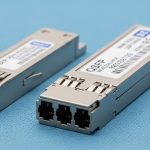
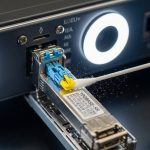
In many enterprise leaf-spine networks, the 800G migration stalls on a single question: DAC or AOC. This article helps network and infrastructure engineers choose the most cost-effective approach for short-reach 800G connectivity, including what to verify in switch optics, power budgets, and field optics behavior. You will get a practical decision checklist, a specs comparison table, and troubleshooting patterns I have seen during deployments.
DAC vs AOC at 800G: the decision comes down to reach, loss, and power
At 800G, engineers typically target either direct attach copper (DAC) for short reaches or active optical cable (AOC) when cabling distances or deployment constraints push beyond copper limits. DAC is usually a twinax assembly with integrated electrical interfaces; AOC is an optical transceiver embedded into a pre-terminated cable with active electronics at both ends. In practice, the “cost-effectiveness” equation is not just purchase price; it is also installation labor, failure rate patterns, and how often you need to re-run fiber.
For many enterprise deployments, the dominant constraint is not theoretical reach but connectorization and airflow. DAC assemblies are compact and often lower in system-level complexity, but they can be sensitive to bend radius and chassis airflow. AOC shifts the burden to optical optics and laser safety class compliance, but it can simplify cable management and reduce cross-talk concerns that show up in high-density copper runs. If your switch vendor supports both, the best choice depends on your exact channel budget, temperature, and how many moves/adds/changes you expect in the first 12 months.
Pro Tip: Before you compare prices, pull the switch vendor optics matrix and verify that the port supports the exact electrical media type. Some platforms will accept “800G DAC” electrically but still apply stricter equalization limits that cause marginal links to fail only under higher chassis temperatures.
Key specs that decide cost-effectiveness: reach, interface type, power, and temperature
For 800G, the most common enterprise optics profiles rely on either copper direct attach or active optical interfaces over fiber. Even when both options are “800G,” the operational envelopes differ. DAC twinax typically targets short reach with strict insertion loss and equalization requirements; AOC targets short-to-mid reach with optical power budgets and receiver sensitivity.
Below is a representative comparison using typical industry behavior for 800G short-reach deployments. Exact values vary by vendor and part number, so treat this table as a selection framework and validate against the specific transceiver datasheet and your switch’s supported optics list.
| Spec | DAC (800G copper twinax) | AOC (800G active optical cable) |
|---|---|---|
| Typical reach class | ~1 to 3 m (short reach) | ~2 to 10 m+ (short reach to modest spans) |
| Media | Electrical twinax assembly | Fiber cable with integrated active optics |
| Connectorization | Usually direct plug into QSFP-DD/OSFP-class port | Pre-terminated fiber ends, plugs into the same port type |
| Power per link (order of magnitude) | Often lower than AOC; depends on vendor | Often higher due to lasers/receivers |
| Operating temperature | Must meet module temperature rating; airflow critical in dense racks | Must meet module temperature rating; optical modules still need thermal headroom |
| Move/Add/Change flexibility | Easy to re-seat; cable length constraints can be tight | More flexible for modest distance changes without fiber re-termination |
| Failure mode profile | Connector wear, bend stress, marginal equalization | Laser/receiver degradation, fiber damage, connector contamination |
| Up-front cost | Often cheaper for very short reach | Often higher per link, but can avoid labor-heavy fiber runs |
In standards terms, the physical layer behavior is governed by the switch’s electrical interface and the optics form factor (for example, QSFP-DD or OSFP class port definitions), while link-level performance is constrained by the channel budget that includes insertion loss, crosstalk, and equalization. For Ethernet at 800G, verify mapping to the relevant IEEE operating modes and the vendor’s implementation details rather than assuming “800G means the same signal.” For authoritative guidance on 800G Ethernet link behavior, consult the IEEE Ethernet updates and your switch vendor’s electrical interface documentation. [Source: IEEE 802.3 Working Group publications] IEEE 802.3 Working Group
How to pick DAC or AOC for 800G: a field-ready decision checklist
Engineers win or lose time by making the decision deterministic. Use this ordered checklist in the lab and then enforce it during spares procurement.
- Distance vs reach class: Measure the actual path length between switch ports including patch leads and slack. If you are near the maximum DAC reach, assume marginal equalization risk.
- Switch compatibility (vendor optics matrix): Confirm the exact part supports the exact port mode on your switch model. Do not rely on “form factor match” alone.
- Budget and BOM impact: Compare not only transceiver price but also the cost of cabling labor, rack management time, and the number of lengths you must stock.
- DOM and monitoring requirements: If your operations team mandates digital optical monitoring (DOM) for alarms and inventory, ensure the module provides it and that your platform reads it correctly.
- Operating temperature and airflow: For dense leaf-spine, validate that your worst-case ambient plus module self-heating stays within datasheet limits. DAC links can fail “only under load” when equalization margins collapse.
- Vendor lock-in risk: Evaluate third-party and OEM interoperability. If you must standardize on a single vendor for compliance, price that risk into TCO and spares lead times.
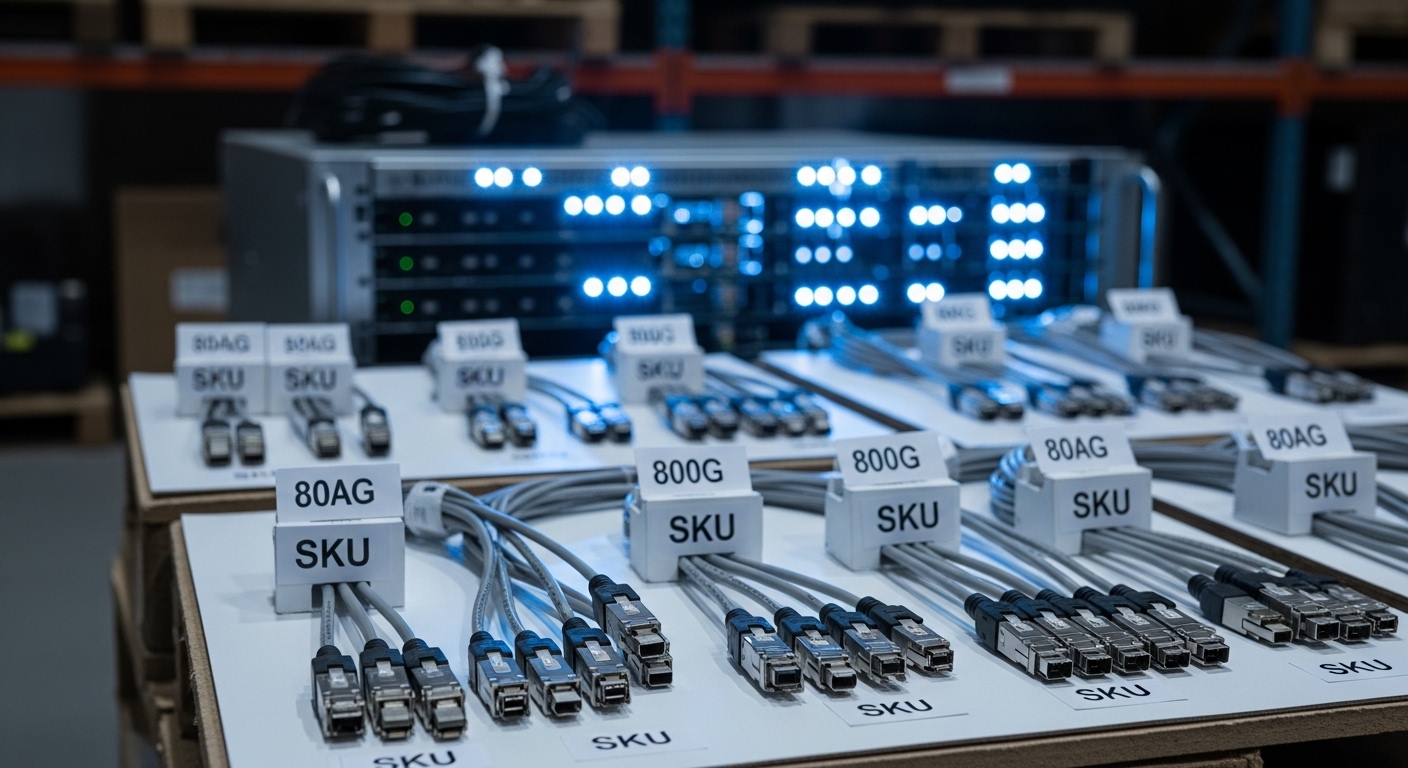
- Spare strategy: Decide whether you will stock multiple lengths and spare types. DAC often needs fewer SKUs when your physical layout is stable; AOC may reduce re-cabling later.
In real deployments, I have seen teams default to DAC for cost until they hit a “mid-run” topology change, at which point AOC becomes cheaper because it avoids re-running fiber or reconfiguring cable trays. Conversely, some teams choose AOC initially to handle modest spans, then discover that their power and thermal constraints in top-of-rack exhaust zones increase nuisance alarms and require airflow retrofits.
Cost & ROI: where DAC typically wins, and where AOC becomes cheaper overall
At procurement time, DAC often looks better because copper assemblies are frequently less expensive than active optical cables. However, the ROI hinges on deployment friction. If you already have fiber infrastructure and want uniform optics, AOC can be a pragmatic middle ground; if you are building out quickly with minimal rework, DAC can reduce installation labor and simplify spares.
Typical price ranges vary widely by OEM, channel length, and whether you buy from the switch vendor or a third-party. As a practical planning baseline, many enterprises see DAC 800G pricing that is often materially lower per link than comparable AOC 800G, especially for very short lengths (around a few meters). But AOC can win in TCO when it prevents labor-intensive fiber re-termination or reduces the number of cable-length SKUs you must carry to cover layout variations.
TCO factors to include in your spreadsheet:
- Installation labor: AOC can reduce fiber patching and re-termination time if your path requires pre-terminated solutions.
- Chassis power: Higher module power for AOC can increase cooling demand; quantify using your site’s PUE and rack-level thermal assumptions.
- Failure and RMA handling: DAC failures often correlate with connector wear and mechanical stress; AOC failures correlate with fiber contamination, laser degradation, or cable damage during moves.
- Spare lead time: If your supply chain constrains OEM optics, a lower failure rate or better availability can dominate.
For concrete part-number examples you may encounter in procurement workflows, many teams compare vendor and third-party options such as Cisco-branded DAC assemblies and third-party 800G optics sourced from vendors like Finisar/II-VI or FS.com. Always validate against your switch optics matrix and datasheet. Example references: Cisco SFP-10G-SR style parts are illustrative for compatibility behavior; for 800G you will be comparing the equivalent 800G copper and active optical assemblies supported by your specific switch. [Source: Cisco product documentation] Cisco Support

Common pitfalls and troubleshooting for 800G DAC vs AOC
Failures at 800G are rarely “mystery.” They usually map to a small set of mechanical, thermal, or compatibility root causes. Below are field-tested patterns, with what to check first.
DAC link flaps only under load
Root cause: Equalization margin collapse due to insertion loss, poor seating, or temperature-induced drift in the channel. Some switch ports apply different coefficients by media type.
Solution: Re-seat both ends, verify correct port mapping, and compare link training counters. Reduce thermal stress by improving airflow; if needed, switch to a shorter DAC length or AOC with a more forgiving optical budget.
AOC alarms after a move or cable management change
Root cause: Fiber micro-damage, connector contamination, or bend radius violations during cable tray adjustments.
Solution: Inspect connectors, clean using the vendor-approved method, and verify bend radius compliance. If you have high churn, standardize cable routing and add strain relief to prevent repeated stress cycles.
“Compatible form factor” but no link comes up
Root cause: Port mode mismatch, unsupported optics profile, or DOM/management differences that the switch does not accept.
Solution: Confirm the exact switch model and software release supports the media type. Use the optics matrix and check for media-type identifiers. If third-party, verify with the vendor that the module is validated for your switch and firmware generation.
Unexpected thermal throttling in dense racks
Root cause: AOC module power plus insufficient exhaust airflow increases local ambient at the port face. DAC can also be impacted by airflow, but symptoms often appear as training instability rather than outright thermal events.
Solution: Measure inlet and exhaust temperatures, then compare to module and switch thermal limits. Improve front-to-back airflow and avoid blocking the port area with cable bundles.
FAQ: DAC vs AOC for 800G enterprise connectivity
When is DAC for 800G the most cost-effective?
DAC is typically most cost-effective when your physical port spacing stays within the DAC reach class and your airflow and routing are stable. If you expect frequent topology changes that would force different cable lengths, DAC can become expensive due to stocking multiple SKUs and potential rework.
When should I choose AOC instead of DAC?
Choose AOC when you need modest additional reach, want pre-terminated fiber for cleaner cable management, or your layout makes copper routing mechanically risky. AOC also helps when you want to avoid re-terminating fiber during incremental expansions.
Do I need DOM support for 800G optics?
If your operations model depends on real-time optics telemetry (temperature, laser bias, receive power), verify DOM support and your switch’s ability to read it. Without DOM, you may lose visibility into early degradation and increase mean time to repair.
Can third-party DAC or AOC reduce costs without breaking compatibility?
It can, but only if the module is validated for your exact switch model and software release. Always rely on the optics matrix, and request compatibility confirmation from the vendor, especially for 800G where equalization and training profiles are sensitive.
What are the fastest troubleshooting steps when a link does not come up?
First confirm the port mode and optics profile in the switch UI/CLI, then reseat the module, then check whether the switch reports media type and DOM presence. If the link trains intermittently, compare temperature and re-check cable routing and bend radius.
How should I plan spares for 800G DAC vs AOC?
For stable layouts, stocking the same DAC length can be efficient. For evolving layouts or fiber-heavy zones, stocking a small set of AOC lengths may reduce future re-cabling and lower downtime during expansions.
If you want the fastest path to a reliable decision, start with your switch optics matrix and your measured port-to-port distances, then apply the checklist above to compare TCO, not just sticker price. Next, review 800G optics compatibility checklist to avoid media-type mismatches and reduce RMA churn.
Author bio: I am a field-focused software and hardware engineer who has deployed 10G through 800G Ethernet fabrics in multi-site enterprise data centers. I specialize in optics compatibility validation, thermal/power budgeting, and operational runbooks for high-speed link troubleshooting.