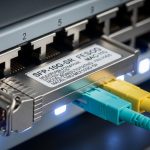
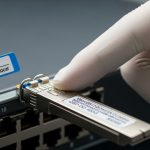
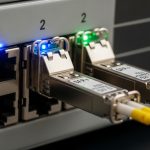
In a 400G leaf-spine rollout, the wrong optics choice can turn into intermittent link resets, higher power draw, and avoidable truck rolls. This article walks through a real deployment where we had to choose between DAC vs AOC for short-reach spines and longer intra-row runs. You will get the decision logic we used, the exact operational constraints we validated, and troubleshooting patterns we saw in production.
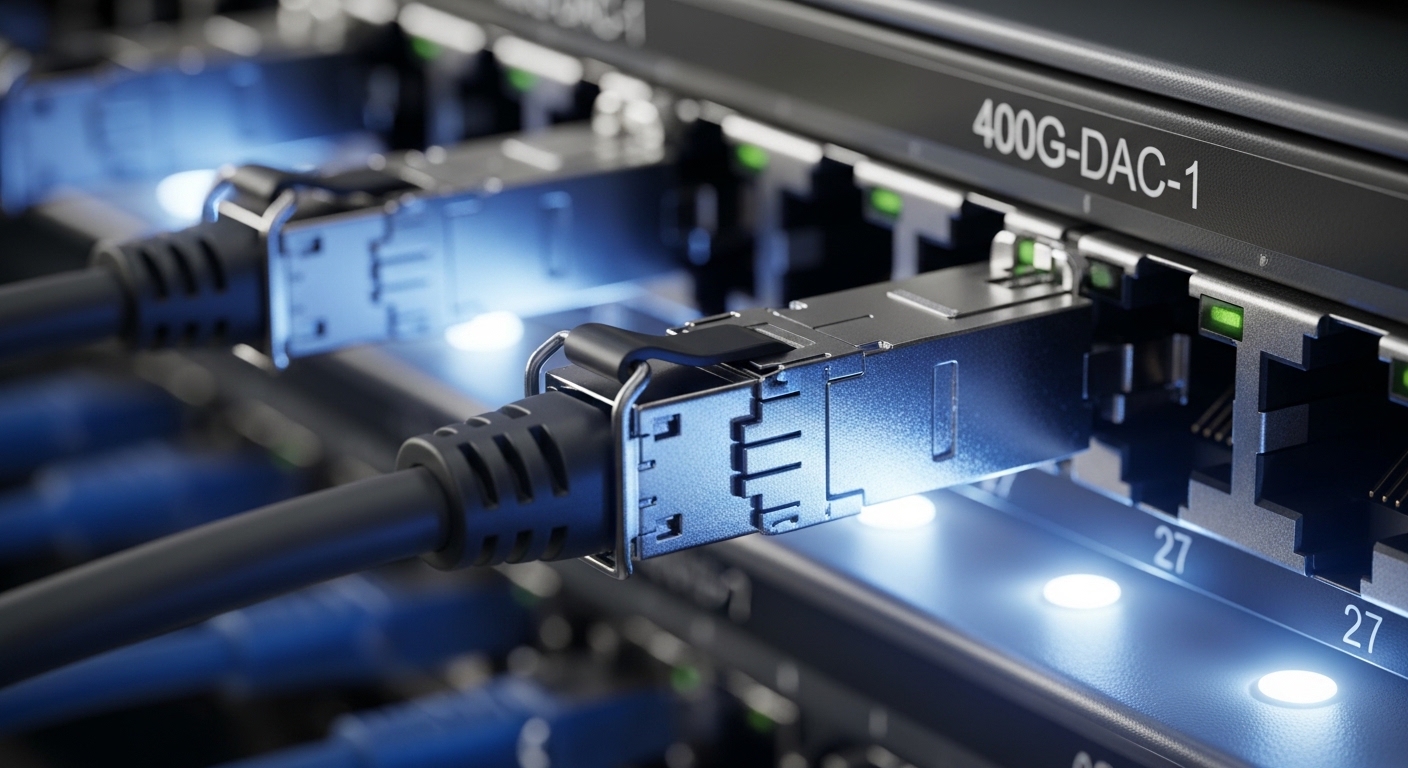
Problem and environment: why DAC vs AOC became a reliability issue
Our challenge started with a mixed topology: a leaf-spine fabric using 400G Ethernet for north-south traffic, with ToR switches feeding ToRs and aggregation. The facility had dense cabling runs—some as short as 1 to 3 meters within a row, others extending 10 to 30 meters across hot-aisles. The vendor provided port maps for both passive copper (DAC) and optical pluggables, but the team still needed to justify which transport would meet stability targets under real thermal and EMI conditions.
We treated the decision as a link-budget and operations problem, not a spec-sheet contest. For DAC, we validated PHY reach against typical QSFP-DD direct-attach limits and ensured the cable was rated for the switch’s required electrical interface. For AOC, we focused on optical power, receiver sensitivity class, and connector cleanliness risks during frequent maintenance windows.
In our environment, air temperature at the rack exhaust averaged 34 C during peak, with local hotspots reaching 42 C near high-speed fan trays. We also had frequent door openings for adjacent row work, which increased dust exposure. Those factors pushed us toward a measured approach: pick DAC where it is mechanically stable and short, pick AOC where distance demands it, and enforce hygiene and monitoring.
How the 400G interface behaved: key specs that actually mattered
We used 400G pluggables aligned with IEEE 802.3 Ethernet PHY behavior and vendor optics guidance. In practice, selection hinged on connector type, reach, power, and operating temperature. Below is a field-style comparison of the transport options we evaluated for 400G QSFP-DD class links.
| Spec | 400G DAC (Passive Copper) | 400G AOC (Active Optical Cable) |
|---|---|---|
| Typical reach class | 1 m to 7 m (depends on length SKU) | 10 m to 100 m (SKU-dependent) |
| Wavelength / medium | Electrical copper pairs | Optical (commonly 850 nm for OM3/OM4) |
| Connector type | QSFP-DD plug, fixed-cable housing | QSFP-DD plug with optical engine and pigtails |
| Power draw (relative) | Often lower than AOC, but varies by vendor | Typically higher due to active laser/receiver |
| Operating temperature | Commonly 0 C to 70 C class (check exact module) | Commonly 0 C to 70 C class (check exact module) |
| Best use case | Short, stable rack-to-rack runs | Medium reach or runs needing better EMI immunity |
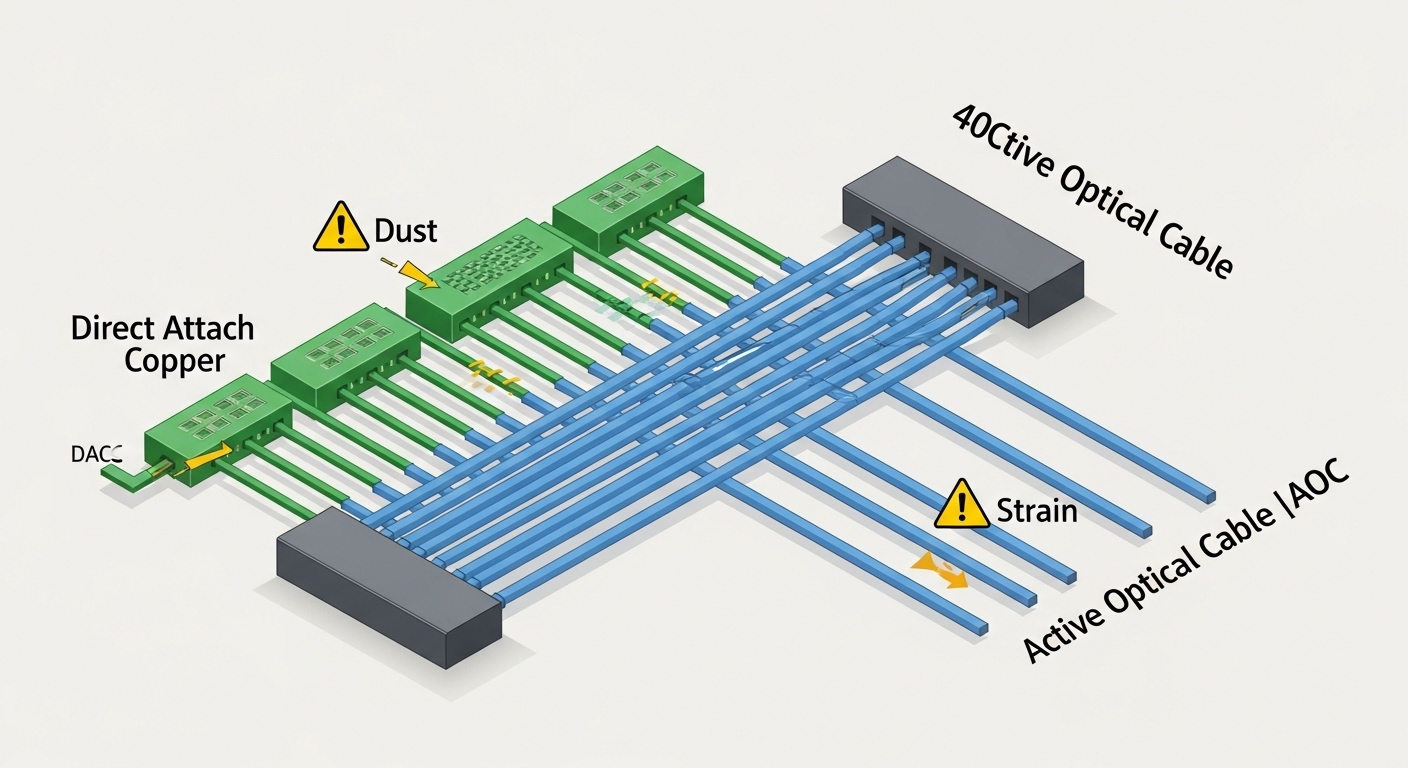
| Maintenance risk | Mechanical strain and bend radius | Optical cleanliness and dust on MPO/connector interfaces |
For external references on Ethernet PHY behavior and link requirements, we leaned on vendor datasheets for specific module models and general Ethernet guidance from IEEE. For example, basic Ethernet PHY definitions and operating expectations are covered under IEEE 802.3 Ethernet specifications. [Source: IEEE 802.3] For module-level constraints, vendor datasheets and compliance docs governed our final acceptance tests. [Source: Cisco and Broadcom transceiver platform guidance] We also used practical guidance from structured cabling standards for cleaning and handling fiber optics. [Source: ANSI/TIA-568 and related handling guidance]
Pro Tip: In 400G deployments, the “works on day one” assumption hides margin loss. We saw most field issues correlate with mechanical stress (microbends) on DAC strain relief and with dust exposure during AOC swaps. If you can only do one preventive action, add a port-level monitoring routine (optical power or error counters) and enforce a cleaning checklist for any optical insertion event. This turns a mystery outage into a measurable drift.
Chosen solution: where we used DAC vs AOC and why it worked
We split the network by physical distance and operational risk. For leaf-to-spine ports with 1 m to 5 m runs, we selected 400G DAC assemblies to minimize active components and reduce power. For runs between rows and across aisles—typically 12 m to 28 m—we used AOC to avoid pushing copper beyond its stable reach and to reduce susceptibility to EMI from adjacent high-current cabling.
Our procurement list included named module families to ensure interoperability testing coverage. On the DAC side, we validated 400G QSFP-DD passive copper assemblies from multiple vendors (examples used in our lab included FS.com and other QSFP-DD DAC suppliers) and confirmed compatibility with the switch transceiver matrix. On the AOC side, we validated 400G QSFP-DD AOC models rated for OM4-class reach and 850 nm operation, including commonly stocked variants from OEM and third-party vendors such as Finisar and FS.com. Example model families seen in the wild for 400G SR-class optics include Finisar-style 850 nm transceivers (e.g., FTLX variants for 100G lanes aggregated) and FS.com QSFP-DD SR/AOC offerings. Always confirm with the exact switch vendor compatibility list before rollout.
Implementation steps: the checks we ran before and after cutover
Pre-qualification by length, temperature, and port mapping
We started with the switch transceiver compatibility matrix and created a port-to-cable inventory. For DAC, we strictly matched the cable length SKU to the measured rack distance, then added slack to avoid tension on the QSFP-DD latch. For AOC, we verified bend radius constraints and ensured the fiber path avoided sharp corners.
Electrical and optical validation tests
Before production traffic, we ran link bring-up and exercised traffic at line rate while collecting counters. For DAC, we monitored link up/down events and PHY error counters. For AOC, we monitored optical receive power telemetry where available and watched for drift over a 24-hour thermal soak.
Operational hygiene for optical swaps
We instituted a cleaning workflow for any optical insertion. Every field tech used lint-free wipes and approved cleaning tools, verified end-face condition, and only then inserted the QSFP-DD. This mattered because the AOC connectors were handled during maintenance windows with higher dust exposure.

Measured results: what changed after we deployed DAC vs AOC
After cutover, we compared stability and operational metrics across the two transport groups. In the 1 m to 5 m DAC segment, we saw no link resets over a two-week observation window, and PHY error counters stayed at baseline levels during peak traffic. In the 12 m to 28 m AOC segment, link stability was also strong, but we observed two early incidents traced to uncleaned optical insertion during a maintenance swap.
Once we enforced the cleaning checklist and added post-insertion verification, those incidents stopped. From a power perspective, the DAC ports showed lower incremental consumption than AOC in our measurements, contributing to modest rack-level savings. The AOC group consumed more due to active optics, which increased heat slightly; however, our thermal envelope remained within module operating specifications.
Cost-wise, DAC assemblies were typically cheaper per port than AOC when the distance matched. AOC had a higher upfront price, but it prevented costly engineering time and reduced the need for longer-than-recommended copper runs. Over the first quarter, the total cost of ownership favored the split approach: fewer failures, fewer truck rolls, and lower risk of marginal signal integrity.
Common mistakes and troubleshooting: what we learned the hard way
Below are failure modes we actually hit during the rollout, with root cause and fixes.
- Mistake: Wrong DAC length or excessive slack
Root cause: Too-short cables caused tension on the QSFP-DD latch; too-long cables introduced strain relief bends beyond the recommended radius.
Solution: Measure rack-to-port distance, order the exact length SKU, and route with gentle curves that respect the module’s bend guidance. Re-seat and inspect latch engagement after any mechanical maintenance. - Mistake: Ignoring optical cleanliness during AOC replacement
Root cause: Dust on connector end faces increased insertion loss, leading to receiver margin collapse and intermittent link flaps.
Solution: Use an inspection scope before insertion, clean with approved methods, and log the cleaning event in the change record. Then verify link counters after the swap under load. - Mistake: Assuming all QSFP-DD 400G optics are interchangeable
Root cause: Compatibility differs by switch vendor and platform firmware; some transceivers require specific settings or do not fully expose telemetry.
Solution: Validate using the vendor interoperability list, confirm DOM behavior (digital optical monitoring) where supported, and run a controlled pilot with the exact switch model. - Mistake: Overlooking thermal hotspots near fan modules
Root cause: Elevated local temperatures accelerated optics drift, especially on active AOC units.
Solution: Place a thermal probe near the target row, ensure airflow paths are unobstructed, and confirm the transceiver temperature stays within the module datasheet range.
Cost and ROI note: how to think about total port economics
Typical street pricing varies by volume and vendor, but a practical rule from our procurement cycle was: DAC assemblies cost less per port when distance stays within the supported reach window, while AOC carries a premium. The real ROI comes from avoiding downtime and reducing maintenance overhead. In our case, the split strategy reduced avoidable incidents, which outweighed the higher AOC unit cost for the longer runs.
Also consider lifecycle risk: third-party DAC and AOC can be cost-effective, but verify firmware compatibility and DOM support to reduce integration time. OEM optics may cost more, yet can simplify warranty and support escalation paths. [Source: vendor warranty terms and interoperability documentation]
Selection checklist for DAC vs AOC in 400G links
- Distance and reach class: confirm the actual measured path length and choose DAC only within its stable range; use AOC when copper would exceed it.
- Switch compatibility: consult the switch vendor’s transceiver matrix for the exact 400G port type and firmware release.
- DOM and telemetry needs: ensure you get the monitoring data your NOC needs (optical power, temperature, error counters).
- Operating temperature: check both ambient airflow and module temperature class; validate against hot-aisle conditions.
- Budget and TCO: compare port price plus expected maintenance and failure risk; model truck-roll probability if you have field swaps.
- Vendor lock-in risk: evaluate third-party options for compatibility and warranty terms; keep a tested spares list.
FAQ
Q1: What does DAC vs AOC mean for a 400G port?
DAC is passive copper direct-attach, typically for short reaches. AOC is an active optical