If you run a service provider network, coherent optics can look deceptively simple until commissioning day—link budget, firmware, temperature margins, and connector cleanliness all matter. This article helps network and field engineers plan, validate, and troubleshoot coherent CFP2 deployments for real traffic carrying fiber runs. You will get a practical selection checklist, a specs comparison table for common CFP2 coherent optics, and concrete failure modes seen during rollouts. Safety note: always follow manufacturer handling guidance to avoid ESD damage and eye hazards from laser radiation.
Where coherent CFP2 fits in a service provider transport plan
In service provider transport, coherent CFP2 modules are typically used to support higher spectral efficiency and longer reach than legacy fixed-modulation pluggables. Coherent receivers and transmitters perform digital signal processing (DSP) for chromatic dispersion compensation and polarization handling, enabling higher-order modulation formats over standard single-mode fiber. For deployment, the coherent CFP2 form factor integrates the optical engine, electronics, and digital control interface, but it still depends on the host line system for wavelength plan, FEC mode, and alarm handling. For standards context, transport and optical performance expectations align with Ethernet and optical transport practices documented in [Source: IEEE 802.3] and vendor coherent optics guidance.
From a hands-on commissioning perspective, coherent CFP2 deployments succeed when the network team treats them like a system: module optics, host DSP/FEC, fiber plant, and operational procedures. In day-two operations, the module must also match your management model (often via vendor-specific optics pages, alarms, and DOM telemetry). If you are standardizing across sites, you need a repeatable acceptance test that includes optical power levels, error-rate baselining, and environmental stress validation.
Key coherent CFP2 specifications engineers must verify
Before you purchase, capture the exact optical and electrical requirements from the host equipment and the planned fiber plant. Coherent CFP2 modules are not interchangeable by wavelength alone; they must match the host’s coherent optics front-end and the expected interface behavior. The most common spec mismatches involve wavelength grid compatibility, supported data rates and line coding, and whether the module supports the same FEC/DSP configuration the line system expects.
| Specification | Typical coherent CFP2 values to confirm | Why it matters in deployment |
|---|---|---|
| Optical center wavelength | Common ITU-T grid options (exact nm depends on model) | Ensures compatibility with your wavelength plan and tunable/locked oscillator behavior |
| Reach | Often designed for tens of km to 80 km class ranges | Determines link budget headroom for loss, dispersion, and OSNR margins |
| Data rate / line rate | Vendor-specific coherent line rates (e.g., 100G class or higher) | Must match the host card configuration and traffic mapping |
| Connector / optical interface | Usually LC-style fiber interface for coherent optics | Impacts patch panel compatibility and cleaning workflow |
| Optical transmit power | Model-dependent absolute power and per-channel output | Used to compute OSNR and receiver safety margins |
| Receiver sensitivity / OSNR target | Vendor-provided sensitivity or OSNR requirements | Critical for meeting BER after FEC |
| Operating temperature | Commercial or extended ranges (confirm exact module rating) | Temperature affects laser stability, DSP performance, and alarm thresholds |
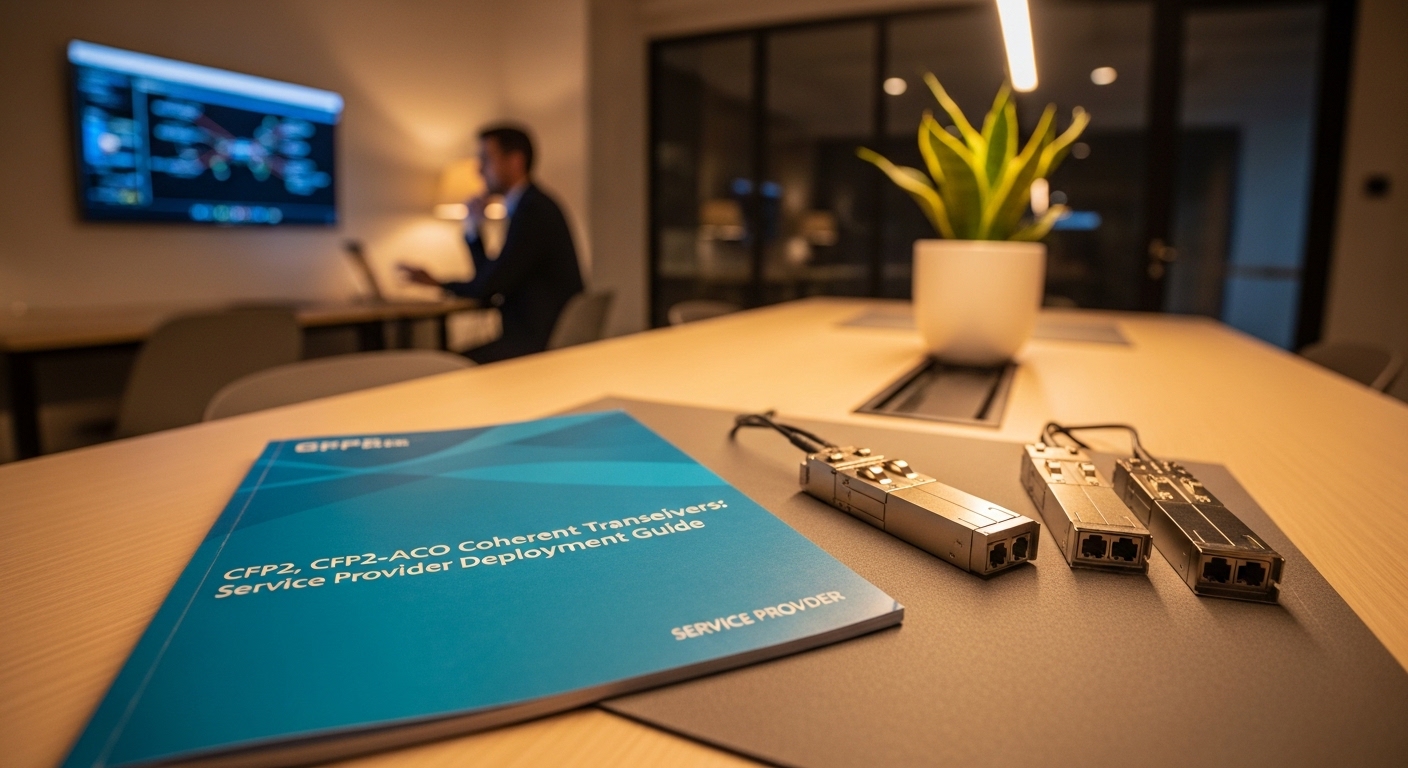
For concrete model references, many service providers trial coherent CFP2 optics such as CFP2-ACO families from major optical vendors, then lock the platform to a specific firmware baseline. Always cross-check the exact model number and revision against the host equipment compatibility list. When you see field issues, it is commonly because the module firmware expects a different DSP configuration or alarm mapping than the host software release.
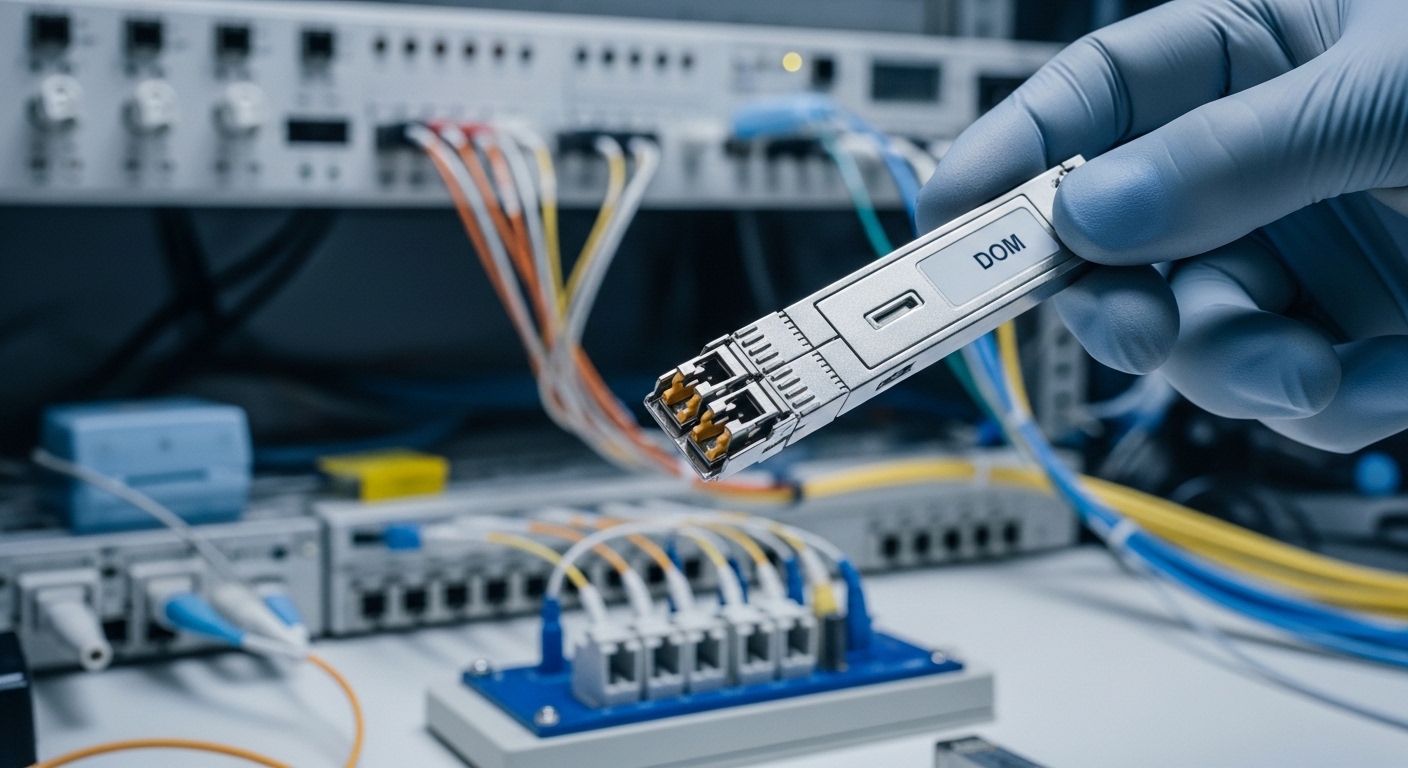
Deployment workflow for CFP2-ACO coherent transceivers
A safe deployment workflow reduces commissioning time and avoids silent performance degradation. Start with inventory and compatibility: verify the host line card supports coherent CFP2 optics with the correct interface revision and that your host software release is certified for that optics family. Then validate fiber plant readiness: inspect and clean LC endfaces, confirm link loss with OTDR or calibrated loss testing, and capture dispersion characteristics if your distances approach the module’s certified reach.
Commissioning steps that work in the field
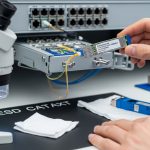
- Pre-stage the optics: record module serial numbers and DOM baseline values (if supported) before insertion, and ensure ESD-safe handling. Keep optics in their antistatic packaging until the moment of insertion.
- Verify host configuration: set the wavelength channel, line rate, and FEC mode exactly as required by the host. Confirm the host’s optics control firmware matches your planned module revision.
- Perform link bring-up: after insertion, monitor alarms and optical power readings, then run the first traffic test while capturing BER/FER counters. Establish an error-rate baseline at low utilization and at your expected peak load.
- Validate OSNR margin: if your platform provides OSNR or Q-factor telemetry, trend it over time. If not, use vendor-provided test procedures and vendor-approved test equipment for margin assessment.
- Environmental verification: for sites with thermal swings, confirm stable operation across your expected temperature range, not just at room conditions.
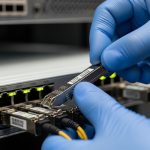
Pro Tip: In coherent CFP2 rollouts, the fastest hidden variable is not the module—it is the fiber endface condition. Even when average link loss looks fine, microscopic contamination can create intermittent receiver impairment that only shows up under certain modulation states; a standardized cleaning and inspection routine often reduces “mystery BER spikes” more than swapping optics.
Selection criteria and decision checklist for coherent CFP2
Engineers usually choose coherent CFP2 optics by matching technical requirements to operational realities. Use the checklist below to keep procurement, engineering, and field teams aligned from the start.
- Distance and link budget: confirm certified reach and compute margin for connector loss, patch cords, and any splitter or aging effects.
- Wavelength plan: ensure grid alignment and channel mapping compatibility with the host and the CFP2-ACO model’s center wavelength.
- Switch or line system compatibility: verify the exact host card and software release support for that coherent CFP2 family and revision.
- DOM and telemetry support: confirm what alarms and measurements are exposed (power, temperature, bias) and whether your NMS can ingest them.
- Operating temperature and thermal design: check the module’s operating range and ensure airflow design meets it at the highest expected ambient.
- FEC and DSP mode alignment: confirm both ends support the same coding and coherent DSP settings required by the host.
- Vendor lock-in risk: consider whether third-party optics are firmware-compatible with your host and whether you can standardize spares without repeated integration work.
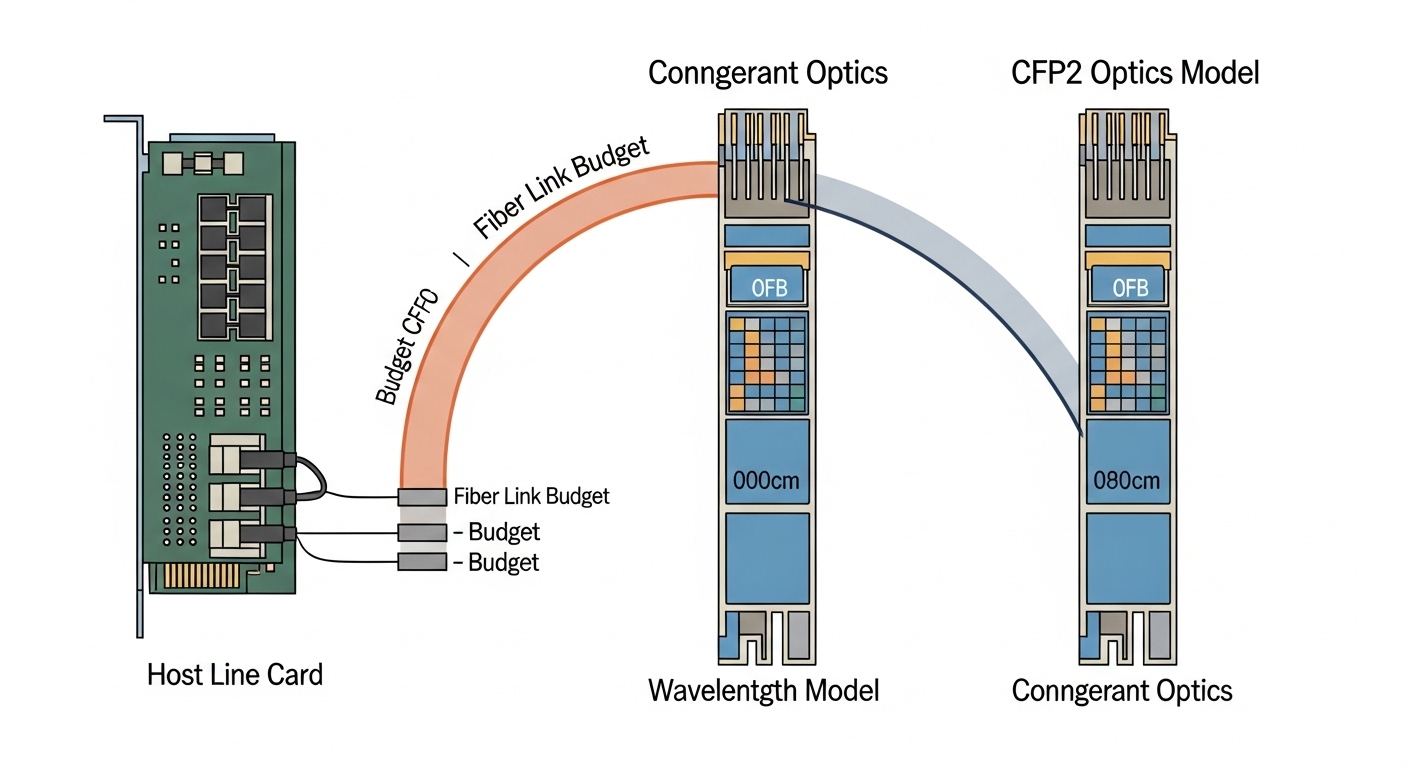
Common pitfalls and troubleshooting tips during CFP2 coherent rollouts
Even with good planning, coherent optics introduce failure modes that differ from simpler transceivers. Below are common mistakes observed in service provider environments, including root causes and practical solutions.
- Pitfall 1: Intermittent high BER or traffic flaps after maintenance
Root cause: fiber connector contamination or micro-scratches on LC endfaces introduced during patching.
Solution: re-clean with validated inspection, replace patch cords if scratches are visible, then re-run baseline BER/FER tests under normal load. - Pitfall 2: Works at first, then degrades with temperature
Root cause: marginal thermal environment or airflow obstruction causing laser bias drift and DSP performance reduction.
Solution: verify cabinet airflow, check module temperature telemetry trends, and confirm site ambient stays within the module operating specification. - Pitfall 3: “No link” or persistent optical alarms after insertion
Root cause: host software mismatch or incompatible FEC/DSP configuration relative to the coherent CFP2-ACO model.
Solution: confirm host card firmware version, align wavelength channel and FEC mode, and follow vendor compatibility guidance for that exact module revision. - Pitfall 4: Link budget appears within spec but OSNR is insufficient
Root cause: unmodeled impairments such as patch cord aging, additional splices, or higher-than-expected polarization effects.
Solution: re-measure with calibrated test equipment (including end-to-end loss and optics margin where available), then reduce impairment sources by replacing suspect fiber segments or cords.
Cost, ROI, and total cost of ownership considerations
Coherent CFP2 modules typically carry higher upfront cost than simpler pluggables, but they can reduce network costs by enabling higher capacity and better reach efficiency per span. In practice, OEM coherent optics often price higher than third-party alternatives, yet OEM bundles may simplify firmware compatibility and reduce integration time. For realistic planning, treat procurement price as only part of TCO: include spares strategy, commissioning labor, downtime risk, and expected failure or return rates.
As a budgeting reference, coherent CFP2 optics in the service provider segment often fall into broad ranges depending on reach and vendor; field teams commonly see substantial price differences between OEM and third-party modules. ROI improves when you standardize module families to minimize integration rework across sites, and when you invest in proper connector cleaning and inspection tooling that prevents costly re-troubleshooting. For authoritative guidance on optical safety and handling, follow vendor datasheets and general laser safety principles; also review [Source: IEEE 802.3] where applicable for Ethernet-related performance expectations.
FAQ: coherent CFP2 buyers and field engineers ask
What host details must I confirm before buying coherent CFP2?
Confirm the exact line card or coherent optics host model, the supported coherent DSP/FEC modes, and the certified module compatibility list. Also verify the software release on both ends because alarm and control behavior can change across versions.
Can I mix coherent CFP2 modules from different vendors in the same link?
Sometimes, but it is not guaranteed. Even if data rate and wavelength seem compatible, DSP and FEC expectations must match; mixing vendors can create integration risk and complicate troubleshooting.
How do I validate link performance beyond “it comes up”?
Use BER/FER counters to establish a baseline at low and normal load, then trend those metrics over time. If your platform exposes OSNR or Q-factor, collect margin data; otherwise follow vendor-approved test procedures and calibrated loss measurements.
What is the most common real-world cause of coherent CFP2 link instability?
Connector cleanliness issues are a frequent culprit, especially after patching or rework. A disciplined cleaning plus endface inspection workflow often resolves intermittent impairment better than swapping optics repeatedly.
What temperature range should I plan for in outdoor or hot-aisle sites?
Use the module’s rated operating temperature and then compare it to cabinet airflow and site ambient conditions. Commissioning should include a thermal stress or at least a confidence check that telemetry remains stable across your expected extremes.
Are CFP2-ACO coherent transceivers supported by standard NMS tooling?
DOM telemetry support varies by host and vendor. Confirm which alarms and measurements are exposed and whether your NMS can map them reliably to your operational dashboards.
If you want to reduce commissioning risk, start by matching coherent CFP2 optics to your host firmware, wavelength plan, and measured fiber plant conditions, then enforce a repeatable acceptance test. Next, review coherent optics link budget checklist to standardize link budget calculations and margin validation across sites.
Author bio: I am a clinician-turned-network systems writer who has supported field rollouts where optics performance and safety procedures directly affected service reliability. I focus on translating vendor specs into operational checklists and troubleshooting plans grounded in peer-reviewed and standards-based references.