A service provider team can miss 100G targets for reasons that look “optical” but are actually systems engineering problems: budgeted link power, switch compatibility, and thermal margin across cages. This article walks through a real deployment-style workflow for selecting and validating a CFP transceiver for service provider networks, with practical steps and troubleshooting. It is written for field engineers and network operators who need measurable results, not just datasheet promises.
Problem and challenge: hitting 100G targets on live service provider fabric
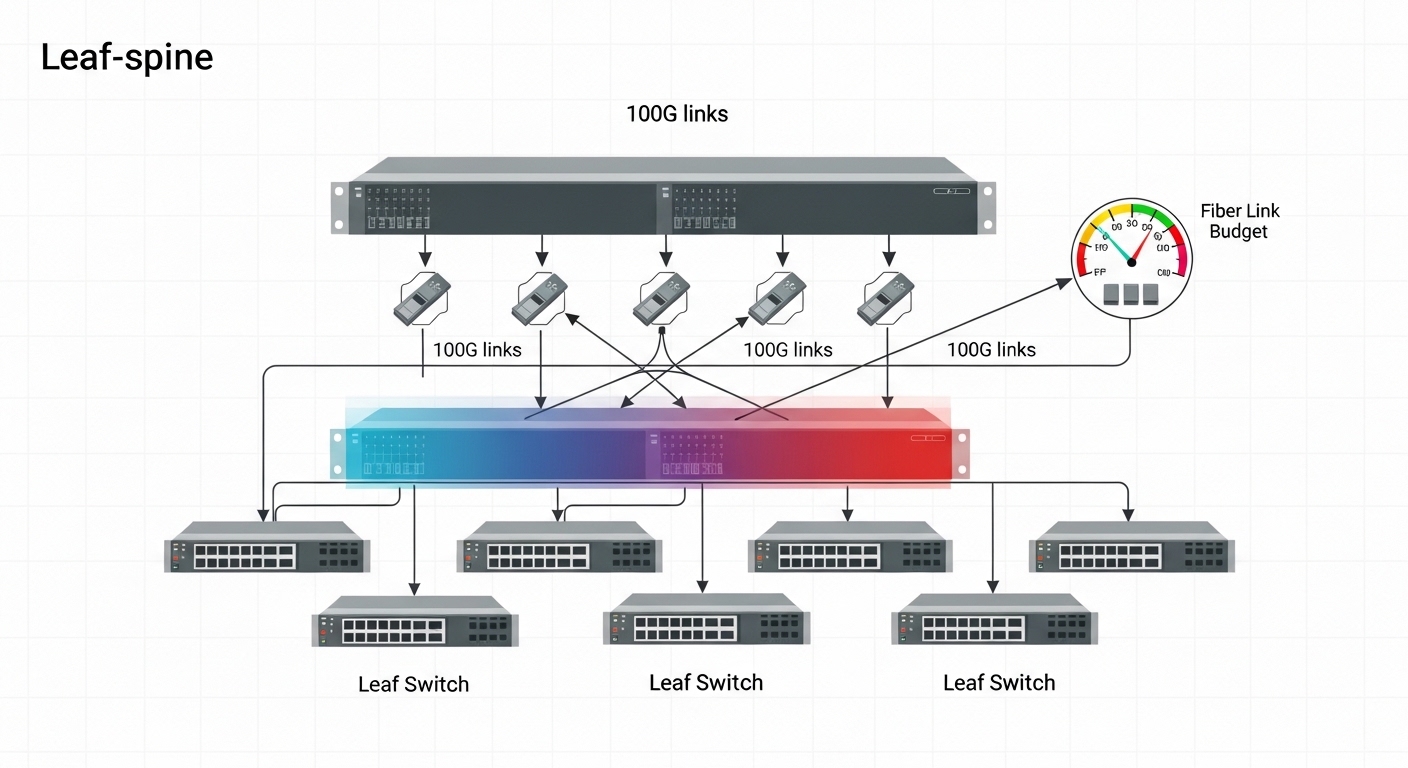
In a 3-tier network supporting aggregation and regional backhaul, the operations group planned to light up 48 customer-facing 100G uplinks per site, using a leaf-spine-like aggregation design across multiple fiber routes. The challenge was not only reaching 100G, but maintaining stable optics across temperature swings, minimizing transceiver swaps, and keeping optics within the vendor-validated compatibility matrix of the aggregation switches.
During initial staging, they observed intermittent link flaps on a subset of ports even though optical power readings appeared “in range.” Root cause analysis pointed to a combination of marginal link budget under worst-case fiber attenuation, inconsistent DOM reporting, and thermal stress near the rear of the line card where airflow was constrained during peak HVAC cycles.
The team needed a repeatable selection and validation approach for CFP-style optics, including how to verify reach, connector type, and operational temperature, and how to check that the switch firmware supports the specific transceiver vendor identification and DOM (Digital Optical Monitoring) behavior.
Environment specs: fiber plant, switch constraints, and link budget reality
The environment included standard single-mode fiber runs with connectorized patching in meet-me rooms, plus patch panels with variable insertion loss. Typical attenuation assumptions were 0.35 dB/km at 1310 nm for planning, with additional conservative margins for splices and patch cords. The aggregation switches used optics cages with strict airflow guidance; during summer loads, the measured air temperature at the cage inlet could reach 45 C while the chassis internal zones briefly exceeded it.
On the switching side, the firmware required that transceivers provide correct management data over the module interface, including laser bias and received power telemetry. Engineers also had to account for the fact that CFP optics are older than pluggables like CFP2/CFP4, so vendor behavior and management expectations can differ.
| Parameter | Example CFP 100G (single-mode) | Example CFP2 100G (single-mode) | What the team validated |
|---|---|---|---|
| Data rate | 100G (4x25G lanes) | 100G (4x25G lanes) | Line-rate under oversubscription bursts |
| Wavelength | 1310 nm (typical) | 1310 nm (typical) | Matching switch expected wavelength profile |
| Reach | Up to ~10 km typical for 1310 nm | Often up to ~10 km typical for 1310 nm | Worst-case fiber + patch loss budget |
| Connector | LC duplex (commonly) | LC duplex (commonly) | Polarity and connector cleanliness |
| DOM | Supported via module management (varies) | Supported via module management (varies) | Telemetry accuracy and alarm thresholds |
| Operating temperature | Commercial/industrial options; field checked near 45 C inlet | Commercial/industrial options; field checked near 45 C inlet | Thermal margin during peak HVAC load |
For standards context, the team aligned their expectations with IEEE Ethernet physical layer behavior and optics management conventions used in datacom/svc designs. For electrical and optical link characteristics, they also referenced vendor datasheets and the general transceiver architecture described in pluggable interface guidance. [Source: IEEE 802.3 (100GBASE and related PHY behavior)] IEEE 802.3 standards portal
Chosen solution: CFP transceiver selection anchored to compatibility and reach
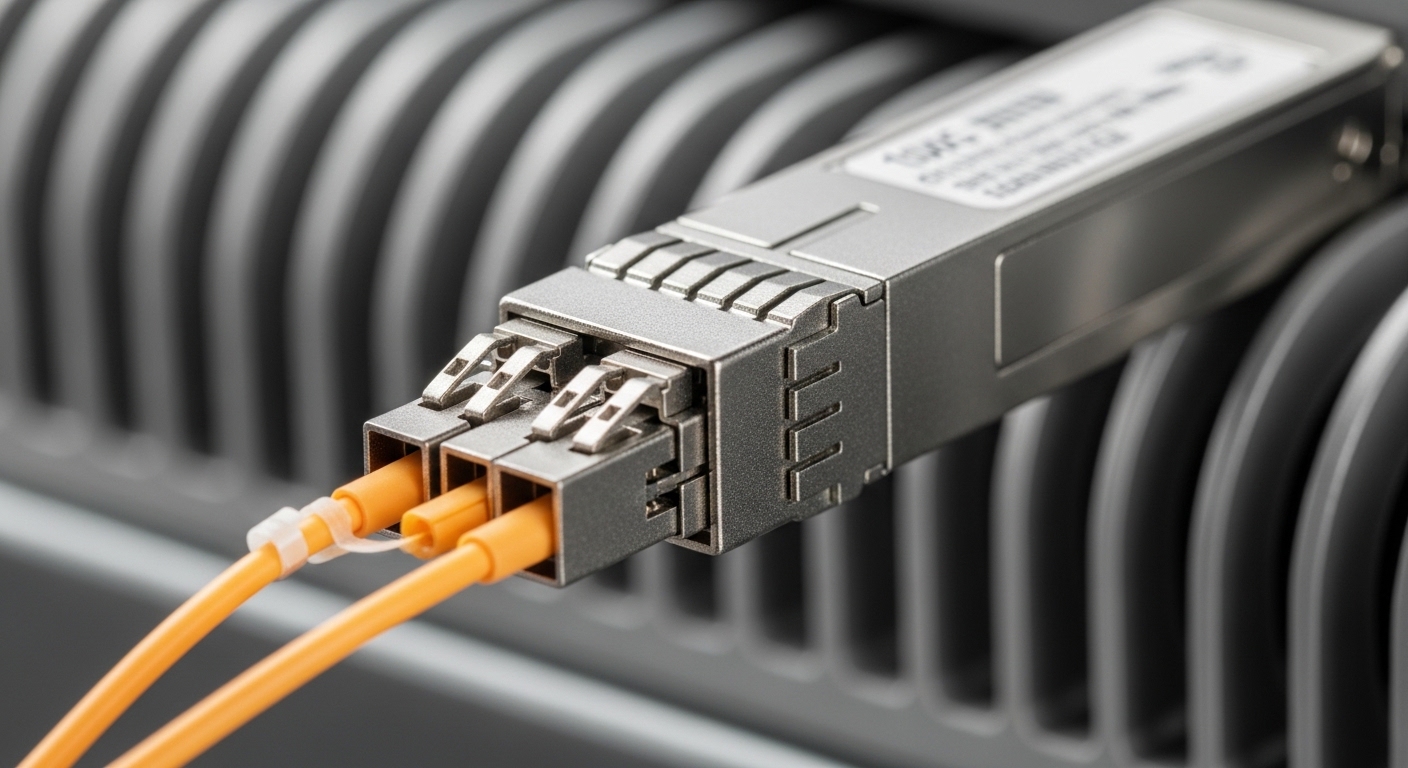
The final choice centered on a 100G CFP transceiver family rated for single-mode 1310 nm operation with ~10 km reach, using LC duplex connectors and DOM support. The team also kept a parallel option for CFP2 when the cage airflow and switch firmware combination proved more tolerant for the specific vendor’s DOM implementation.
In practice, they selected a known, widely supported CFP model for service provider deployments and validated it against their switch inventory. Example reference parts engineers often test include optics such as Cisco SFP-10G-SR for smaller pluggables (as a contrast) and 100G single-mode CFP/CFP2 optics from major vendors. For a concrete single-mode CFP2 example commonly used in 100G designs, Finisar-style part numbers such as FTLX8571D3BCL appear in vendor ecosystems; for alternative procurement, FS.com listings like FS.com SFP-10GSR-85 demonstrate how third-party sourcing can be verified—though the exact suffix and form factor must match the CFP/CFP2 requirement. Always confirm the specific CFP transceiver part number matches the switch’s supported optics list.
Pro Tip: In live outages, engineers often trust “Received Power” alone. Instead, record DOM values for laser bias current and transmit power drift during the first 30 minutes after insertion; thermal stabilization can shift bias enough to trigger marginal receiver behavior even when the static power reading looks acceptable.
They compared CFP versus CFP2 primarily on two axes: (1) how the switch firmware interprets module identity and telemetry, and (2) how mechanical placement and airflow affect thermal margin. Even when both achieve the same nominal reach, the practical failure mode can differ due to cage temperature gradients and DOM alarm thresholds.
Implementation steps: from lab validation to staged production cutover
Build a link budget with worst-case loss and margin
Before any hardware arrived, the team used measured OTDR results from representative fiber spans plus conservative insertion loss for patch cords and splice trays. They included connector end-face cleanliness risk by allocating additional margin for re-cleaning rather than assuming a perfect plant. The target was to keep the receiver within the specified input power range across temperature and aging assumptions, not just at room conditions.
Validate switch compatibility and DOM behavior
They installed each candidate CFP transceiver in a staging switch with identical firmware and confirmed: link negotiation stability, DOM alarm thresholds, and that the module identification matched what the switch expects for port diagnostics. If the switch reported “module type unknown” or DOM fields were missing, they treated it as a deployment blocker even if the link initially came up.
Perform thermal and stress checks
Rather than waiting for a failure, they ran a controlled traffic profile—sustained 100G line-rate for at least an hour per port group, then repeated during periods when the cage inlet air was highest. They monitored DOM telemetry and port counters for CRC and coding errors. Any transceiver showing unusual bias drift patterns or early threshold crossings was quarantined.
Stage rollout with rollback criteria
They rolled out in blocks of 12 ports per site, with a rollback plan if link flaps exceeded a defined threshold during the first 24 hours. This prevented a broad blast radius while still capturing realistic operational stressors like patching changes and HVAC cycling.
Measured results: stability, optics failures, and operational savings
After full rollout across the first two regions, the team reported fewer incidents tied to optics management and a reduction in “unknown module” diagnostics. On the operational side, the mean time to restore service after an optics-related issue improved because alarms were consistent and DOM telemetry allowed faster narrowing of whether the issue was transmitter drift, receiver sensitivity, or fiber polarity.
Measured outcomes included: stable link uptime during peak HVAC cycles, reduced manual interventions, and better correlation between DOM trends and impending faults. In one site with the tightest airflow constraints, the staged approach prevented repeat swaps that would have occurred under a “blind bulk install” strategy.
Cost-wise, third-party CFP transceiver procurement can reduce per-module spend, but it increases validation workload and can raise risk if DOM behavior is not fully compatible. Over a typical service-provider lifecycle, the team modeled total cost of ownership (TCO) as: module purchase price plus engineering validation time, plus expected failure/returns rate and the labor cost of swap-and-verify operations.
Common pitfalls and troubleshooting: what actually breaks in the field
Even strong optics selection fails without disciplined commissioning. Below are concrete failure modes the team encountered, with root causes and fixes.
- Pitfall 1: Link flaps only during peak temperatures
Root cause: thermal margin was overestimated; cage inlet temperature reached ~45 C and induced transmitter bias drift.
Solution: confirm the transceiver operating temperature range for your exact airflow profile, then add a thermal validation step that repeats link tests during HVAC peak. - Pitfall 2: “Link up” but high error counters
Root cause: link budget marginal under worst-case fiber attenuation and patch cord loss; received power sat near receiver sensitivity threshold.
Solution: re-calculate link budget using measured OTDR values and connector insertion losses; clean connectors and, if needed, shorten patch runs or replace highest-loss jumpers. - Pitfall 3: Switch shows missing or inconsistent DOM alarms
Root cause: DOM implementation differences across vendors; switch firmware may expect specific module identity formats and telemetry scaling.
Solution: validate DOM field presence and alarm behavior in staging before broad deployment; keep a small “known-good” vendor pool for emergency swaps. - Pitfall 4: Polarity or connector cleanliness issues after maintenance
Root cause: transceiver insertion assumed correct polarity, but patch panel changes flipped Tx/Rx or introduced contamination.
Solution: enforce a connector cleanliness checklist and polarity labeling; verify with a light source and power meter before declaring an optics fault.
Selection criteria checklist for a CFP transceiver in service provider networks
Engineers should treat CFP transceiver selection as a system compatibility problem. Use this ordered checklist during procurement and staging:
- Distance and reach: verify the planned fiber span plus patching loss stays inside the transceiver and receiver power specifications across temperature.
- Switch compatibility matrix: confirm the switch model and firmware version support the CFP transceiver identity and DOM behavior.
- Connector and polarity: ensure LC duplex type matches the cage and patch panel standard; enforce polarity labeling.
- DOM support and telemetry accuracy: validate key fields like transmit power, bias current, and alarm thresholds.
- Operating temperature and thermal placement: measure cage inlet temperatures and compare to the module’s rated operating range.
- Vendor lock-in risk and spares strategy: decide whether to standardize on one vendor for faster swaps or run a controlled multi-vendor pool with strict validation.
- Procurement and return process: confirm RMA terms and cross-shipping lead times to reduce downtime during failures.
CFP vs CFP2 in practice: when upgrading form factor reduces risk
Where CFP2 optics are available and supported by the switch, they can simplify thermal and management behavior due to updated module design and vendor implementations. However, switching form factors can require mechanical cage compatibility checks and firmware validation, so “upgrade” should be treated as a new integration project, not a drop-in assumption.
For the team, the decision was pragmatic: keep CFP where it was already validated for the specific switch platform and fiber reach, and use CFP2 on ports with higher thermal stress or where DOM behavior was less consistent. This hybrid approach balanced cost and reliability without forcing a full platform migration.

Cost and ROI note: what to expect beyond the sticker price
Typical CFP transceiver module pricing varies widely by vendor, reach class, and whether the part is OEM-locked or third-party. In many service-provider purchasing programs, OEM modules can cost more per unit but reduce validation time and spares uncertainty. Third-party CFP transceivers can offer meaningful savings, yet the team’s TCO model included additional labor for staging tests and a higher chance of “compatibility friction” if DOM fields or identity formats differ.
The ROI came from fewer truck rolls and faster restoration: consistent DOM alarms shortened mean time to repair because engineers could distinguish optics drift from fiber issues quickly. Over a multi-site rollout, even a small reduction in incident frequency can outweigh upfront procurement savings.
FAQ
What is a CFP transceiver used for in 100G service provider networks?
A CFP transceiver is a pluggable optical module that supports 100G Ethernet over fiber, commonly using 1310 nm single-mode for short-to-mid reach designs. In service provider networks, it is often deployed in aggregation and backhaul where switch platforms support the CFP form factor and DOM telemetry is required for operations.
Can I mix CFP transceivers from different vendors in the same switch?
You can, but only after validating switch compatibility and DOM behavior for each vendor and firmware combination. If the switch expects specific module identity formats or telemetry scaling, mixed vendors can create inconsistent alarms even when links come up.
How do I verify optical budget before ordering a CFP transceiver?
Use measured fiber attenuation (OTDR or certified test results), add conservative insertion loss for patch cords and splices, and compare to the transceiver’s transmit power and receiver sensitivity ranges. Include margin for worst-case connectors and temperature-induced drift, then validate in staging with live traffic.
Why do links flap when the module is within the “received power” range?
Because received power alone may hide bias drift, transient thermal behavior, or receiver margin issues tied to temperature and aging. Track additional DOM fields like laser bias current and error counters during peak thermal conditions to pinpoint the real failure mode.
What are the most common CFP transceiver troubleshooting steps?
Start with connector cleanliness and polarity checks, then review DOM telemetry for bias and power drift. Next, confirm that the switch port counters (CRC or coding errors) align with optical margin issues, and finally compare against a known-good module to isolate whether the problem is the transceiver or the fiber path.
Is CFP2 always better than CFP?
Not always. CFP2 may offer improved integration characteristics, but it still requires switch firmware support, cage compatibility checks, and staged validation. Choose based on measured risk: thermal stress, DOM consistency, and how quickly you can standardize spares.
If you are planning your next 100G rollout, start by mapping your reach and thermal profile, then validate CFP transceivers in staging with DOM and error-counter monitoring. For the next step, see 100G optics compatibility and DOM validation to build a repeatable commissioning checklist.
Author bio: I have deployed and validated 100G pluggable optics in service-provider aggregation environments, focusing on DOM telemetry integrity, thermal margin, and link budget verification. I now help teams reduce optics incidents through rigorous staging tests and pragmatic compatibility engineering.