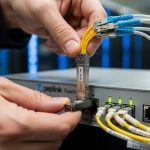
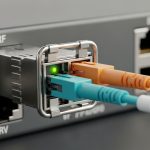
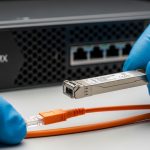
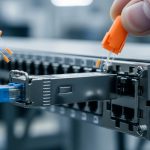
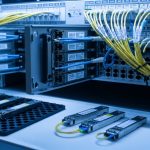
If you maintain ABB or Siemens automation controllers, you already know optics can be the difference between “it boots fine” and “the line is down.” This article helps plant and field teams choose automation controller optics SFP modules that match port requirements, fiber reach, and diagnostics—without turning procurement into a recurring fire drill. We’ll compare common SFP variants, call out compatibility gotchas, and share troubleshooting patterns seen during real commissioning.
How ABB and Siemens SFP ports behave in the field
Most ABB and Siemens automation controller installations use Ethernet interfaces that expect standard SFP electrical behavior (SFP MSA format) and predictable optical power. In practice, the controller’s SFP cage and firmware decide whether the optics are accepted, how link negotiation works, and whether diagnostics like Digital Optical Monitoring (DOM) get exposed in the controller’s status screens. For Ethernet over fiber, the physical layer is still grounded in IEEE 802.3 link behavior, but the “accept/reject” logic can vary by controller generation and software.
Before you buy, confirm three things in the controller documentation: (1) required data rate (for example 1G, 10G), (2) optical type (SX/MM vs LX/SM), and (3) whether the controller expects DOM or supports “DDM/DOM reporting” from third-party modules. Many engineers do the distance math correctly and still get burned by DOM mismatch or vendor-specific acceptance rules.
What to verify on the controller side
- Port speed and media type: Some controller SKUs support 1000BASE-SX only; others support multiple modes but require correct optics.
- Connector and fiber type: LC is common for SFP; confirm whether you need multimode (MMF) or single-mode (SMF).
- Diagnostics expectations: If the controller reads DOM thresholds, you want modules that expose standard DDM parameters.
Pro Tip: In commissioning logs, the most common “mystery link flaps” come from marginal optical power after connector cleaning issues—not from the SFP wavelength being “wrong.” Treat cleaning and optical budget as first-class procurement checks, not afterthought maintenance.
SFP optics that actually match automation controller Ethernet
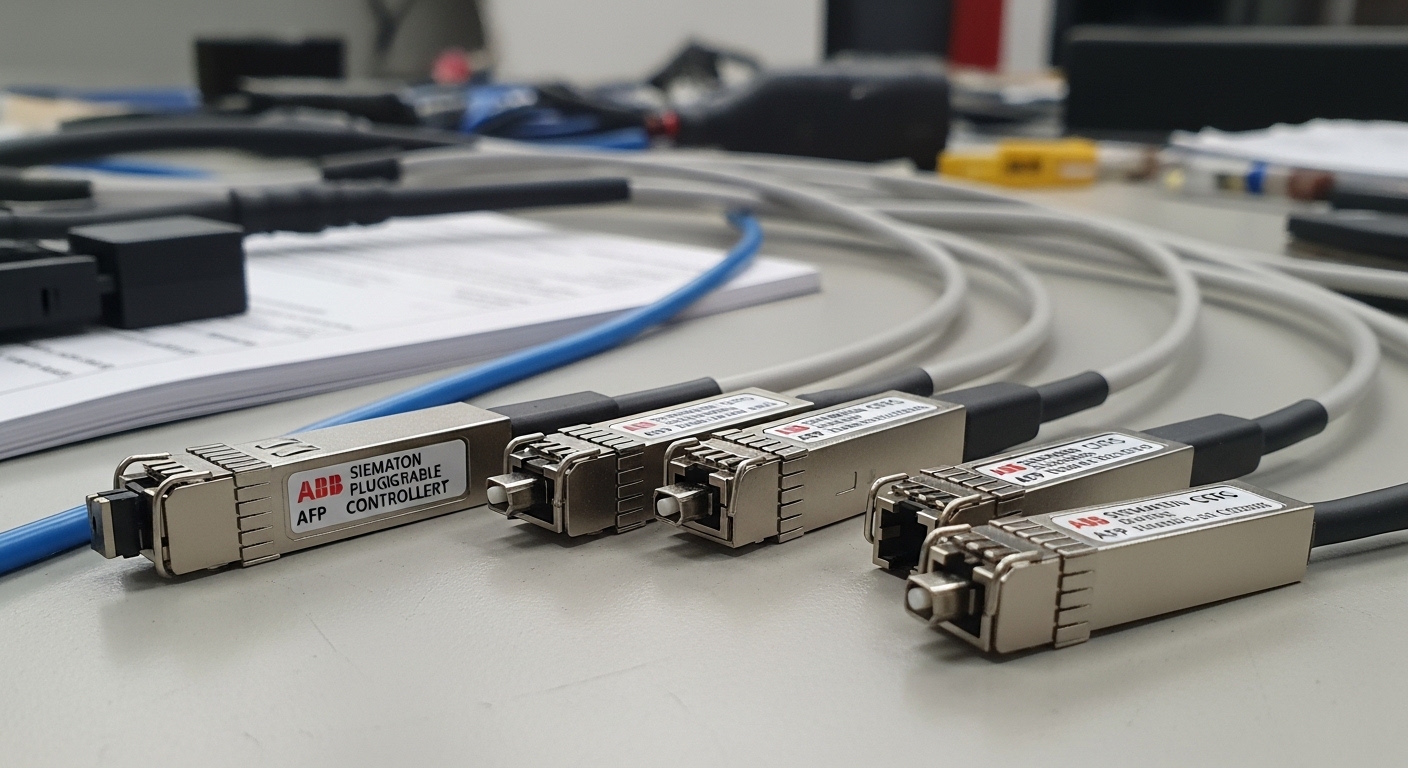
For ABB and Siemens controller networks, SFP modules are usually selected around wavelength, fiber type, and reach. The “right” module is the one that matches the port’s Ethernet PHY requirements and your installed fiber plant. Most teams choose either MMF/SX for shorter runs (often in the same building) or SMF/LX for longer runs and campus separation.
Key SFP parameters you should compare
Here are the fields procurement and field engineers should align. Even when two modules are both “10 km” parts, their power class, receiver sensitivity, and DOM behavior can differ.
| Spec | Example SFP-MM/SX | Example SFP-SM/LX | Why it matters for ABB/Siemens |
|---|---|---|---|
| Data rate | 1G or 10G (depends on SKU) | 1G or 10G (depends on SKU) | Controller port must match; wrong rate can cause “link down” or negotiation failures. |
| Wavelength | 850 nm (typical for SX) | 1310 nm or 1550 nm (typical for LX/LR) | Mismatch with fiber plant leads to severe optical loss and no link. |
| Reach | ~300 m to 400 m on OM3/OM4 (varies) | ~10 km or more depending on class | Distance drives whether you must budget SMF. |
| Connector | LC duplex (common) | LC duplex (common) | Field swaps fail if the connector standard doesn’t match existing patch cords. |
| DOM / DDM | Often supported | Often supported | Some controller GUIs expect DOM; missing diagnostics can block monitoring workflows. |
| Tx power / Rx sensitivity | Varies by vendor and class | Varies by vendor and class | Defines your optical budget with real cable loss and aging. |
| Operating temperature | Commonly industrial range | Commonly industrial range | Automation cabinets can run hot; confirm -20 C to +70 C or better depending on environment. |
Concrete examples you’ll see in BOMs
In the wild, procurement teams often reference known-good OEM-equivalent parts. Typical examples include Cisco-branded optics like Cisco SFP-10G-SR equivalents for short reach, and Finisar/FS-style single-mode modules for longer runs such as FTLX8571D3BCL (10G, 850 nm class) or FS.com-style equivalents like FS SFP-10GSR-85. Always map examples to your controller’s exact port speed and your actual fiber type rather than assuming “10G SR works everywhere.”
Cost, lead time, and supply chain risk for controller optics
Price swings are real, especially when a controller project is time-critical and the approved vendor list is narrow. OEM optics (for example, Cisco-branded) often cost more but can reduce acceptance and warranty friction. Third-party optics can be cheaper and faster to source, but you must validate DOM behavior, optical power class, and any controller-specific acceptance tests.
Typical price ranges and TCO thinking
- OEM SFP (1G/10G): often higher unit cost; TCO can still be lower if it avoids downtime and returns.
- Third-party SFP: frequently 20% to 50% less, but plan for qualification time and potential rework if the controller rejects the module.
- Field failure costs: include truck rolls, swap labor, and production impact. A “cheap” module that causes repeated link issues can cost more than the price delta.
Lead time also depends on whether your project is building new fiber patching or swapping failed optics mid-shift. A common pattern: you keep a small “hot spare” inventory of the exact optics model for each controller site, because waiting on a distributor shipment during a production incident is usually the most expensive delay.
Pro Tip: When possible, lock an approved optics SKU list per controller model and firmware revision. Even if two optics are “both 10G SR,” acceptance logic and DOM parsing can differ across controller generations.
Selection criteria checklist for automation controller optics
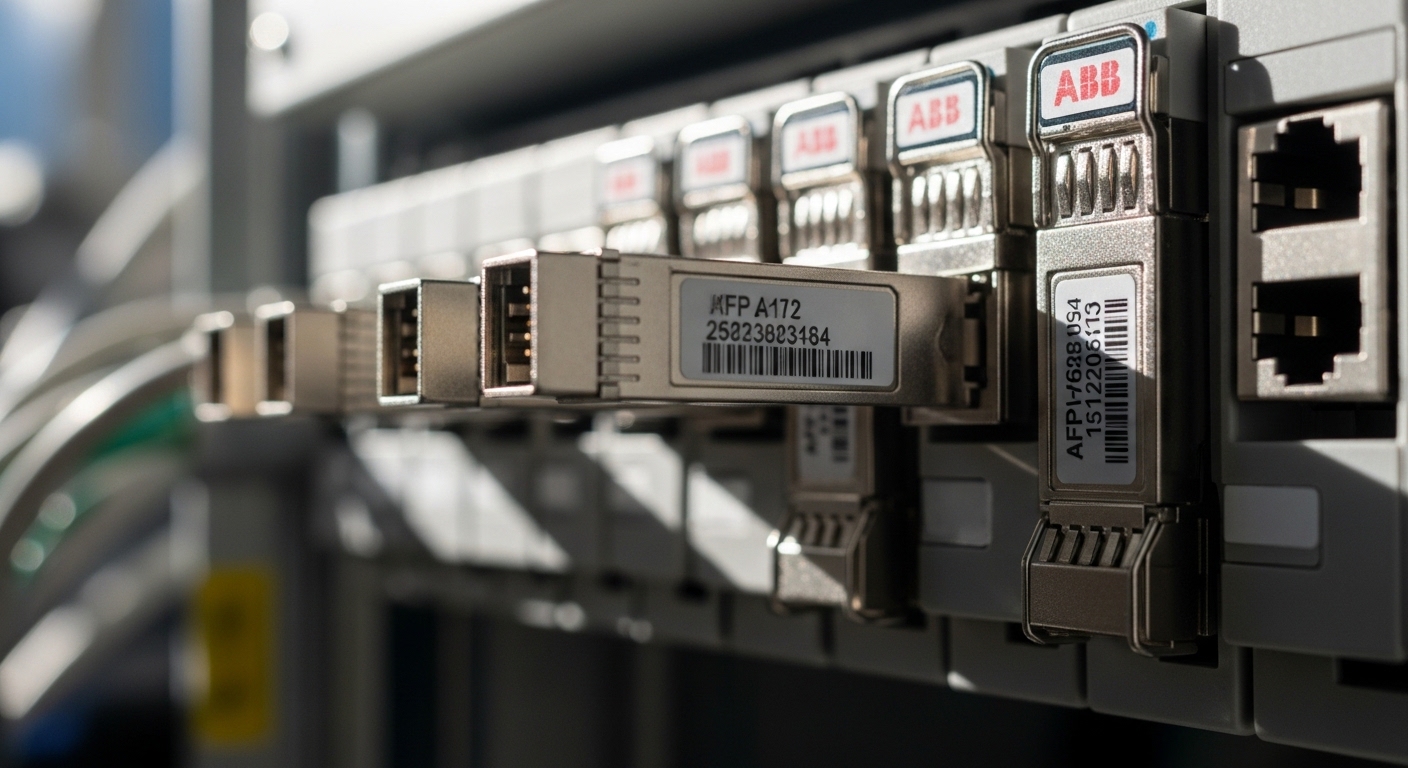
Use this ordered checklist when you’re choosing SFPs for ABB and Siemens automation controller ports. It’s built around what causes real procurement delays and field failures.
- Distance and fiber type: confirm MMF OM3/OM4 vs SMF; verify end-to-end attenuation and patch cord losses.
- Port compatibility: match data rate and optical interface type specified for the controller Ethernet port.
- Wavelength and reach class: pick the correct wavelength (850 nm SX vs 1310/1550 nm LX/LR) for your plant.
- DOM/diagnostics support: ensure the module supports standard DDM/DOM so controller monitoring doesn’t go blind.
- Operating temperature: choose modules rated for the cabinet and ambient range; automation sites can exceed “office” assumptions.
- Vendor lock-in risk: if OEM optics are the only “approved” option, plan spares and long-term availability early.
- Supply chain resilience: maintain alternate qualified part numbers and test them on a bench with your controller firmware.
Common mistakes and troubleshooting tips
Even experienced teams hit the same failure modes. Here are concrete pitfalls I’ve seen during field swaps and commissioning.
Link never comes up after install
Root cause: wrong fiber type or wrong wavelength expectation (MMF installed where SMF is required, or vice versa), or incorrect patching (Tx/Rx swapped on LC). Solution: verify connector polarity, clean both ends with proper fiber cleaning tools, and measure end-to-end loss. Then confirm the SFP type matches the controller port’s required standard.
Link flaps under load, not at idle
Root cause: marginal optical power budget due to dirty connectors, aging fiber, or too-aggressive reach assumptions. Solution: re-clean connectors, replace suspect patch cords, and validate optical budget with vendor sensitivity specs. Also check for excessive bending radius during cabinet routing.
Controller shows “module not recognized” or missing diagnostics
Root cause: third-party optics with partial or non-standard DOM reporting, or controller firmware that enforces acceptance checks. Solution: test the candidate SKU in a non-production bench setup using the same controller model and firmware. If the controller requires DOM for status, require full DDM/DOM compatibility from the supplier.
Overheating in cabinets causes intermittent failures
Root cause: SFP operating temperature exceeds spec because the cabinet airflow is poor or the module is not rated for industrial range. Solution: confirm cabinet ambient and airflow, improve ventilation, and choose optics rated for the deployment temperature band. If possible, monitor module temperature via DOM if supported.

FAQ: automation controller optics for ABB and Siemens
Which SFP type is safest for short runs inside a plant?
For typical intra-building distances, 850 nm SX over multimode is common. The safest choice is the one explicitly supported by your controller port documentation and proven against your actual fiber type (OM3 vs OM4) and connector cleanliness.
Can I use third-party SFP optics in ABB or Siemens systems?
Often yes, but you must qualify them for your specific controller model and firmware. The biggest practical risk is DOM acceptance and controller “recognition” behavior, so bench-test before you scale.
What matters more: reach rating on the datasheet or real optical budget?
Real optical budget matters more. Datasheet reach assumes specific fiber grade, connector quality, and power margins; your plant has patch cords, splitters (if any), and aging loss.
Do I need DOM for the controller to work?
Some deployments need DOM only for monitoring, while others use DOM thresholds for diagnostics or alarms. Check controller documentation and validate in a test bay; if DOM is required, require standard DDM reporting.
Why do I see link up but no traffic?
That can happen when the physical link is correct but VLAN, speed/duplex settings, or switch port configuration doesn’t match expectations. Confirm Ethernet configuration end-to-end and verify the controller is configured for the same link parameters.
How should we handle spares for production continuity?
Keep hot spares of the exact optics SKU per controller model and site. Also track lead times from your distributor and maintain an approved second source to reduce downtime during shortages.
Choosing automation controller optics for ABB and Siemens is mostly about matching port requirements to your fiber reality, then validating DOM and thermal behavior. If you want the procurement workflow tightened further, see fiber optic acceptance testing for a practical testing checklist before you ship parts to the plant.
Author bio: I’ve supported field deployments of fiber Ethernet links in industrial automation cabinets, including SFP swaps, optical budget reviews, and controller acceptance testing. My day-to-day