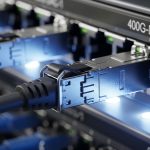
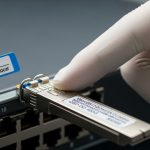
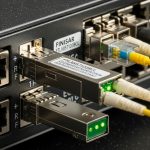
AI infrastructure optics often hinge on one unglamorous component: the transceiver. This article helps data-center, network, and field engineers choose SFP modules for AI and ML clusters by mapping real link budgets, switch interoperability, and operational risks. You will get practical selection checklists, troubleshooting patterns, and a ranked comparison table for faster procurement decisions.
Top 8 SFP transceiver strategies for AI infrastructure optics
In many AI/ML deployments, SFP-based links connect leaf switches, storage fabrics, and management networks, while higher-speed interconnects may use QSFP or OSFP. The key is to choose SFP optics that match Ethernet electrical interfaces, fiber type, reach, and your switch vendor’s compatibility constraints. This section frames eight strategies you can apply immediately, each with best-fit scenarios and clear pros/cons.
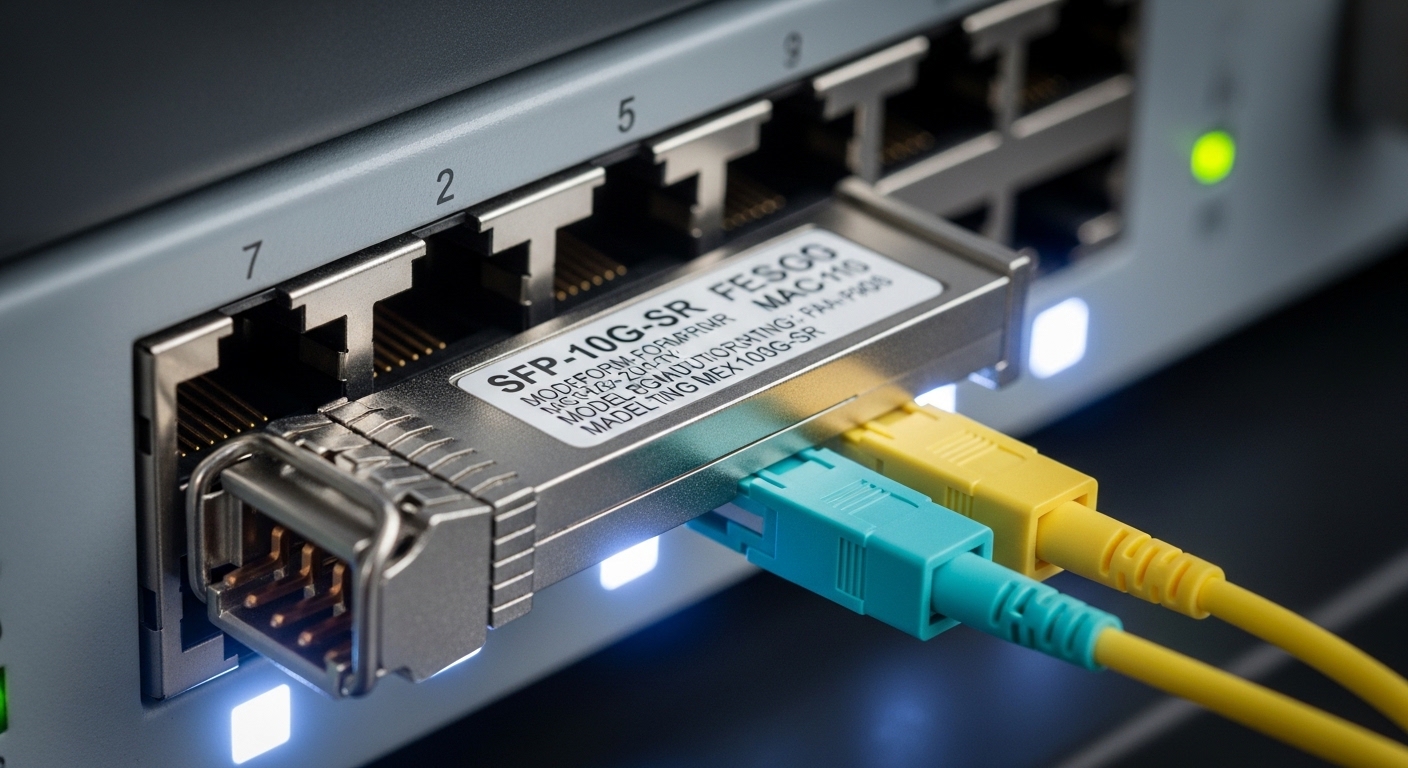
Use 10G SR (multimode) SFP for short-reach ToR and storage uplinks
Core specs: 10G Ethernet, typical wavelength 850 nm, multimode reach commonly 300 m over OM3 and 400 m over OM4 (module and cabling dependent). For AI infrastructure optics, this is the most forgiving option when your structured cabling is already multimode. Real deployments often run 10G SR to top-of-rack switches for east-west traffic in GPU clusters where the switch-to-switch distance stays under a few hundred meters.
Example modules: Cisco SFP-10G-SR, Finisar FTLX8571D3BCL, FS.com SFP-10GSR-85. Validate that the module’s DOM interface is supported by your switch and that your switch firmware does not enforce strict vendor whitelists.
- Pros: Lowest cost per port, broad switch compatibility, easy fiber certification.
- Cons: Limited distance versus single-mode, multimode plant quality matters.
Prefer 10G LR (single-mode) SFP for longer leaf-spine or cross-row links
Core specs: 10G Ethernet, wavelength typically 1310 nm, common reach 10 km on single-mode fiber (SMF) depending on module class. For AI infrastructure optics, LR is often used when the AI pod spans multiple rows or when you cannot extend multimode economically. It also reduces sensitivity to multimode modal dispersion issues when your cabling history is mixed.
Example modules: Cisco SFP-10G-LR, Finisar FTLX1471D3BCL, FS.com SFP-10GLR. Confirm SMF type (typically OS2) and connector cleanliness, since LR optics are less forgiving of contamination than short-reach multimode.
- Pros: Longer reach, consistent performance across heterogeneous cabling.
- Cons: Higher module cost, requires SMF certification and careful cleaning.
Use 25G SFP28 SR (OM4) when your AI fabric needs more bandwidth per lane
Core specs: 25G Ethernet, SFP28, wavelength 850 nm, typical OM4 reach around 100 m (module-dependent). For AI infrastructure optics, 25G SR SFP28 is frequently chosen for mid-distance links where 10G would constrain oversubscription ratios. In practice, many operators deploy 25G to connect top-of-rack switches with 50 m to 90 m patching plus conservative margin.
Example modules: Finisar FTLX8572D3BCL, FS.com SFP-25G-SR-85. Verify your switch supports SFP28 at 25G and that the port profile is not locked to 10G-only.
- Pros: Better bandwidth density without changing the entire switching layer.
- Cons: OM4 requirements and strict reach margins; higher power draw than 10G SR.
Choose 25G SFP28 LR for SMF links where 100 m is not enough
Core specs: 25G Ethernet, wavelength 1310 nm, reach often 10 km on SMF. AI infrastructure optics teams use LR to extend bandwidth across campus-like row distances or to connect aggregation points without redesigning optics. This is especially relevant when your AI growth plan forces you to reuse existing SMF trunks.
Example modules: Finisar FTLX1472D3BCL style parts, and compatible LR SFP28 optics from reputable vendors. Confirm switch firmware supports 25G SFP28 LR and that link training succeeds at your target speed.
- Pros: SMF reuse, long reach at 25G.
- Cons: Higher cost; ensure fiber attenuation budget and connector hygiene.
Match SFP power and thermal design to high-density AI switch chassis
Core specs: SFP optical modules have typical receive/transmit power budgets and operating temperature ranges often around 0 to 70 C (commercial) or -40 to 85 C (extended) depending on model. AI infrastructure optics in dense racks can run warm; thermal throttling or optical power drift can cause intermittent link flaps. Field engineers should verify that the module’s temperature rating matches your aisle ambient and that your switch airflow pattern is consistent.
For example, when you populate every port in a 1U or 2U switch with optics, you may see inlet temperatures exceed 30 C even with raised-floor airflow. Prefer vendor-recommended optics families and monitor DOM temperature and bias current via your switch telemetry.
- Pros: Fewer intermittent failures, better link stability under load.
- Cons: More verification work; extended-temp modules cost more.
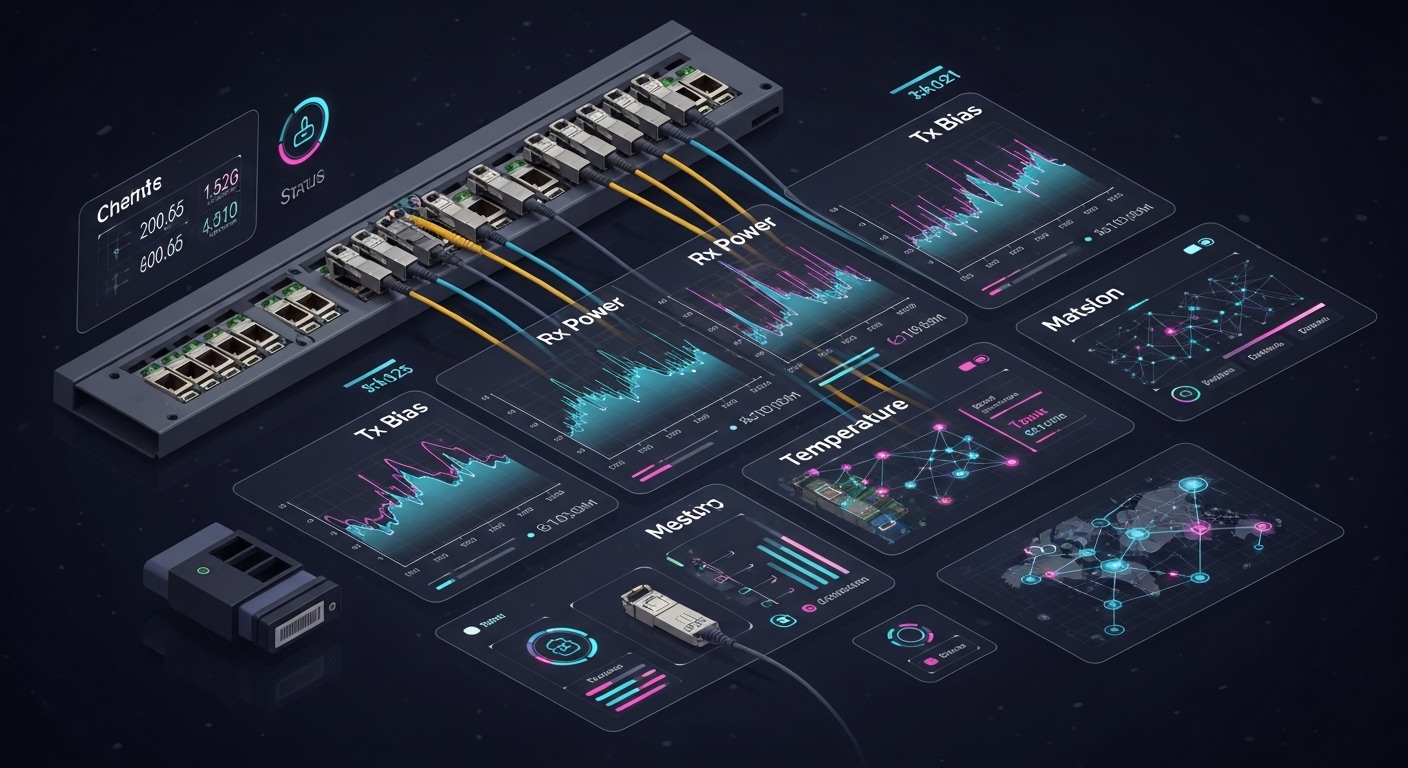
Require DOM support and monitor optics health during model training peaks
Core specs: Digital Optical Monitoring (DOM) exposes parameters such as Tx bias, Tx power, Rx power, and module temperature. AI infrastructure optics should be treated like a monitored system, not a static cable. During training peaks, you create higher fan-out traffic and sometimes higher rack inlet temperatures, so DOM trending can reveal aging optics before failures.
Operational practice: Export switch telemetry (e.g., SNMP or streaming telemetry) and alert on Rx power drift thresholds specific to your module class. Calibrate initial “golden” baselines after burn-in and fiber cleaning.
- Pros: Predictive maintenance; faster root-cause isolation.
- Cons: Requires telemetry plumbing and alert tuning to avoid noise.
Plan for interoperability: validate vendor whitelists and speed profiles
Core specs: SFP modules implement electrical interfaces via SFP Multi-Source Agreement patterns; however, switches may enforce speed profiles and compatibility checks. AI infrastructure optics procurement should include a lab validation step: insert the exact module part number, verify link comes up at the intended rate, and confirm DOM reads correctly. Some switches also enforce optical power class or require specific vendor firmware behavior.
Example: A switch may default to 10G on an SFP port even if the module supports 25G, unless you set the port profile correctly. Always check whether your switch uses static configuration, auto-negotiation, or a fixed breakout mode.
- Pros: Avoids “port up/down” surprises during rollout.
- Cons: Adds test time; may create vendor lock-in risks.
Reduce failure rates with connector discipline and cleaning workflow
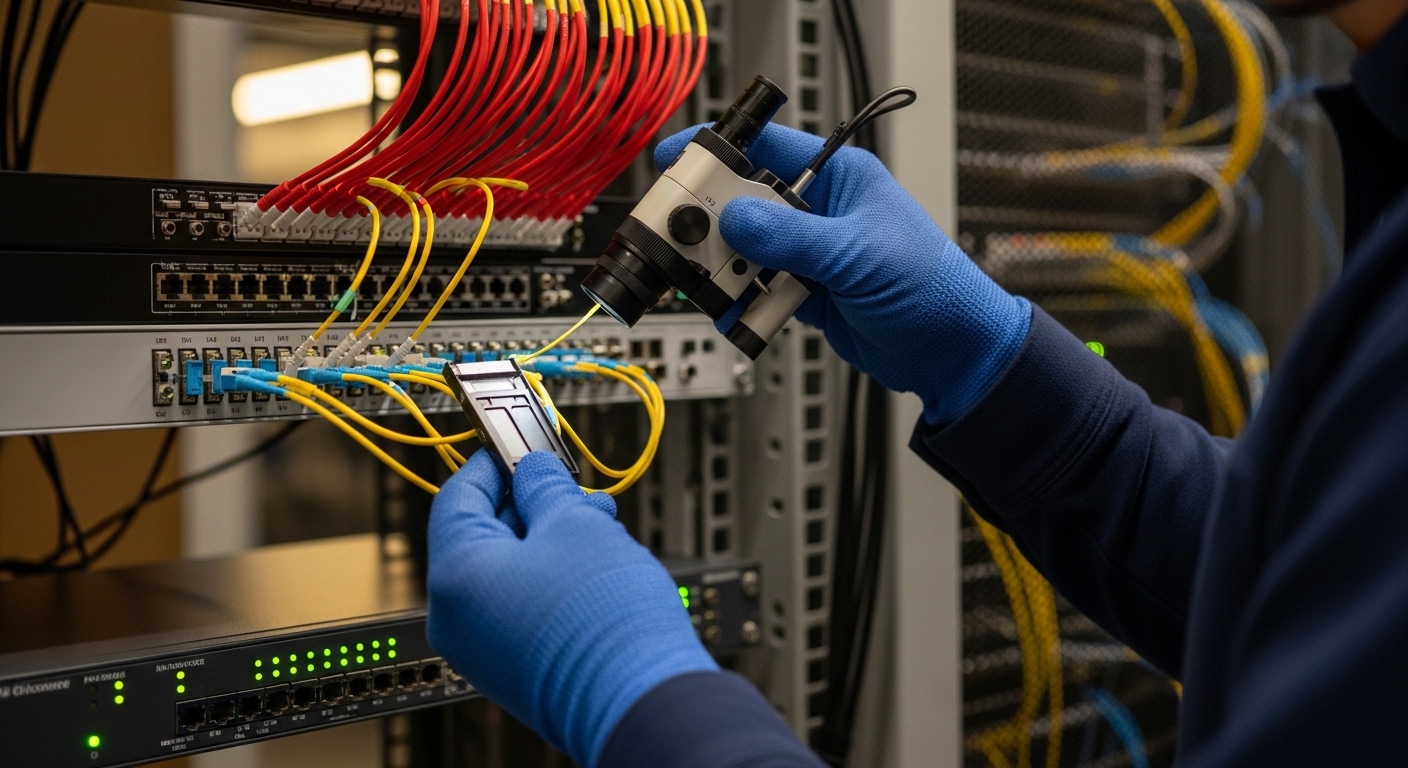
Core specs: Optical link performance is extremely sensitive to end-face contamination, especially for 850 nm multimode and 1310 nm single-mode. In AI infrastructure optics operations, the biggest “mystery outages” often trace back to connector contamination rather than optics defects. Use industry-standard inspection and cleaning tools before mating, and re-inspect after any patch rework.
Field workflow: Inspect with a fiber microscope, clean with lint-free swabs and appropriate cleaner, and only then connect. Keep caps on unused connectors and maintain patch cord labeling to prevent cross-connection errors.
- Pros: Dramatic drop in intermittent CRC errors and link flaps.
- Cons: Requires process discipline and spare cleaning kits.
Specification comparison for common SFP optics used in AI pods
Engineers typically choose SFP optics by wavelength, reach, fiber type, and monitoring capability. The table below summarizes representative parameters you should align with your cabling plant and switch port configuration. Always confirm exact reach against the module datasheet and your fiber attenuation measurements.
| Optics type | Data rate / form factor | Wavelength | Typical reach | Fiber type | Connector | DOM | Operating temperature |
|---|---|---|---|---|---|---|---|
| 10G SR | 10G / SFP | 850 nm | 300 m (OM3) / 400 m (OM4) | OM3 or OM4 | LC | Common | 0 to 70 C (typical) |
| 10G LR | 10G / SFP | 1310 nm | 10 km (SMF) | OS2 (SMF) | LC | Common | -40 to 85 C (varies) |
| 25G SR | 25G / SFP28 | 850 nm | ~100 m (OM4, module-dependent) | OM4 | LC | Common | 0 to 70 C (typical) |
| 25G LR | 25G / SFP28 | 1310 nm | ~10 km (SMF) | OS2 (SMF) | LC | Common | -40 to 85 C (varies) |
Standards and reference points: Ethernet optical interfaces are defined in IEEE 802.3 for 10G/25G operation, while transceiver electrical and monitoring behaviors are guided by SFP/SFP28 multi-source agreement concepts. For authoritative validation, consult the IEEE physical layer specifications and vendor datasheets. anchor-text: IEEE 802.3 standards [Source: IEEE 802.3].
Selection criteria checklist for AI infrastructure optics
Use this ordered checklist during procurement and lab validation. It is designed to prevent the most common “works on bench, fails on site” outcomes.
- Distance and link budget: Measure fiber attenuation and connector losses; add margin for patch cords and aging.
- Fiber type and bandwidth class: Confirm OM3 vs OM4 for SR; confirm OS2 SMF for LR.
- Switch compatibility: Validate SFP vs SFP28, supported speed profiles, and any vendor whitelist behavior.
- DOM and telemetry needs: Ensure DOM reads reliably and supports the parameters you monitor for alerts.
- Operating temperature alignment: Match module spec to rack inlet and airflow conditions; consider extended-temp models if needed.
- Vendor lock-in risk: Test at least two compatible vendors if your procurement strategy requires optionality.
- Connector and cleaning workflow: Plan inspection tools and replacement patch cords to avoid contamination-driven failures.
Pro Tip: In many AI infrastructure optics rollouts, the earliest warning signal is not link down events but a slow Rx power drift visible in DOM trends. If you baseline Rx power after cleaning and then alert on a consistent downward slope, you can replace optics during maintenance windows instead of reacting to CRC spikes.
Common mistakes and troubleshooting patterns
Below are concrete failure modes field teams see when deploying SFP optics for AI infrastructure optics. Each includes root cause and a practical fix.
Port comes up but performance is unstable (CRC errors, microbursts)
Root cause: End-face contamination or marginal optical power due to high connector loss, often after patch rework. Solution: Inspect with a fiber microscope, clean both ends, verify connector geometry, and replace any damaged patch cords. Re-check Rx power via DOM and compare to the initial baseline.
Link flaps only at high load or during hot periods
Root cause: Thermal stress causing optical bias drift or receiver sensitivity reduction. Solution: Confirm module operating temperature rating against measured rack inlet temperature; improve airflow alignment; consider extended-temp optics. Use DOM temperature and Tx bias trending to confirm correlation.
“No signal” or link never negotiates at the intended speed
Root cause: Switch port profile mismatch (SFP28 vs SFP), unsupported speed mode, or vendor compatibility enforcement. Solution: Set the port to the correct speed profile, confirm the transceiver is the correct form factor (SFP vs SFP28), and validate with the exact part number. If DOM is required by platform policies, ensure the module supports DOM as expected.
Distance failures that look like “bad optics”
Root cause: Fiber attenuation higher than assumed, often due to dirty connectors or aging in patch cords. Solution: Re-certify the link with an optical test set (including end-to-end loss and reflectance if available). Add margin by shortening patch cords or migrating from SR to LR when budget is tight.
Cost and ROI considerations for AI infrastructure optics
Typical street pricing varies by vendor and volume, but a practical budgeting pattern is: 10G SR is usually the lowest-cost per port, 10G LR is meaningfully higher, and 25G SFP28 optics cost more than 10G equivalents. Third-party compatible optics can reduce upfront CapEx, but ROI depends on failure rate, return logistics, and the time lost to troubleshooting.
TCO levers: (1) labor time during rollouts, (2) downtime cost from intermittent errors, (3) spares inventory sizing, and (4) power and thermal overhead in dense AI racks. In many operations, the cheapest optics are not the best ROI if they lack consistent DOM behavior or fail switch compatibility tests, increasing field swap frequency.
Summary ranking table: best-fit SFP optics for AI infrastructure optics
Rankings below assume typical AI pod realities: structured cabling with known reach limits, strict uptime targets, and a preference for manageable operational risk.
| Rank | Strategy | Best-fit scenario | Primary benefit | Main limitation |
|---|---|---|---|---|
| 1 | 10G SR SFP on OM3/OM4 | ToR east-west within 300 to 400 m | Low cost, stable deployment | Distance and multimode plant constraints |
| 2 | 25G SR SFP28 on OM4 | Bandwidth lift for mid-distance links | Higher throughput per port | Reach often near 100 m |
| 3 | 10G LR SFP on SMF | Row-to-row or cross-row 10 km class needs | Long reach with consistent performance | Higher cost; cleanliness sensitivity |
| 4 | DOM-monitored optics workflow | High uptime AI training periods |
.wpacs-related{margin:2.5em 0 1em;padding:0;border-top:2px solid #e5e7eb}
.wpacs-related h3{margin:.8em 0 .6em;font-size:1em;font-weight:700;color:#374151;text-transform:uppercase;letter-spacing:.06em}
.wpacs-related-grid{display:grid;grid-template-columns:repeat(auto-fill,minmax(200px,1fr));gap:1rem;margin:0}
.wpacs-related-card{display:flex;flex-direction:column;background:#f9fafb;border:1px solid #e5e7eb;border-radius:6px;overflow:hidden;text-decoration:none;color:inherit;transition:box-shadow .15s}
.wpacs-related-card:hover{box-shadow:0 2px 12px rgba(0,0,0,.1);text-decoration:none}
.wpacs-related-card-img{width:100%;height:110px;object-fit:cover;background:#e5e7eb}
.wpacs-related-card-img-placeholder{width:100%;height:110px;background:linear-gradient(135deg,#e5e7eb 0%,#d1d5db 100%);display:flex;align-items:center;justify-content:center;color:#9ca3af;font-size:2em}
.wpacs-related-card-title{padding:.6em .75em .75em;font-size:.82em;font-weight:600;line-height:1.35;color:#1f2937}
@media(max-width:480px){.wpacs-related-grid{grid-template-columns:1fr 1fr}}

🍪 We use cookies to improve your browsing experience and analyse site traffic.
Privacy Policy
|