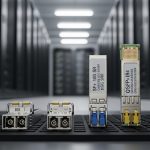
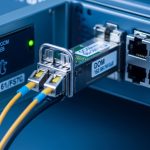
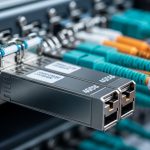
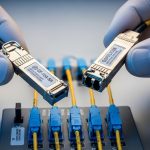
Telecom teams are feeling the squeeze: fiber capacity is there, but switching and optics budgets are not. This quick reference shows how to judge whether an 800G transceiver upgrade is truly cost-efficient versus incremental alternatives, using real engineering tradeoffs: reach, power, optics compatibility, and operational risk. It helps network architects, transport engineers, and IT directors build a defensible business case before procurement.
Where the 800G transceiver drives real cost savings
In transport and aggregation layers, cost efficiency typically comes from reducing optics count and transceiver port density while maintaining throughput. An 800G transceiver can replace multiple lower-rate links, lowering total line cards, optics inventory, and splice/patch complexity. The second lever is power: higher-rate optics can reduce watts per carried bit when paired with modern switch silicon and well-matched optics.
However, ROI depends on how your network is actually built: if you are limited by end-to-end reach, dispersion tolerance, or transceiver/host compatibility, you may pay more for higher-spec optics or additional optics cooling. Treat the upgrade as a system decision, not a single SKU swap.
Key technical specifications that affect both price and performance
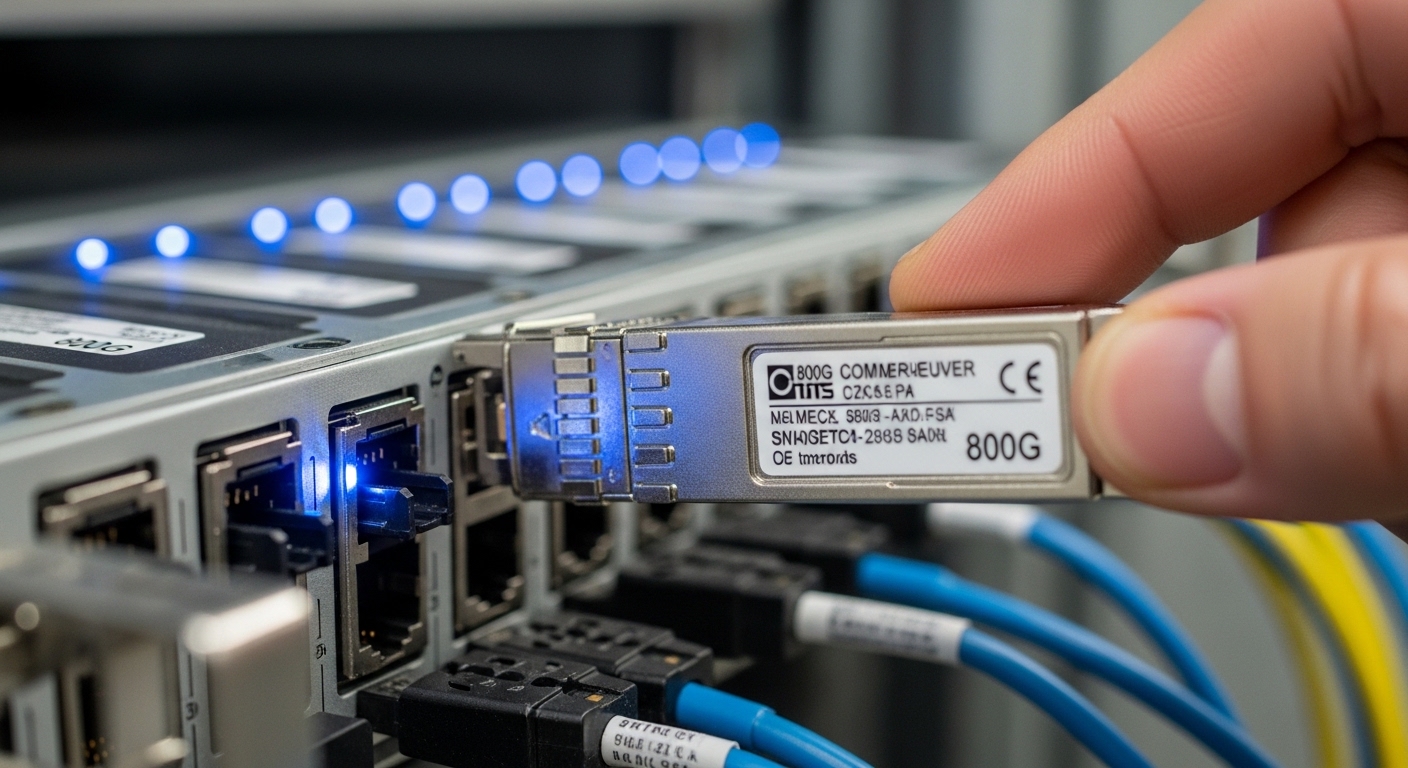
Use the IEEE 802.3 family guidance and vendor datasheets to validate electrical interface, supported modulation, and reach. In practice, “works in the lab” is not enough; you need operating temperature range, DOM telemetry behavior, and optical safety/class compliance for your site.
| Parameter | What to verify for an 800G transceiver | Typical example values |
|---|---|---|
| Data rate | Line-side throughput per optic | 800G class (implementation-dependent) |
| Optical wavelength | Must match fiber plant and optical budget | Common variants include 850 nm multimode and 1310 nm singlemode depending on platform |
| Reach | Distance without exceeding BER and power penalties | MM optics often target tens to a few hundred meters; SM optics often reach kilometer-class depending on modulation and vendor |
| Connector | Field deployability and cleaning workflow | LC duplex is common for fiber transceivers; verify MPO/MTP vs LC on your host |
| DOM / telemetry | Alarm thresholds, optics temperature monitoring | Digital Optical Monitoring with vendor-specific alarms |
| Operating temperature | Rack cooling realism, airflow direction, and derating | Common ranges include 0 to 70 C for standard and wider ranges for extended variants |
| Power draw | Impacts OPEX via PSU and cooling | Varies by generation; confirm watts per module from datasheet |
Model-number reality checks from common sourcing channels
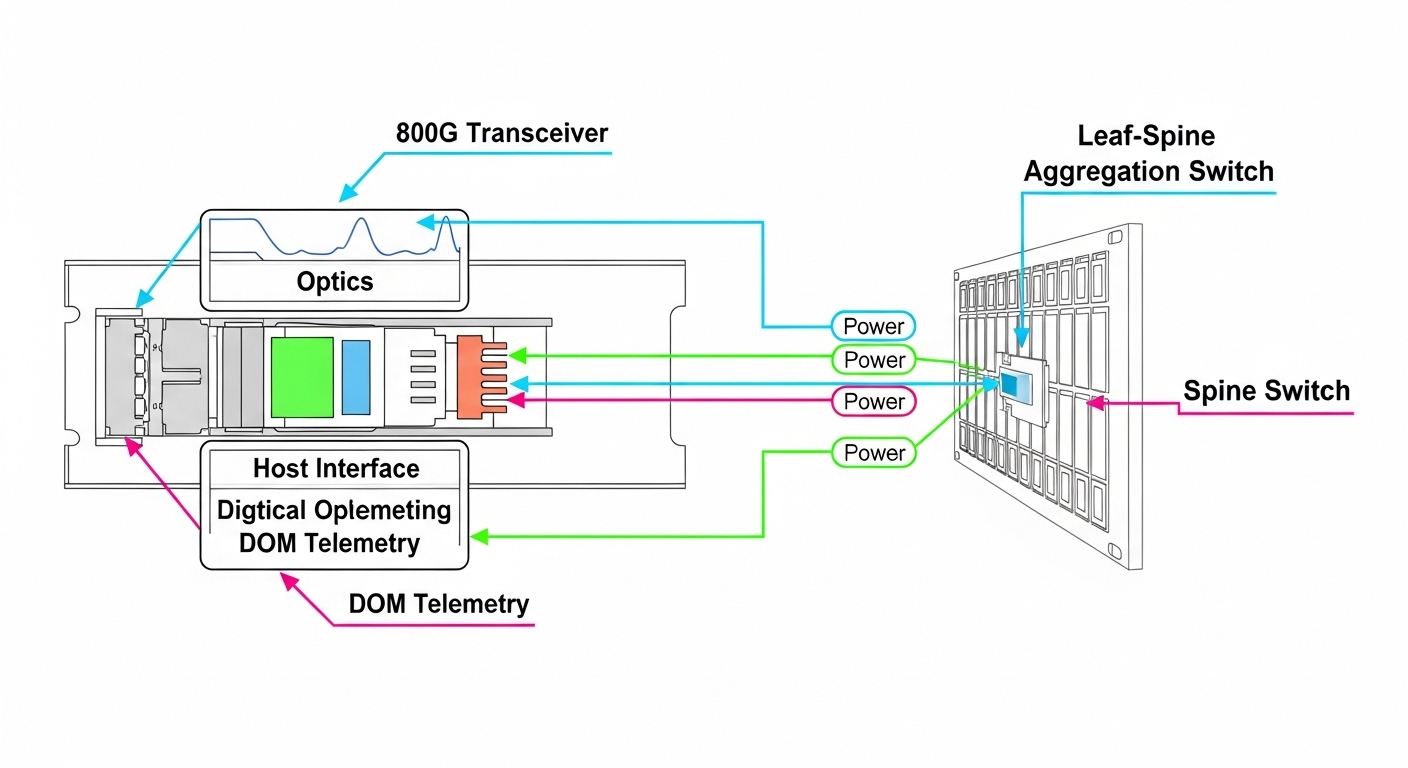
Procurement often mixes OEM and third-party optics. For example, you may see 10G and 25G SR optics such as Cisco SFP-10G-SR or Finisar FTLX8571D3BCL in older fleets; for 800G you will typically source from OEM-qualified lists per switch vendor. Always confirm that your exact host model supports the exact 800G transceiver part number and DOM behavior, not just “800G compatible.”
Decision checklist: prove cost-efficiency before you buy
Engineers should run this ordered checklist during design and quoting. It prevents budget surprises and avoids late-stage interoperability failures.
- Distance and optical budget: confirm reach for your exact fiber type (OM3/OM4 vs SMF), split ratios, and connector losses.
- Switch compatibility: validate host support for the specific 800G transceiver model; confirm lane mapping and breakout mode constraints.
- DOM and alarm thresholds: ensure your NMS reads temperatures, bias currents, and optical power consistently; verify how thresholds trigger maintenance tickets.
- Operating temperature and airflow: check that your rack cooling meets module derating; confirm front-to-back airflow alignment.
- Vendor lock-in risk: assess whether third-party optics are supported with stable firmware and consistent monitoring.
- Migration path: confirm you can stage upgrades without forcing a full line card replacement or disruptive maintenance windows.
- Total optics count reduction: model how many lower-rate ports you replace and how that changes spare inventory and patching labor.
Pro Tip: In field upgrades, the biggest hidden variable is not “reach” on paper; it is connector cleanliness and patch loss variability. Teams that add a strict cleaning verification step (visual inspection plus power sanity checks using DOM) typically see dramatically fewer link flaps during the first month after commissioning.
Common mistakes and troubleshooting patterns
These are the failure modes that repeatedly show up when telecom teams attempt an 800G transceiver upgrade under time pressure.
- Mistake: Buying optics that match wavelength but not the host’s required electrical interface or lane configuration. Root cause: switch vendor expects a specific transceiver profile. Solution: validate against the host’s qualified optics list and confirm DOM presence and vendor ID behavior during acceptance testing.
- Mistake: Underestimating thermal derating in dense racks. Root cause: module output power and receiver sensitivity can degrade near upper temperature limits. Solution: measure inlet air temperature at the line card, enforce airflow direction, and plan for a higher cooling margin.
- Mistake: Ignoring patch cord variability and connector contamination. Root cause: small increases in insertion loss can push the link over the power budget. Solution: standardize patch cord lengths, enforce cleaning SOPs, and use DOM optical power readings to confirm link margin immediately after installation.
- Mistake: Treating alarms as generic. Root cause: different vendors expose different thresholds and telemetry scaling. Solution: align NMS thresholds per module type and verify alert semantics in a staging environment.

Cost and ROI note: what to budget realistically
Pricing for an 800G transceiver varies widely by reach class, modulation complexity, and whether it is OEM-only or third-party qualified. As a planning baseline, many teams see materially higher unit prices than legacy 100G/400G optics, but ROI can still be strong when you account for optics count reduction, lower port utilization overhead, and power efficiency per carried bit. TCO should include: spare inventory strategy, field replacement labor, cleaning supplies, and the risk cost of interoperability delays.
If your upgrade reduces required ports by 2x to 3x, you often see faster payback through decreased line card consumption and fewer installed optics to maintain. If your network is reach-constrained and forces higher-spec optics or extra regeneration, savings can shrink quickly.
FAQ
What does “cost-efficient” mean for an 800G transceiver upgrade?
It means you reduce total operational cost for the same or higher throughput: fewer optics and ports, lower watts per bit, and reduced maintenance labor. Your business case should include power, spares, and commissioning effort, not just the per-module price.
How do I confirm 800G transceiver compatibility with my switch?
Check the host vendor qualified optics list and verify acceptance tests: link bring-up, DOM telemetry visibility, and alarm mapping. If you use third-party optics, require a pilot batch and confirm stable behavior over several days.
Is multimode or singlemode better for ROI?
Multimode can be cost-effective for short-reach links with well-controlled patching, while singlemode often wins on longer reach and expansion. ROI depends on your actual fiber plant losses, not the marketing reach number.
What power metrics matter most in the ROI model?
Use module watts from datasheets and validate with rack-level power measurements during load. Then convert to watts per carried bit and include cooling overhead if your room is near capacity.
What are the top causes of early link failures?
The most common are connector contamination, thermal derating, and transceiver profile mismatch with the host. DOM telemetry sanity checks after installation help catch issues before they escalate into repeated link resets.
Should we standardize on OEM or allow third-party optics?
Standardization improves operational consistency and often accelerates support resolution. A