When a campus grows faster than your copper runs, engineers hit the same wall: 10G uplinks look great on paper, but long distances and EMI in older buildings force expensive redesigns. This article helps network teams planning 5GBASE-T over fiber links choose the right 5G ethernet transceiver, verify compatibility, and avoid field failures. You will get a top-N decision list, a real deployment scenario with measured link targets, and practical troubleshooting rooted in vendor datasheets and IEEE guidance. This is an attorney-style disclaimer: this content is for information only, not legal advice.
Top 7 5G ethernet transceiver picks for 5GBASE-T fiber campuses
Below are seven “best-fit” transceiver categories engineers select during multi-building campus upgrades. Each item includes key specs, where it shines, and tradeoffs. Note: exact parameters vary by vendor and regulatory region; always confirm with the specific part number datasheet. For standards grounding, IEEE 802.3 defines Ethernet physical layer behavior, while vendor transceiver specs govern optics, reach, and temperature performance. [Source: IEEE 802.3 standards]
5GBASE-T to fiber media converters with SFP-style optics
What it is: A small-form media converter that terminates 5GBASE-T electrical signaling (RJ-45) and outputs fiber using pluggable optics (often SFP or SFP+ class depending on vendor design). In field deployments, this option is popular when you need to keep existing 5GBASE-T NICs or switch ports but want fiber reach between buildings. You typically get a link budget based on the optics you choose, not a fixed “one size” fiber distance.
Key specs to verify: fiber lane type (single-mode vs multimode), optical wavelength, connector type (LC is common), transmit power and receive sensitivity, and whether the converter supports auto-negotiation features on the 5GBASE-T side. Many units also expose link status LEDs and sometimes alarms for optical power drift. Operating temperature matters for rooftop cabinets; look for at least -5C to 70C industrial-grade support if you have HVAC gaps.
Best-fit scenario: A campus where building A and building B each have 5GBASE-T ports on access switches, but the interconnect is too long for reliable copper. You drop fiber between converters, keeping the switching layer consistent.
- Pros: preserves 5GBASE-T on the edge; flexible optics selection; easier phased rollouts.
- Cons: adds a hop and power draw; may introduce latency; not every converter interoperates with every switch vendor’s timing quirks.
Managed fiber transceivers matched to your switch vendor’s optics profile
What it is: Some switch families expect specific transceiver behavior, including DOM (Digital Optical Monitoring) reporting and particular compliance behavior for diagnostics. Engineers sometimes choose “managed-ready” optics where the vendor documents compatibility with a given switch model. This reduces the risk of “link up, but traffic flaps” after a firmware update.
Key specs to verify: DOM support (readable via I2C/MDIO depending on platform), laser safety class, and whether the optics are validated for the exact switch series. If your plant uses monitoring systems (NMS) that read DOM thresholds, confirm the transceiver’s vendor supports alarm flags and real-time optical power reporting.
Best-fit scenario: A data closet that already runs optical health dashboards and requires consistent telemetry for incident response.
- Pros: better observability; fewer surprise incompatibilities; easier change management.
- Cons: can cost more; vendor lock-in risk if you rely on proprietary diagnostics.
Single-mode 5G ethernet transceiver optics for long campus runs
What it is: Single-mode optics (typically 1310 nm or 1550 nm class depending on the design) designed for long-distance links with lower attenuation than multimode. For campus retrofits, this is often the “distance saver” when you have 300 m to several kilometers between buildings, especially where multimode fiber is not installed or is already aging.
Key specs to verify: wavelength, reach rating, transmit optical power (dBm), receiver sensitivity (dBm), fiber type (OS2), connector (LC/UPC), and whether the optics are “low power” enough to stay within the receiver budget across splitters and aging factors. Also check DOM wavelength reporting accuracy if you rely on automatic inventory.
Best-fit scenario: A campus with fiber runs across parking lots and service tunnels, where pulling new multimode is not feasible.
- Pros: long reach; stable link budgets; future-proof for higher rates.
- Cons: single-mode optics can be pricier; mismatch with OS1/OS2 labeling can cause deployment delays.
Multimode 5G ethernet transceiver optics for cost-sensitive, short-to-mid links
What it is: Multimode optics (often 850 nm class for short runs) designed for OM3/OM4 fiber. Multimode is attractive when the campus already has OM3 or OM4 installed, and the target distances are typically within a conservative reach envelope.
Key specs to verify: fiber grade (OM3 vs OM4), modal bandwidth assumptions, and connector cleanliness requirements. Field reality: multimode links are more sensitive to dirty connectors and patch-panel fiber stress than single-mode. Confirm whether the vendor specifies an insertion loss budget and expected compliance under typical connector reflectance.
Best-fit scenario: A modernization project where the backbone is already multimode and you want to avoid trenching.
- Pros: lower optics cost; easy local troubleshooting with standard cleaning kits.
- Cons: shorter reach; higher sensitivity to installation quality.
BiDi fiber 5G ethernet transceiver optics to maximize existing strands
What it is: BiDi optics send and receive on different wavelengths over a single fiber strand in each direction, allowing duplex communication using fewer fibers. This is useful when your fiber count is limited and you cannot easily add new pairs.
Key specs to verify: wavelength pair (for example, one side around 1310 nm and the other around 1550 nm class, depending on the BiDi standard), polarity requirements, and compatibility with your patching scheme. Confirm whether the vendor requires strict pairing of “Tx/Rx wavelength” optics for each end; mixing can lead to silent link failures.
Best-fit scenario: A campus where a previous project left only one strand per link due to “temporary” splicing that became permanent.
- Pros: higher fiber utilization; faster upgrades without re-cabling.
- Cons: stricter polarity and wavelength discipline; sometimes less forgiving during maintenance swaps.
Ruggedized 5G ethernet transceiver modules for outdoor or high-vibration cabinets
What it is: Industrial temperature-rated optics and sometimes hardened media converters for locations like outdoor cabinets, utility rooms with HVAC outages, or corridors exposed to vibration. If your campus has equipment rooms with wide temperature swings, this category reduces field returns.
Key specs to verify: temperature range (for example, -40C to 85C industrial variants where offered), optical power stability, and connector retention force. Also ask whether the vendor supports extended DOM thresholds so you can detect early degradation before a full outage.
Best-fit scenario: A rooftop aggregation cabinet where summer heat and winter cold exceed typical commercial-grade limits.
- Pros: fewer seasonal outages; better reliability under stress.
- Cons: higher upfront cost; availability can be limited by third-party supply.
Third-party 5G ethernet transceivers with documented compatibility and DOM
What it is: Non-OEM optics sold by reputable integrators that may offer similar electrical and optical performance. Engineers choose this category to reduce capital expense, but only after validating compatibility with the exact switch model and firmware version.
Key specs to verify: DOM support, laser safety compliance, and documented verified part numbers. In practice, you should request a compatibility matrix or test report from the seller. If you use network automation, confirm the optics’ DOM fields match what your inventory software expects to avoid “unknown module” alerts.
Best-fit scenario: A multi-site campus rollout where OEM pricing would make the project unaffordable and you need controlled risk.
- Pros: cost savings; variety of reach options.
- Cons: higher compatibility risk; returns can be slow if documentation is weak.
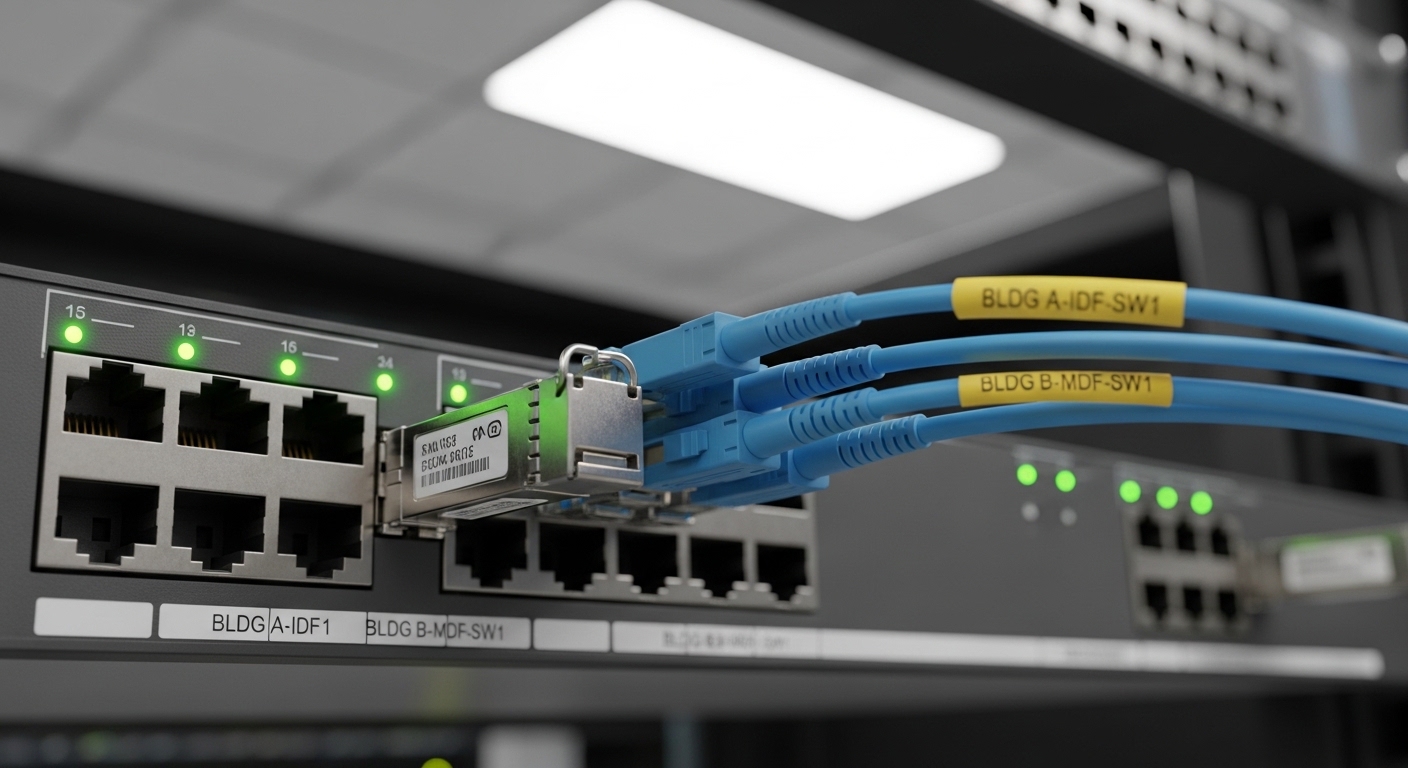
Specs that decide whether your 5GBASE-T fiber link will stay stable
Before you buy, translate “5GBASE-T fiber transceiver” requirements into measurable link budget and installation constraints. IEEE Ethernet physical layer rules handle framing and signaling semantics, but the transceiver determines optical budget, reach, and diagnostics. For optical links, vendor datasheets typically specify transmit power, receive sensitivity, and recommended fiber types. [Source: IEEE 802.3 working group resources]
| Spec | What to check | Why it matters | Typical target |
|---|---|---|---|
| Wavelength | 850 nm, 1310 nm, 1550 nm class | Must match fiber type and reach model | OM3/OM4: 850 nm class; OS2: 1310 nm/1550 nm class |
| Reach rating | Vendor-stated maximum distance | Defines link margin over attenuation | Pick with at least 3 to 6 dB margin |
| Transmit power (dBm) | Laser output range | Determines how far signal can travel | Use datasheet min/max, not marketing averages |
| Receive sensitivity (dBm) | Lowest detectable optical power | Defines receiver headroom | Ensure budget meets worst-case sensitivity |
| Connector | LC/UPC, LC/APC | Cleaning and reflectance impact stability | Match connector types across patch panels |
| Data rate & mode | 5GBASE-T mapping and link behavior | Prevents half-rate surprises | Confirm 5G mode negotiation behavior |
| DOM support | Optical power and alarms visibility | Accelerates troubleshooting | DOM present and readable on your switch |
| Temperature range | Commercial vs industrial grade | Prevents thermal drift and link drops | Plan for -5C to 70C or better if exposed |
Pro Tip: In real campus installs, the most common “mystery flaps” are not optical budget math errors. They are connector contamination and patch-panel stress that cause intermittent receiver overload or excessive return loss; teams often fix the problem in minutes by re-cleaning LC ends with fresh wipes and re-seating the transceiver, then verifying optical receive power in DOM.
Deployment blueprint: multi-gig campus upgrade with 5GBASE-T fiber
Picture a 3-tier campus leaf-spine design where 48-port multi-gig ToR switches serve classrooms and offices. In building A, each ToR uplinks to a core/distribution switch using 10G fiber, but access-to-aggregation runs are constrained by long copper paths. The team targets 5GBASE-T for edge devices (workstations, Wi-Fi 6 APs, and small IP cameras) and uses a 5G ethernet transceiver solution to bridge between buildings over fiber.
In a real roll-out, the engineering plan uses three fiber segments: two single-mode links at 1.2 km and 2.0 km, plus one multimode link at 180 m through a shared patch panel. They budget for patch loss and connector loss, then select optics with reach headroom so the receive power stays within the vendor’s operating envelope even after aging. On install day, a field tech cleans every LC end, verifies continuity, records DOM receive power values, and tags the transceiver serial numbers in the inventory system for later incident correlation. If a link drops during testing, they first compare DOM alarms, then clean and reseat, and only then replace optics.
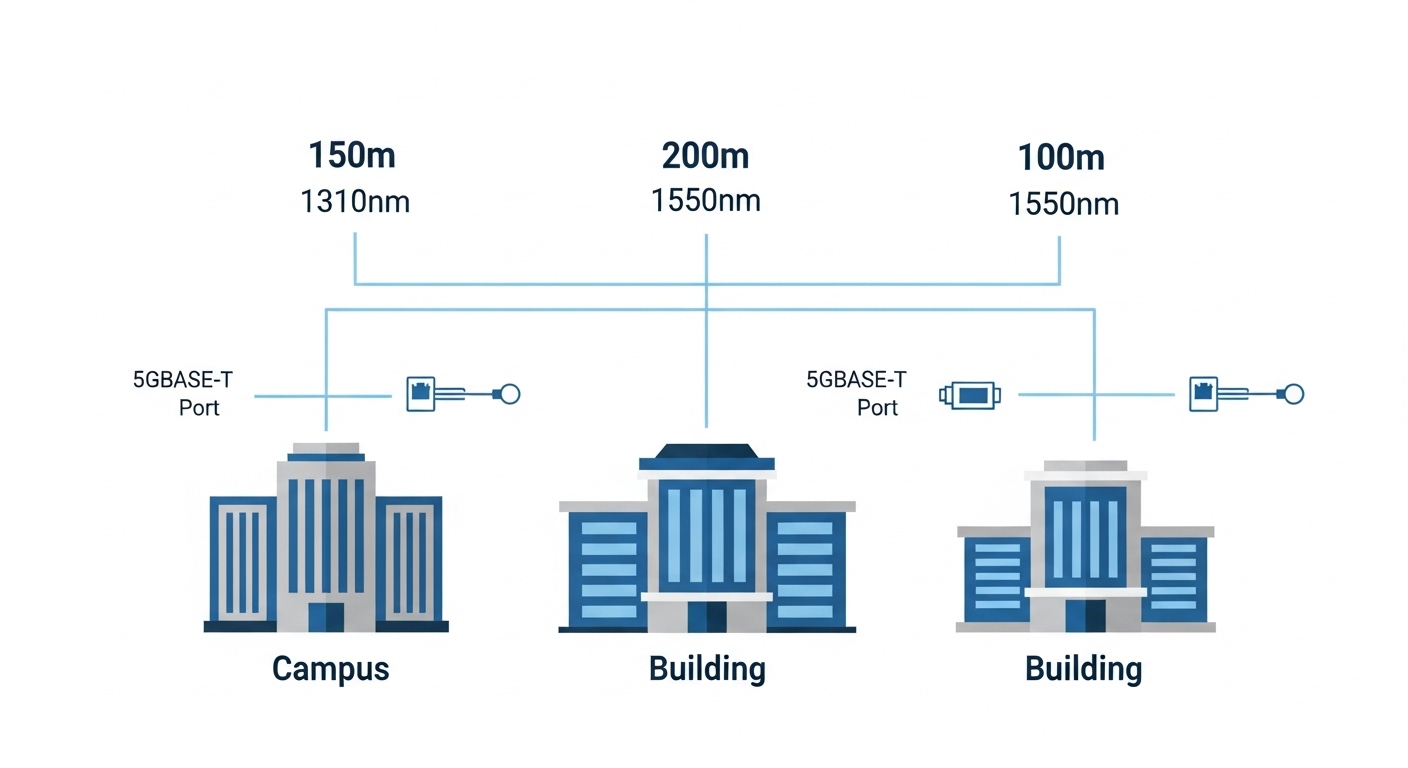
Selection checklist engineers use before ordering optics
Engineers rarely choose based on reach alone. They weigh operational compatibility, monitoring needs, and the risk of vendor-specific behavior. Use this ordered checklist to reduce rework and downtime.
- Distance and fiber type: confirm OS2 vs OM3/OM4, then compute loss including connectors, splitters, and patch-panel couplers.
- Switch compatibility: validate with the exact switch model and firmware version; confirm whether the platform expects specific DOM fields.
- DOM and alarm support: ensure your NMS can ingest optical power and raise alerts for low power or temperature drift.
- Operating temperature: match the module’s temperature range to the enclosure environment, not just the server room.
- Budget and TCO: compare OEM vs third-party with warranty terms, return logistics, and mean time to repair.
- Vendor lock-in risk: decide whether you can standardize on one ecosystem or need cross-vendor interoperability.
- Power and thermal impact: confirm converter power draw and airflow requirements in dense racks.
Common mistakes and troubleshooting that saves hours in the field
Even strong designs can fail during deployment. These are the mistakes teams make most often when rolling out a 5G ethernet transceiver for 5GBASE-T fiber campus upgrades, along with root causes and fixes.
Buying optics with the right “reach,” wrong connector type
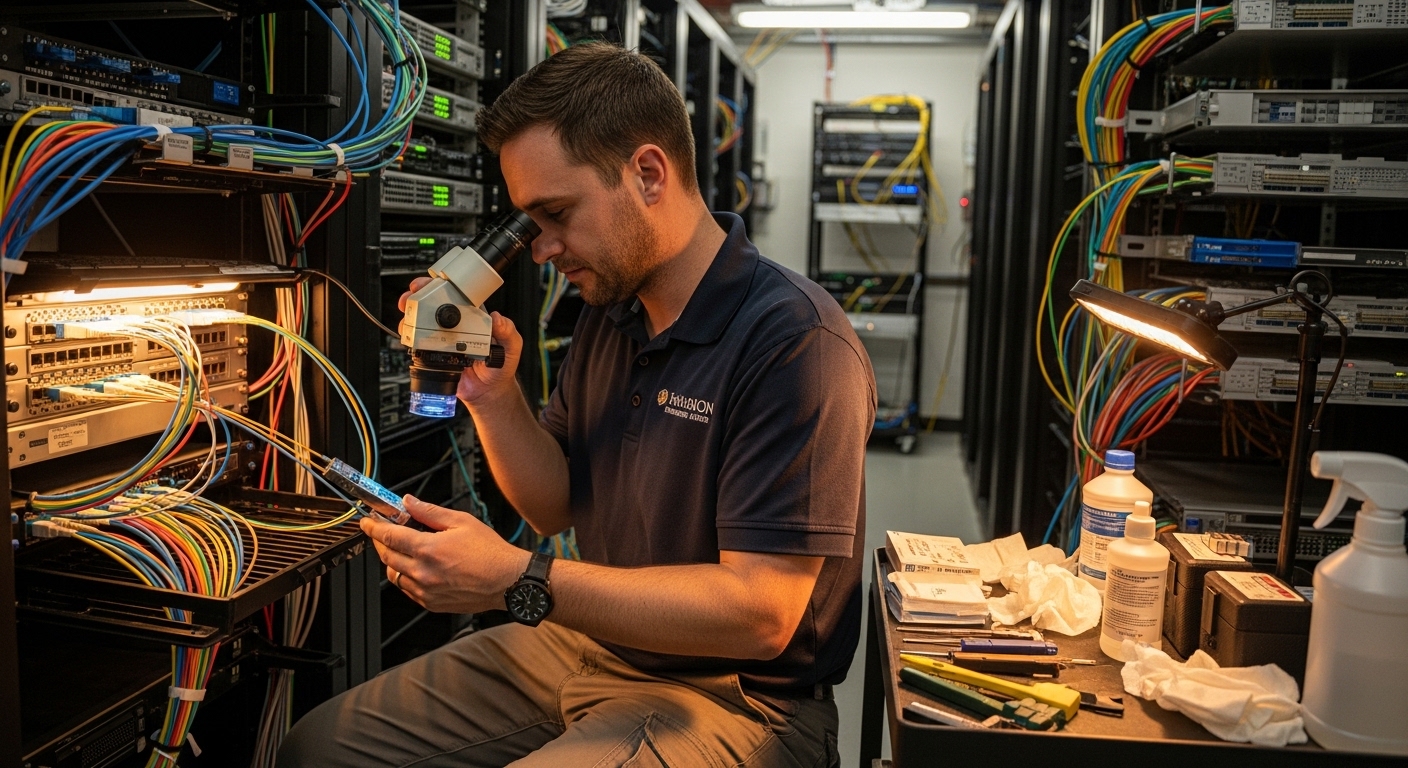
Root cause: LC/UPC vs LC/APC mismatches or patch panels built with mixed connector types can raise return loss and cause intermittent receiver instability. Solution: verify connector standards end-to-end before pulling fiber, then clean and inspect with a fiber microscope after every rework.
Ignoring DOM expectations on the host switch
Root cause: Some platforms treat unknown DOM fields as “faulty module,” or they throttle links after detecting inconsistent readings. Solution: confirm DOM compatibility with the switch vendor, and test one transceiver in a non-critical port before scaling.
Overestimating link margin by using “typical” attenuation
Root cause: Engineers sometimes use optimistic attenuation values and forget patch loss, connector aging, and extra slack storage losses. Solution: build a conservative budget with worst-case connector loss and include a margin (commonly 3 to 6 dB) so the receiver stays within spec under aging.
Skipping cleaning steps before first power-on
Root cause: Factory dust or debris from patching can cause high insertion loss and trigger link renegotiation loops. Solution: clean with lint-free wipes and appropriate cleaning tools, then re-seat; record receive power in DOM immediately after stabilization.
Mixing wavelength pairs in BiDi deployments
Root cause: BiDi optics require strict pairing of transmit and receive wavelengths. A swapped pair can lead to “link dead” with no obvious physical damage. Solution: label fibers and transceiver cages, verify wavelength pairs against the vendor labeling, and use a continuity map before final termination.
Cost and ROI: what you should expect in real campus budgets
Prices vary by reach, DOM support, and whether you choose OEM or third-party. As a practical range, OEM optics and compatible media converters often land in the $60 to $250 per module range, while validated third-party options can be lower, sometimes $30 to $140. Total cost of ownership (TCO) is driven by not only hardware price, but also downtime risk, truck rolls, warranty handling, and the speed of replacement logistics.
In a campus upgrade, ROI improves when you standardize optics types and document DOM baselines during commissioning. If you can reduce repeat visits by even one service call per site, the project typically pays back quickly through reduced labor and fewer outages. Still, be honest: third-party optics may reduce capex but can increase operational overhead if compatibility testing is rushed or if warranty terms are weak.
Summary ranking table: best-fit options by upgrade constraint
Use this table to rank options based on your most likely constraint: distance, fiber scarcity, observability needs, and environmental risk. This is not a guarantee of compatibility; it is a decision aid grounded in typical deployment behavior and vendor documentation practices.
| Rank | Best-fit transceiver category | Primary constraint solved | Typical reach use | Key watch-outs |
|---|---|---|---|---|
| 1 | Single-mode 5G ethernet transceiver optics | Long distance with stable budgets | Hundreds of meters to kilometers (OS2) | Connector cleanliness and correct wavelength pairing |
| 2 | 5GBASE-T to fiber media converters with pluggable optics | Preserve edge 5GBASE-T while extending over fiber | Varies by selected optics | Added hop and power draw; validate port behavior |
| 3 | Multimode 5G ethernet transceiver optics | Cost-effective upgrades on existing OM fiber | Short-to-mid links (OM3/OM4) | More sensitive to installation quality |
| 4 | BiDi fiber 5G ethernet transceiver optics | Limited fiber strand availability | Where strand count is the bottleneck | Strict polarity and wavelength discipline |
| 5 | Managed-ready optics matched to switch profiles | Telemetry and change control | Any supported fiber type | Can increase vendor lock-in risk |
| 6 | Ruggedized industrial-grade optics | Outdoor or temperature-stress environments | Any distance, if environmental limits are exceeded | Higher cost; confirm enclosure airflow |
| 7 | Third-party optics with documented compatibility | Capex reduction with controlled risk | Any supported fiber type | Compatibility testing and warranty terms |
FAQ for buyers deploying a 5G ethernet transceiver on 5GBASE-T fiber
What does a 5G ethernet transceiver actually do in a 5GBASE-T fiber upgrade?
It bridges the electrical 5GBASE-T domain to a fiber physical layer, either through a direct pluggable optics approach or via a media converter that terminates copper and remaps to fiber. The goal is to keep your edge devices on 5GBASE-T while using fiber for reach and noise immunity. Always confirm the exact link negotiation behavior in the vendor documentation for your switch and converter model.
Can I mix OEM and third-party optics on the same campus?
Yes, but you should do it carefully. Validate DOM compatibility and switch behavior for each optics type, then test in a non-critical port before scaling. If your operations team relies on optical thresholds and alarms, mismatched DOM fields can complicate incident response.
How do I choose between single-mode and multimode for campus distances?
Start with your fiber type already installed: OS2 supports long-distance with single-mode optics, while OM3 or OM4 supports multimode for shorter segments. Then compute a conservative link budget including connector and patch losses. If your measured distances are near the vendor’s edge of reach, prefer single-mode for margin.
Do I need DOM support for troubleshooting, or is link status enough?
DOM support is strongly recommended for operational teams. Link LEDs tell you “up or down,” but DOM provides optical power and diagnostic thresholds that reveal degradation before a full outage. This can cut mean time to repair by narrowing the root cause to optics, fiber contamination, or receiver budget issues.
What are the most common reasons 5G links flap after installation?
The top causes are usually connector contamination, insufficient cleaning after rework, incorrect polarity or wavelength pairing for BiDi, or an over-optimistic link budget. Another frequent issue is host switch compatibility where optics behave differently across firmware revisions. The fastest path is to check DOM receive power first, then clean and reseat, then validate switch compatibility.
Are ruggedized transceivers worth it for normal indoor closets?
If your closets remain within